The Christian Fish Symbol: Why the Ichthys Became a Quiet, Powerful Sign
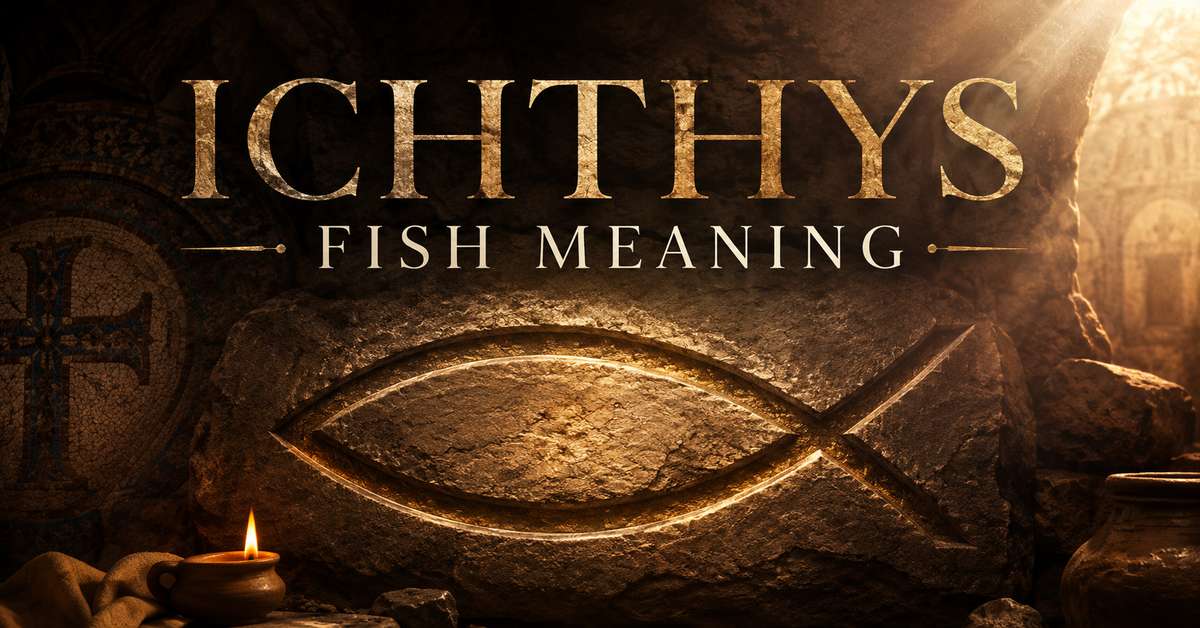
The Christian fish symbol, commonly called the ichthys or ichthus, is one of the most distinctive and enduring emblems of the Christian tradition. The Greek word ἰχθύς literally means "fish," and its letters were understood by Christians past and present as deeply meaningful.
Summary: The fish image appears in early Christian art and inscriptions, was interpreted as an acrostic for "Jesus Christ, God's Son, Savior," and served as a discreet identifier linked to baptism and Christian identity. It later gave way to the cross in public use but experienced modern revival.
WHAT THE SYMBOL MEANS AT ITS CORE
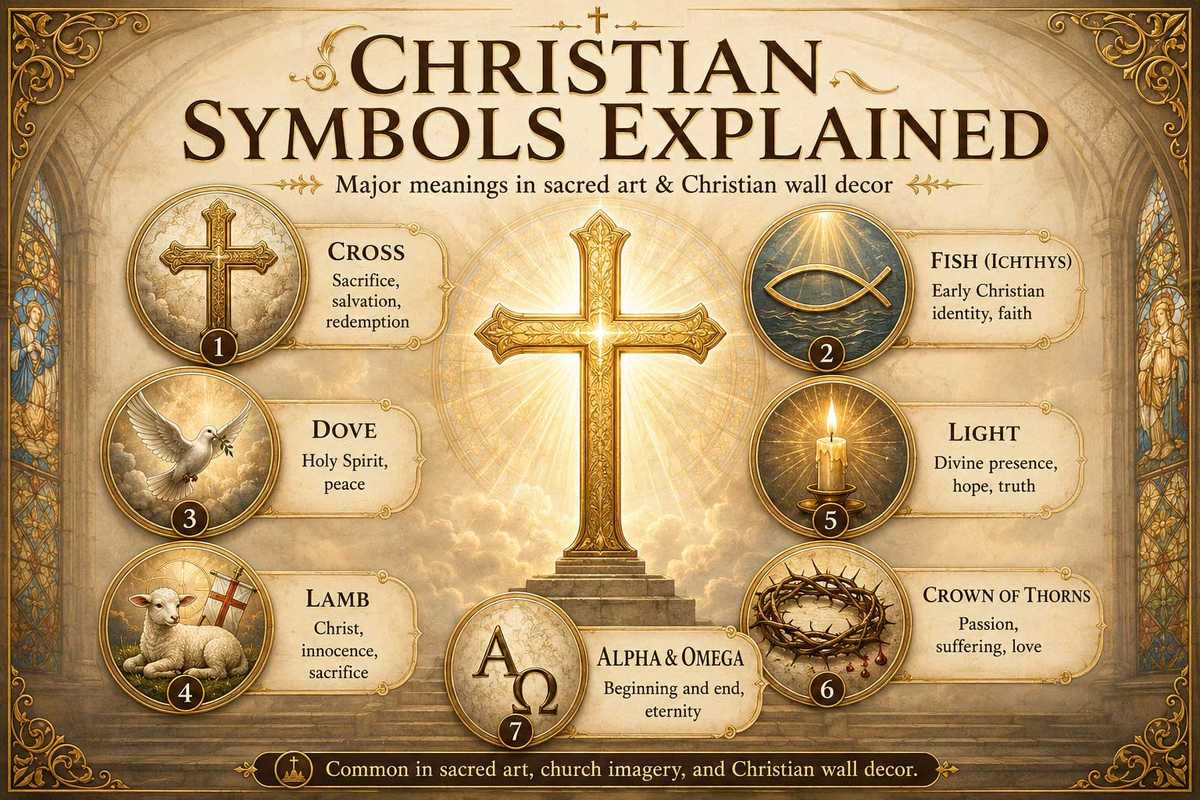
At its heart the ichthys is a simple visual sign with a concise verbal counterpart. The Greek word ἰχθύς means "fish," and the letters ΙΧΘΥΣ were read by Christians as an acrostic for Ἰησοῦς Χριστός, Θεοῦ Υἱός, Σωτήρ — "Jesus Christ, God's Son, Savior." This christological reading gives the fish its explicit theological content: it stands as a short, memorable formula that names Jesus and affirms who he is in Christian confession.
BIBLICAL OR TRADITIONAL ROOTS
While the verified sources do not claim a single biblical origin for the fish sign, patristic commentary and early Christian writers made connections between fish imagery, baptism, and Christian identity. Early authors such as Tertullian used fish or baptismal imagery in surviving texts, and later tradition preserved the ichthys as a symbol with clear sacramental and identity resonances.
EARLY USE AND ARCHAEOLOGICAL ATTESTATIONS
Archaeological and art-historical evidence shows the fish motif in early Christian contexts from the 2nd through the 4th centuries. Examples appear in Roman catacombs and on early Christian tombs, lamps, seals, and rings. These uses demonstrate that the image circulated in funerary, domestic, and liturgical-related objects in the early church.
WHY THE IMAGE WAS DISCREET AND MEMORABLE
Scholars and popular histories note that the ichthys could function as a discreet identifying sign during periods of persecution. Its simple outline and the compact acrostic made it easy to draw or inscribe, to appear in private settings, and to convey affirmation of faith without elaborate proclamation. The symbol's economy—both visual and verbal—helped it remain memorable across diverse Christian communities.
HOW THE SYMBOL APPEARS IN CHRISTIAN ART
In early Christian art the fish appears on a variety of objects: tombs, lamps, rings, and other items associated with worship and daily life. The motif could be literal or stylized, and over time it became one of several visual options by which Christians expressed belief. After the fourth century, the cross increasingly became the dominant public symbol, but the fish persisted in many artistic and devotional contexts.

MODERN REVIVAL AND VARIATIONS
The ichthys experienced a revival in modern times, especially from the twentieth century onward. Contemporary adaptations include a simple fish outline, versions that incorporate the name "Jesus," and a range of creative or parodic variants. This modern visibility reflects both the symbol's recognizability and its capacity for adaptation to new cultural settings.
DEVOTION, MEMORY, AND EVERYDAY RECOGNITION
Because the fish combines theological meaning (the acrostic confession) with a strikingly simple form, it continues to appear on home décor, prints, jewelry, and devotional objects. It speaks to private devotion and communal memory: a compact reminder of faith that can be displayed modestly in daily life while still conveying a clear christological claim.
WHY THE SYMBOL STILL RESONATES TODAY
The ichthys endures because it ties together language, image, and identity. Its origins in early Christian use, its connection in tradition to baptism and church identity, and its later revival all contribute to a symbol that is at once historically rooted and flexible. As both discreet marker and public affirmation, the fish continues to communicate call, faith, and belonging for many Christians.
A CLEAR AND QUIET CONCLUSION
The Christian fish symbol—ἰχθύς—remains a memorable and meaningful emblem because it blends a succinct christological confession with a simple, adaptable image. From catacombs and seals to modern badges and artwork, the ichthys has carried convictions about Jesus, baptism, and community. Its ongoing presence in Christian life testifies to the power of a small sign to hold deep truth.
Sources: Summary drawn from verified research on the ichthys: linguistic meaning, early Christian attestations in art and inscriptions, the ΙΧΘΥΣ acrostic interpretation, links to baptism and identity in patristic writing, later replacement by the cross in public use, and modern variations and revival.