Alpha and Omega Meaning in Christianity: Christ as Beginning and End
The phrase "Alpha and Omega" — the first and last letters of the Greek alphabet — is one of Christianity's compact but powerful symbols. Used in the Book of Revelation as an appellation for God and for Jesus, the expression signals divine eternity, authority over history, and the identification of Christ with the origin and consummation of creation. For readers of Christian wall art, sacred images, and devotional spaces, the Alpha and Omega is both a theological claim and a visual shorthand for Christ's lordship across time.
Quick summary: Revelation names God and Christ "Alpha and Omega" (Revelation 1:8; 21:6; 22:13). The phrase conveys "the Beginning and the End," and early Christians used the letters in catacombs and Christological monograms.
Quick access: Biblical roots | Christian symbolism | Art & monograms
Clear definition
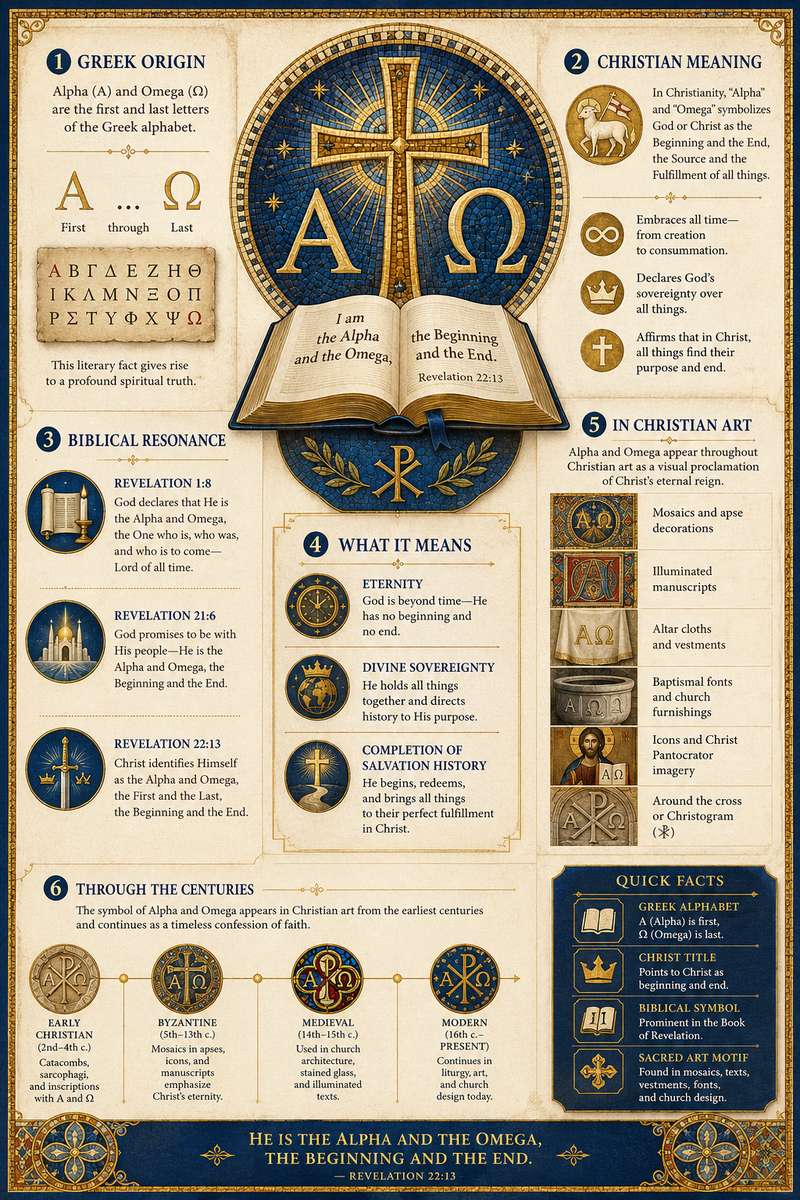
Alpha and Omega literally names the first (Alpha) and last (Omega) letters of the Greek alphabet. In Christian usage the phrase becomes a theologically loaded title meaning "the Beginning and the End." It functions as a statement about divine eternity and sovereignty: the one who is present at the origin of all things and who brings history to its consummation.
Biblical roots
The primary biblical attestations appear in the Book of Revelation. Revelation 1:8 uses the phrase as an appellation for God, while Revelation 21:6 and 22:13 apply "I am Alpha and Omega" to the risen Son, identifying Christ with the same eternal scope. These passages make the phrase a clear Christological and theocentric claim within the New Testament witness.
Spiritual meaning
Because Alpha and Omega locates God and Christ at both beginning and end, it expresses several linked theological points: divine eternity (not bound by time), sovereignty over the course of history, and a unity between creation’s origin and its eschatological fulfillment. Patristic and later Christian writers have read the phrase as connecting Christ to the Word and to final judgment or consummation, so the title carries both cosmic and eschatological weight.
Christian symbolism
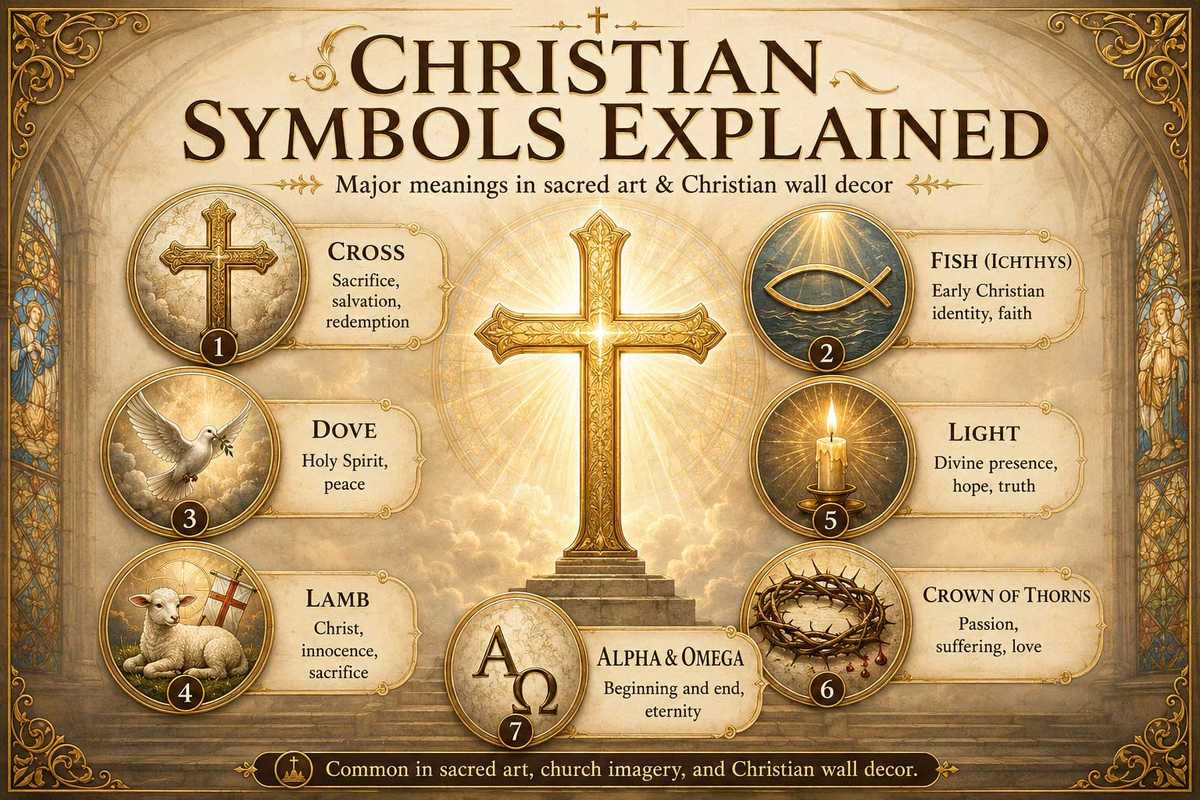
Visually, the two letters serve as a condensed confession: they name Christ as Lord over history. In iconography and monograms the letters are often shown flanking a central Christ symbol or placed near a Christogram. The simple graphic contrast — the first and last letters — communicates a theological totality that is easy to read and meaningful in devotion.
Sacred art and monograms
Early Christians incorporated Alpha and Omega into funerary and devotional art. The letters appear in Roman catacombs and on early rings, sarcophagi, and ornaments. They often accompany the Chi‑Rho or other Christological monograms, reinforcing the identification of Christ with the God of Revelation. Museum descriptions and material in the Vatican collections note this association between the letters, the Christogram, and funerary iconography tied to Revelation 22:13.
Liturgy and tradition
Across Christian traditions the Alpha and Omega appears in worship and devotional contexts as a reminder of Christ's temporal scope. Liturgical art, church furnishings, and inscriptions can use the letters to frame sermons, prayers, or liturgical texts that emphasize God's timeless rule. While practices vary, the symbol consistently points worshippers back to the biblical witness in Revelation.
Prayer and home devotion
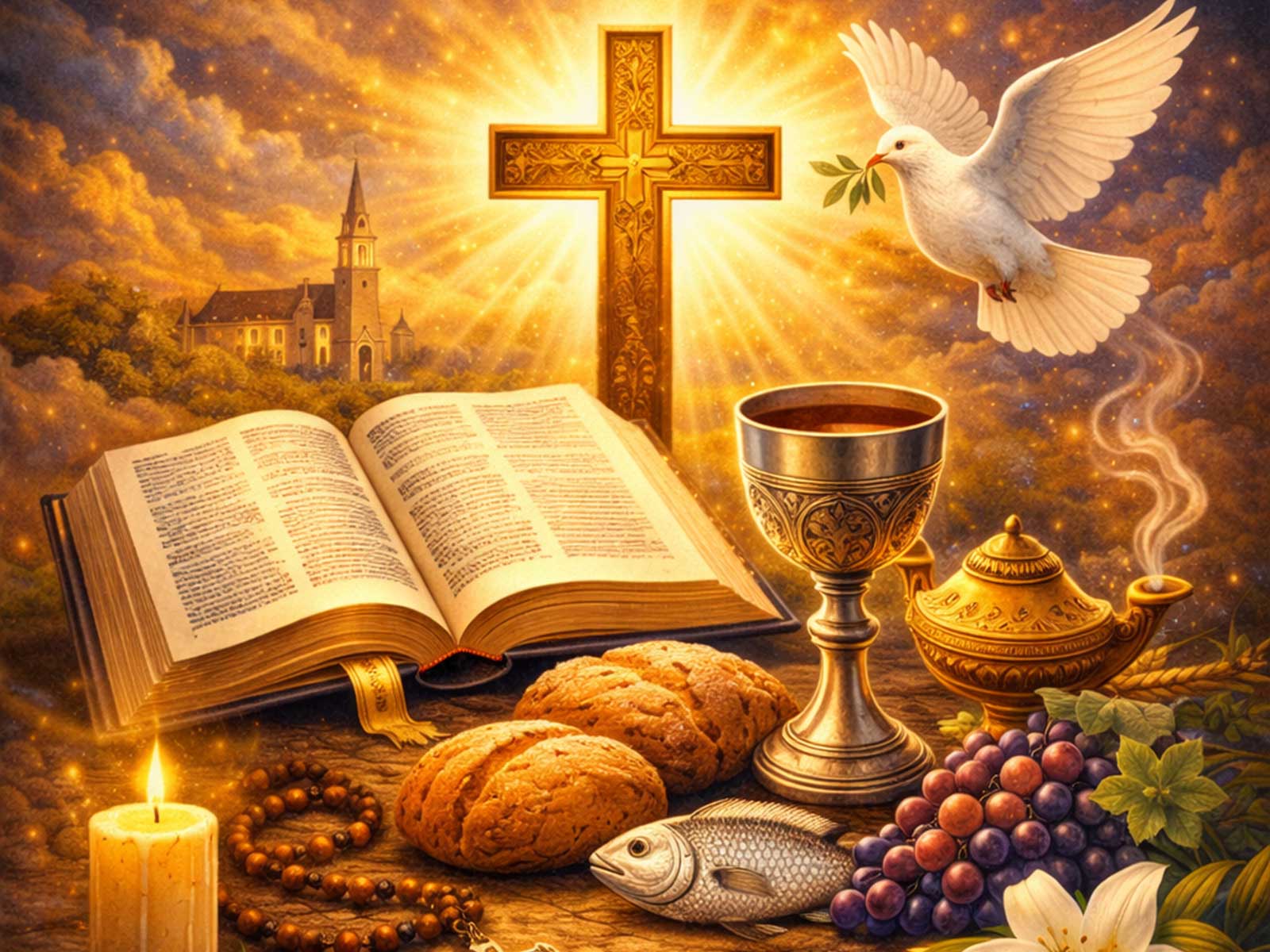
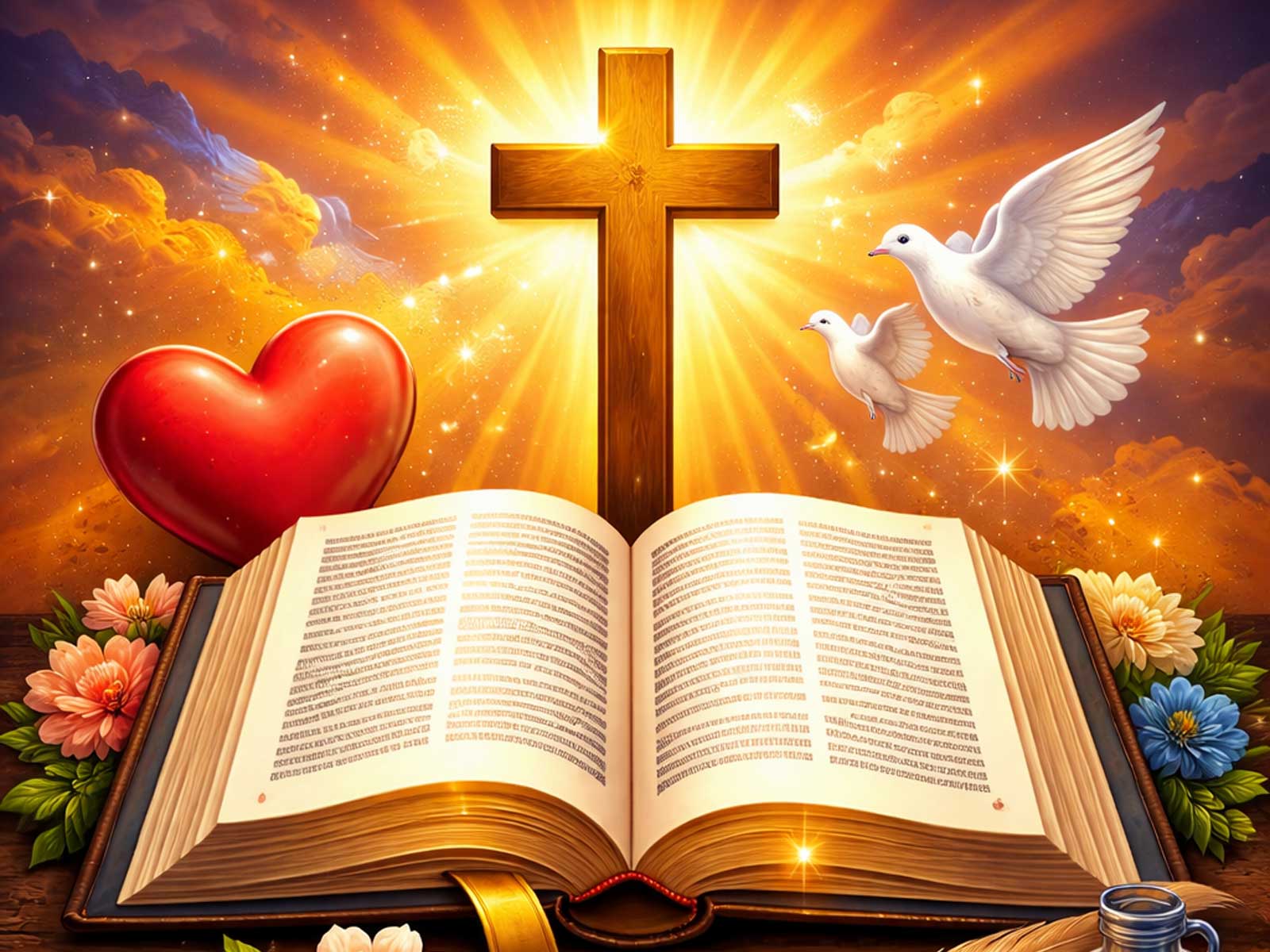
In a home prayer corner or on Christian wall art, Alpha and Omega can serve as a contemplative prompt: a reminder to bring the whole of life — its beginnings, endings, and transitions — before Christ. As a visual element it works well in simple prints or framed monograms beside a Bible or candle, where it encourages reflection on God's presence at every stage of life.
Common misunderstandings
One common simplification is treating the Alpha and Omega as a purely decorative motif. Its origin in Revelation and its theological force connect it to serious claims about Christ and God. Another error is to assume a single uniform interpretation across all Christians: while the core idea of "beginning and end" is constant, biblical, patristic, and liturgical emphases differ by tradition.
Closing interpretation
The Alpha and Omega remains a compact yet rich Christian symbol because it links Scripture, theology, and visual culture. Rooted in Revelation's identification of God and Christ, the letters condense the Christian claim that God is present at creation's dawn and at its fulfillment. For believers arranging a prayer space or choosing a devotional print, the Alpha and Omega offers a theologically dense image: a simple pairing of letters that invites reflection on eternity, providence, and the central Christian hope that Christ is Lord of all time.
Author: Alex R.