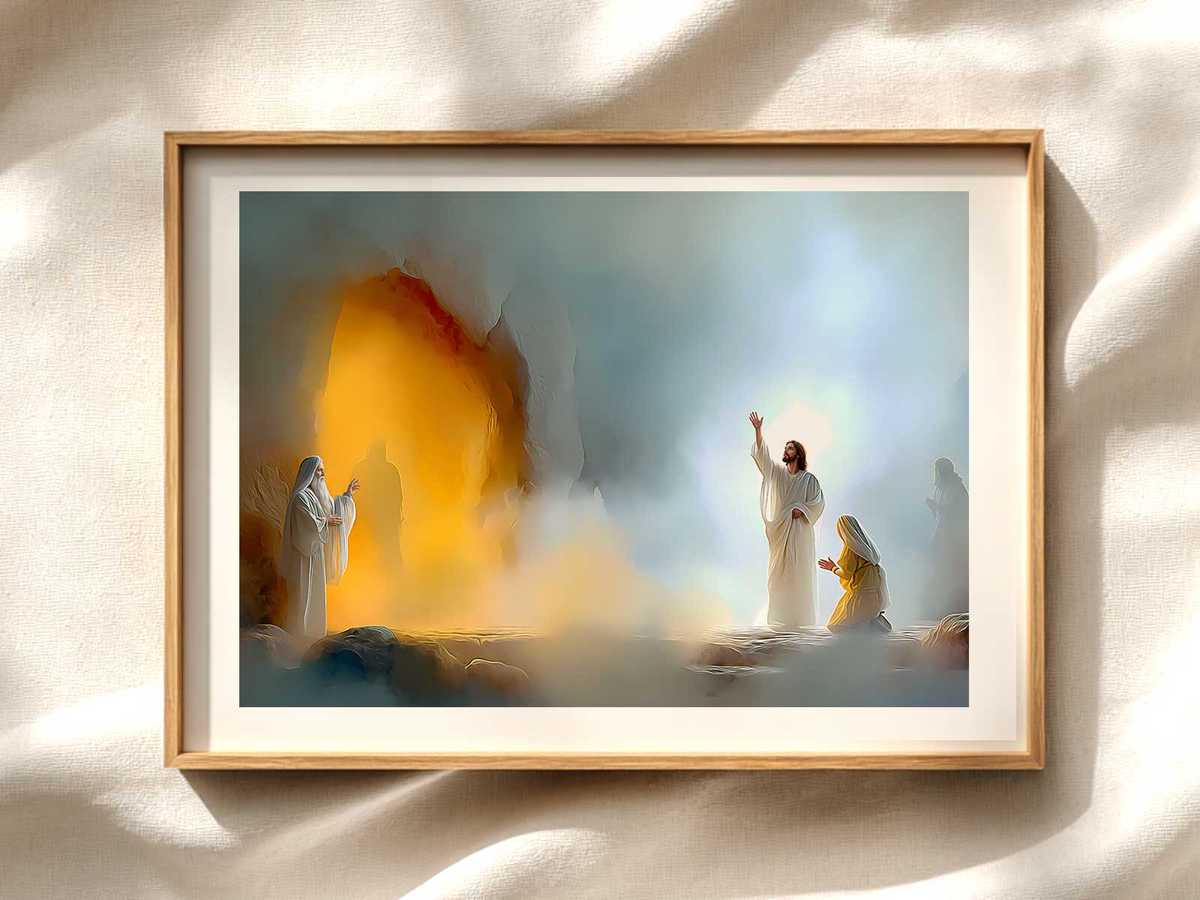
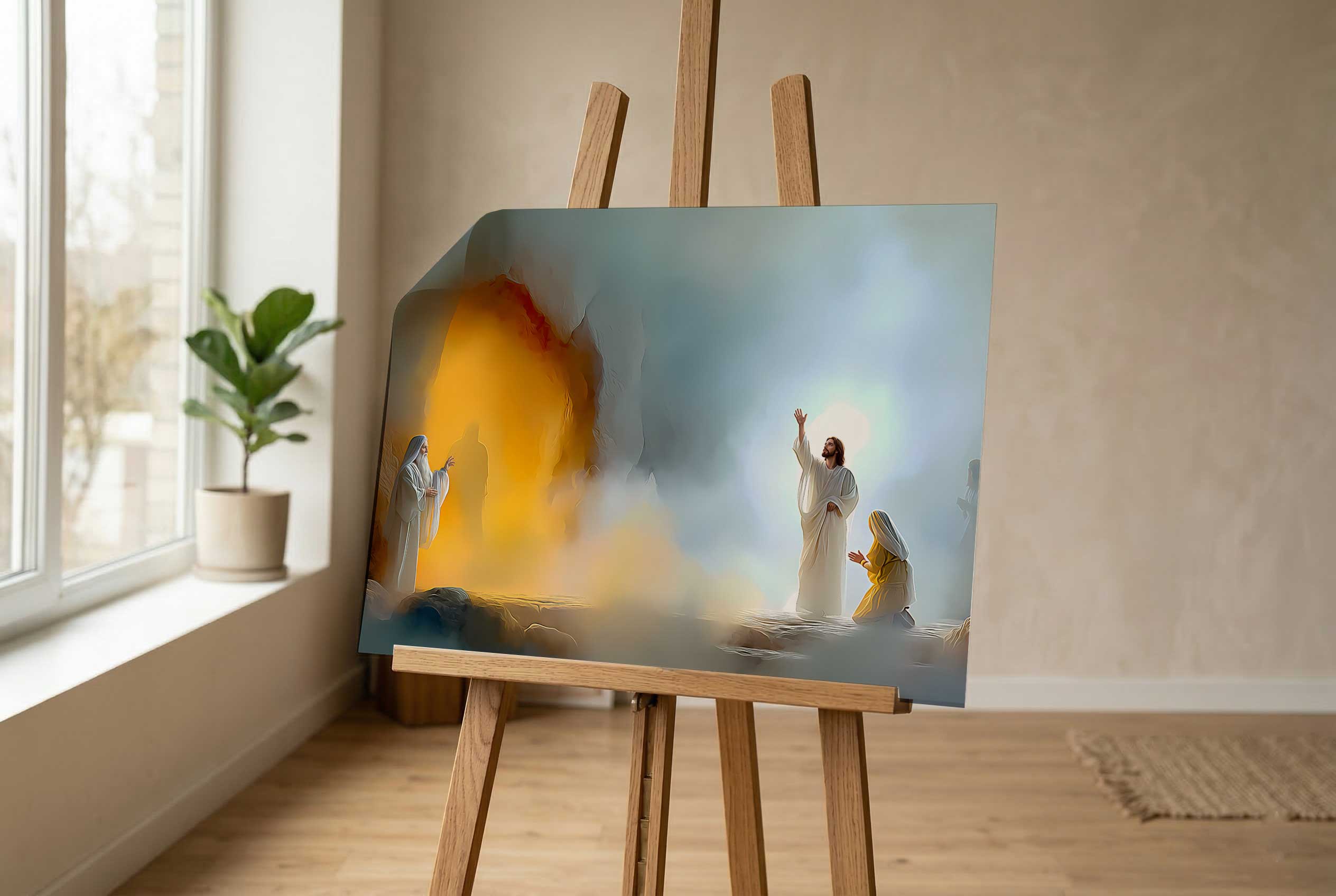
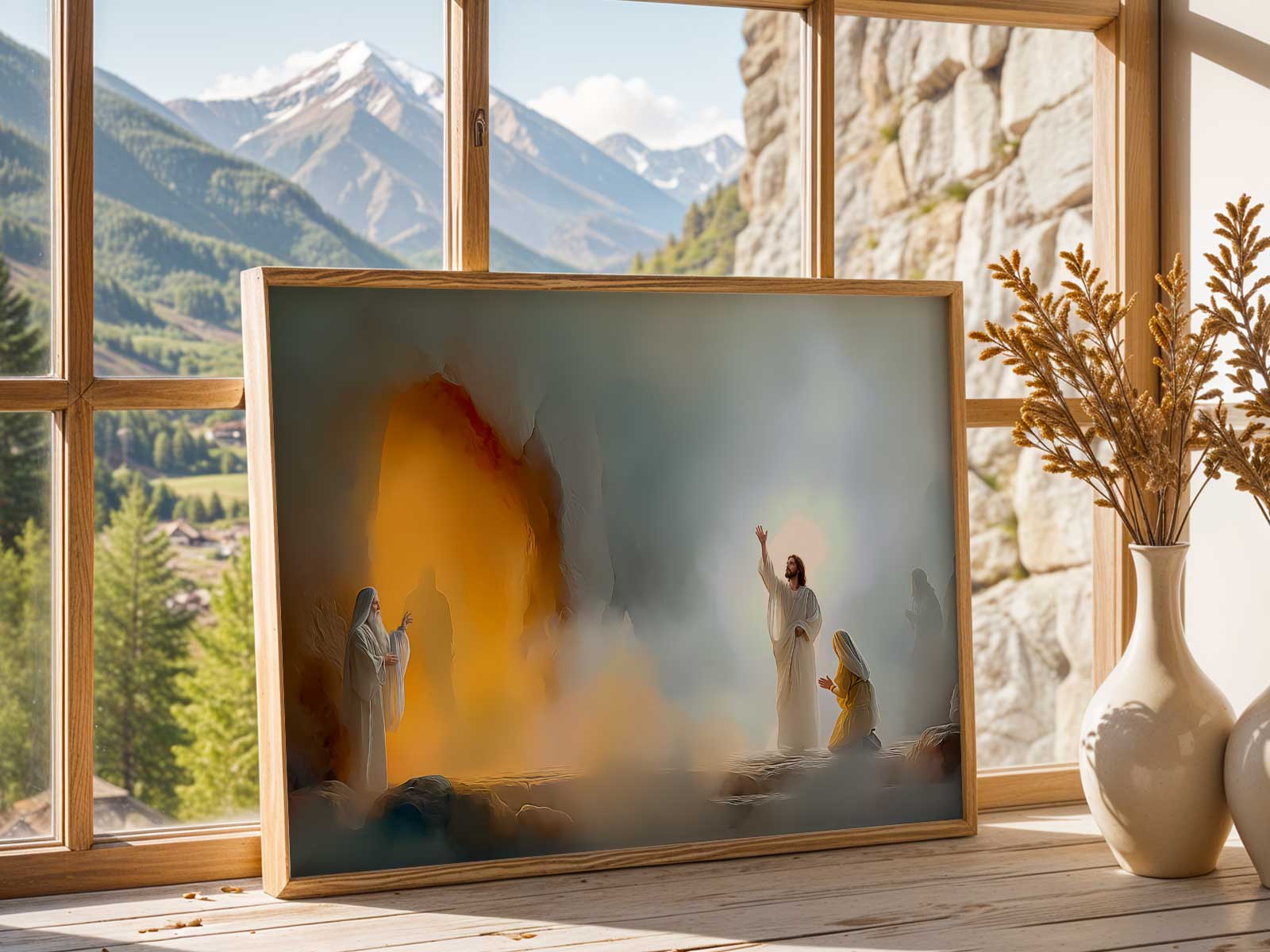
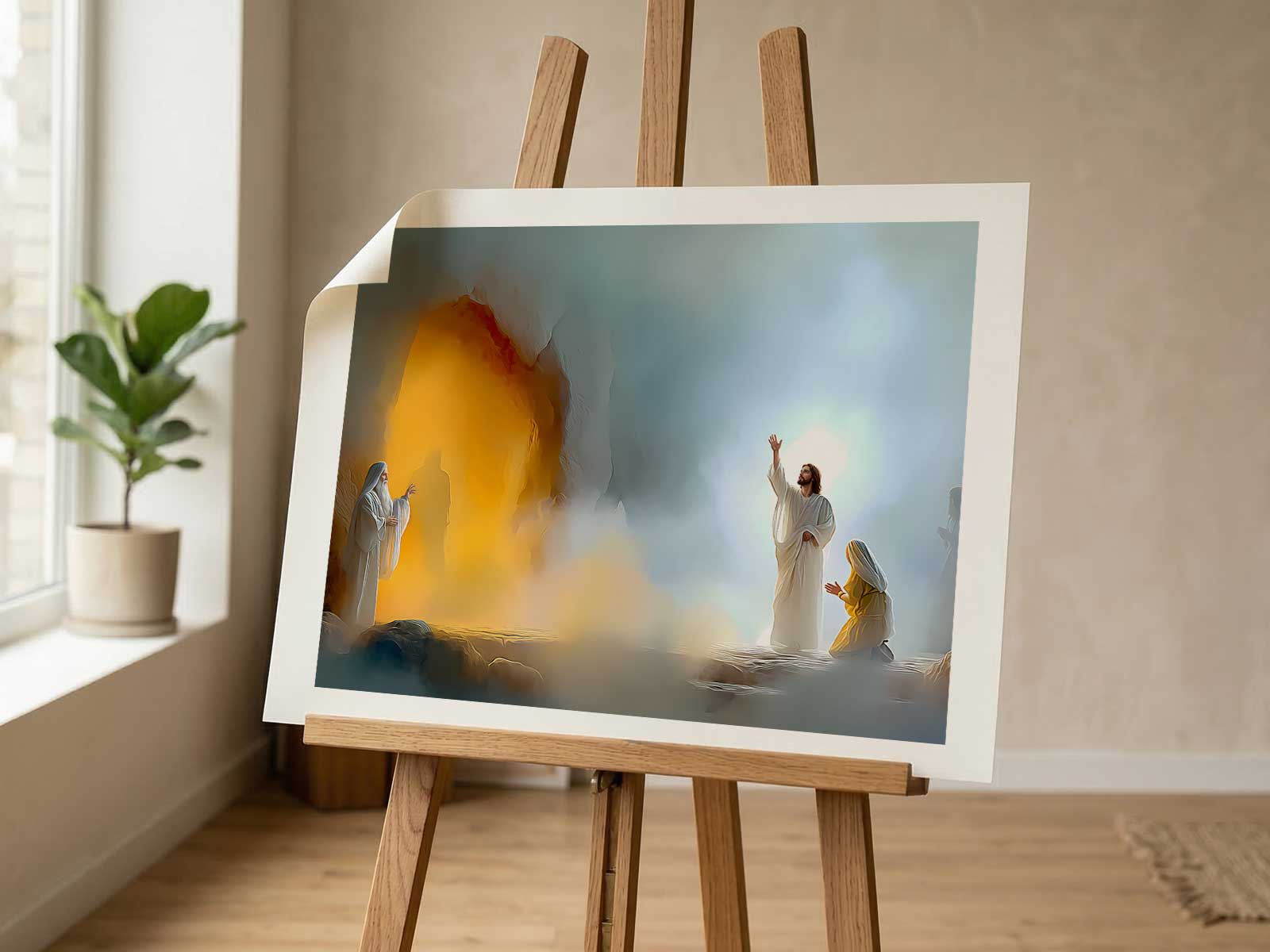
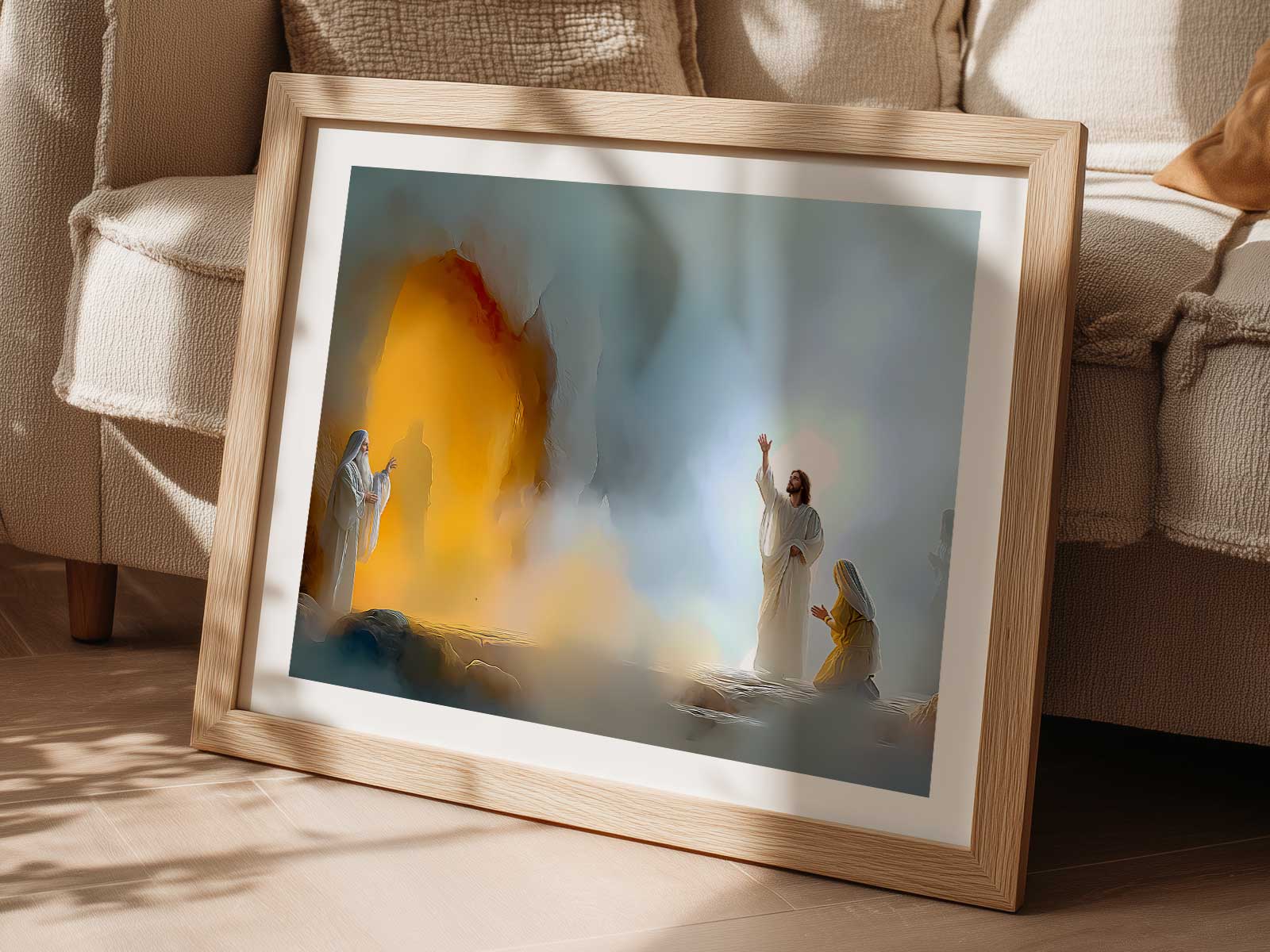
There are paintings whose fame is only one of their qualities; at their center is an event made visible in light, gesture, and human faces. This depiction of the resurrection of Lazarus keeps the scene first and foremost as a sacred image. It does not trade the drama of its artistic renown for the tenderness of a moment in which life and death meet. What holds the viewer is not spectacle but the concentrated presence of a Christ who stands at the threshold of the tomb, whose posture and gaze insist that this is an encounter meant for prayer as much as for admiration.
The painting’s visual vocabulary is quietly specific: a folded shroud, the shadowed mouth of the tomb, the gathered figures whose hands and faces map the ache of loss. Against that somber chorus, Christ appears with a calm authority that is neither theatrical nor distant. His gesture — an extended arm, a look that meets both the living and the one being called back — organizes the composition into a single pastoral act. Seeing this on a wall is to have a doorway of attention: the eye moves from darkness to light, and the heart follows in a way that invites silence rather than commentary.
[IMAGE_INSERT_ARTICLE_01]
Part of this image’s devotional power is its capacity to hold contradiction without dissolving either side: grief remains real in the tearful companions and the folded linens, while a promise of life presses in through the figure of Christ and the subtle lifting of light across the scene. As a piece of wall art, it furnishes a room with an example of prayer that is neither sentimental nor merely illustrative. Instead, it gives a form to a Christian conviction experienced at the level of posture and gaze — the steady, attentive presence that quietly reorders a household’s rhythms when glimpsed each morning or in late evening reflection.
In practical terms for a home, this image reads as an anchor. Placed above a small prayer table, it offers a focal point for petition and thanksgiving; in a hallway it greets visitors with a story that is not boastful but hospitable; in a study or bedroom it provides a companionable stillness that slows hurry. The figures’ close, communal clustering suggests that this scene thrives in ordinary proximity — it belongs where family life is lived, where memory and hope are shared.
Gifting this sacred image also makes sense when one wants to offer consolation without words. The scene communicates familiarity with sorrow and a promise that is enacted rather than merely proclaimed. It is an image suited to moments when speech fails and a room needs a quiet reminder of how Christian faith frames loss and longing.
Ultimately, the painting’s fame is a surface fact; its deeper value is that it remains an image of presence. Hanging it is not an exercise in collecting a celebrated object but a choice to live with a visible form of hope that holds grief and restoration together. In that way it becomes less an ornament and more a companion for daily contemplation, shaping the light of a room and the shape of a household’s prayerful attention.






 ↧ Digital download
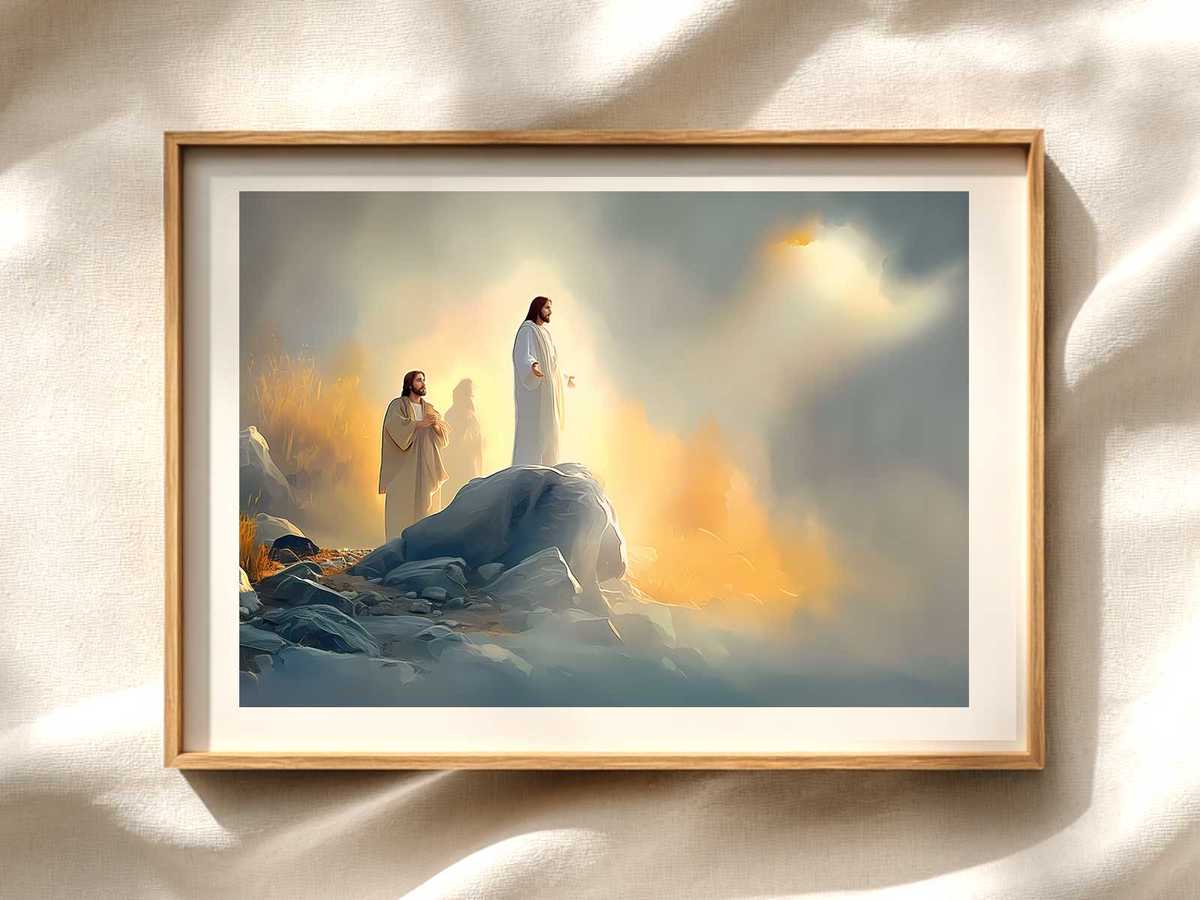
Famous Christ Painting Wall Art: The Transfiguration as Sign of...
Digital download
↧ Digital download
Famous Christ Painting Wall Art: The Transfiguration as Sign of...
Digital download
 ↧ Digital download
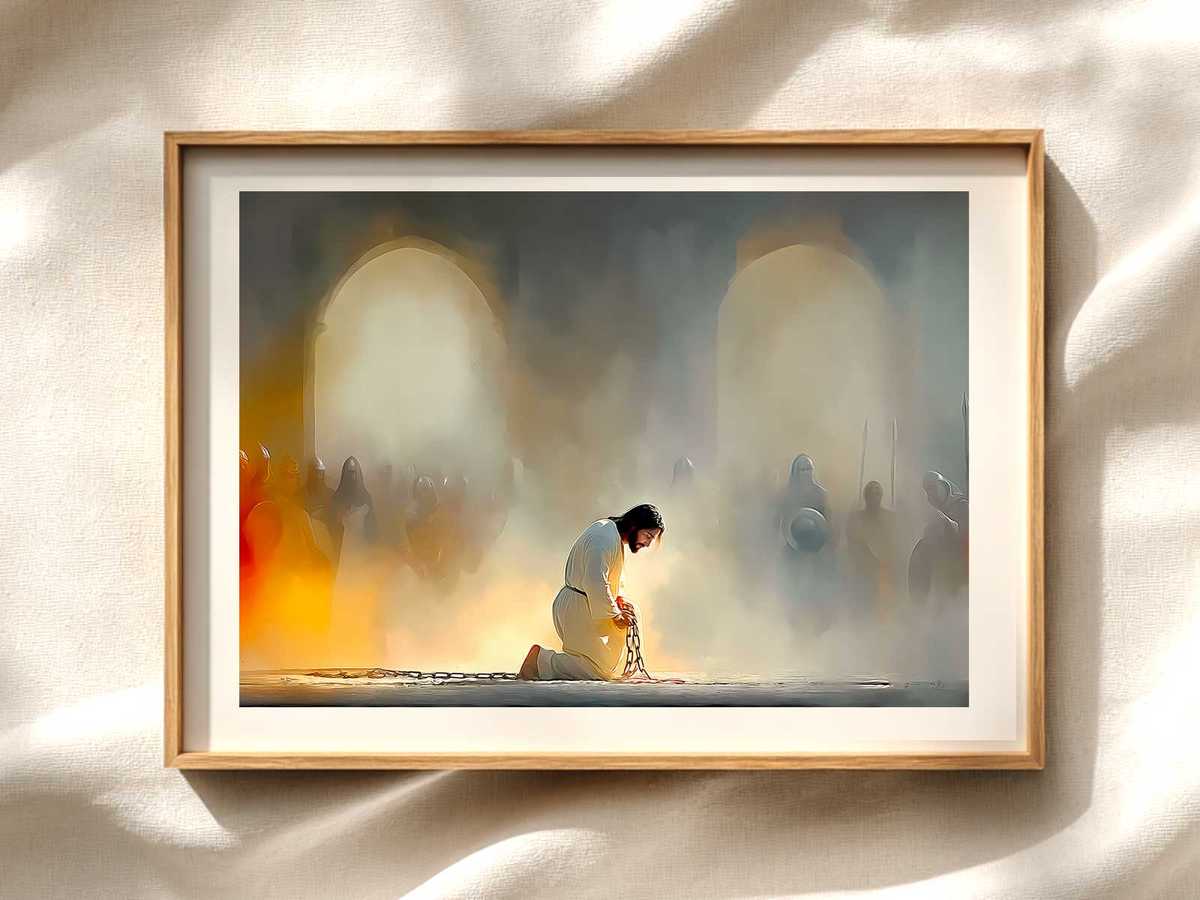
Drawings of Jesus Christ Print: The Trial and the Silent Dignity of...
Digital download
↧ Digital download
Drawings of Jesus Christ Print: The Trial and the Silent Dignity of...
Digital download
 ↧ Digital download
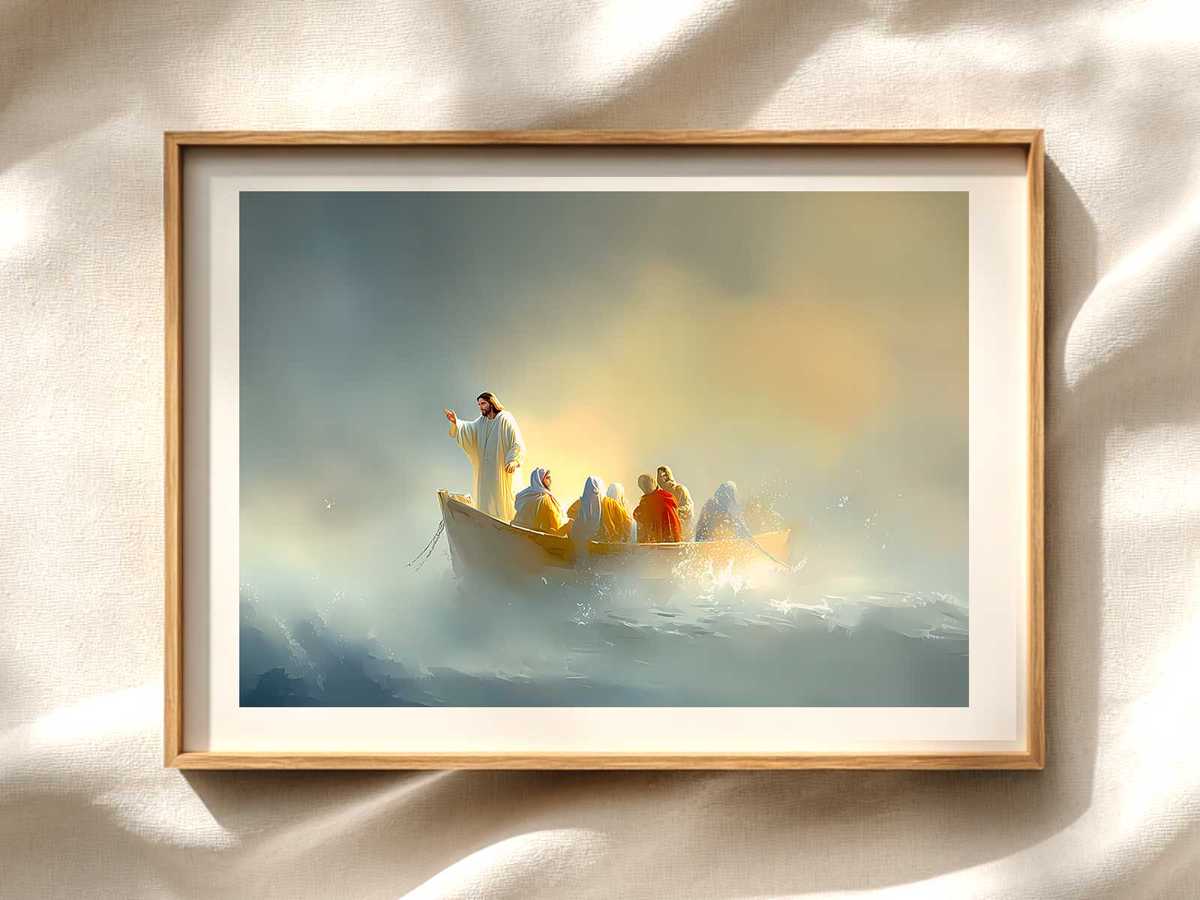
Jesus Art: The Stilled Storm — A Quiet Icon of Christ’s Gentle...
Digital download
↧ Digital download
Jesus Art: The Stilled Storm — A Quiet Icon of Christ’s Gentle...
Digital download
 ↧ Digital download
Parable Verses as Wall Art: A Visible Word for Discernment...
Digital download
↧ Digital download
Parable Verses as Wall Art: A Visible Word for Discernment...
Digital download