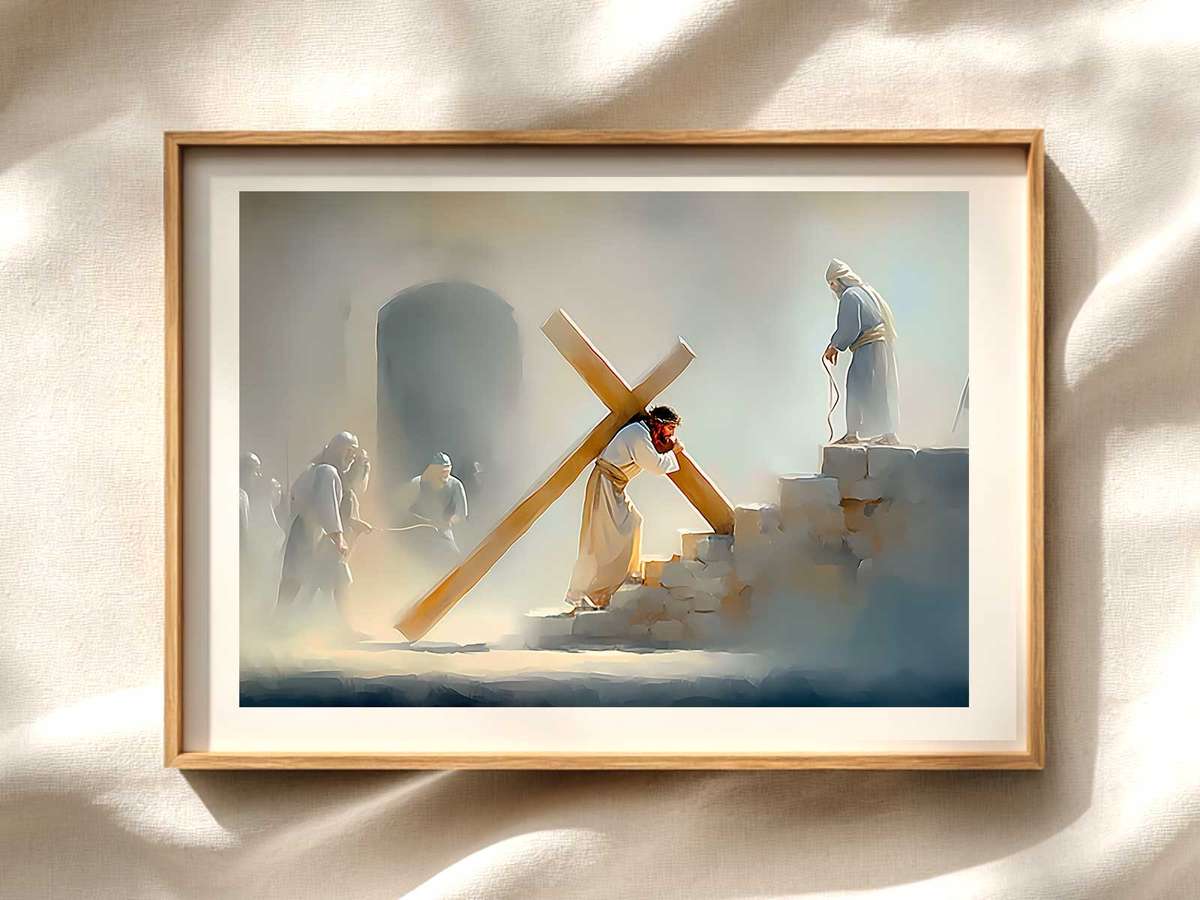
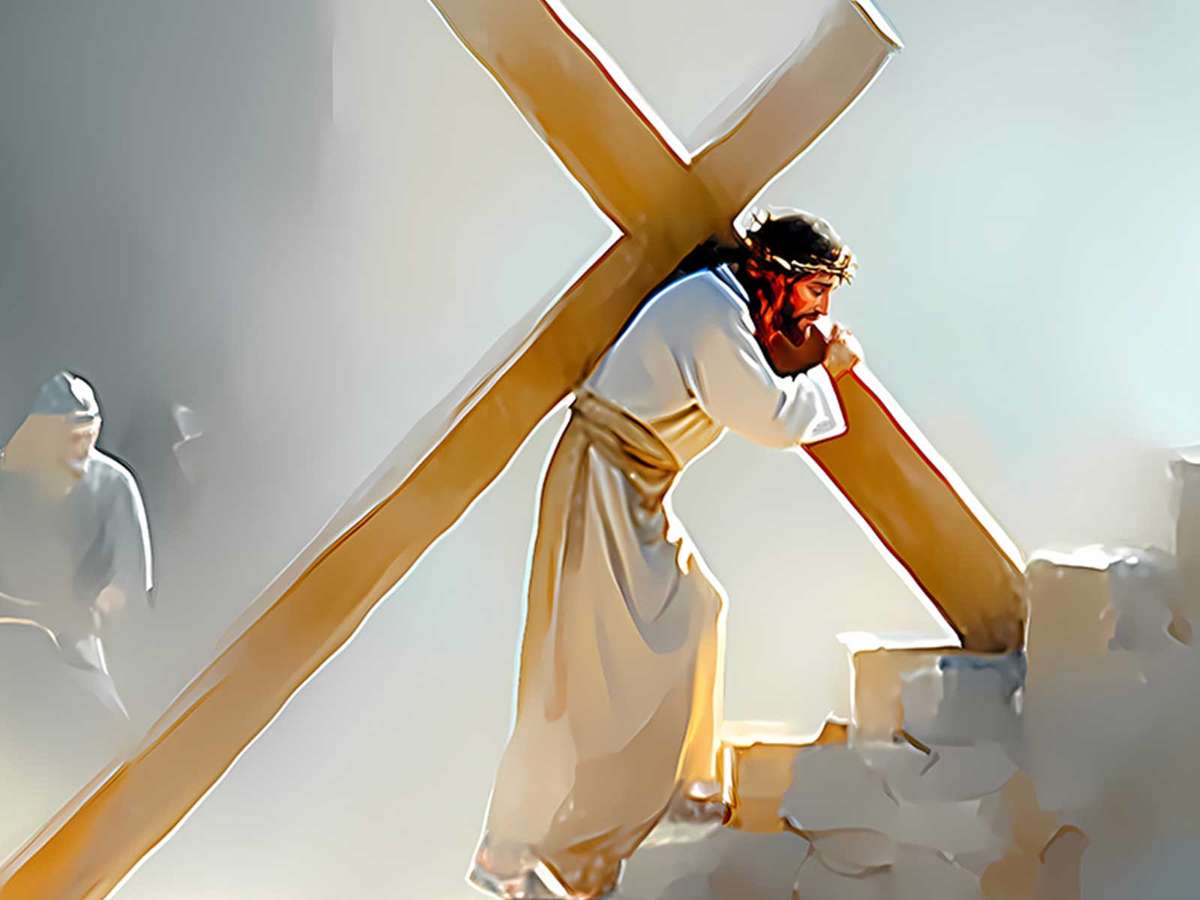
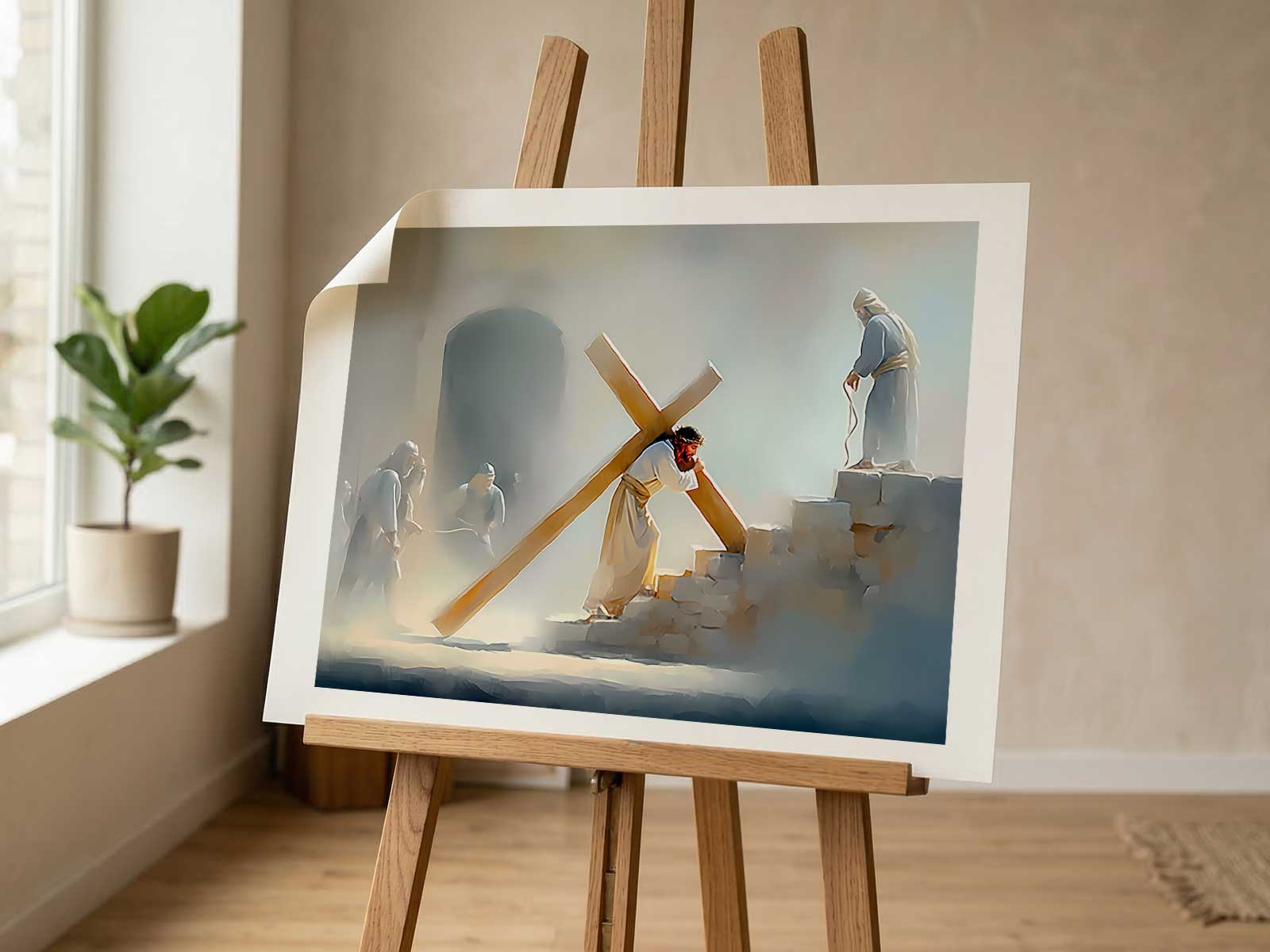
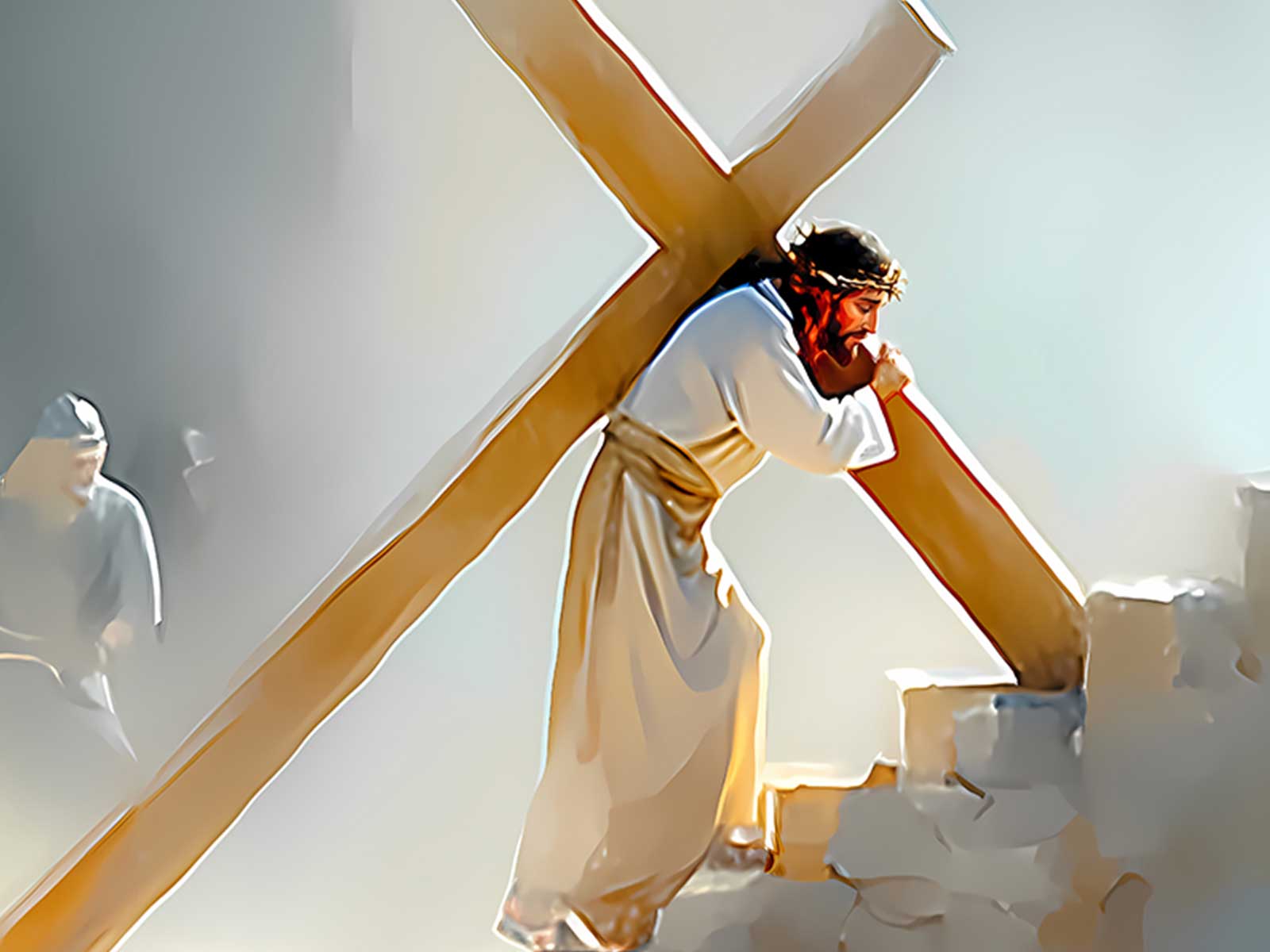
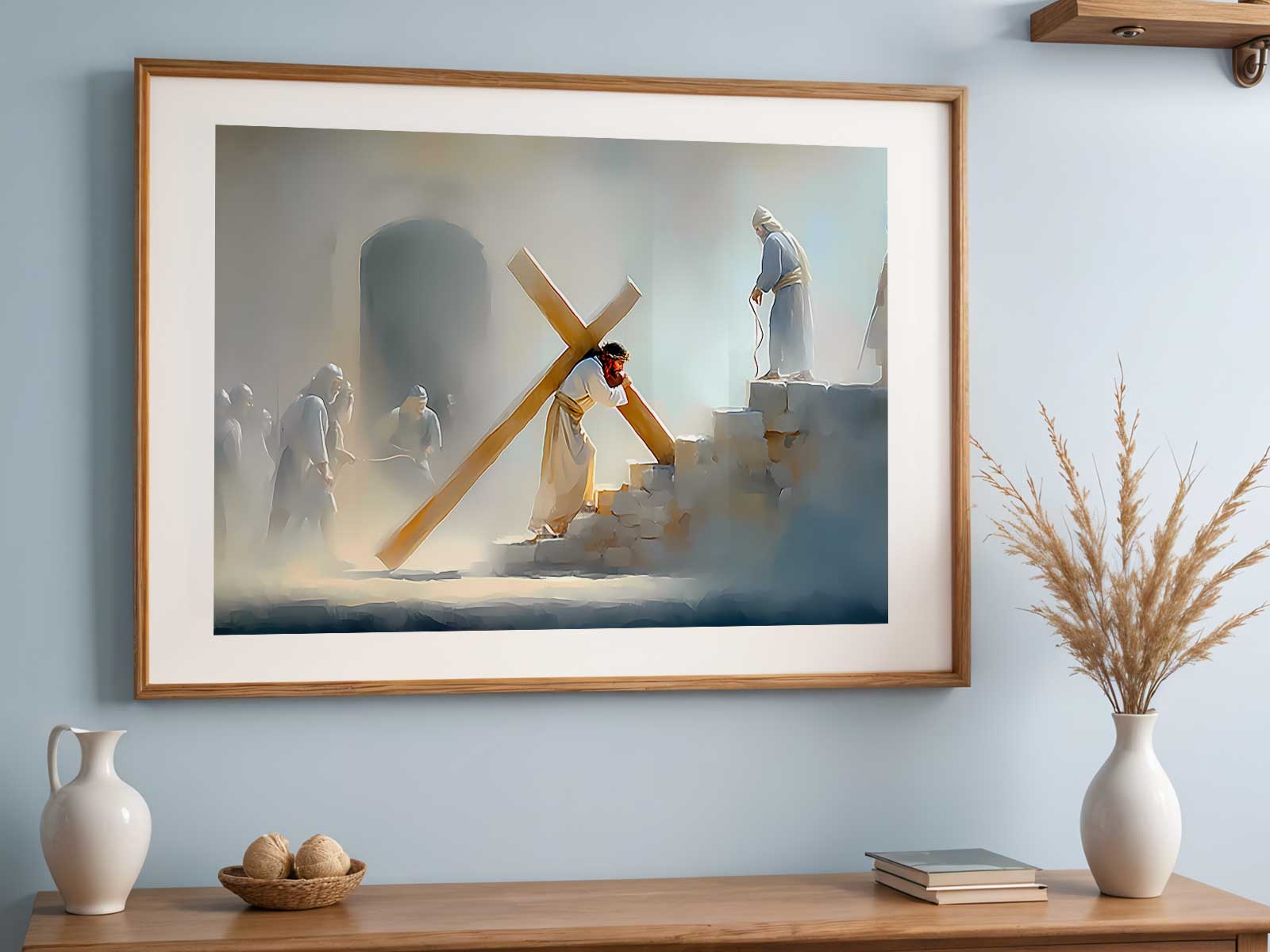
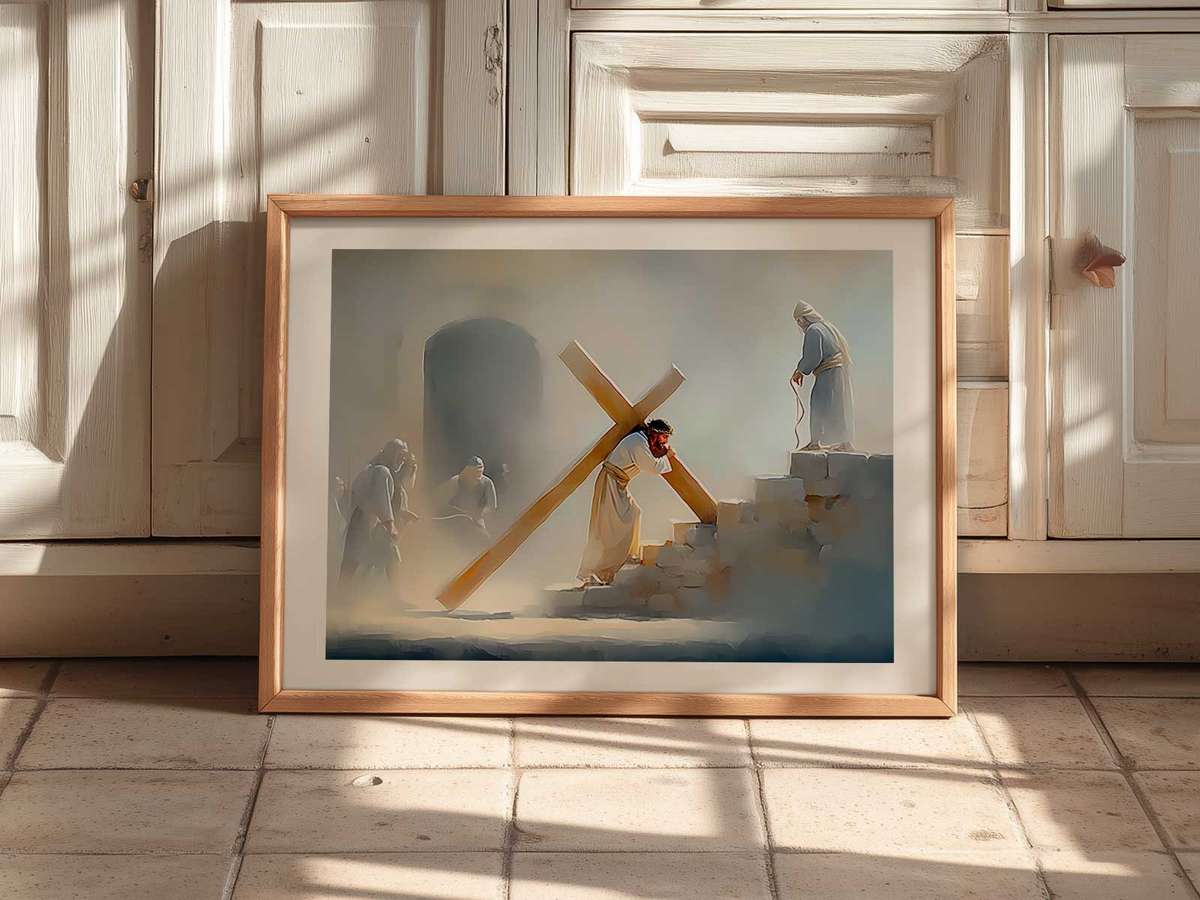
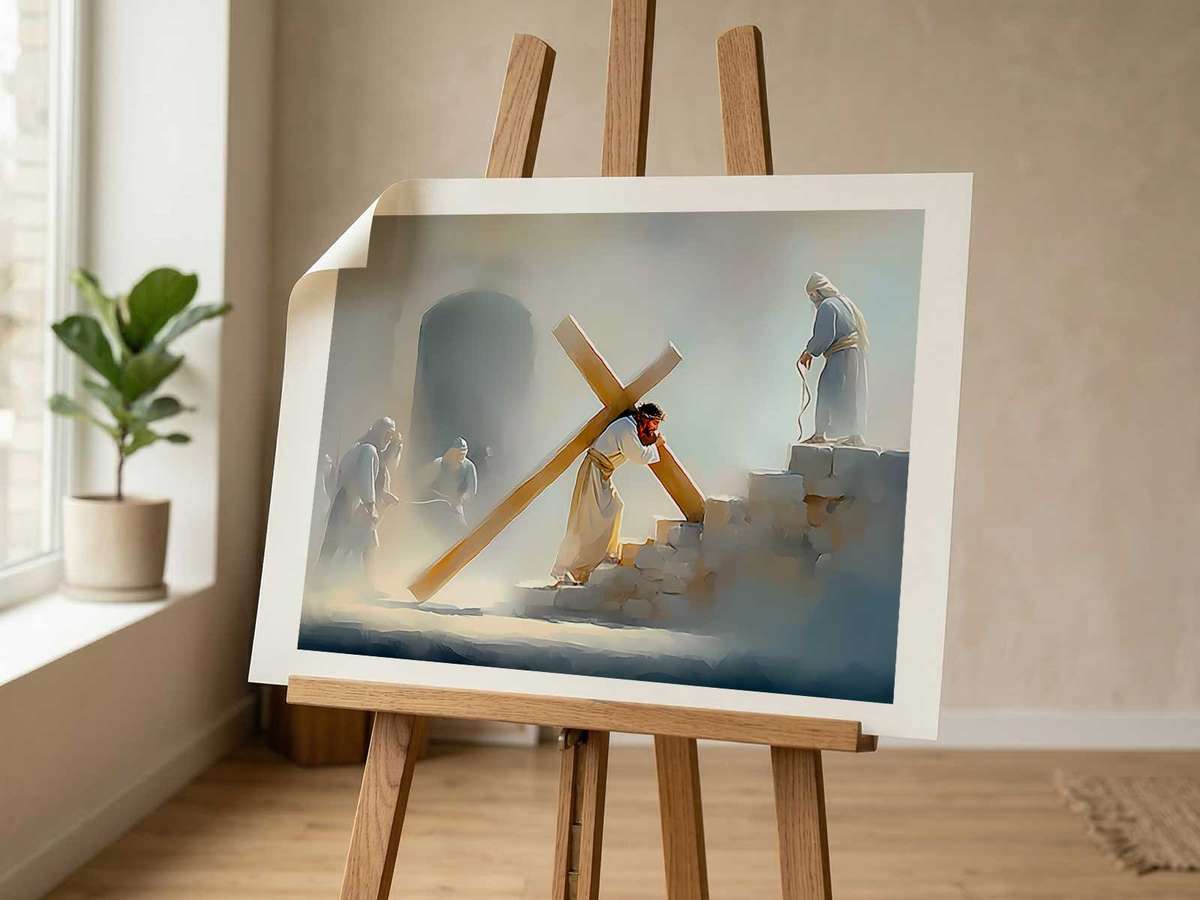
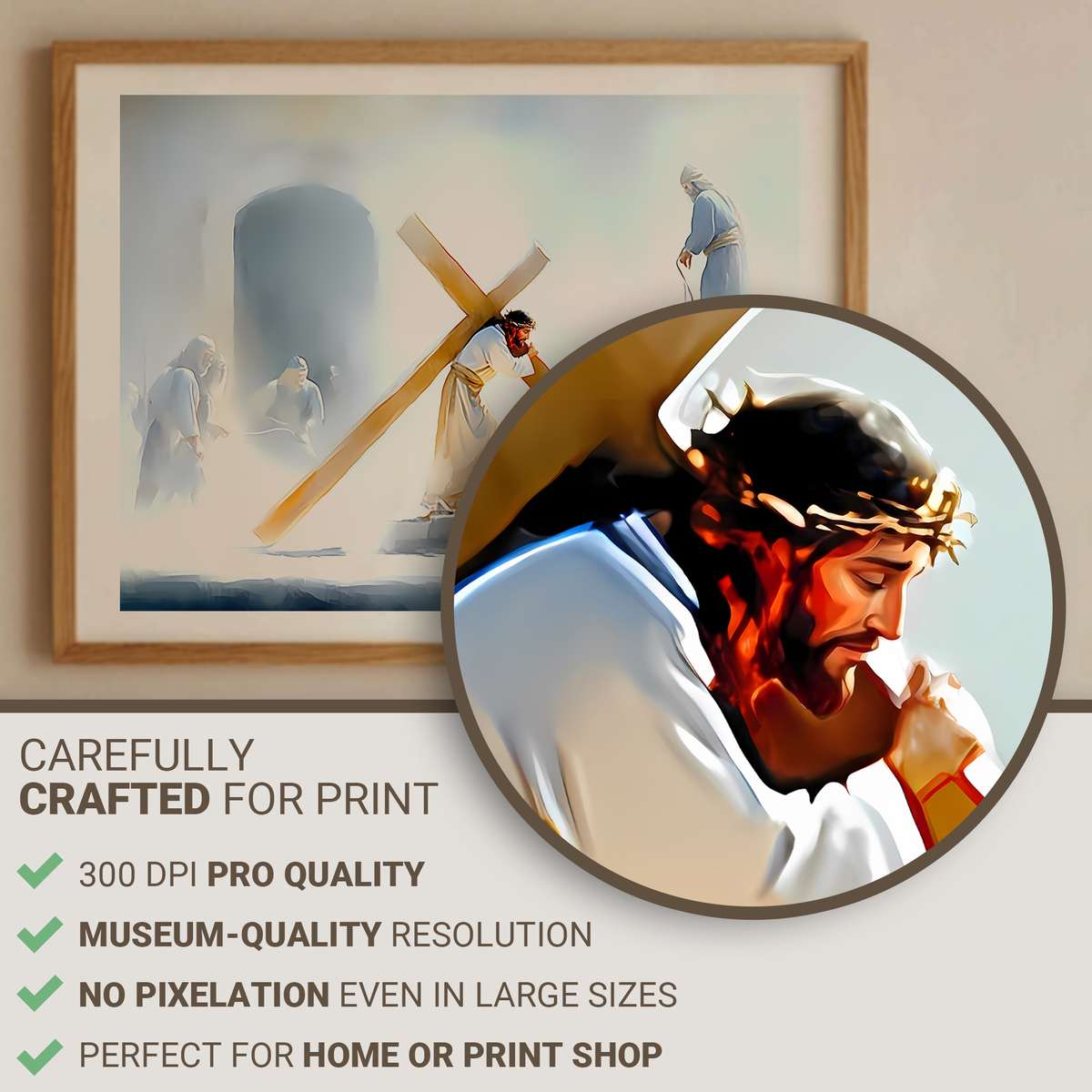
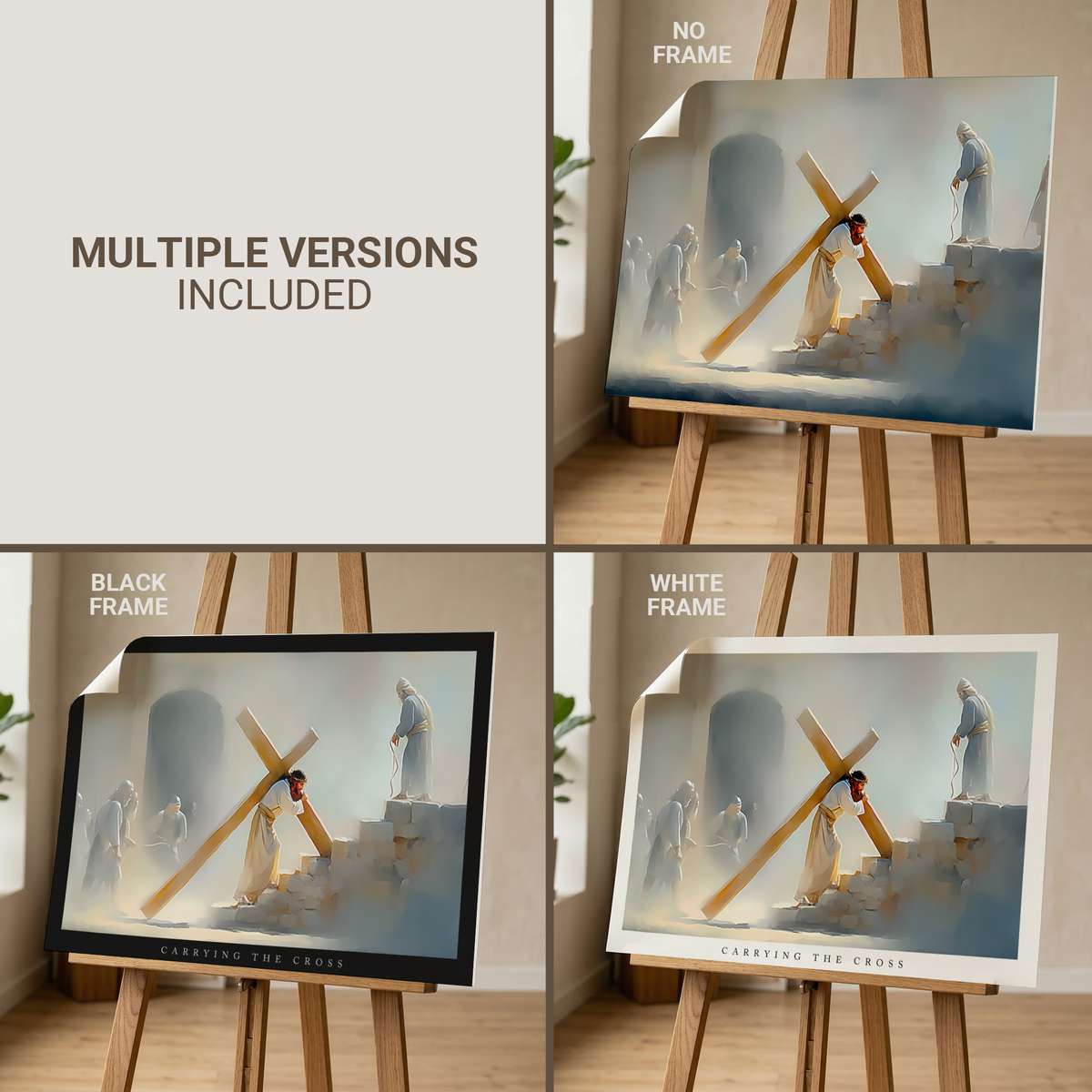
The image of the carrying of the cross presents a scene where fidelity is shown not only in dramatic motion but in patient, embodied loyalty. In this artwork Jesus is captured mid-journey, shoulders bent beneath the wood, face composed with a stillness that speaks of decision rather than only pain. That composed bearing — the way his hands hold the beam, the line of his profile, the set of his eyes — makes visible a fidelity that endures through suffering. As wall art, this is a devotion that invites contemplation rather than a single theatrical moment.
Visually, the piece asks a quiet, persistent attention. The palette and the treatment of light emphasize the figure’s inward focus: a soft glow around the head and a measured shadow on the road give the scene a prayerful hush. Small details matter here — the relaxed grip of fingers, the slope of the shoulders, the way a cloak may fall — because they turn physical strain into a gesture of steadfastness. These are the particulars that allow a living room or prayer corner to hold not just an image of sorrow, but a witness to fidelity that remains tender and human.
Devotional power in this depiction comes from restraint. The artist refuses excess dramatization and instead places the viewer close enough to feel invited into companionship. The gesture is not a spectacle but a call to stand with Christ through the ordinary work of bearing burdens. In a bedroom or study this quality translates into a steadying presence: you can return to the image in moments of weariness and find a visual model of endurance that is neither triumphant nor defeated, but loyally present.
On a wall, the composition creates a subtle focal point for prayer and reflection. The direction of movement in the scene — the forward incline, the road receding — suggests a pilgrimage rather than a frozen tableau. That forwardness offers a narrative of fidelity: suffering traversed rather than suffered for display. For a family room or entryway, it becomes a reminder of commitment seen through care, not spectacle; for a prayer corner it becomes an aid to meditative repetition, an image you can return to when words fail.
The emotional warmth of the work is found in its small humanizing touches. A hint of compassion in the tilt of the head, a suggestion of bystanders kept deliberately indistinct, or the simple rendering of hands and feet all invite a gentle, protective watching. These features make the piece suitable as a meaningful gift for someone in a season of trial or for a household seeking an image that holds sorrow and fidelity together without forcing an easy consolation.
Ultimately, this portrayal of the carrying of the cross belongs to rooms where faith is quietly lived. It does not demand performance; it offers a space for steady attention. Placed where household life moves around it, the image has a habit of softening hurried moments into prayerful ones, turning domestic walls into a place of reverent witness to Christ’s fidelity in suffering.



 ↧ Digital download
Famous Christ Painting Wall Art: The Transfiguration as Sign of...
Digital download
↧ Digital download
Famous Christ Painting Wall Art: The Transfiguration as Sign of...
Digital download
 ↧ Digital download
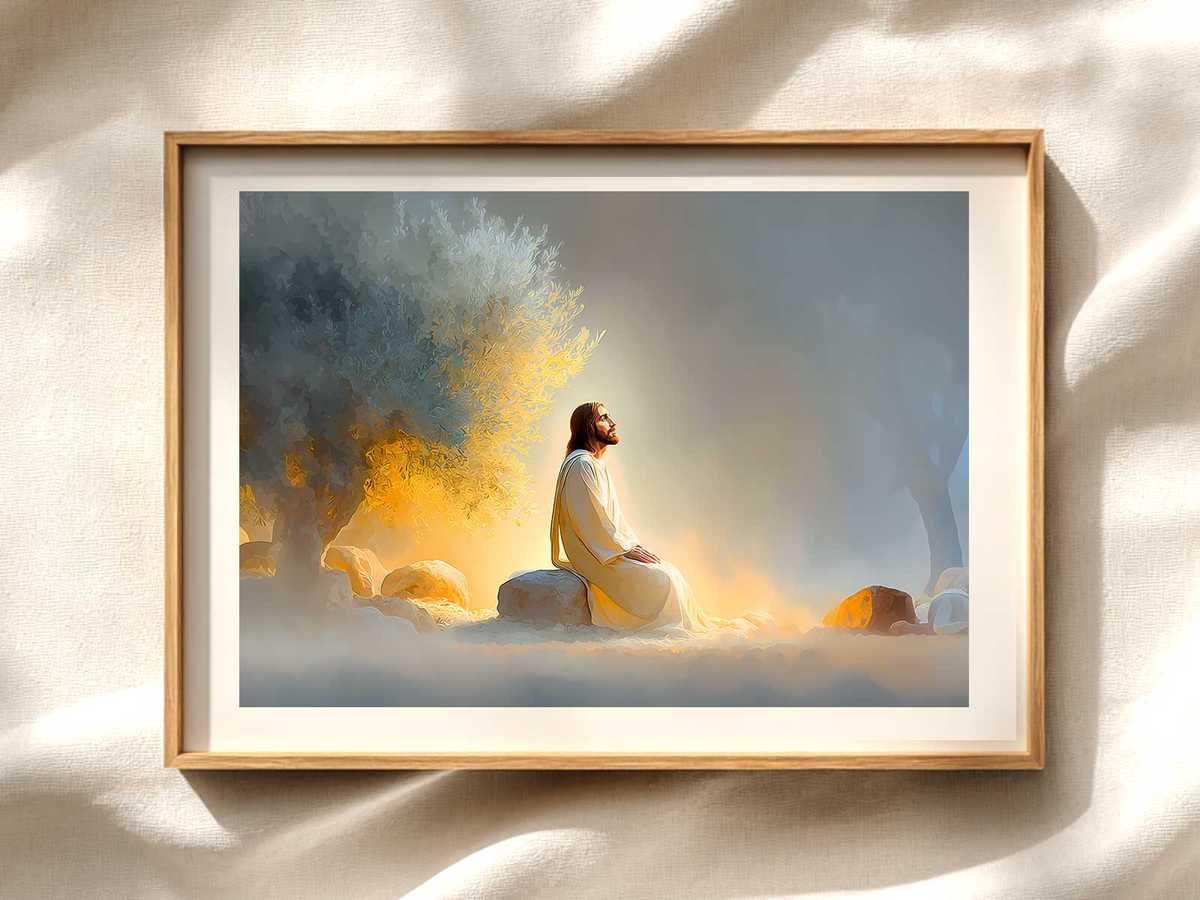
Gethsemane Drawing with Bible Verse Wall Art: A Quiet Companion for...
Digital download
↧ Digital download
Gethsemane Drawing with Bible Verse Wall Art: A Quiet Companion for...
Digital download
 ↧ Digital download
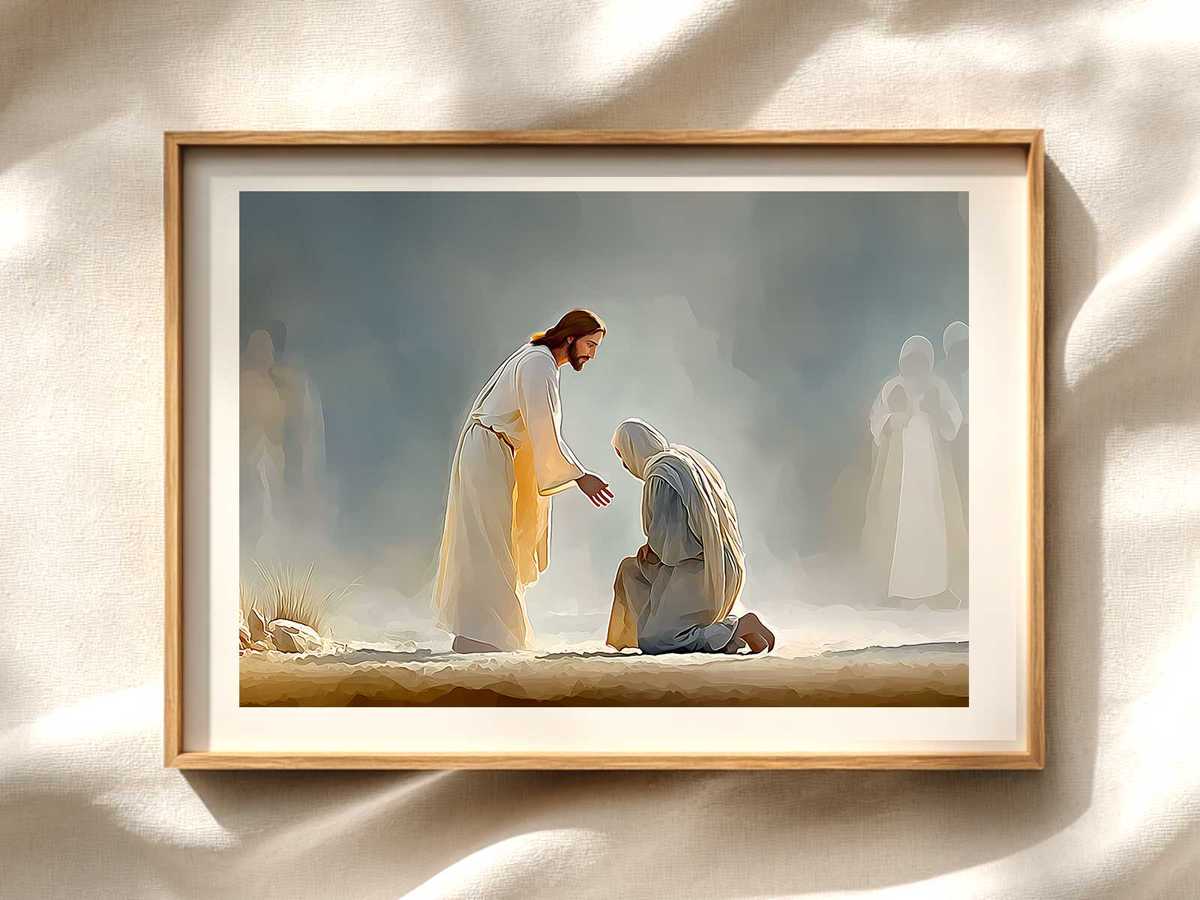
Jesus art: The Healing of the Leper — a Quiet Image to Anchor Home...
Digital download
↧ Digital download
Jesus art: The Healing of the Leper — a Quiet Image to Anchor Home...
Digital download
 ↧ Digital download
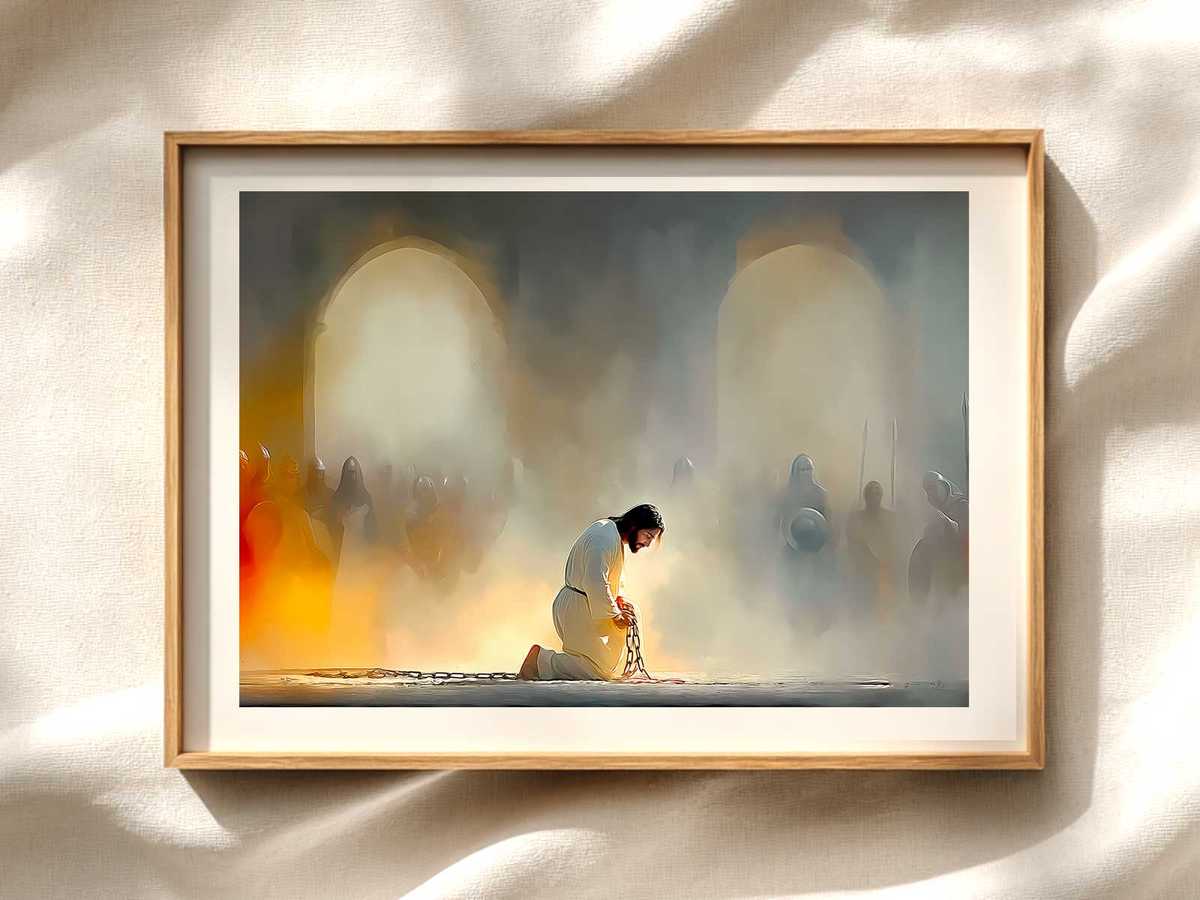
Drawings of Jesus Christ Print: The Trial and the Silent Dignity of...
Digital download
↧ Digital download
Drawings of Jesus Christ Print: The Trial and the Silent Dignity of...
Digital download