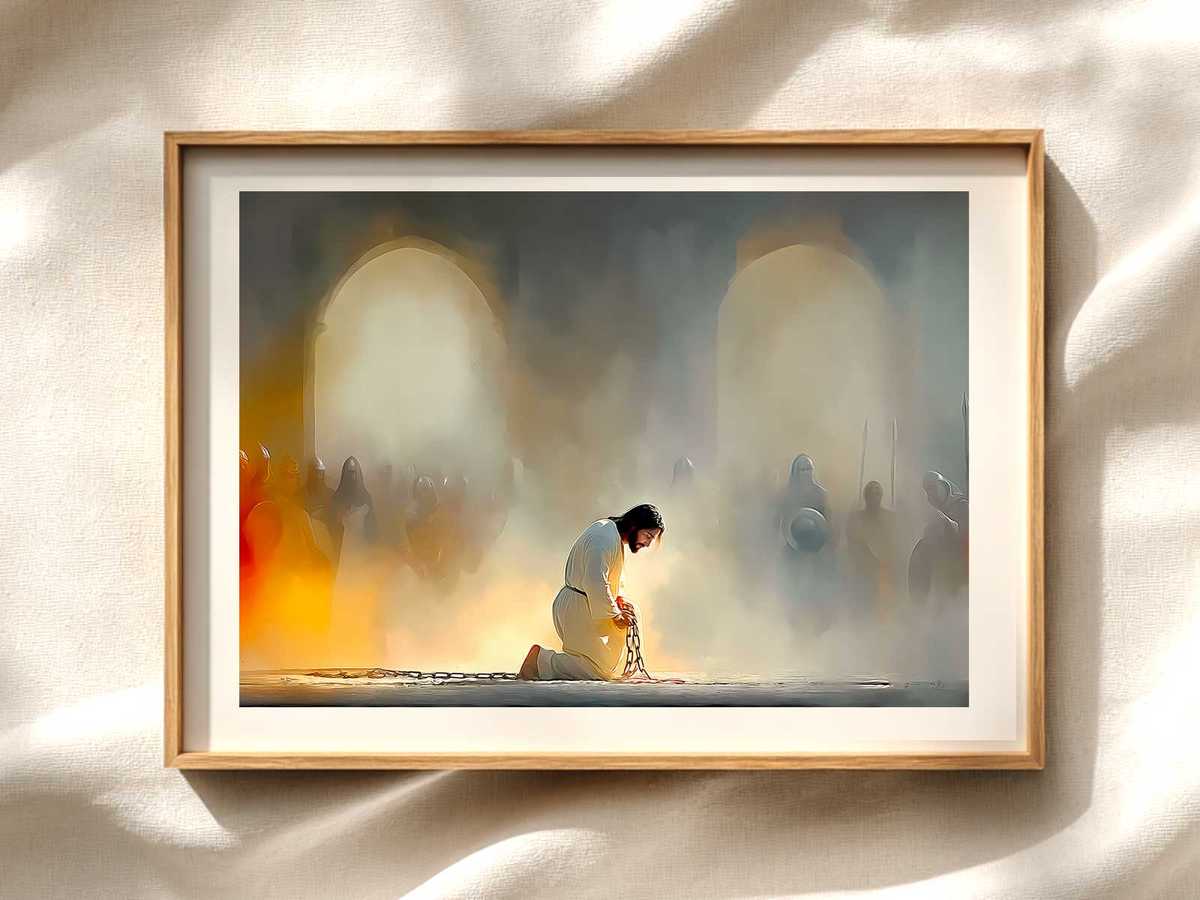
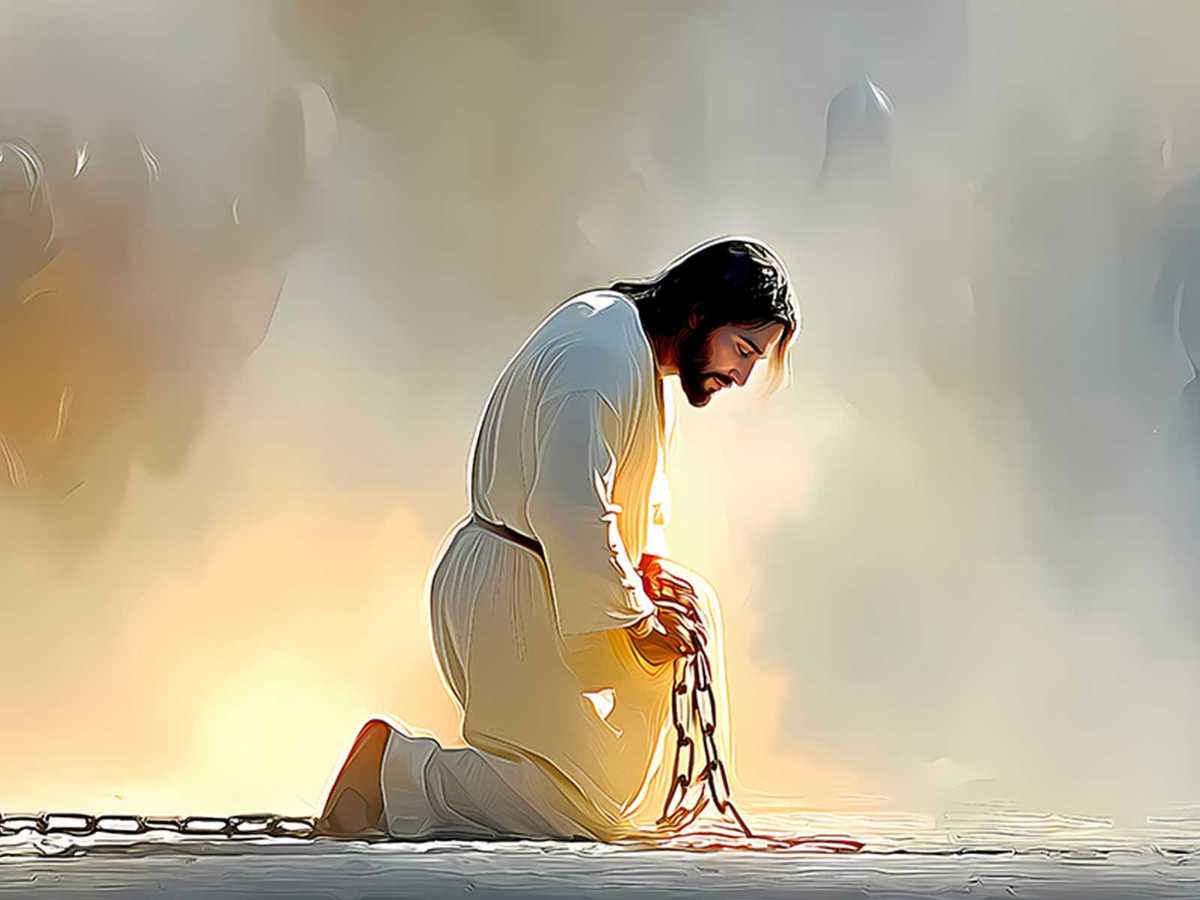
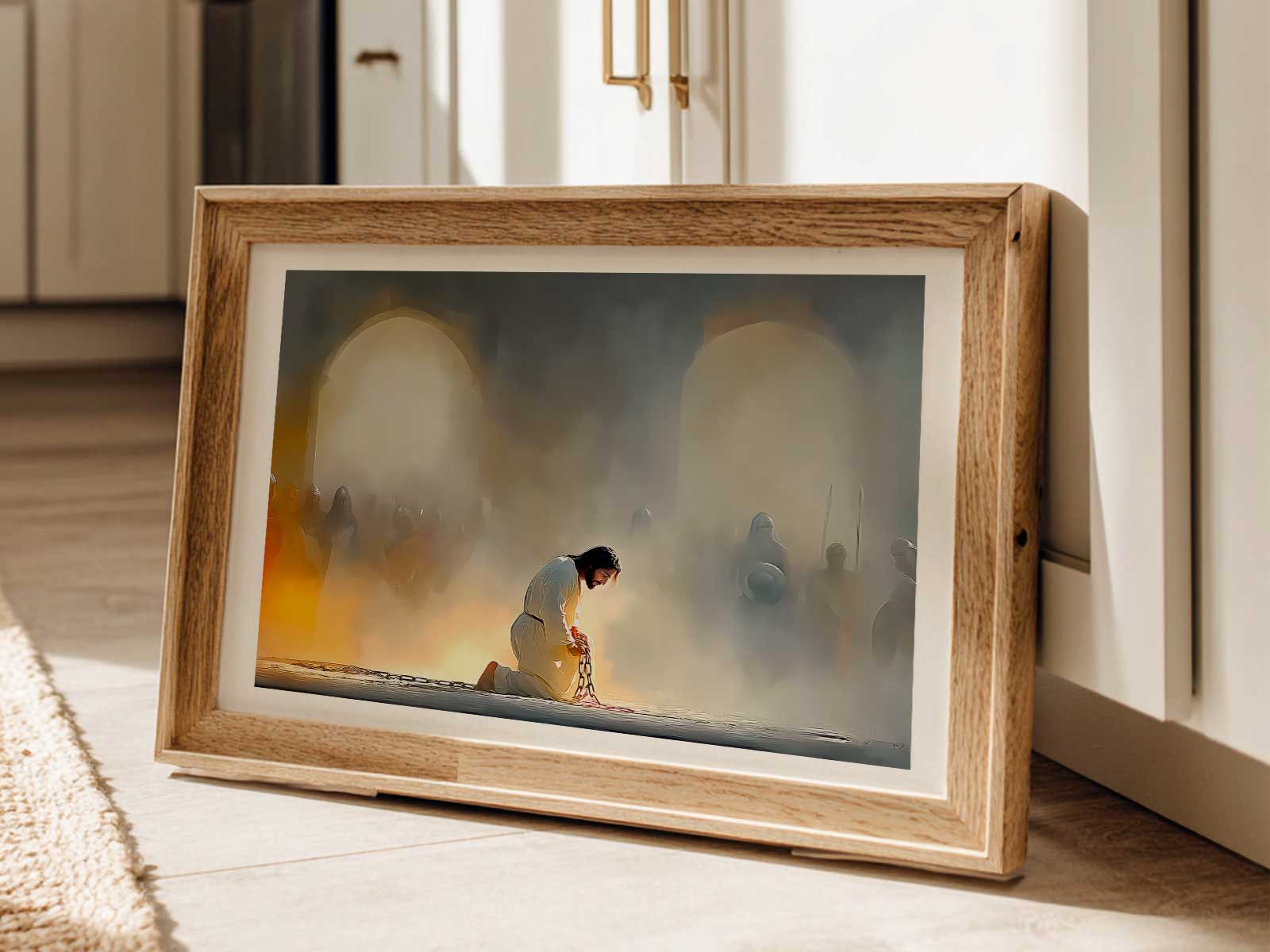
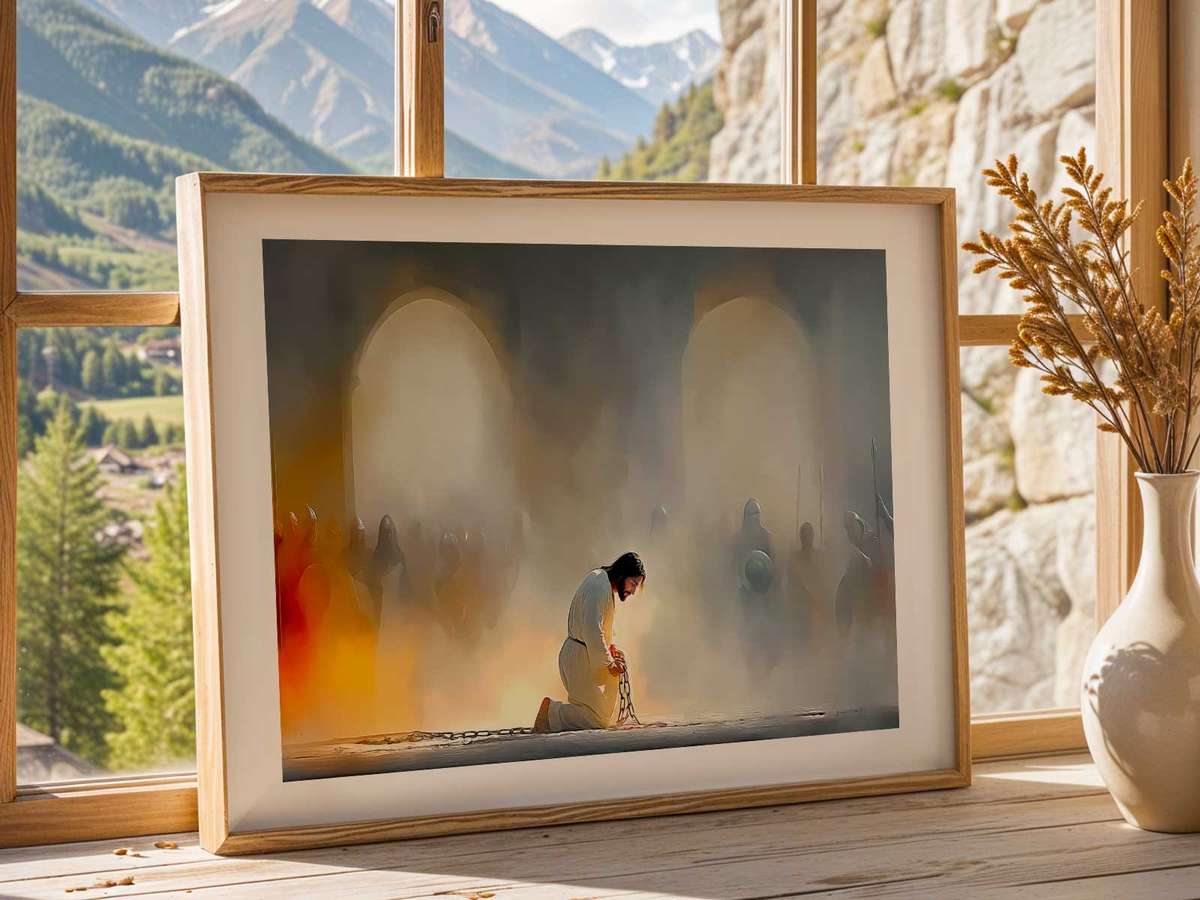
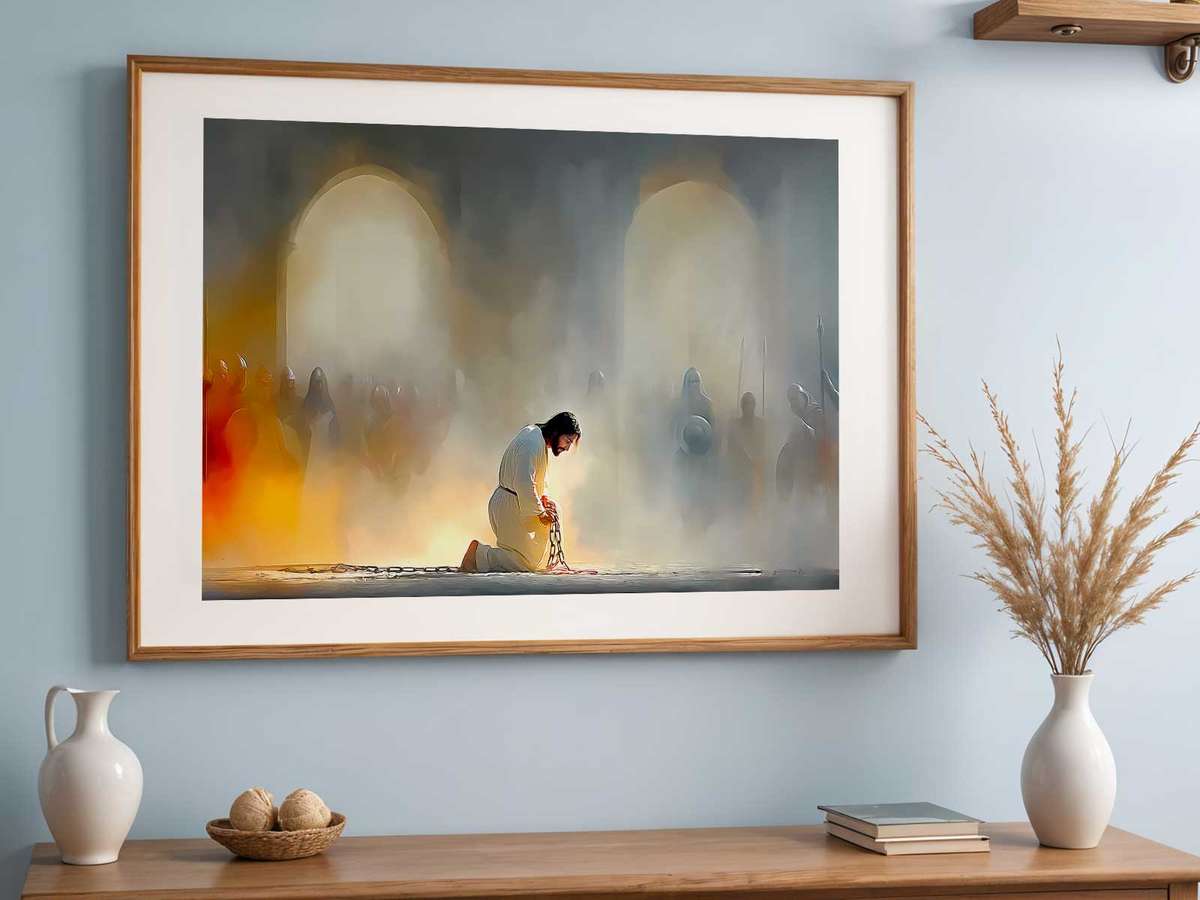
A drawing that stages the trial of Jesus need not be theatrical to be holy. In a work guided by sobriety of line and restraint of expression, the scene becomes less a spectacle and more a presence—Christ standing or seated in controlled posture, his face composed, the few strokes that define him asking the viewer to look rather than stare. This is a depiction that trusts silence: the thin contour of a cheek, the downturned tilt of a brow, an economy of shadow that suggests a crowd without reproducing it. Such restraint keeps the image from being performance and makes it an object for contemplation.
What gives this drawing its devotional charge is not drama but proportion. The artist pares away busy detail so that every mark acquires meaning. A simple suggestion of a robe falling, the faint line of hands perhaps folded or open, the subtle spacing between eyes and mouth—these elements offer room for prayer. A pared-back palette or monochrome ink allows the face to read as quiet and human rather than emblematic, inviting the home viewer to linger, to bring to the image their own petitions and sorrows without distraction.
Visually, the dignity of the unjustly judged Christ comes through posture and calmness rather than overt gestures. The figure’s bearing is measured; there is no exaggerated suffering staged for effect. Instead, the dignity comes from a composed profile, a steady gaze that refuses to be reduced to victimhood or triumphalism. In a living room, study, or prayer corner, that steadiness functions like a liturgical pause—an image that invites a slower breath and a refocusing of attention toward mercy and endurance.
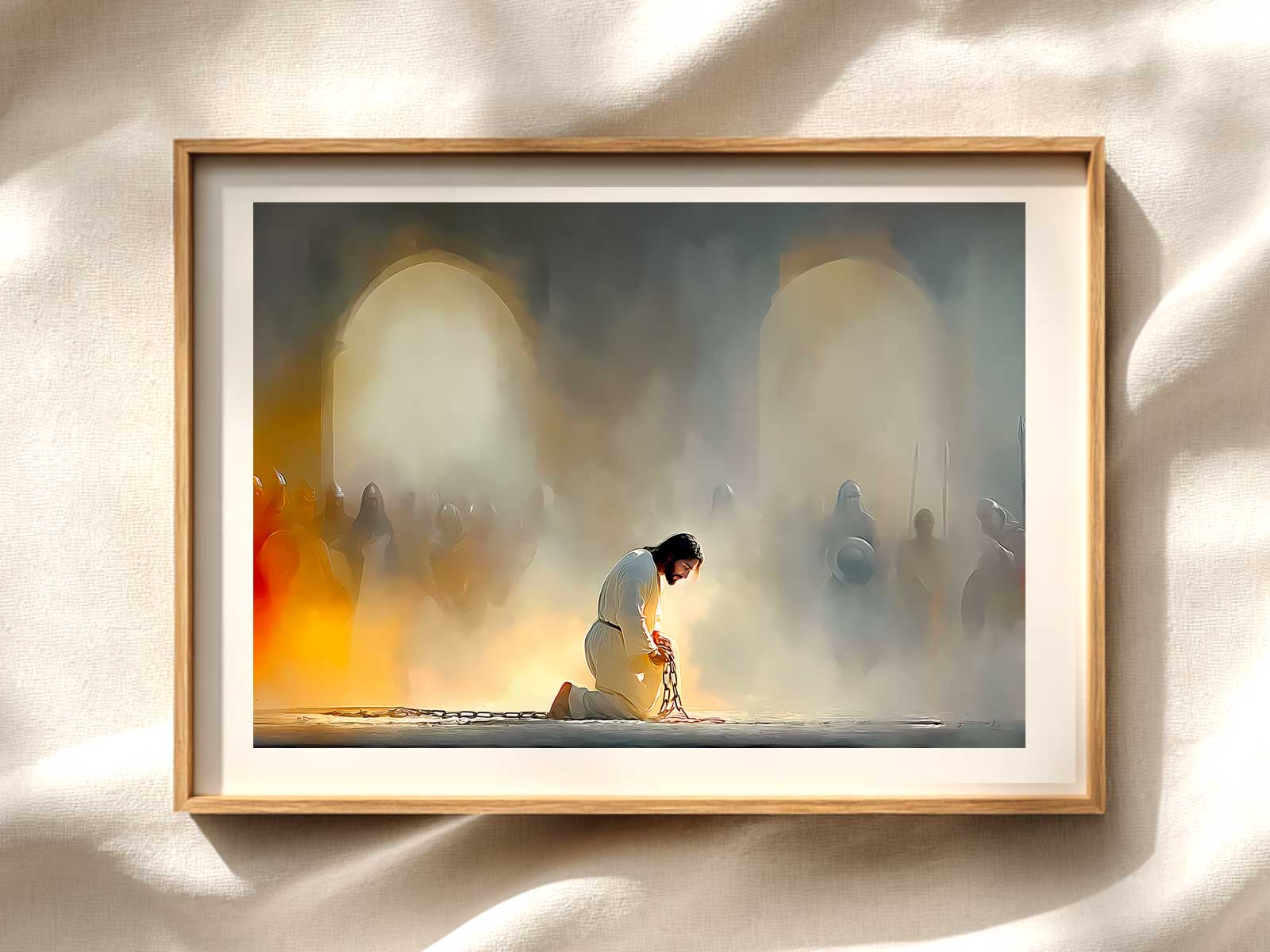
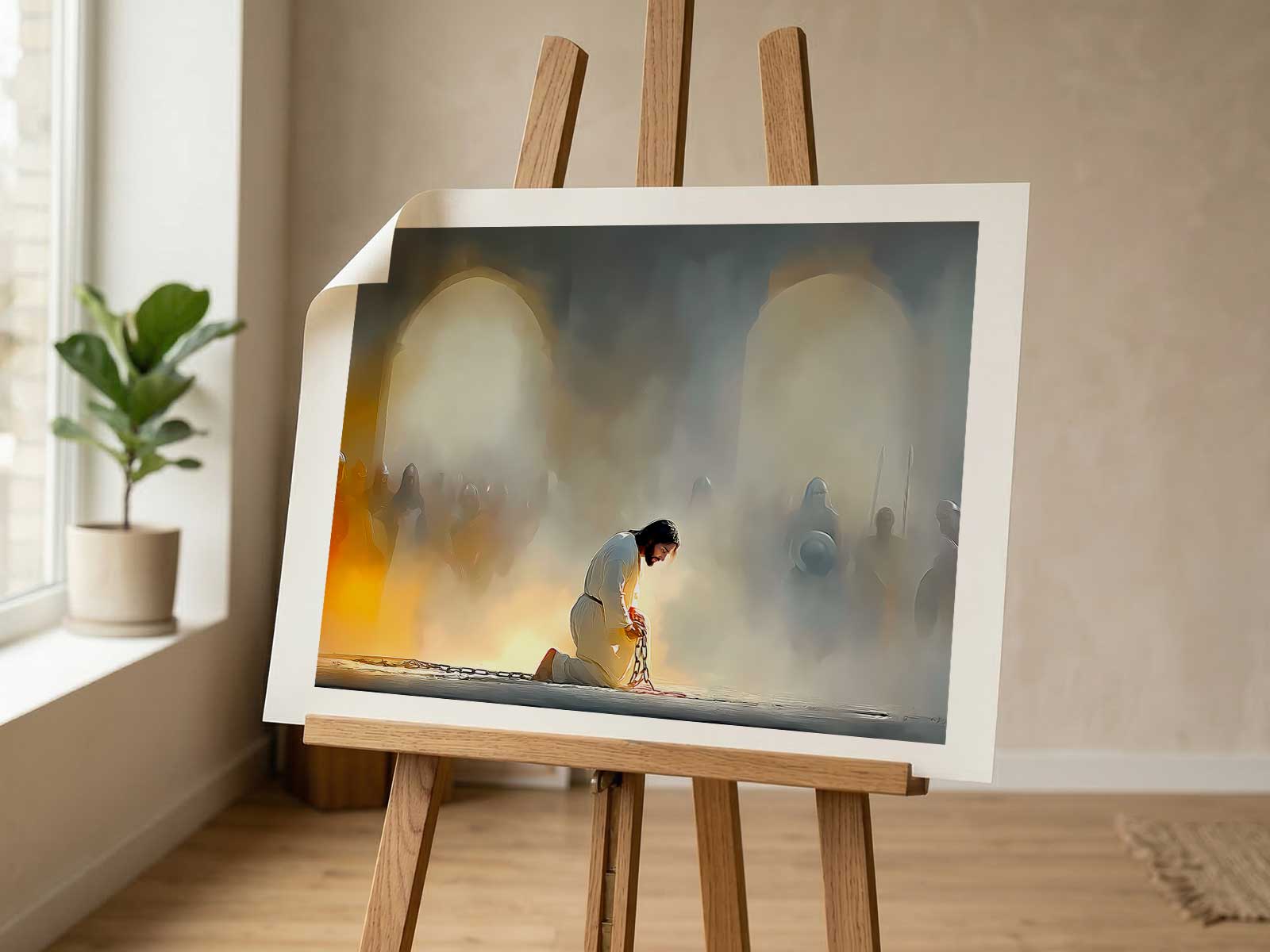
Because the composition privileges the face and the immediate space around it, the drawing works well at human scale. Hung above a modest console, beside a bedside lamp, or within a quiet niche, the image adapts to domestic light and accumulates meaning through daily encounter. Where an ornate picture might compete with furnishings, the economy of this drawing complements a calm interior; its presence reads as an invitation to private reflection rather than a pronouncement on a wall.
The devotional appeal also lies in how the scene suggests rather than narrates. There is enough context to recognize the moment—an unjust judgment, the silent integrity of Christ—but the surrounding figures and architecture recede into suggestion. This allows the viewer to bring their own experience into the frame: grief, repentance, solidarity, or simply the desire to sit in stillness with a sacred face. As a gift for someone beginning a season of prayer or for a household seeking a quietly Christian presence, the drawing communicates care by encouraging contemplative attention rather than commanding an emotional response.
Ultimately, a drawing of the trial rendered with restrained line and a subdued face becomes a daily sacrament of looking: a small altar of seeing that reshapes a room by reminding its occupants of patience, witness, and the dignity that can exist even under injustice. Its power is not in illustration but in invitation—an invitation to stop, to breathe, and to keep company with a figure who endures without spectacle.





 ↧ Digital download
Jesus Art: The Miraculous Catch as a Quiet Call to Trust
Digital download
↧ Digital download
Jesus Art: The Miraculous Catch as a Quiet Call to Trust
Digital download
 ↧ Digital download
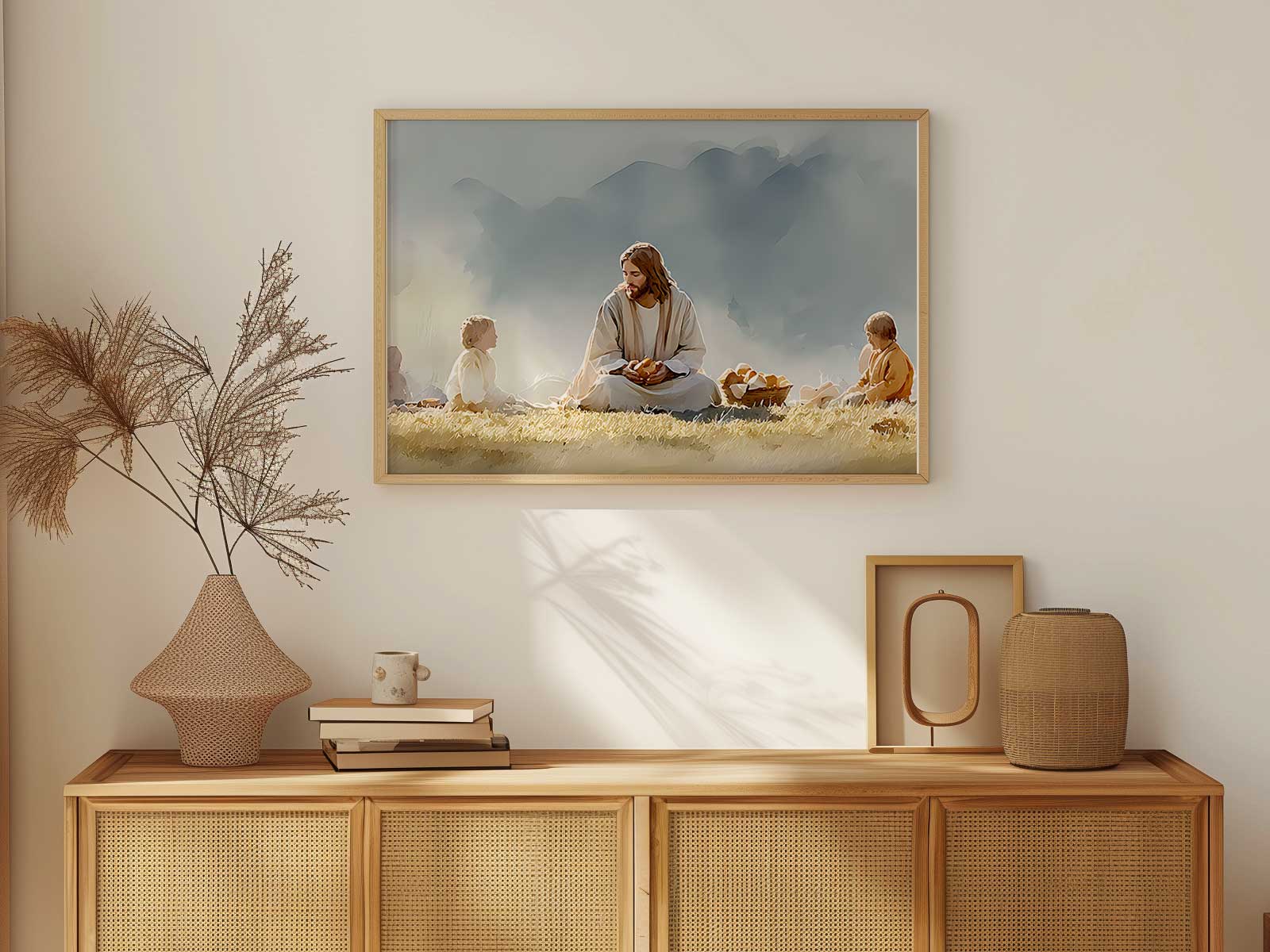
Christian Wall Art: Feeding the Five Thousand and Trust in Providence
Digital download
↧ Digital download
Christian Wall Art: Feeding the Five Thousand and Trust in Providence
Digital download
 ↧ Digital download
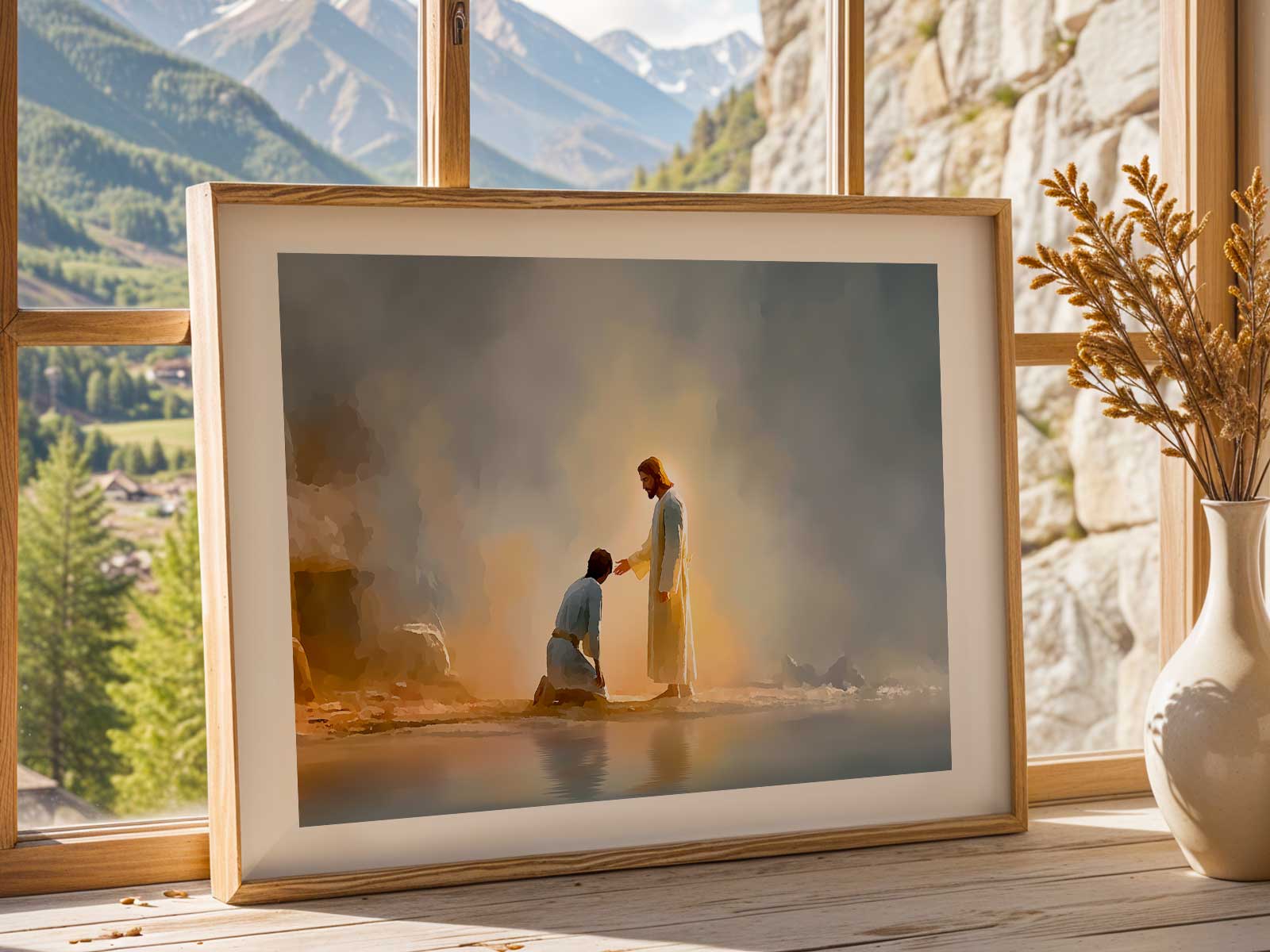
Drawings of Jesus Christ Wall Art: A Sobriety of Line for the Scene...
Digital download
↧ Digital download
Drawings of Jesus Christ Wall Art: A Sobriety of Line for the Scene...
Digital download
 ↧ Digital download
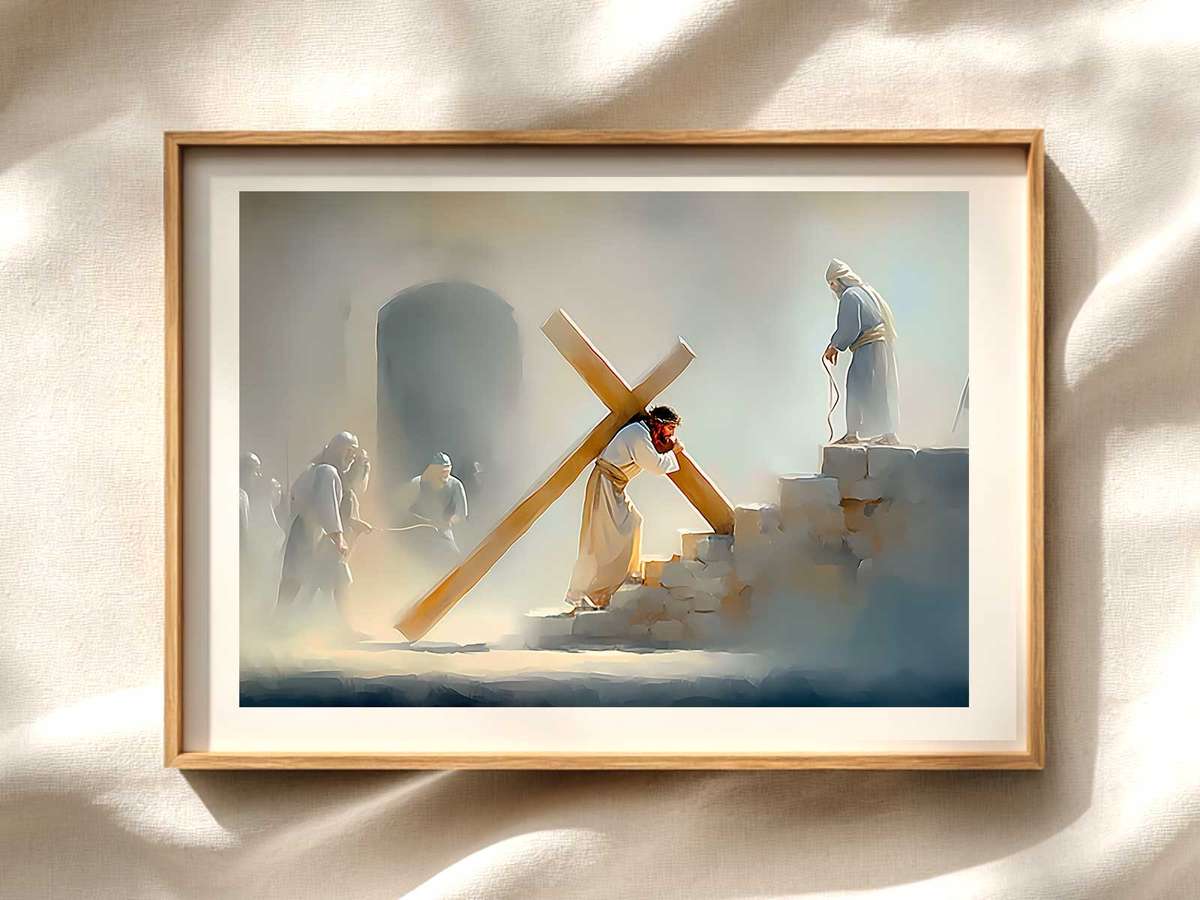
Art of Jesus on the Cross: The Carrying of the Cross and Christ’s...
Digital download
↧ Digital download
Art of Jesus on the Cross: The Carrying of the Cross and Christ’s...
Digital download