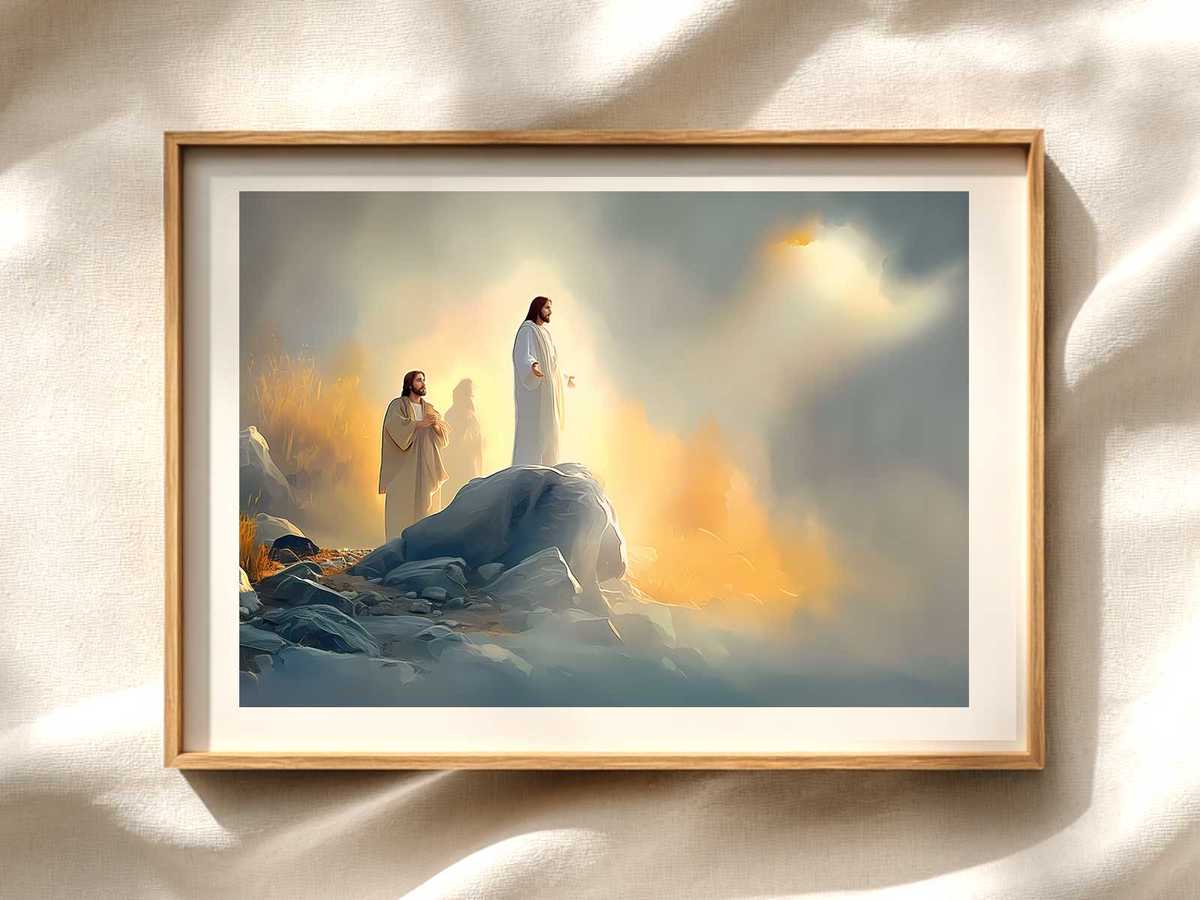
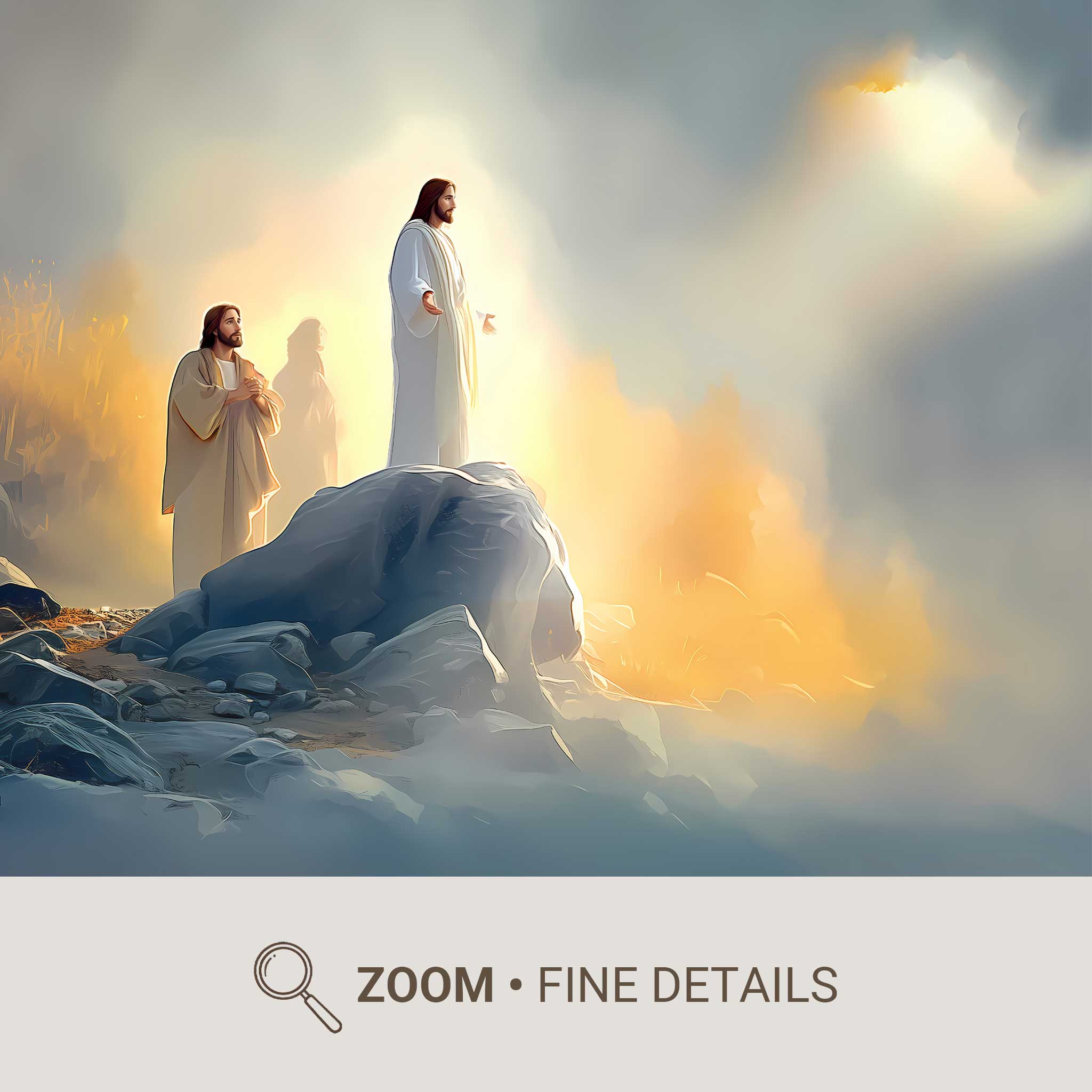
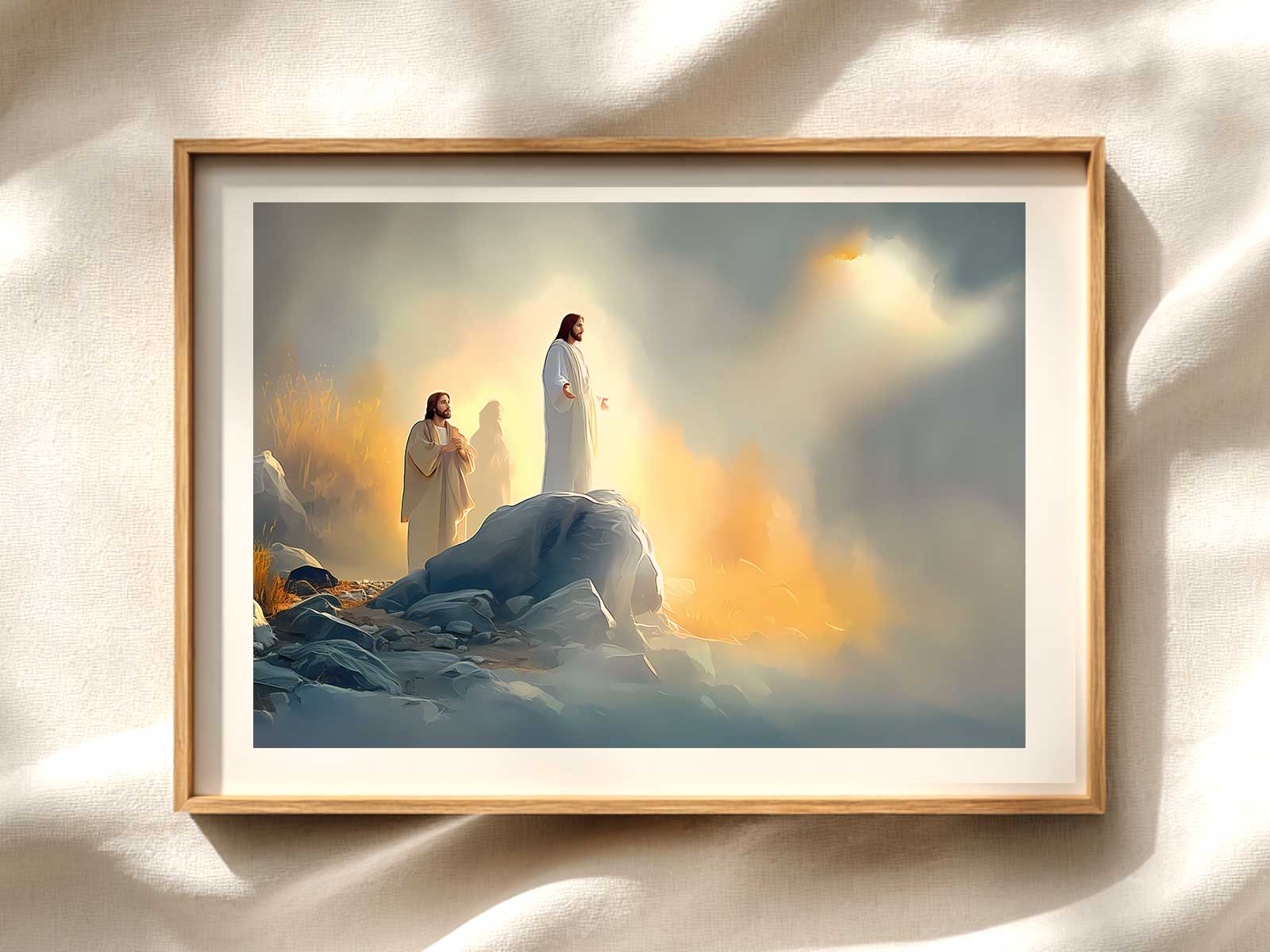
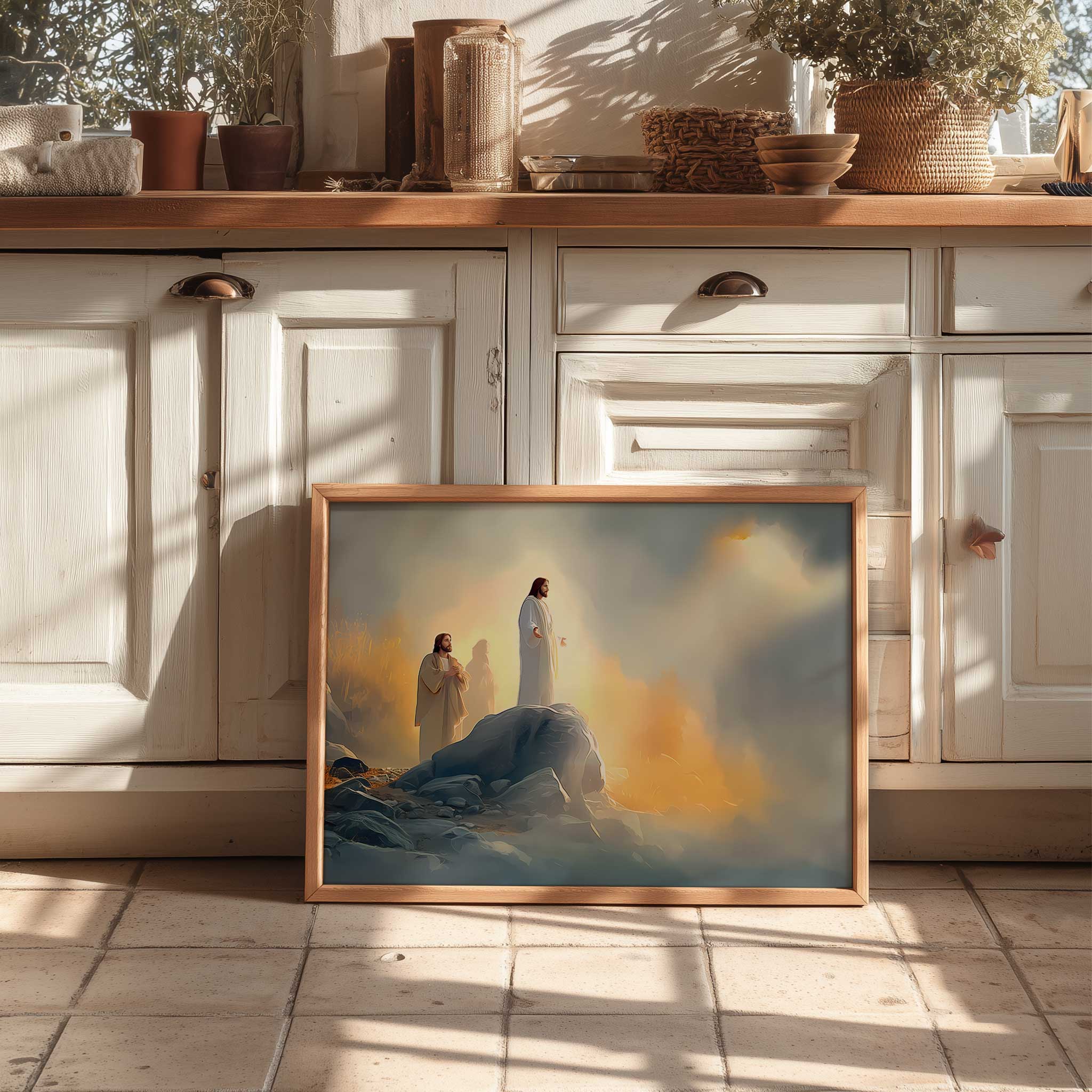
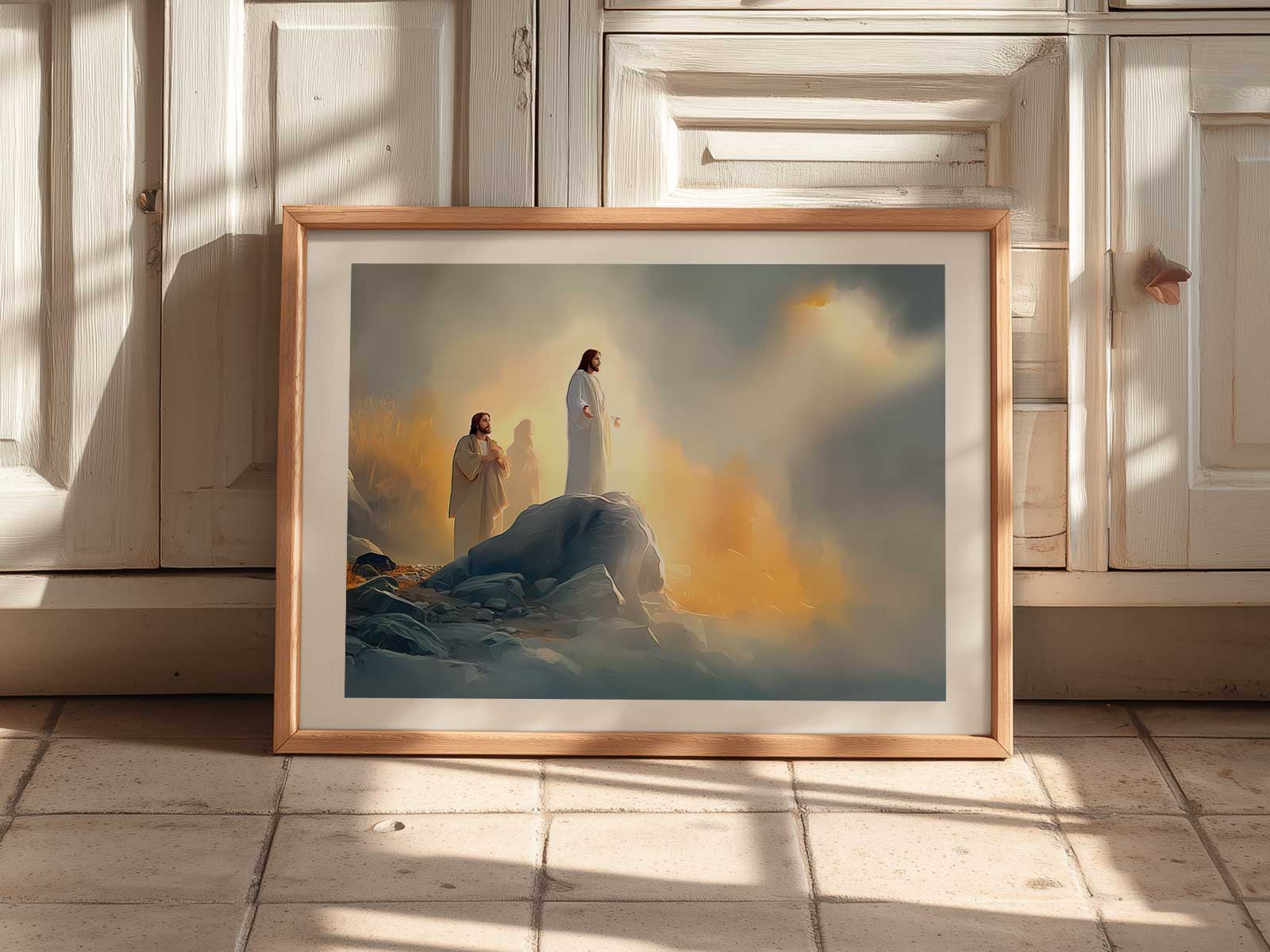
The Transfiguration is often known as a famous Christ painting, but when read as a single, restrained sign it offers a different invitation: not spectacle, but a concentrated language of light, elevation and the posture of the Son being heard. A wall art piece that takes this moment as its guiding symbol does not try to copy a museum scene; it reduces the story to essentials so the eye and the heart can settle. The primary gesture is luminosity — a softened, central radiance that suggests victory over shadow without shouting. This glow is the primary shape of the composition, set against quiet negative space so the light reads as both triumph and intimate presence.
Visually the work favors an economy of means. Instead of detailed figures and crowded landscape, the piece places an upward sweep of light at its center, framed by two darker planes that imply height and ascent. That contrast — bright center, muted edges — is what makes the symbol feel like a sign rather than a scene. It translates the theological feeling of glorification into something domestic: a vertical axis that draws the eye up, an emblem of elevation that fits above a mantel, in a prayer corner, or near a bedroom window where morning light will echo the painting’s own quiet brilliance.
There is also a listening posture encoded into the design. The glow is not theatrical; it leans slightly forward, as if addressing a single listener. This subtle tilt invites the occupant of a room to receive rather than to admire. It explains why such a piece works well in a study or a small chapel nook: the image is conversational rather than decorative. It rewards stillness with a sense that something essential has been spoken and heard, and it preserves the humility of encounter even as it commemorates a revealed glory.
[IMAGE_INSERT_ARTICLE_01]
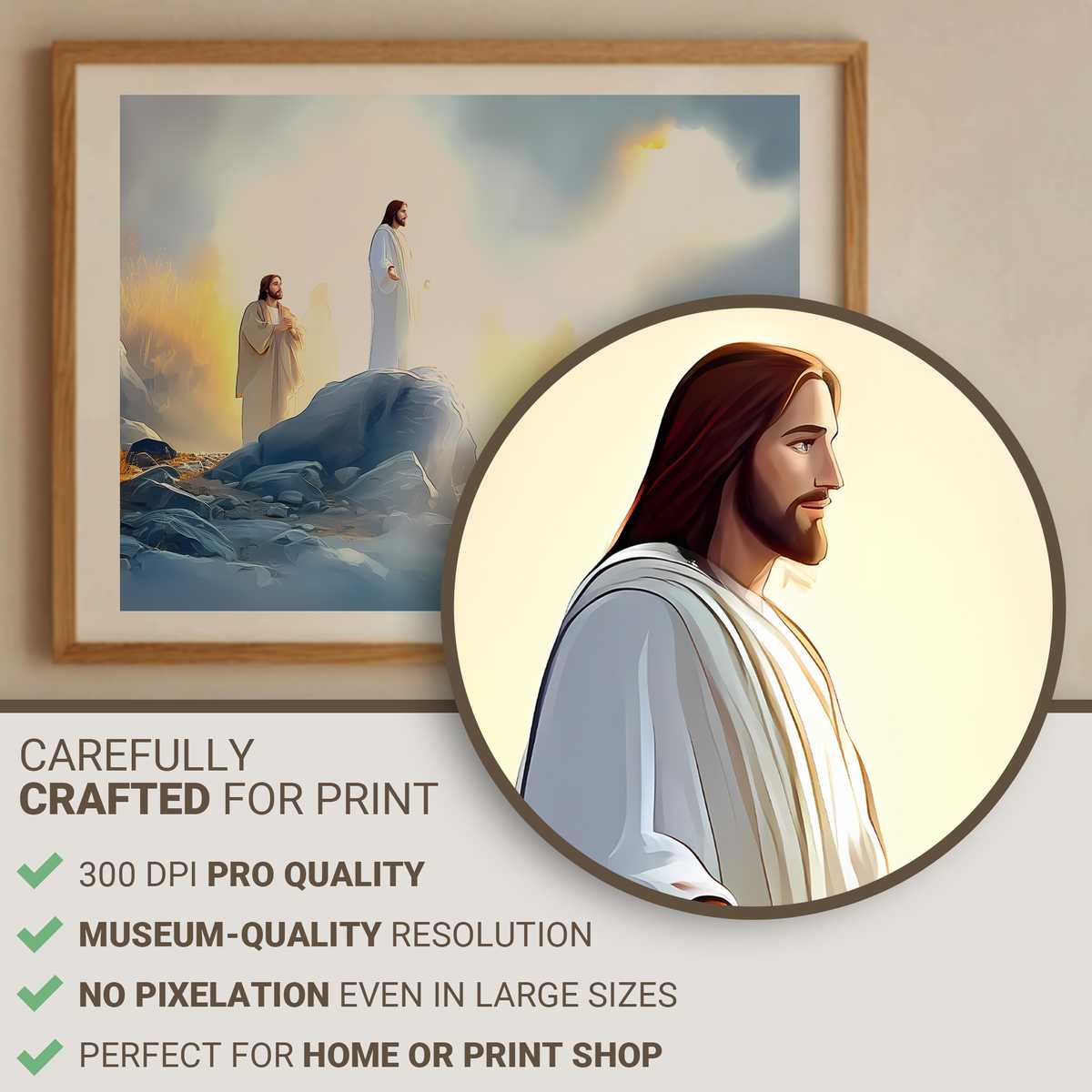
The material treatment is intentionally restrained. Textural suggestions — soft brush-like transitions, a whisper of gilded tone at the core — allow the light to feel tactile without becoming ornate. Those touches keep the symbol approachable, neither remote nor trivialized. The limited palette ensures the work complements a quiet interior scheme; it will not compete with furniture or family photographs but will provide a visual axis that organizes the room around a spiritual center.
Emotionally, the piece balances consolation and challenge. The radiance reads as victory because it overcomes surrounding dusk, yet the composition’s humility reminds viewers that glory in Christian vision often appears alongside listening and obedience. That doubled note — elevation paired with attention — is what allows the Transfiguration symbol to traverse centuries of Christian painting and still speak freshly in a modern home. It asks less for doctrinal explanation than for a habit of looking and receiving.
As a gift, the work speaks to those who need a steadying presence: someone beginning a new season, a family marking a baptism or a birthday, a friend facing uncertainty. In private use, it frames times of prayer and reflection without dictating ritual. In public rooms it anchors conversation with a quiet story: not of artistic celebrity, but of a radiant sign that calls the household upward and inward at once.





 ↧ Digital download
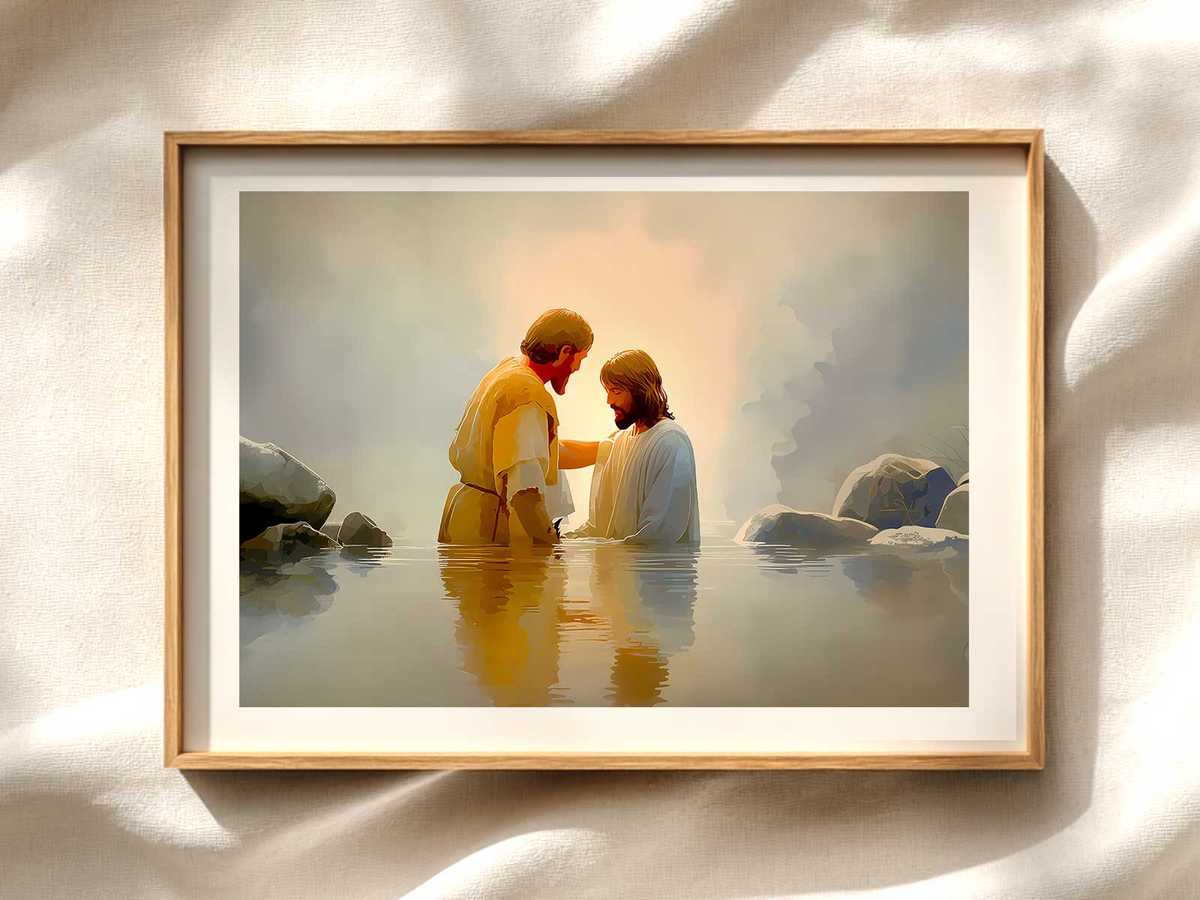
Baptism of Christ painting — a sacred print for quiet devotion at home
Digital download
↧ Digital download
Baptism of Christ painting — a sacred print for quiet devotion at home
Digital download
 ↧ Digital download
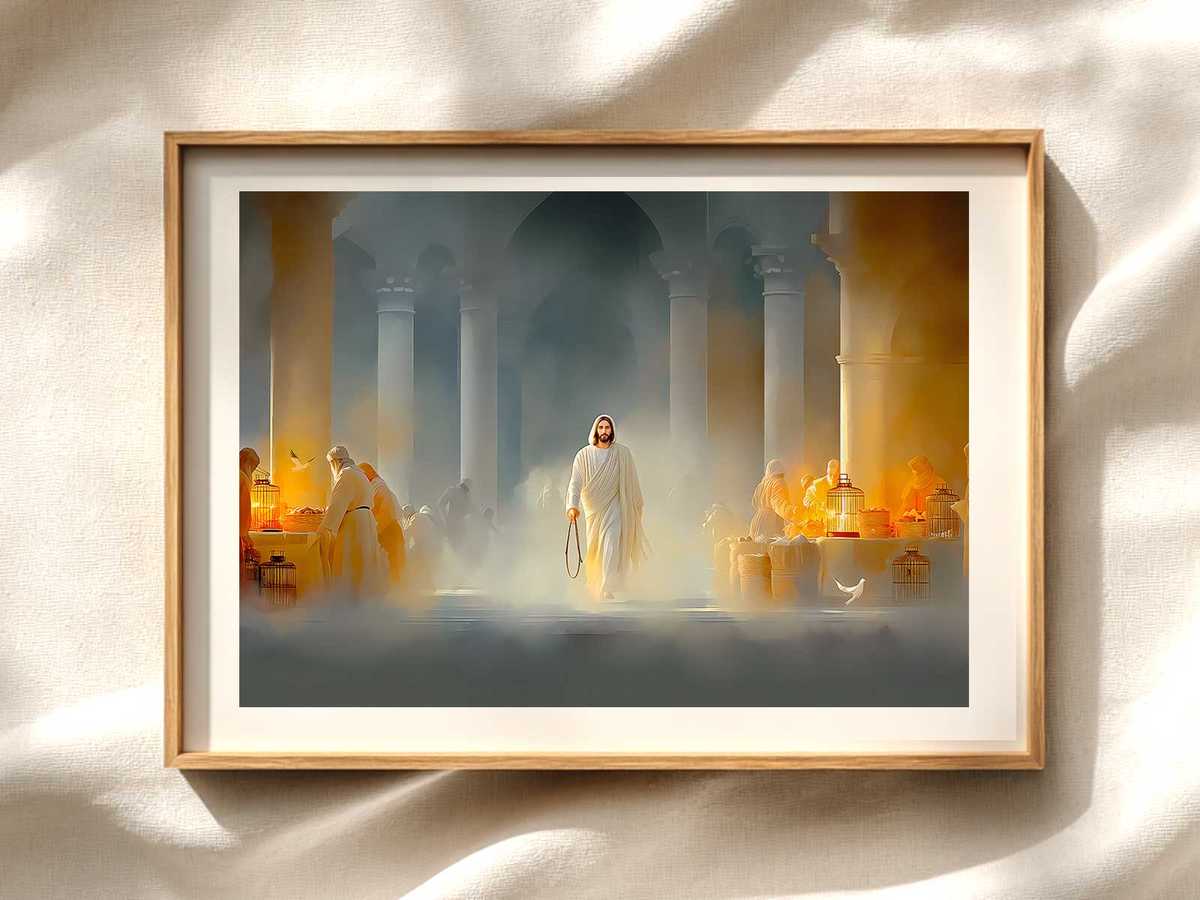
Drawings of Jesus Christ Print: The Purification of the Temple...
Digital download
↧ Digital download
Drawings of Jesus Christ Print: The Purification of the Temple...
Digital download
 ↧ Digital download
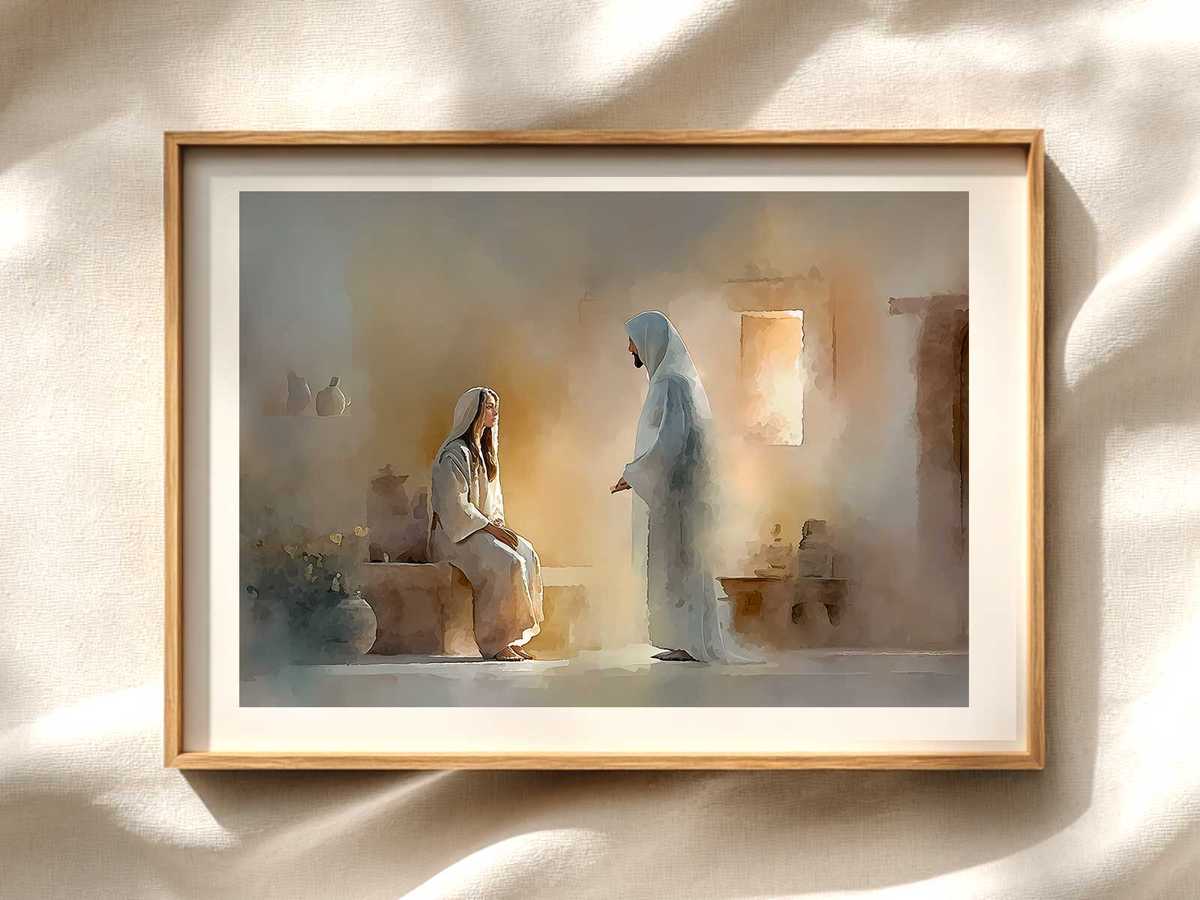
Early Painting of Jesus: The Annunciation and Incarnation in...
Digital download
↧ Digital download
Early Painting of Jesus: The Annunciation and Incarnation in...
Digital download
 ↧ Digital download
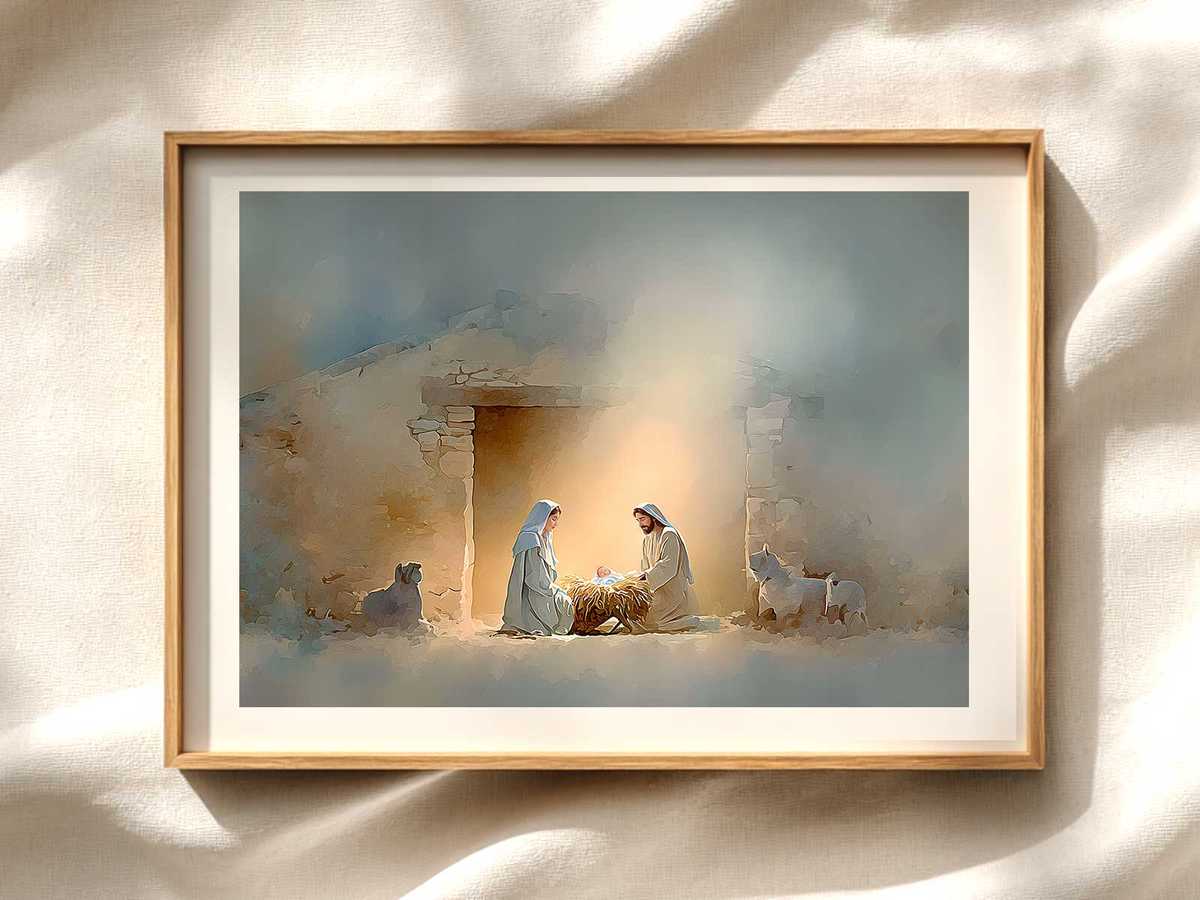
Earliest Painting of Jesus: The Nativity’s Quiet Thread Through...
Digital download
↧ Digital download
Earliest Painting of Jesus: The Nativity’s Quiet Thread Through...
Digital download