Christian Symbols Explained: Cross, Fish, Dove, Lamb, Light, Crown of Thorns…
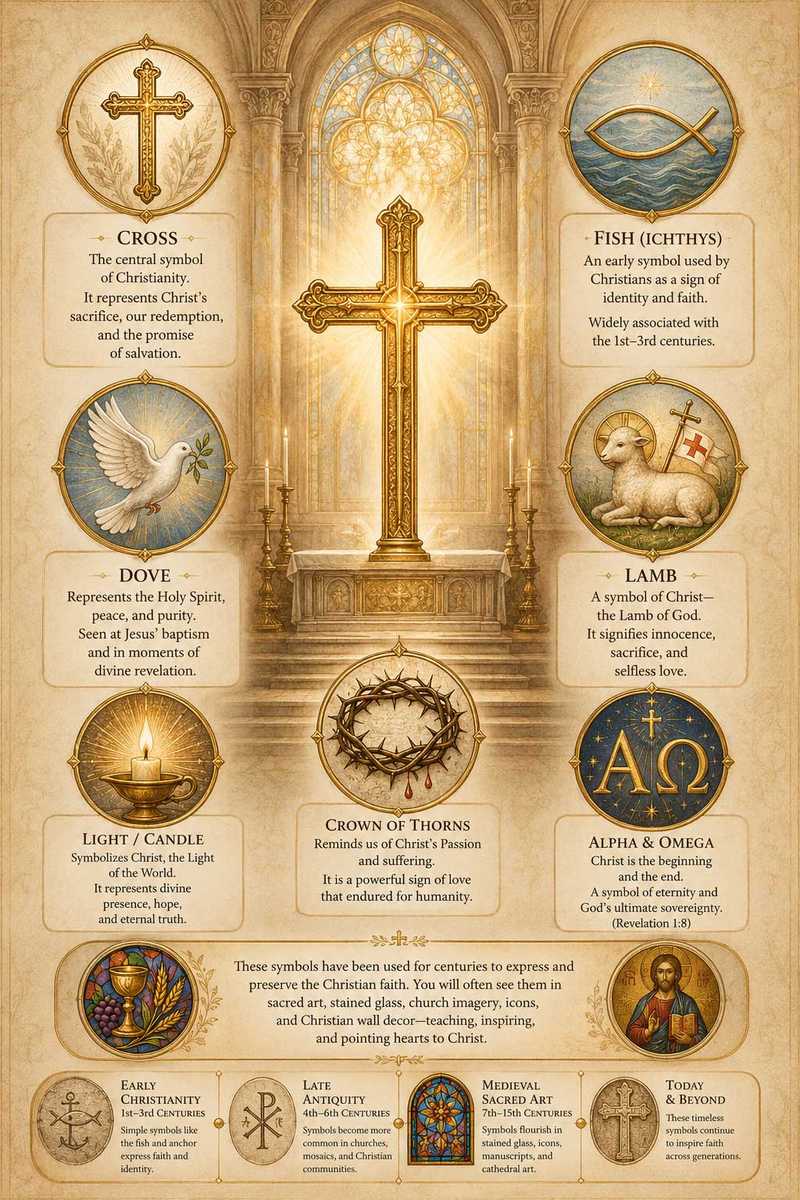
Christian visual culture uses a small set of powerful symbols to convey core gospel truths. This guide to Christian symbols explained looks at seven familiar emblems—the cross, the ichthys or fish, the dove, the lamb (Agnus Dei), light, the crown of thorns, and Alpha and Omega—showing what each means in Christian thought and how artists and devotional décor use them to teach, comfort, and inspire.
Quick summary: The cross recalls Jesus’ crucifixion and victory over death; the fish links to the Greek acronym ΙΧΘΥΣ; the dove symbolizes the Holy Spirit and peace; the lamb (Agnus Dei) stands for Christ the sacrificial Lamb; light represents divine presence and truth; the crown of thorns evokes the Passion; Alpha and Omega name Christ as the Beginning and the End. These symbols appear widely in sacred art and Christian wall decor to express theology, comfort, and identity.
CLEAR DEFINITION
Christian symbols are visual signs that carry theological meaning and devotional resonance. Each symbol works at several levels: biblical or early-Christian association, liturgical or devotional use, and artistic representation. Together they help viewers recognize core Christian claims—about Christ, the Spirit, salvation, suffering, and God’s eternal nature—often at a glance.
BIBLICAL ROOTS
Many symbols draw directly on Scripture and early Christian practice. The cross recalls the crucifixion; the dove connects to the Spirit’s descent at Jesus’ baptism and to earlier biblical imagery of peace; the lamb reflects the Paschal and sacrificial language applied to Christ. Alpha and Omega come from Revelation as titles of Christ meaning the Beginning and the End. The ichthys (fish) is associated with early Christian use and the Greek acronym ΙΧΘΥΣ (Jesus Christ, Son of God, Savior).
CHRISTIAN SYMBOLISM
Each emblem carries layered meanings that became standardized in Christian iconography:
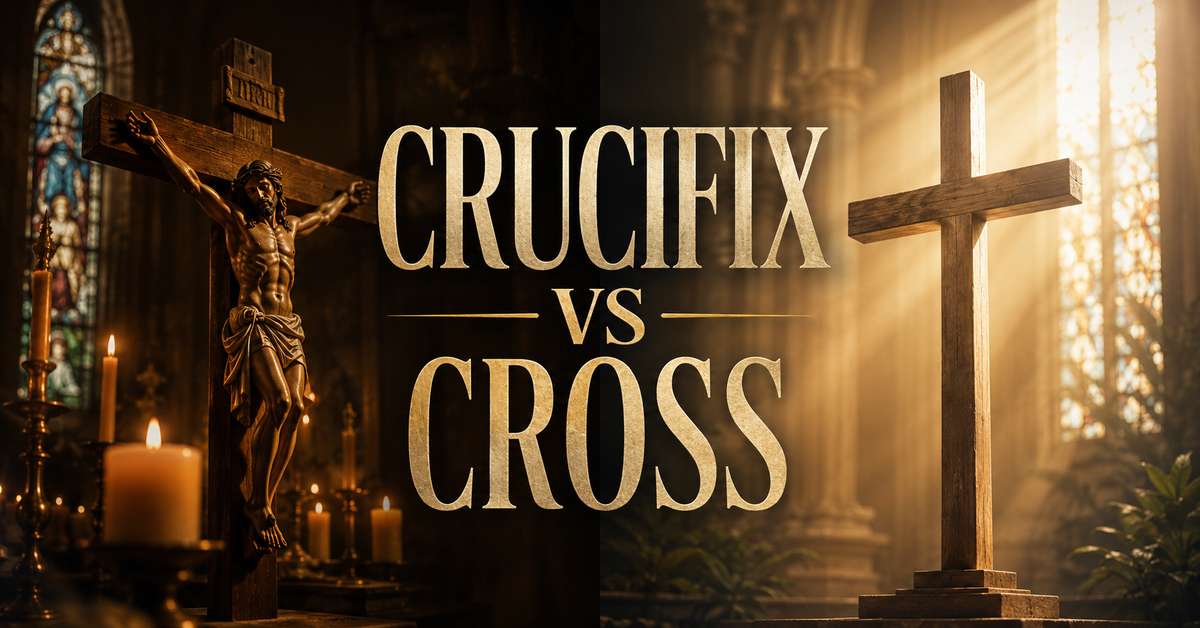
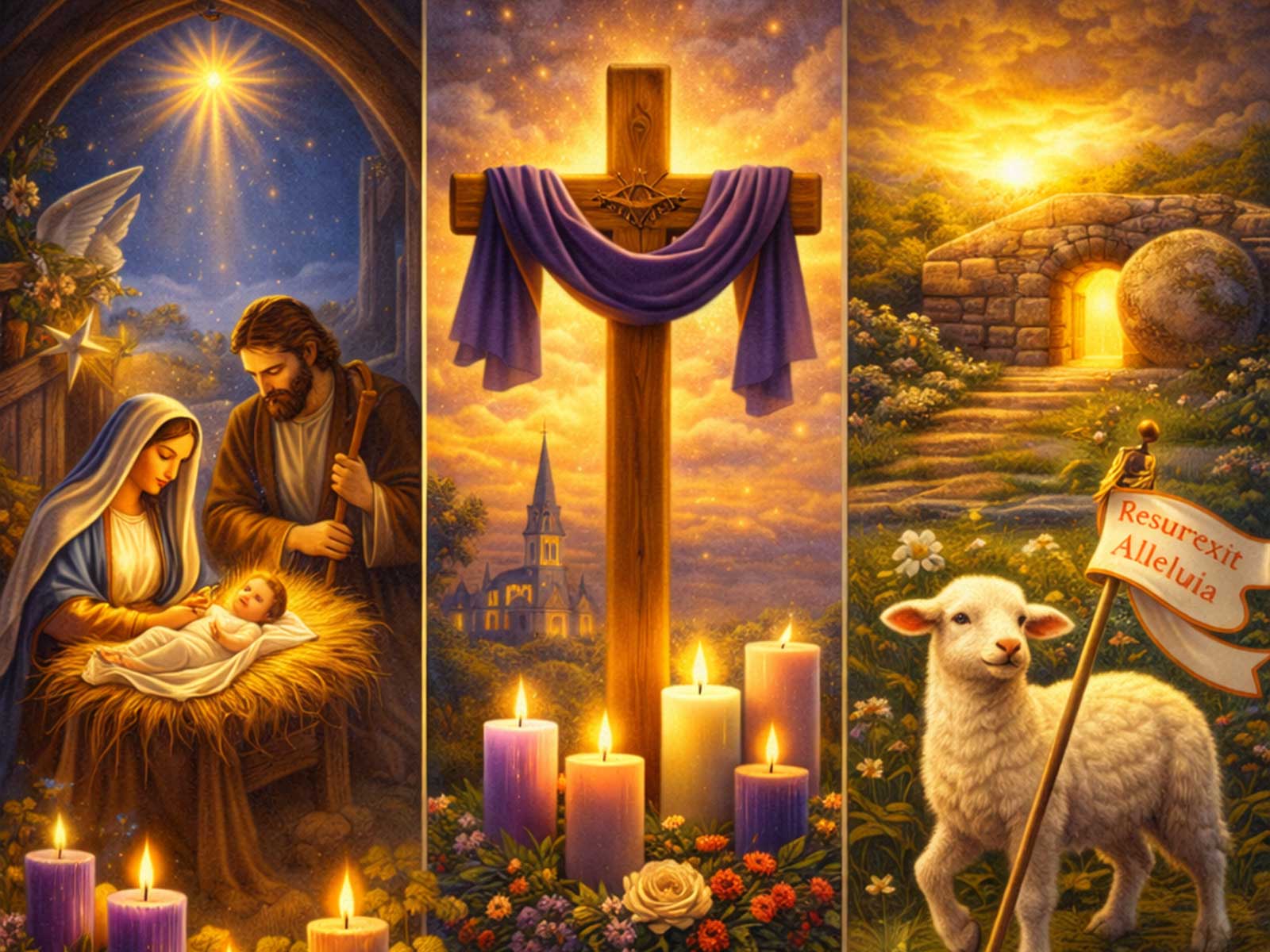
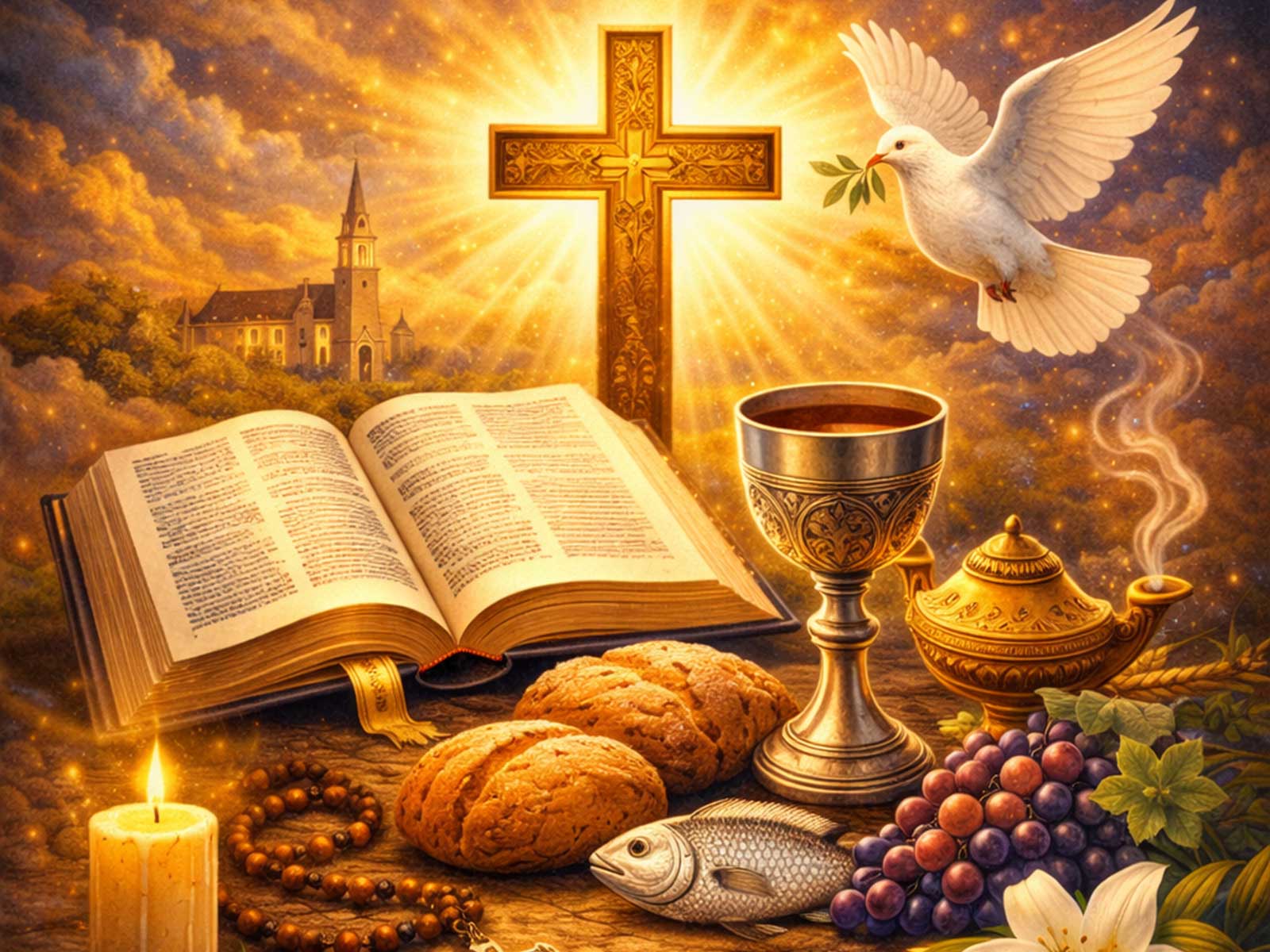
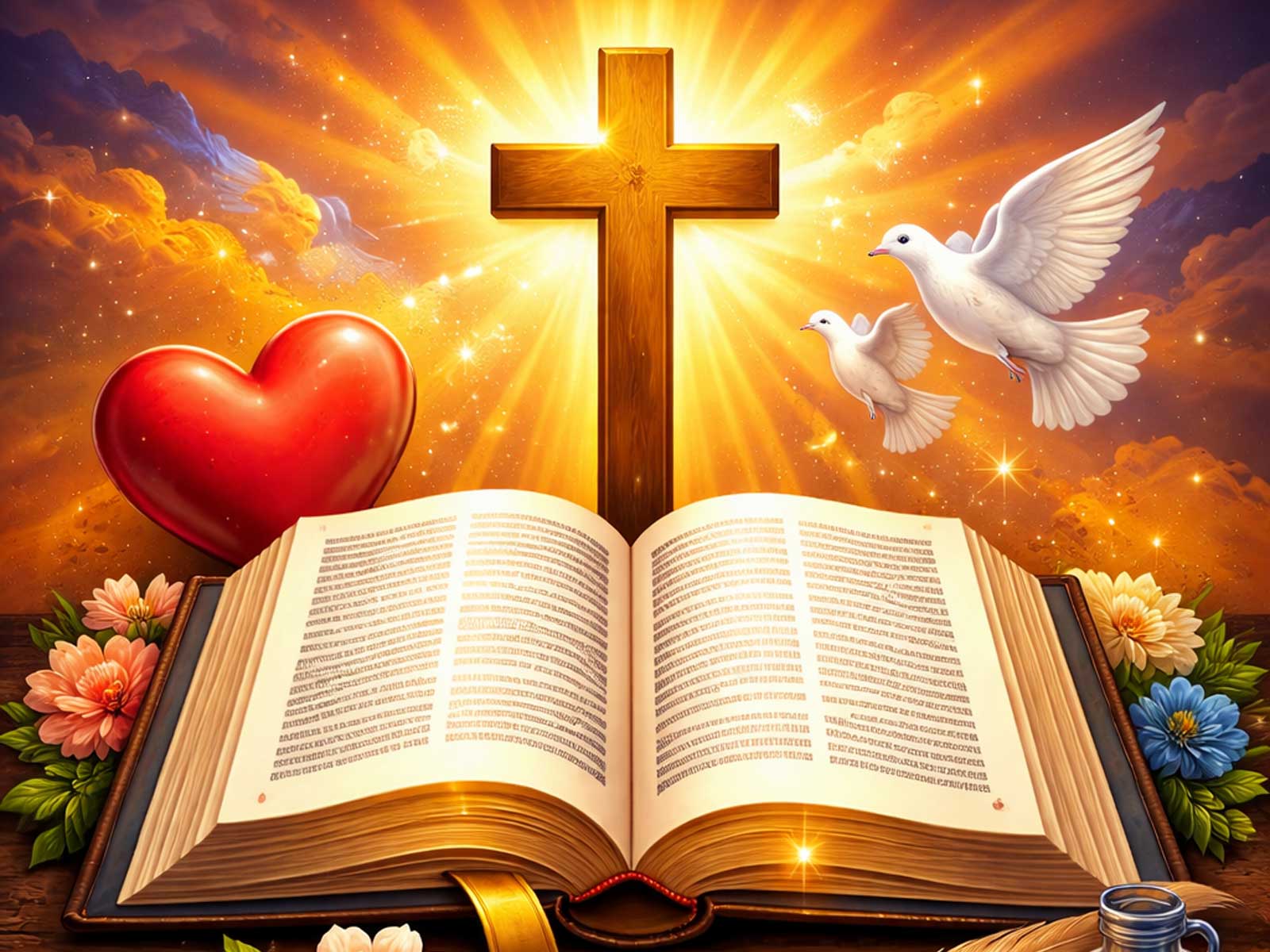
- Cross: Principal symbol of Christianity; in many Protestant settings a plain cross signifies Christ’s victory over death, while crucifixes—showing Christ’s body—are common in Roman Catholic and Eastern Orthodox use.
- Ichthys (fish): Early Christian symbol tied to the Greek acronym ΙΧΘΥΣ and found in catacomb art; later revived in modern contexts as a concise Christian identifier.
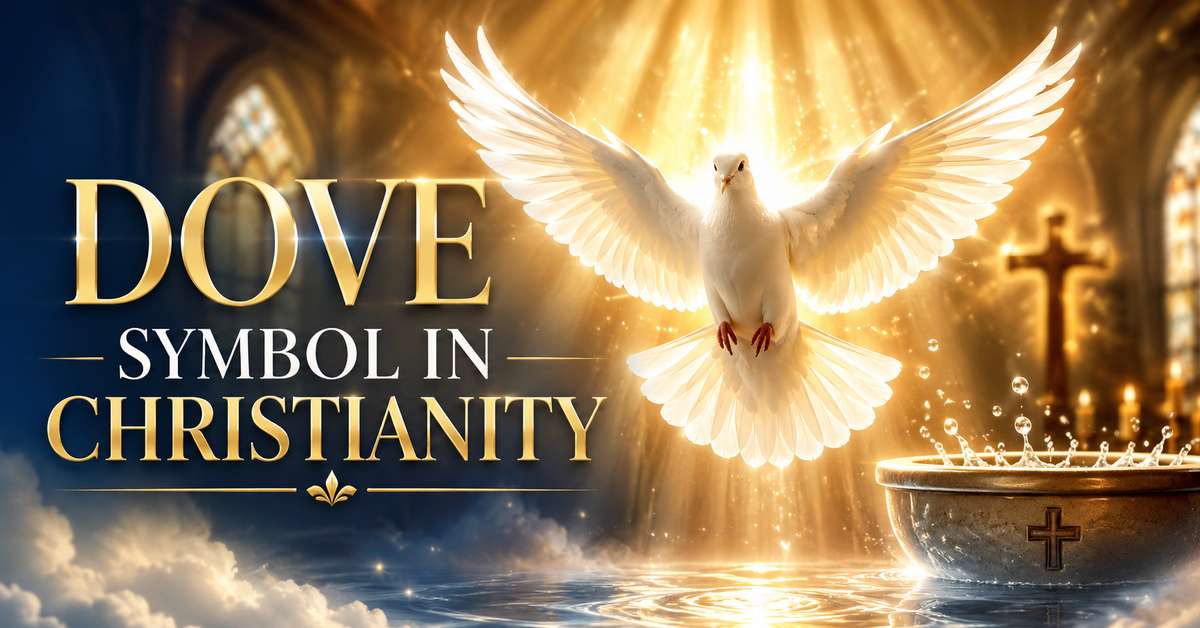
- Dove: Emblem of the Holy Spirit and peace; used to suggest divine presence, especially in baptismal and funerary imagery.
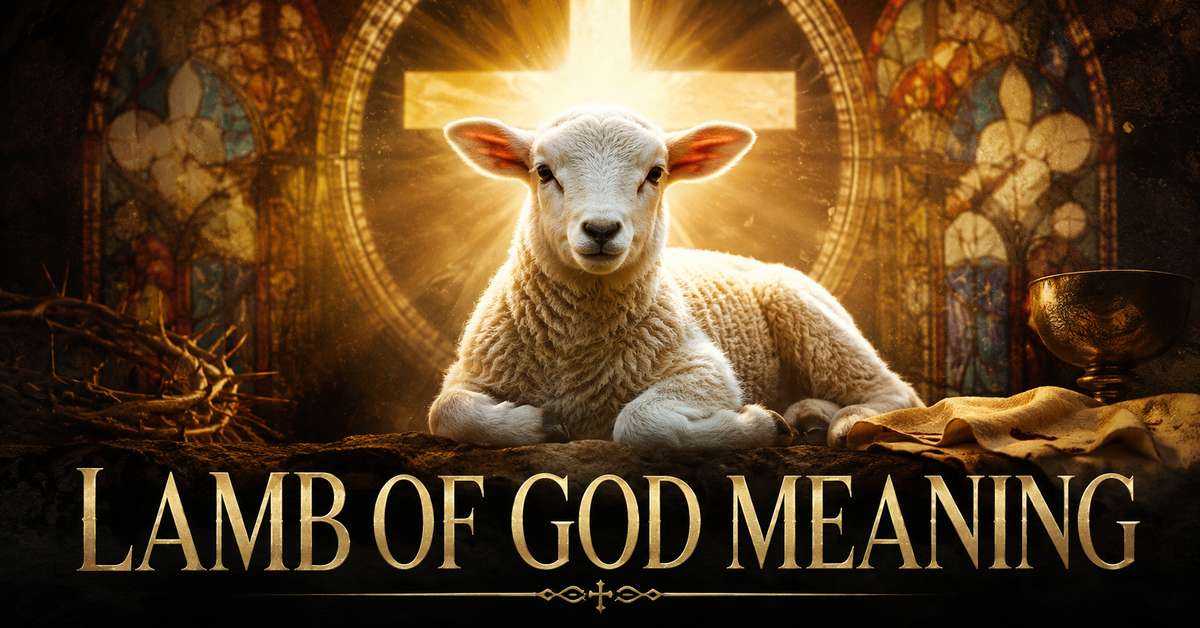
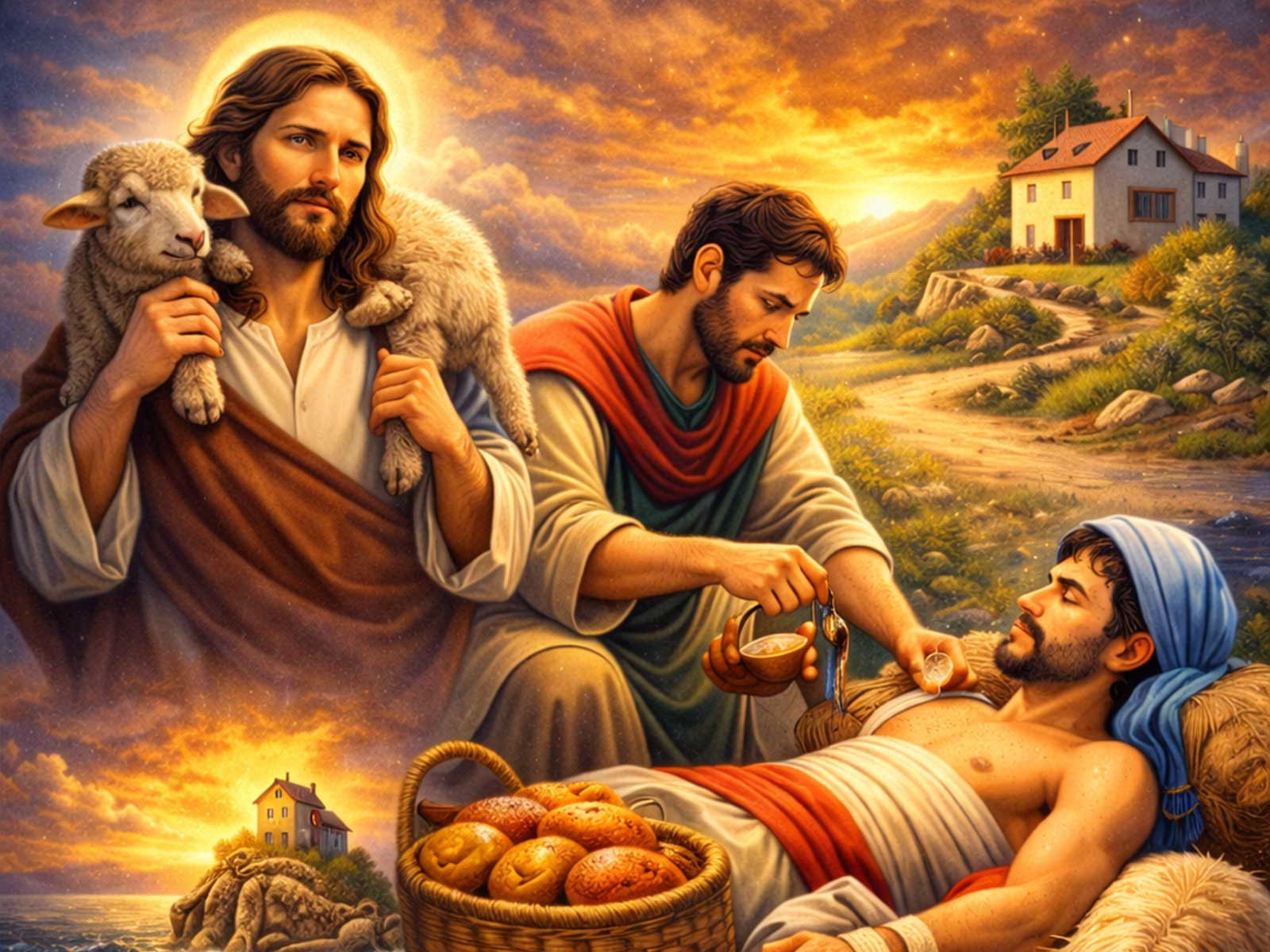
- Lamb (Agnus Dei): Represents Christ as the sacrificial Paschal Lamb; central in liturgical phrases and devotional images.
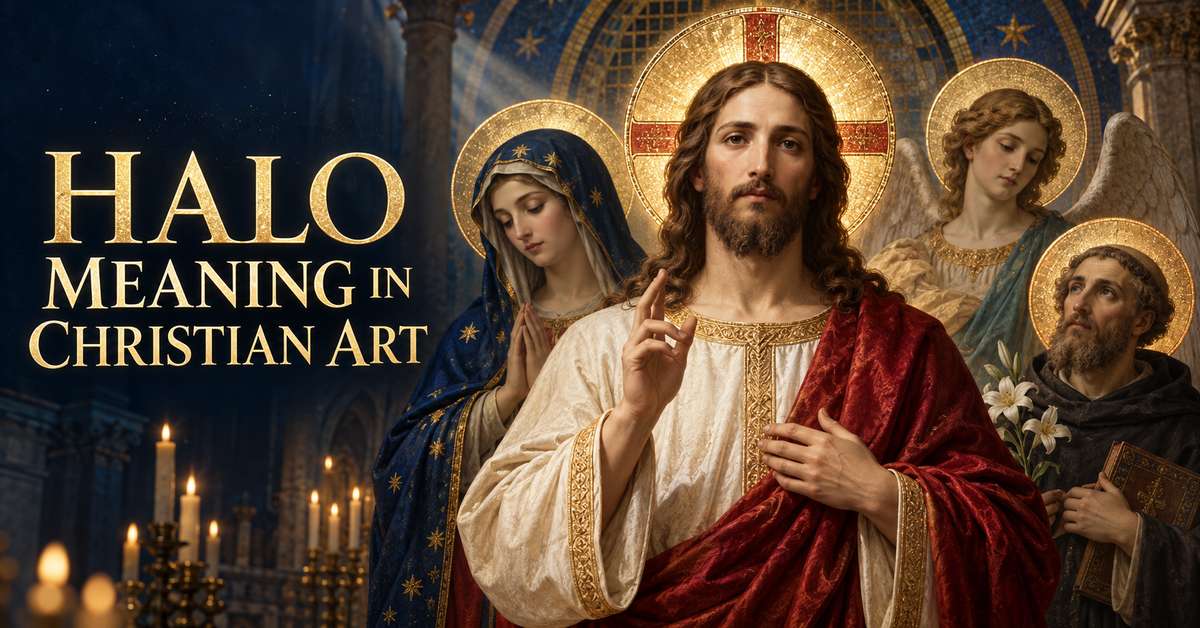
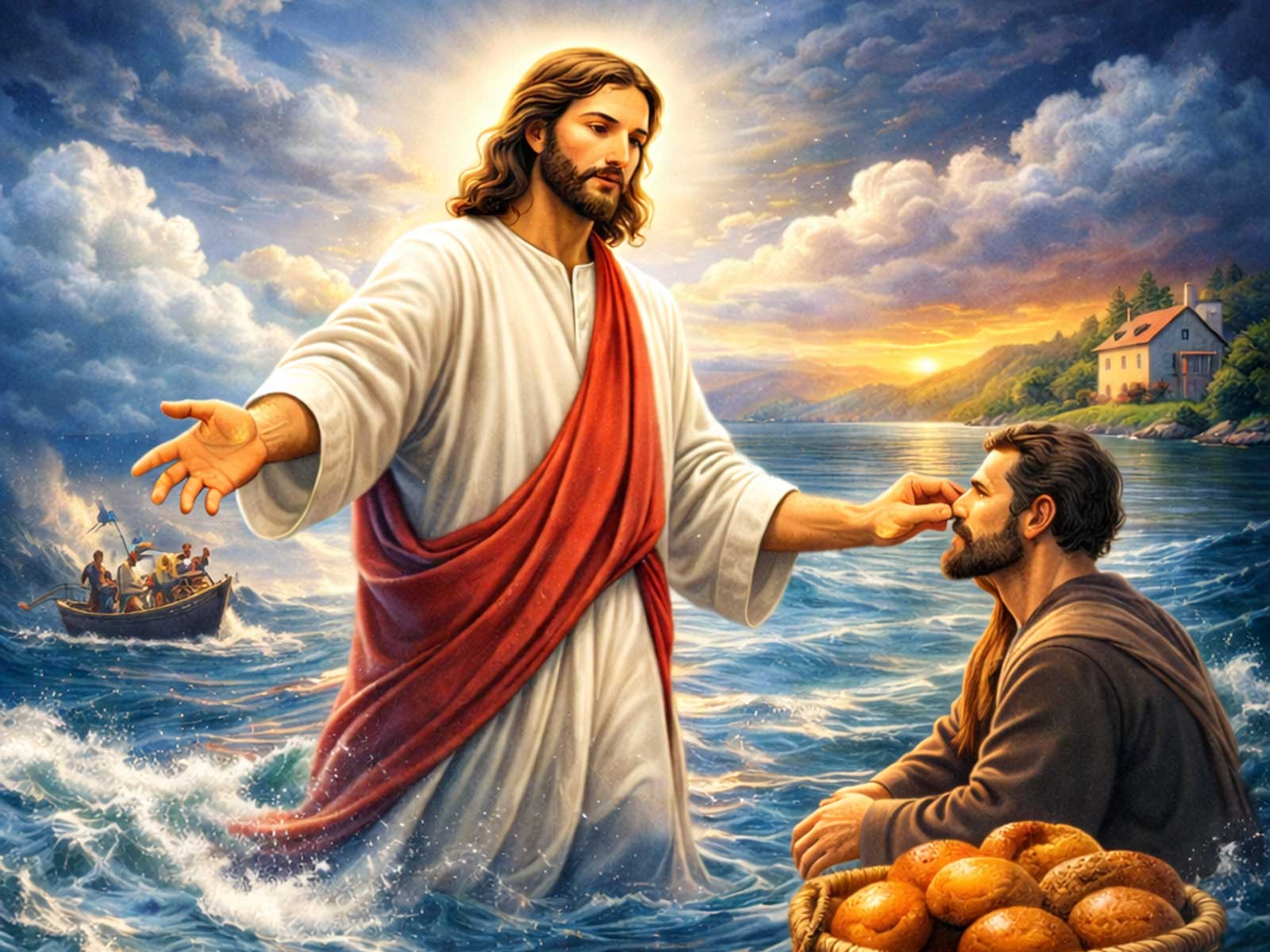
- Light: Symbolizes divine presence, truth, and Christ himself; artists use rays, halos, and lamps to convey holiness and revelation.
- Crown of Thorns: Evokes Christ’s suffering, mockery, and the Passion; a common Passion motif in devotional art.
- Alpha and Omega: Letters used as titles of Christ meaning the Beginning and the End; appear in inscriptions and decorative church imagery.
SACRED ART AND VISUAL LANGUAGE
Artists and makers of wall decor use composition, color, and attribute to communicate these symbols’ meanings. Halos and light emphasize sanctity; the cross often stands at a focal point to center devotion; the fish may appear discreetly as a sign of identity; the lamb and dove appear in scenes or as isolated devices to invite meditation on sacrifice and the Spirit. The crown of thorns typically appears in Passion scenes or as a poignant emblem of suffering, while Alpha and Omega are carved or painted near altar spaces or combined with other early-Christian signs like the chi-rho.
LITURGY AND TRADITION
These symbols have long liturgical and devotional uses. The Agnus Dei is part of Western liturgy and appears in sacramental art; the dove is present in baptismal contexts and funerary decoration; the cross and crucifix mark worship spaces in most traditions. Alpha and Omega are used in inscriptions and feast imagery that reflect Christ’s eternal role. While expressions vary between traditions—Catholic, Orthodox, and many Protestant contexts—the symbols themselves function as common visual language across Christian communities.
PRAYER AND HOME DEVOTION
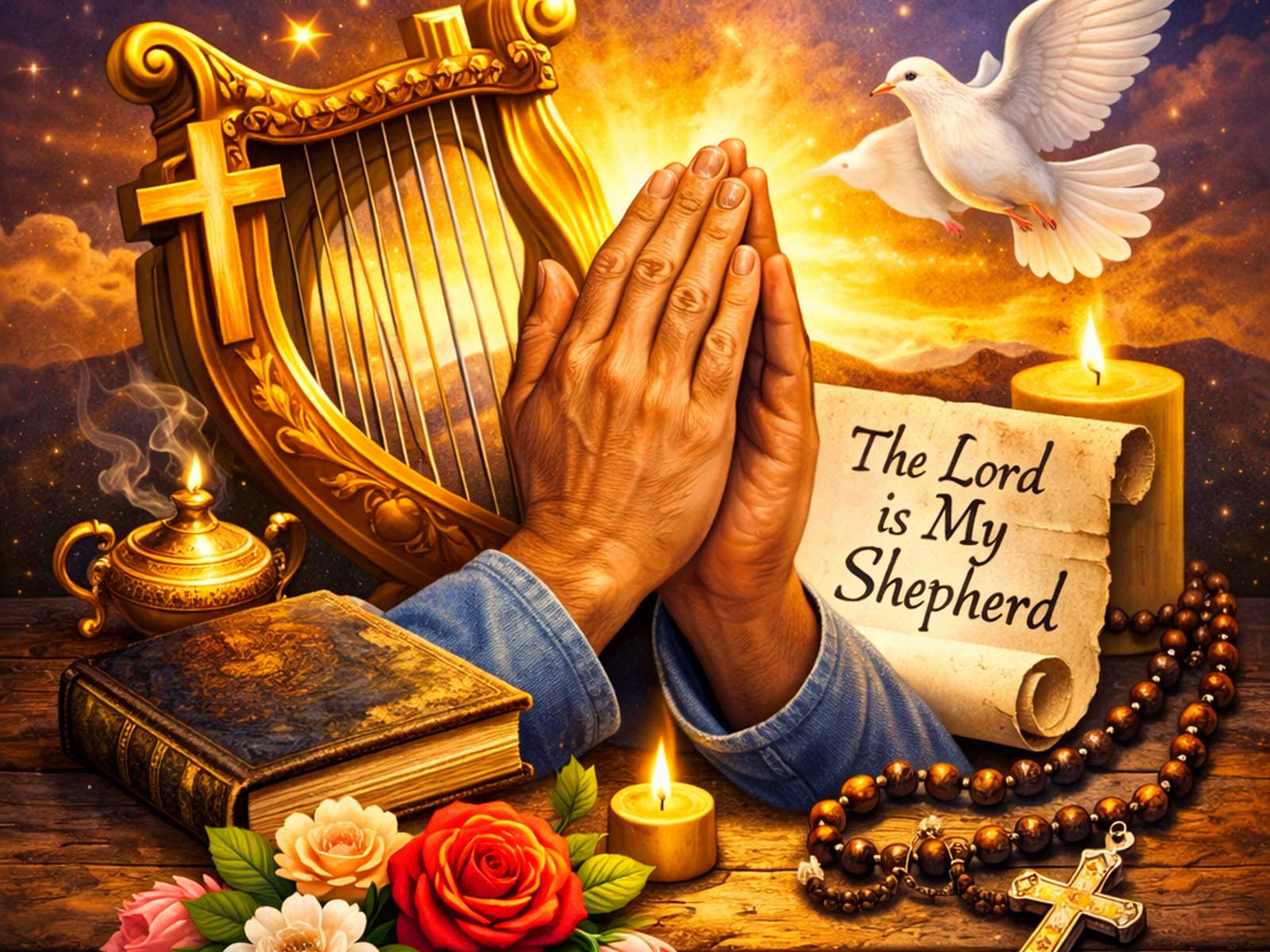
In a home prayer corner or on a wall print, these symbols can focus reflection: a cross or crucifix for contemplation of sacrifice and hope, a dove for prayers to the Spirit, a lamb as reminder of redemption, and light imagery to invite moments of silent prayer. Simple ichthys decals or Alpha and Omega prints can express identity and encourage short, regular acts of remembrance or thanksgiving without needing elaborate explanation.
COMMON MISUNDERSTANDINGS
Because these images are familiar, they can be reduced to mere decoration. Important corrections: the crucifix (with Christ’s body) and the plain cross carry different devotional emphases in various traditions; the ichthys is not merely a modern logo but has ancient roots; Alpha and Omega are not decorative letters but theological titles drawn from Revelation. Appreciating symbolic depth helps avoid flattening these images into generic motifs.
CLOSING INTERPRETATION
Understanding these basic emblems deepens both aesthetic appreciation and devotional practice. Whether found in ancient catacombs, medieval altarpieces, or modern wall decor, the cross, fish, dove, lamb, light, crown of thorns, and Alpha and Omega continue to carry layered theological and pastoral meaning. Seen thoughtfully, they turn visual space into an occasion for memory, prayer, and reflection that connects everyday rooms to the larger Christian story.
Author: Eric M.