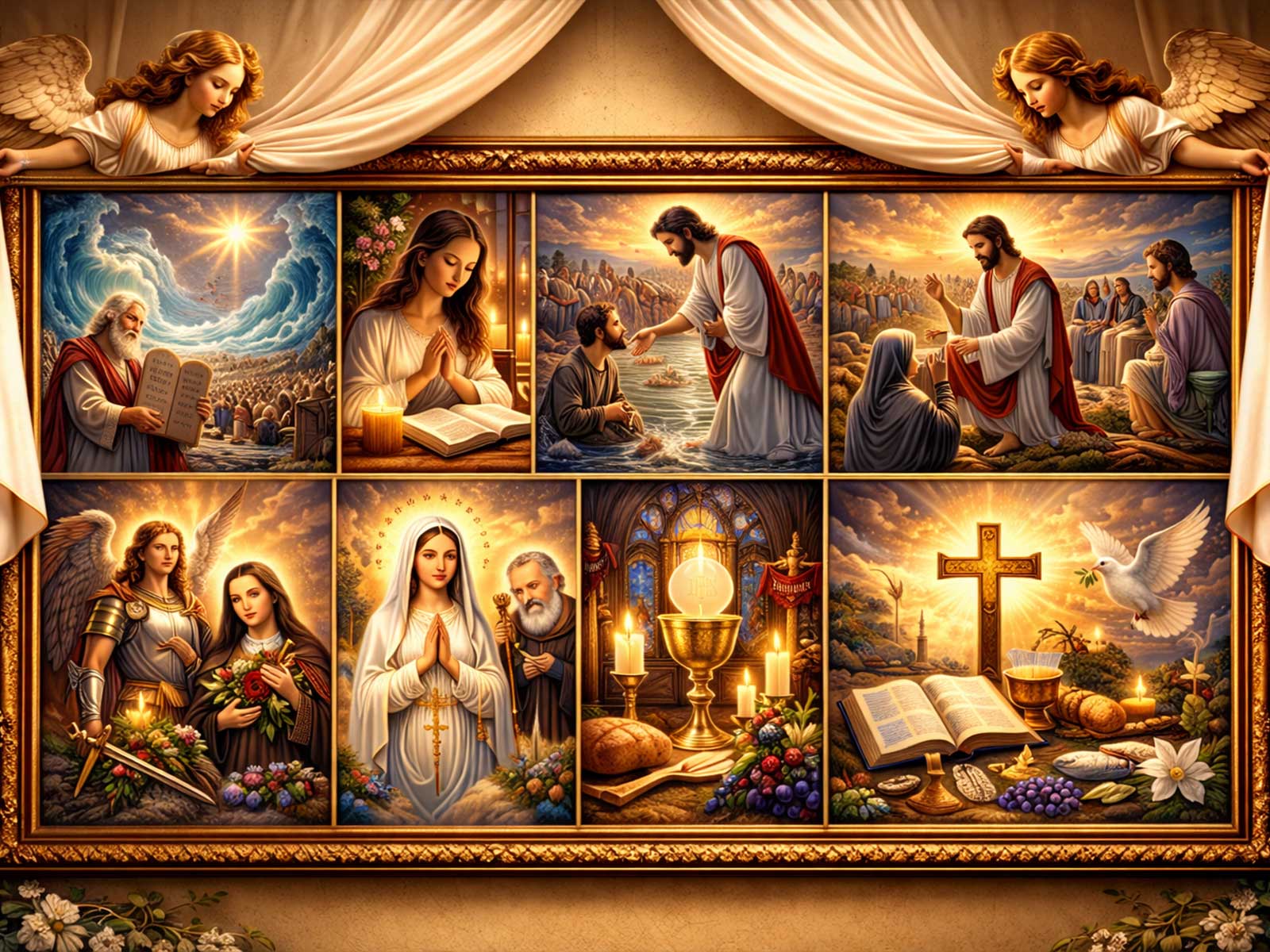
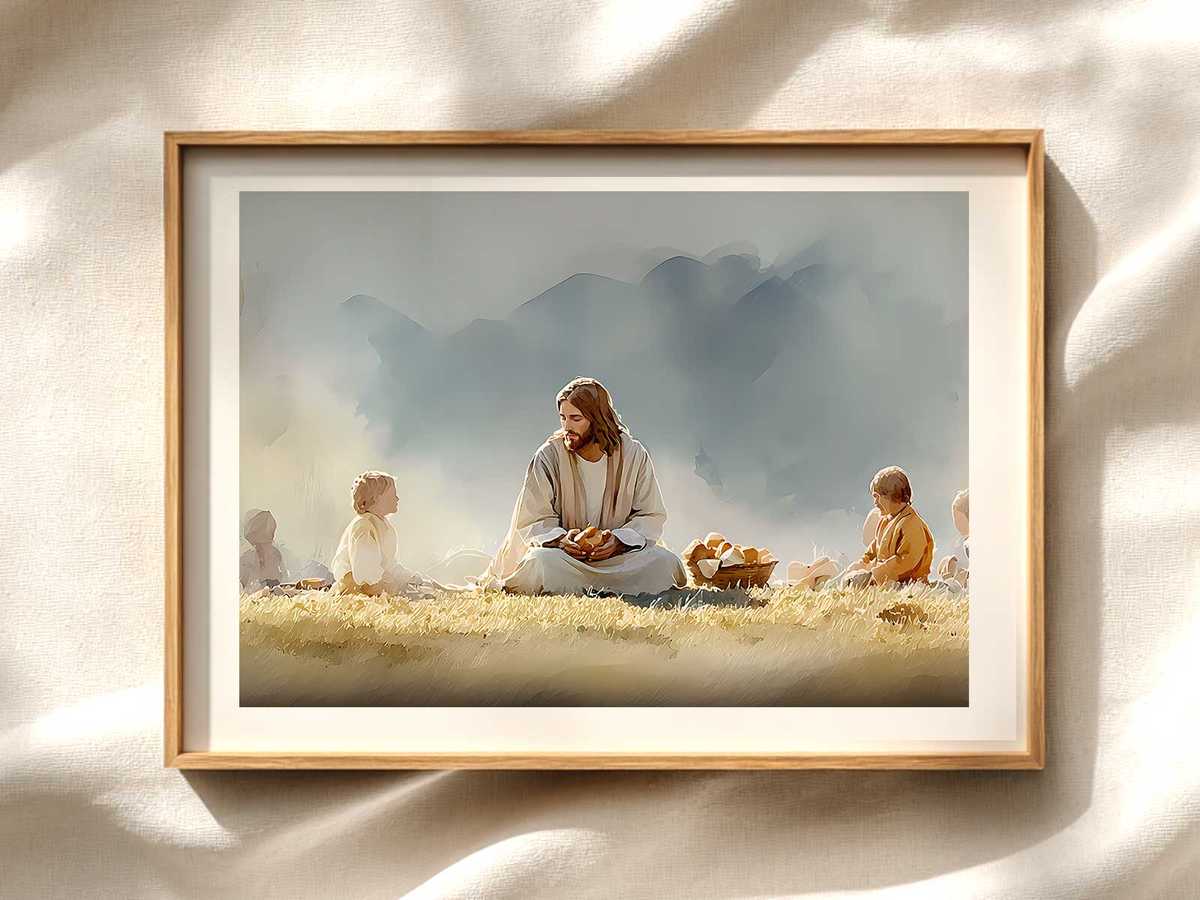
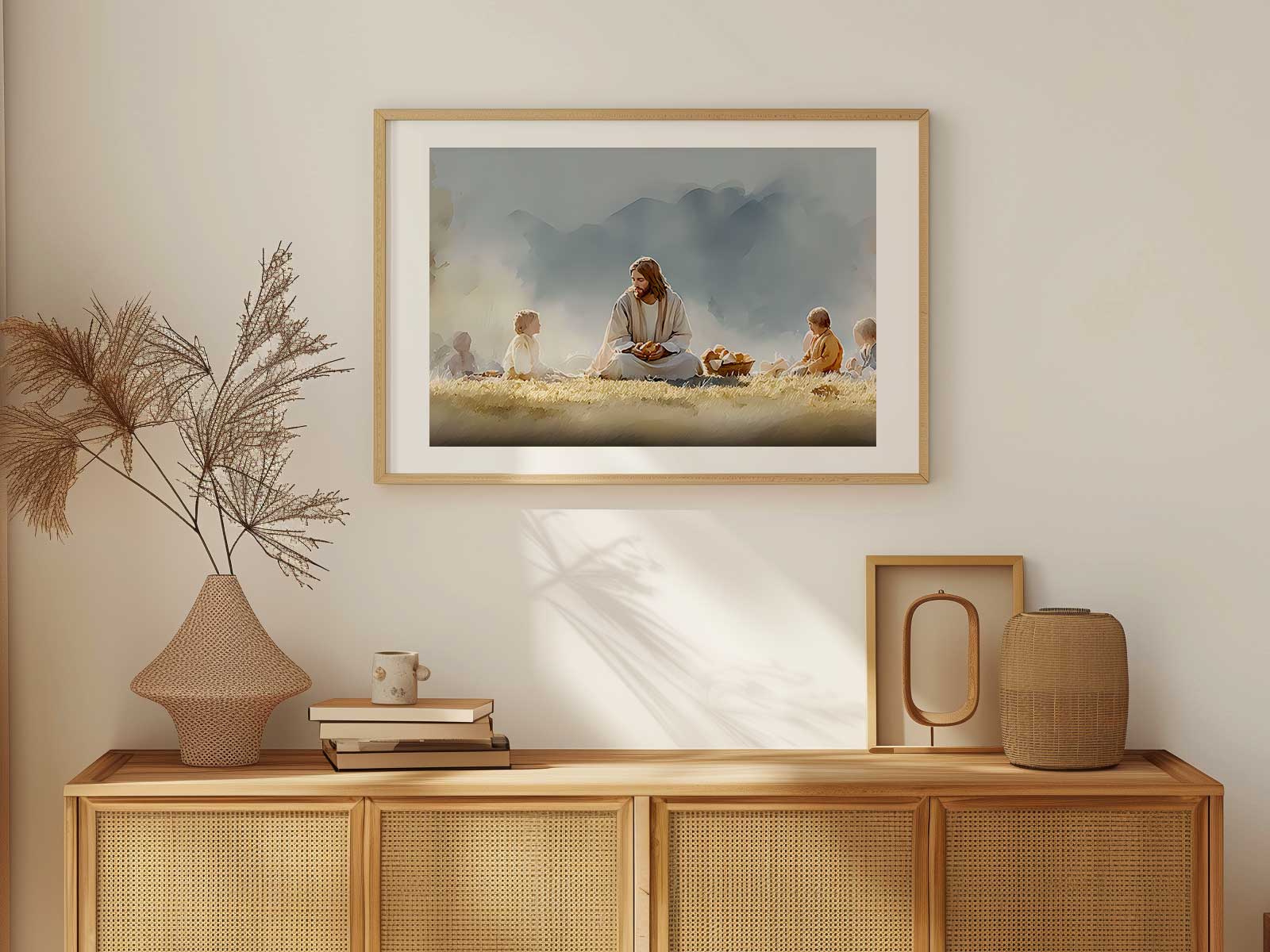
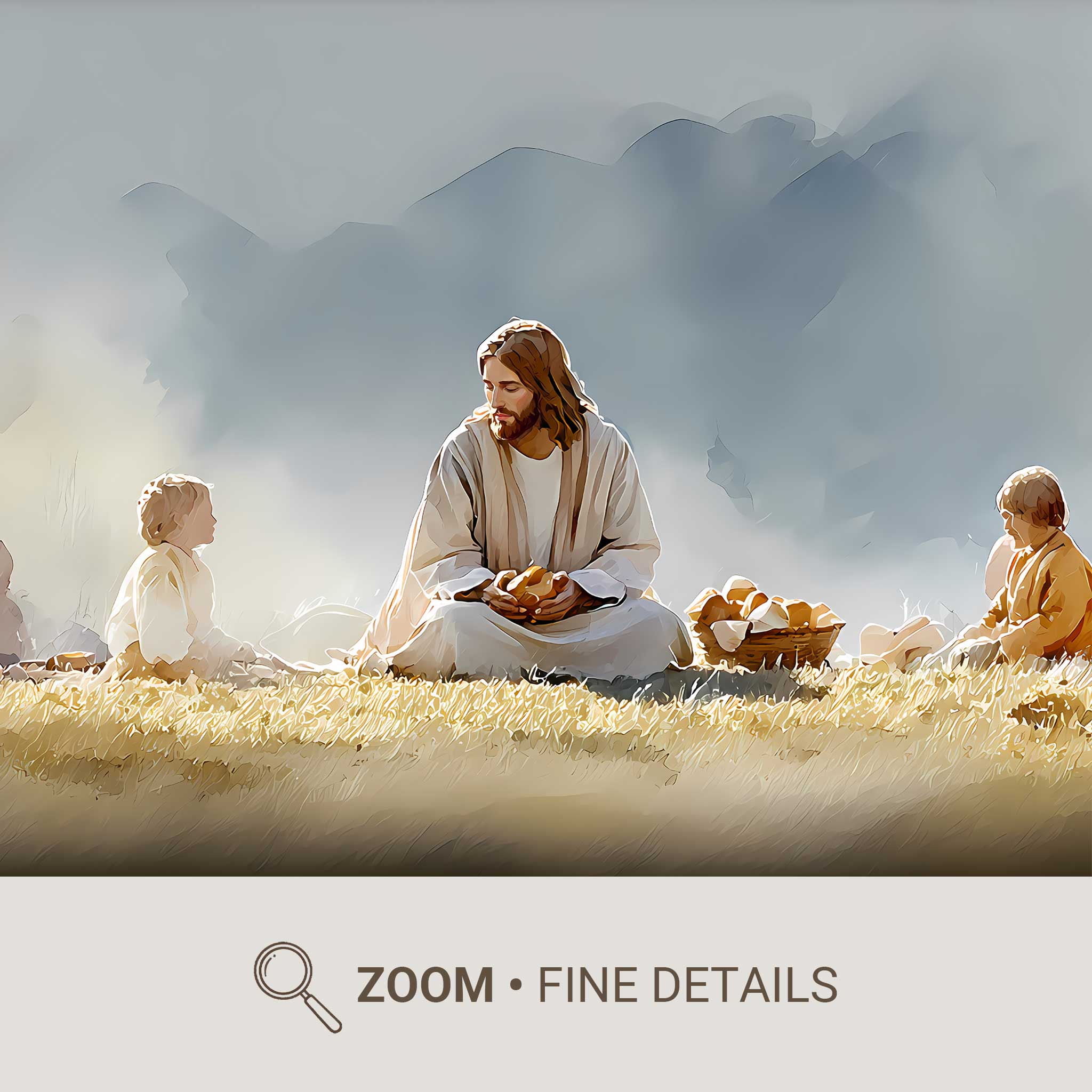
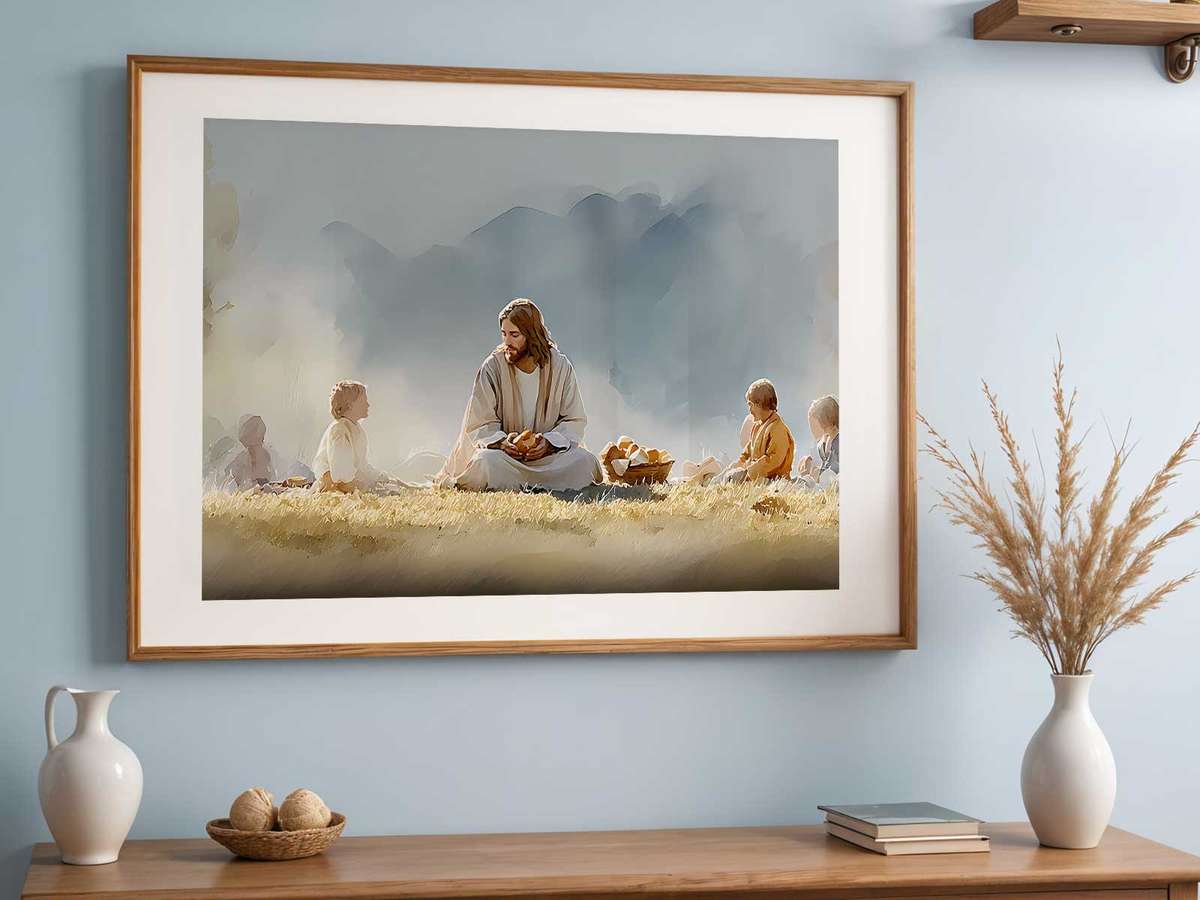
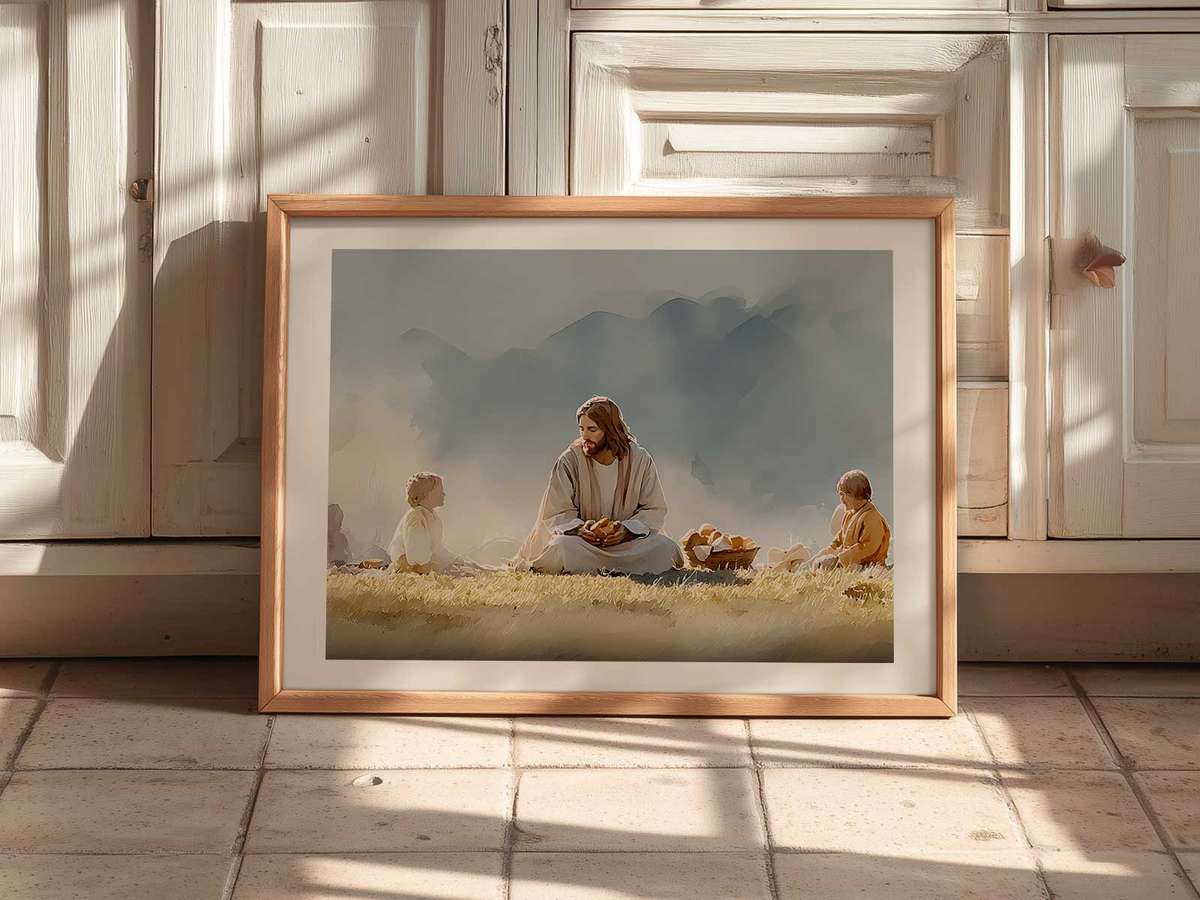
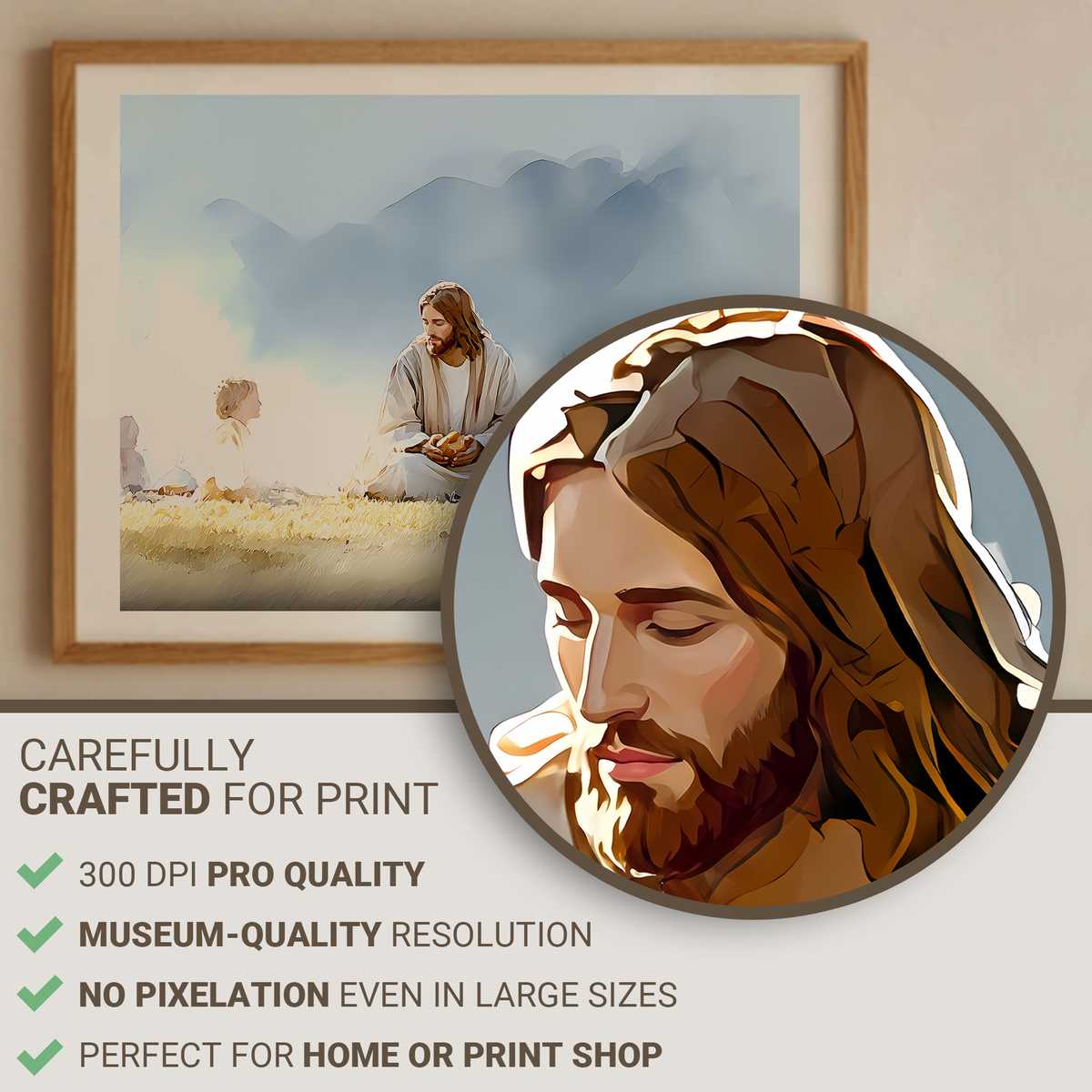
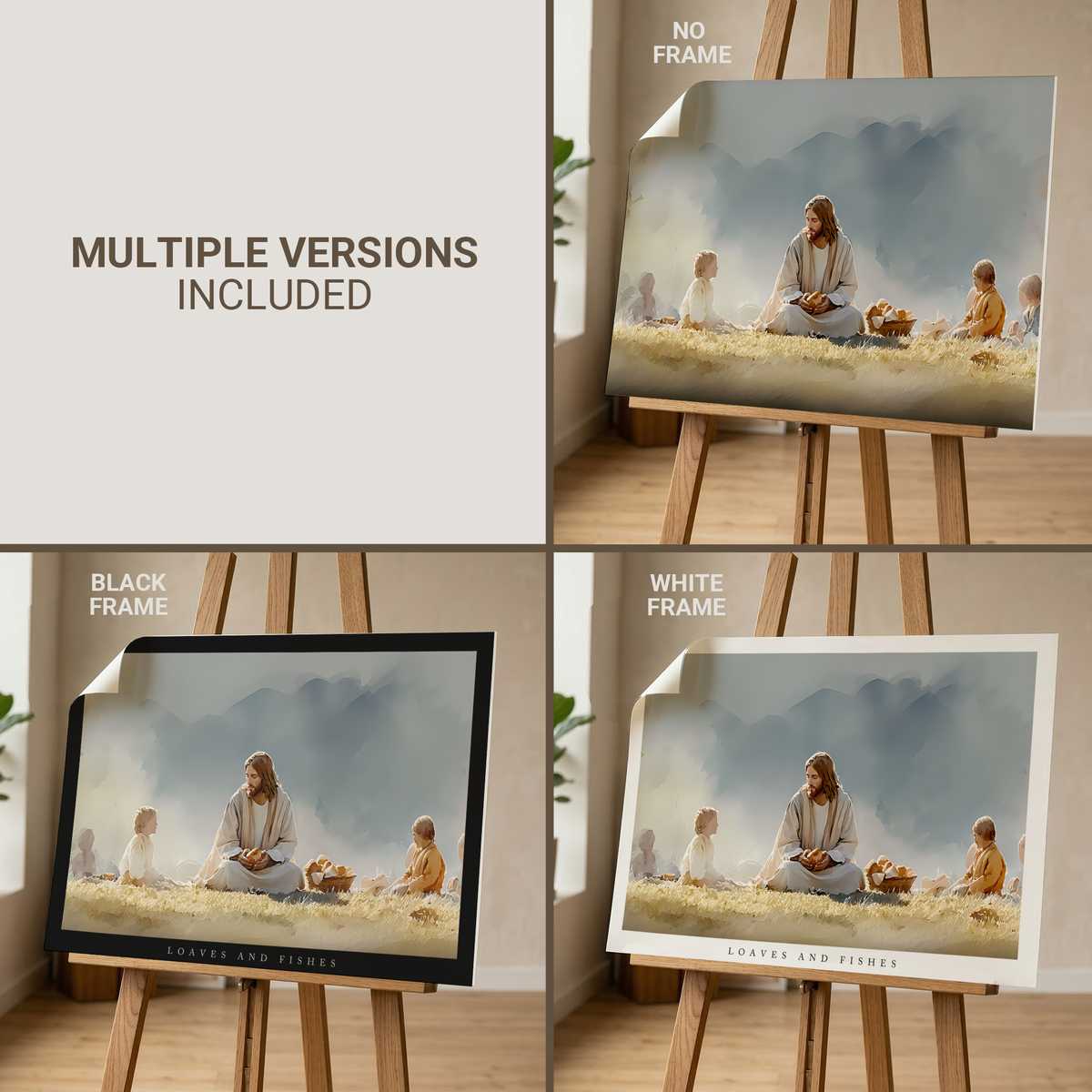
The story of the multiplication of the loaves carries a quiet, persistent grace: a handful of bread and fish offered, a blessing spoken, and more than enough for all. Framed as a verse-centered wall art, that moment from the Gospel becomes more than a picture — it becomes an invitation to remember providence each time you pass by. When a single line of Scripture is given pride of place on a wall, it trains vision and memory alike; the text unpacks slowly over months and years, surfacing in ordinary mornings and anxious evenings as a gentle call back to trust.
Choosing a Gospel phrase that evokes the feeding—whether a short sentence about blessing and abundance, a promise of care, or an imperative to share—lets the words act as both sign and sacrament in the home. Placed in a kitchen, the verse meets daily rhythm: it blesses the labor of preparing food and frames the table as a small altar where gratitude is practiced. Hung in an entryway, it greets guests with a reminder that hospitality is rooted in God's provision rather than in human sufficiency. In a bedroom or prayer corner, the same visible text becomes a nightly balm, a line to turn toward in quiet reflection and thankful rest.
The aesthetic of verse-led wall art matters because simplicity helps Scripture speak. A single carefully chosen typeface and ample negative space allow the biblical words to breathe; the eye rests on the sentence and the heart on its meaning. This restraint is not austerity but reverence: the design removes distraction so the promise can sit plainly in the room, ready to be read aloud, memorized, or silently absorbed. Over time, those few words form a mental landmark. In moments of worry they return with the same steadiness as a familiar hymn.
[IMAGE_INSERT_ARTICLE_01]
Beyond personal consolation, a visible Gospel verse shapes communal life. It names a shared story for a household and becomes a touchstone in conversations about provision, stewardship, and generosity. Children who grow up around that text learn to associate food and care with divine kindness; guests often notice and ask, opening space for testimony and hospitality. The wall art thus functions both as remembrance of a biblical event and as a practical prompt toward living out its implications in everyday decisions.
When selecting the exact wording, consider brevity and resonance: a promise that can be spoken easily, a fragment that invites repetition, a verse that reads naturally at eye level. The result is not merely decoration but a steady, visible discipline. The presence of Scripture on the wall encourages a posture of dependence that is neither passive nor resigned, but generative and thankful. It reminds the household that blessing can begin with a small offering and that scarcity does not have the final word.
In a world of constant visual noise, verse-centered wall art shaped around the multiplication of the loaves offers a particular calm. It holds a story of blessing and sharing, rendered in words you can see every day. To live with such a piece is to practice remembrance: to let a simple Gospel sentence steward your gaze, steady your heart, and invite you, again and again, to trust in provision and to pass along what you have with an open hand.

 ↧ Digital download
Jesus Art: The Miraculous Catch as a Quiet Call to Trust
Digital download
↧ Digital download
Jesus Art: The Miraculous Catch as a Quiet Call to Trust
Digital download
 ↧ Digital download
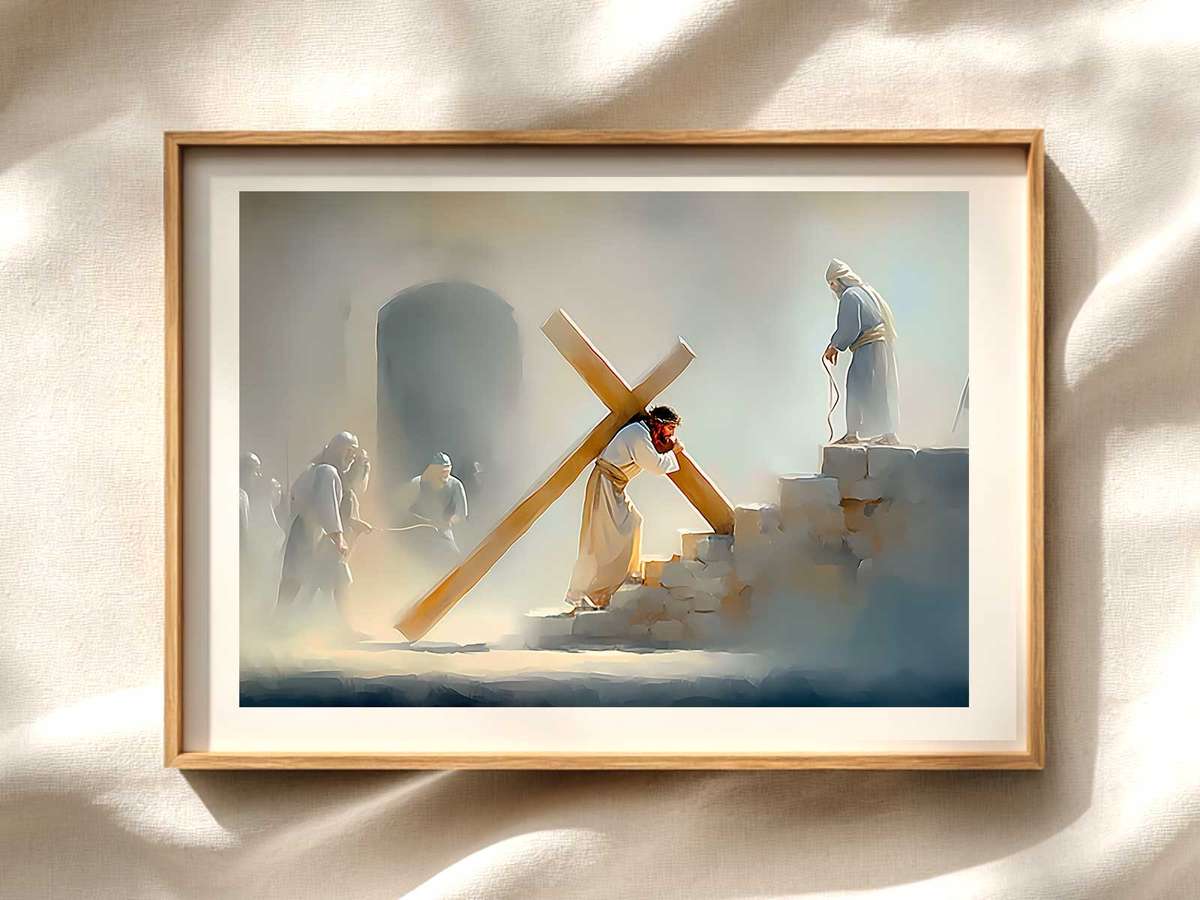
Art of Jesus on the Cross: The Carrying of the Cross and Christ’s...
Digital download
↧ Digital download
Art of Jesus on the Cross: The Carrying of the Cross and Christ’s...
Digital download
 ↧ Digital download
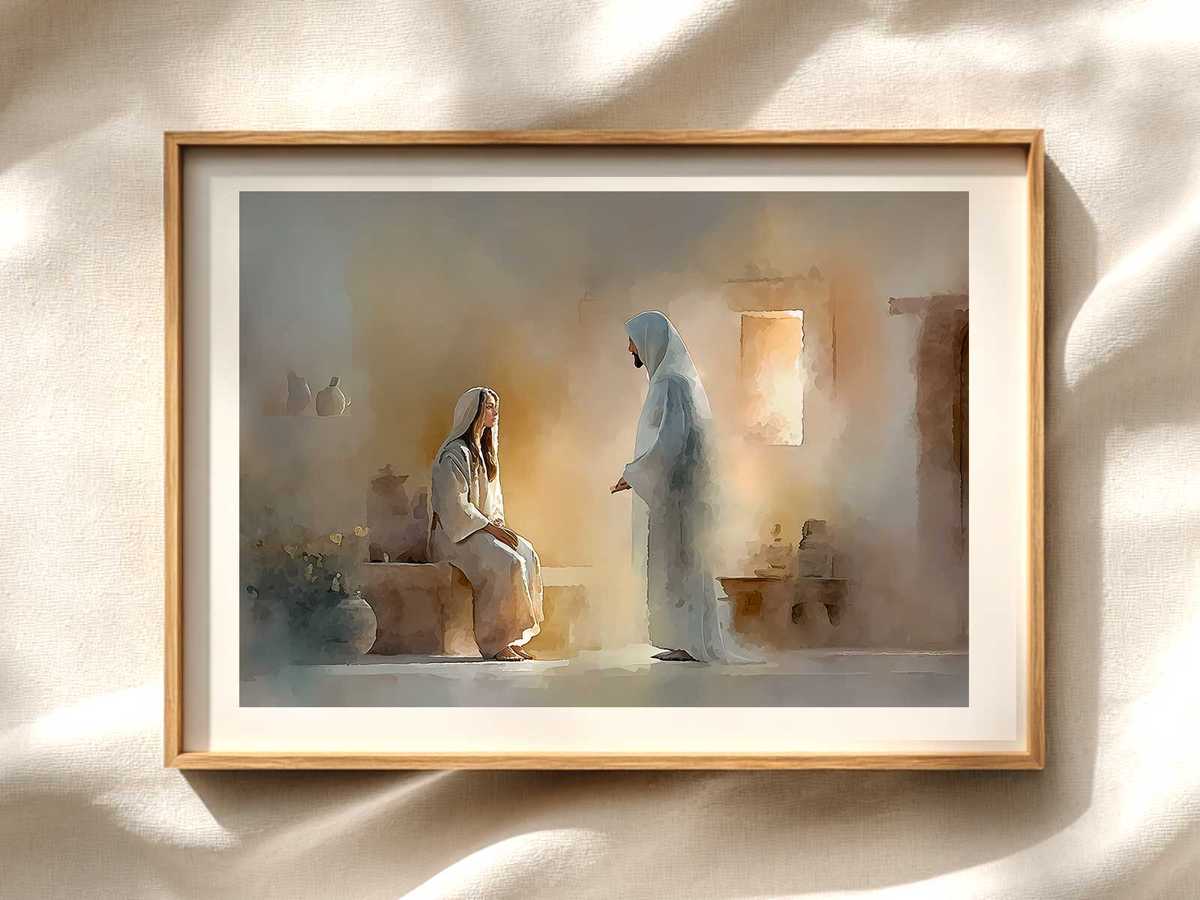
Early Painting of Jesus: The Annunciation and Incarnation in...
Digital download
↧ Digital download
Early Painting of Jesus: The Annunciation and Incarnation in...
Digital download
 ↧ Digital download
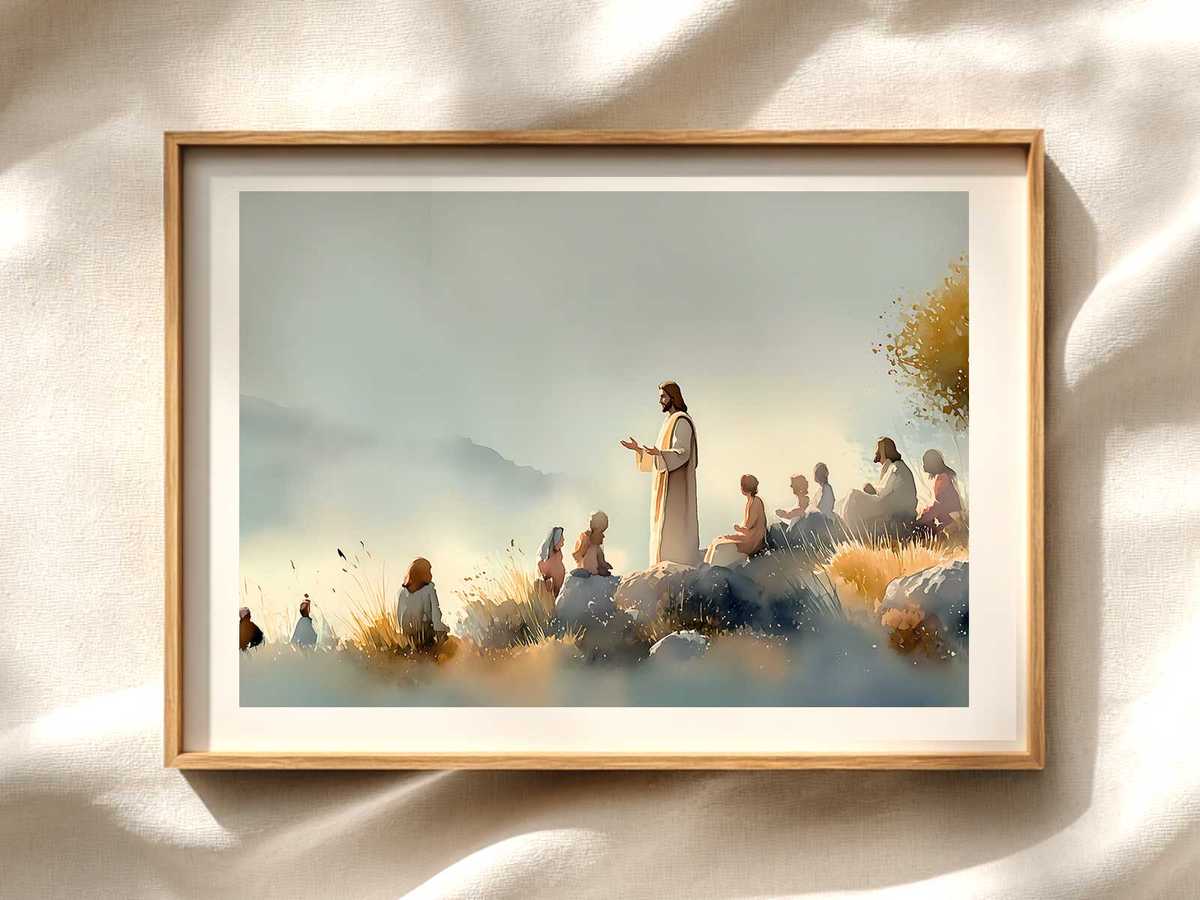
Why the Sermon on the Mount Makes Gentle, Daily Wall Art
Digital download
↧ Digital download
Why the Sermon on the Mount Makes Gentle, Daily Wall Art
Digital download