Was the Book of Enoch Removed from the Bible?
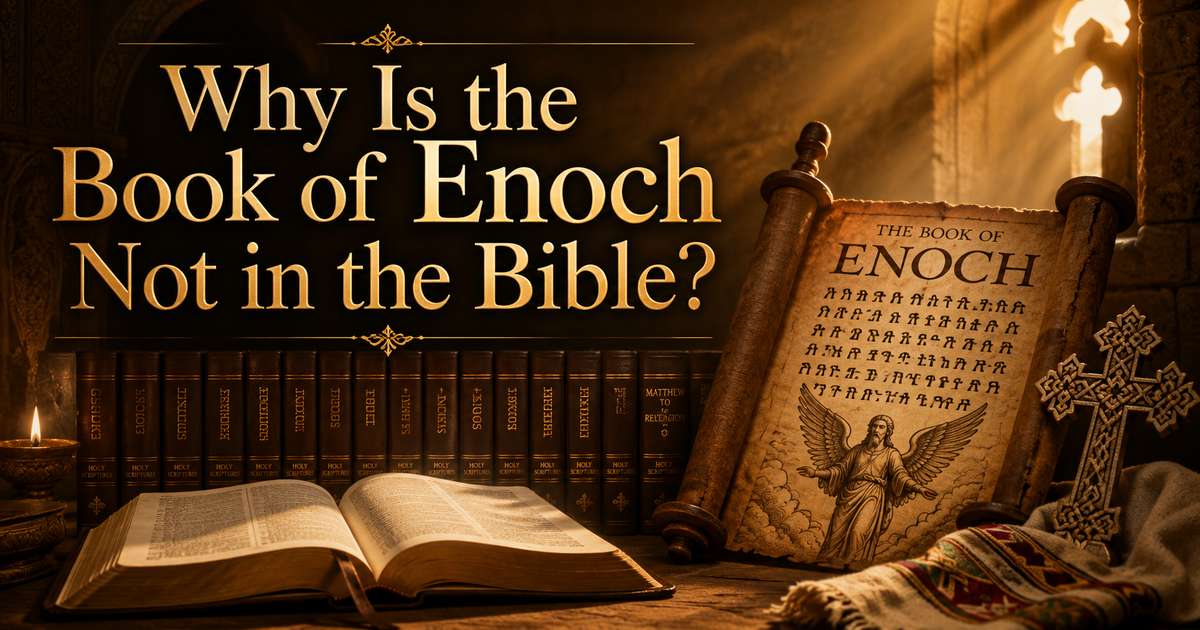
Popular webpages and social posts sometimes claim that church leaders once "removed" the Book of Enoch from the Bible. The short answer is: there is no reliable evidence that a single council or universal church body formally removed 1 Enoch from a universally accepted Bible. Instead, 1 Enoch’s fate reflects complicated local canons, variable early reception, and later manuscript transmission—most clearly preserved in the Ethiopian tradition.
Quick answer
The Book of Enoch (commonly 1 Enoch) was not the victim of a single, decisive "removal." It was an ancient Jewish apocalypse valued in some early communities, quoted in Jude, but it did not become part of the Hebrew Bible and was excluded from most Christian canons. It survives fully in Ge'ez and is canonical in the Ethiopian and Eritrean Orthodox Tewahedo Churches.
What this article reveals
- How 1 Enoch circulated in Jewish and some early Christian circles and how Jude uses material linked to it.
- Why the book appears in the Ethiopian canon but not in the Hebrew Bible or most other Christian canons.
- Why claims about a single council 'removing' Enoch are historically unsupported.
Defining the question: removed by whom?
When people ask "was the Book of Enoch removed from the Bible?" they often assume a single, authoritative Bible from which texts were taken out. That assumption flattens a complex historical reality. Different Jewish and Christian communities used different collections of sacred books over centuries. The relevant question is not whether an authoritative universal church erased Enoch, but how 1 Enoch fared in local traditions and which communities ultimately preserved it as Scripture.
What 1 Enoch is and how early readers regarded it
1 Enoch is an ancient Jewish apocalyptic composition assembled in stages roughly between the third century BCE and the first century CE. It contains visionary journeys, heavenly secrets, and stories about heavenly beings often tied to Genesis traditions about the Watchers and the Nephilim. Evidence shows it was widely read in some Jewish and early Christian circles: the New Testament letter of Jude directly quotes or alludes to a passage associated with 1 Enoch (Jude 1:14–15), which shows early Christian familiarity with the work.
Canonical diversity and why Enoch was excluded from most canons
There are two linked facts to keep in mind. First, 1 Enoch is not part of the Hebrew Bible (the Tanakh). Second, most major Christian communions—Roman Catholic, Eastern Orthodox, and Protestant—do not include 1 Enoch in their Old Testament canons. Canon formation was gradual and local: churches and synagogues curated lists of authoritative books over centuries. Several fourth-century lists and influential ecclesiastical statements do not list Enoch among accepted Old Testament books, reflecting the diverse outcomes of that process rather than a single expulsion.
Why Ethiopia kept Enoch and Europe 'lost' it
Unlike Western churches, the Ethiopian (and Eritrean) Orthodox Tewahedo tradition preserved 1 Enoch in full and treats it as canonical. The complete text survives in the Ge'ez language; this unique preservation explains why Enoch is still part of the broader Ethiopian biblical corpus. In contrast, European and Near Eastern Christianity lost regular access to the full work: only fragments and patristic citations circulated until Ge'ez manuscripts were brought to Europe in the eighteenth century, when western scholars regained the full text.
No evidence for a single council 'removal'
Conspiracy-style claims often point to councils such as Nicaea (325) as if a specific meeting voted Enoch out. The verified historical record does not support a narrative of a single council removing 1 Enoch from a universally accepted Bible. Canonical lists were produced and debated in many places; some fourth-century lists do not include Enoch, but omission from particular lists is not the same as a formal, universally binding removal. The scholarly consensus based on manuscript and canonical evidence is that Enoch fell outside the canons adopted by most Jewish and Christian authorities rather than being actively suppressed by one decisive act.
How Judaism and Christianity differ on canonicity (briefly)
The Hebrew Bible’s formation produced the Tanakh, which does not include 1 Enoch. Early Christianity inherited diverse Jewish textual traditions and added writings Christians considered authoritative. Different Christian communities reached different conclusions about which Jewish and later Christian writings belonged in Scripture. These differences help explain why some churches accepted certain books while others did not; the fate of 1 Enoch fits this pattern of plural outcomes rather than censorship by a single authority.

What Jude and other early uses mean for authority
Jude’s citation or allusion to material associated with 1 Enoch shows the book’s influence in at least some early Christian circles and helps explain why later readers were aware of its traditions. Influence and canonical status are not identical: a text can be influential without being included in a received canon. Scholars treat Jude’s use as evidence that Enoch-language circulated among early Christians, not as proof that every later church regarded the entire book as Scripture.
Why modern narratives about suppression appeal to readers
Stories that imagine a single removal resonate because they simplify a messy history into a single dramatic event. They also play into broader cultural anxieties about hidden knowledge and institutional power. The verified historical facts—gradual, local canon formation, partial preservation, and later rediscovery of Ge'ez manuscripts—offer a more accurate but less sensational account. Understanding the real history helps readers appreciate both Enoch’s ancient influence and the limits of claims about institutional conspiracy.
What this means for Christian readers today
If you encounter claims that Enoch was "removed," ask which tradition, which council, and what documentary evidence those claims rely on. For spiritual and theological reflection, the key is to distinguish between the book’s historical influence—visible in Jude and in some early communities—and its formal canonical status, which varies by tradition. In practice that means: recognize Enoch as an important ancient Jewish apocalypse preserved in Ethiopia and influential in parts of early Christianity, but not assume it was once universally authoritative and then secretly deleted.
Further reading and honest curiosity
Scholars and accessible guides explain 1 Enoch’s dating, transmission, and reception. Good starting points summarize the book’s composition between the third century BCE and the first century CE, its New Testament echo in Jude, its absence from the Hebrew Bible and most Christian canons, and its full survival in Ge'ez and the Ethiopian canon. Those facts provide a stable foundation for exploring the book’s imagery and theological themes without resorting to unverified conspiracy claims.
Author: Alex R.