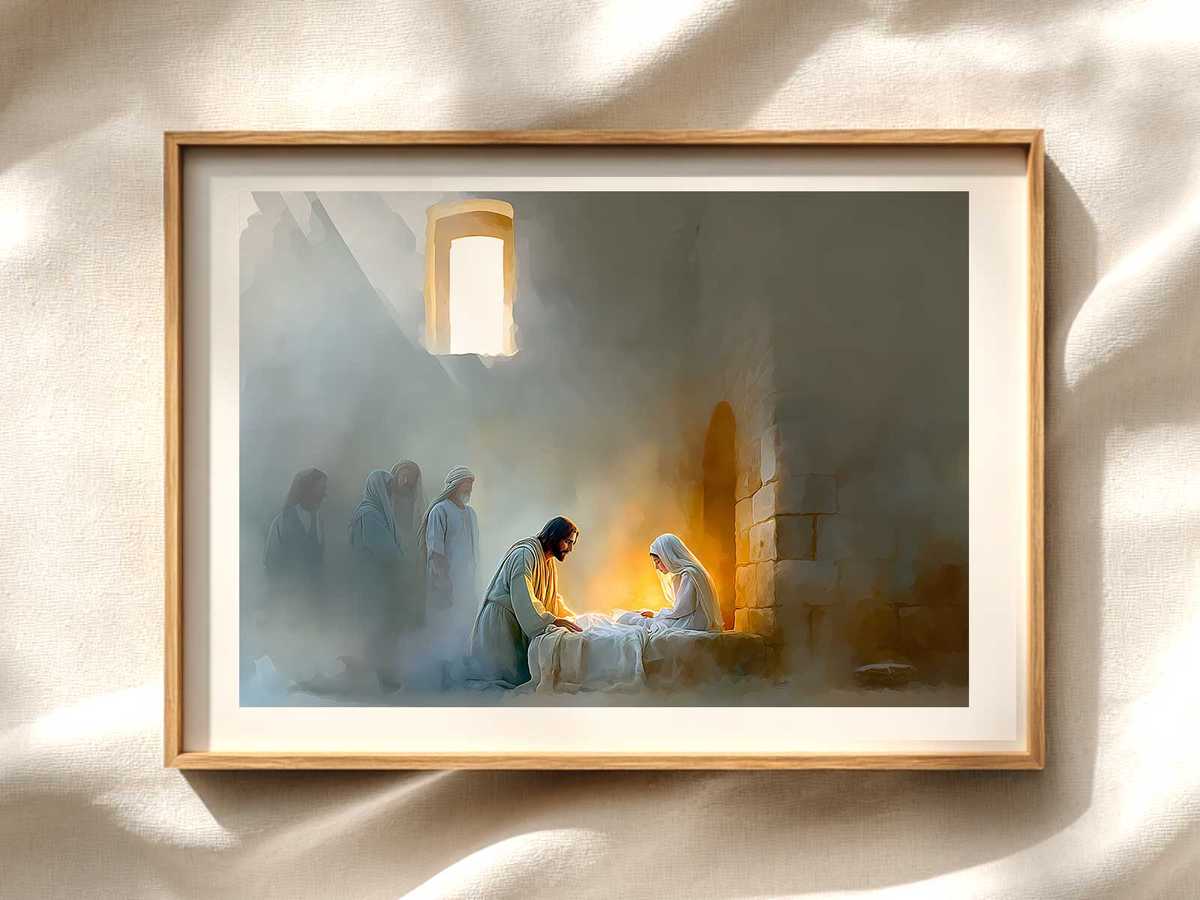
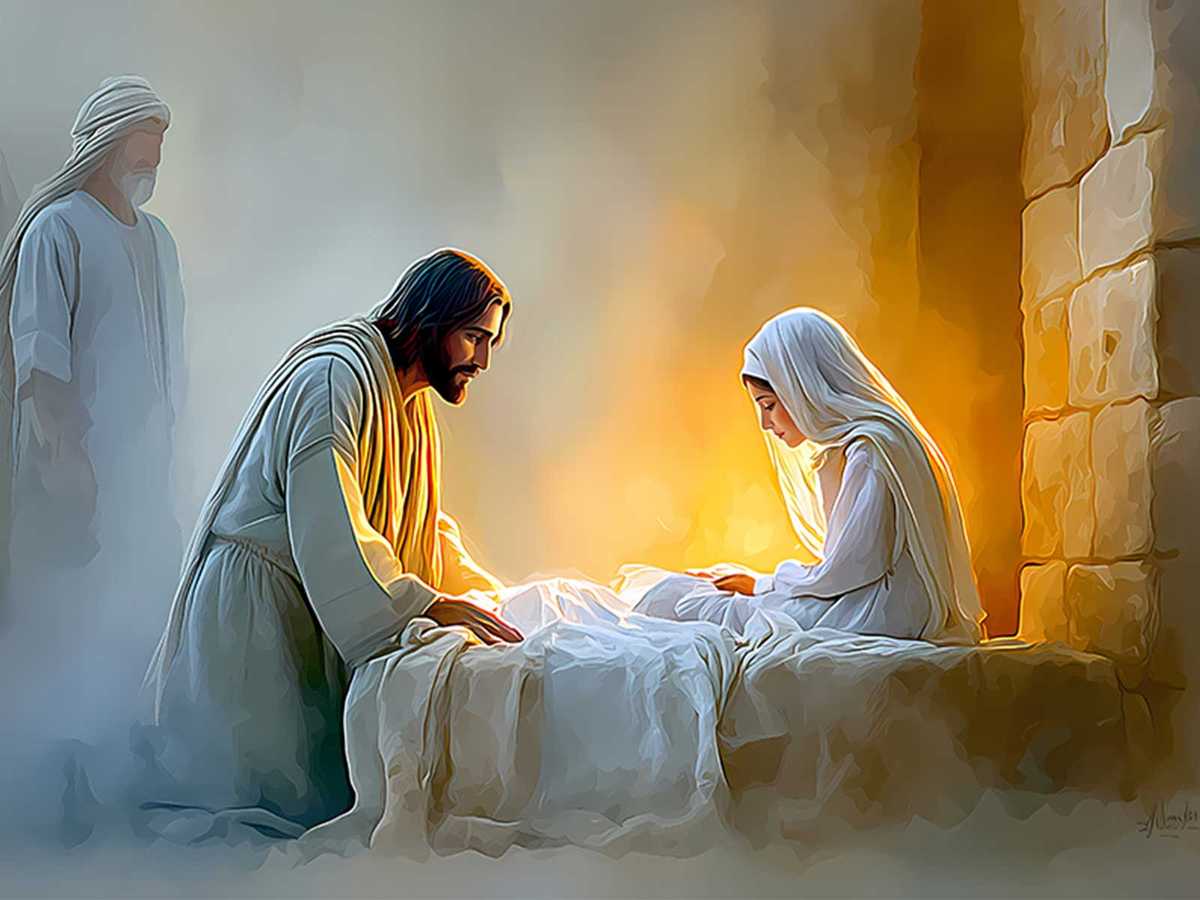
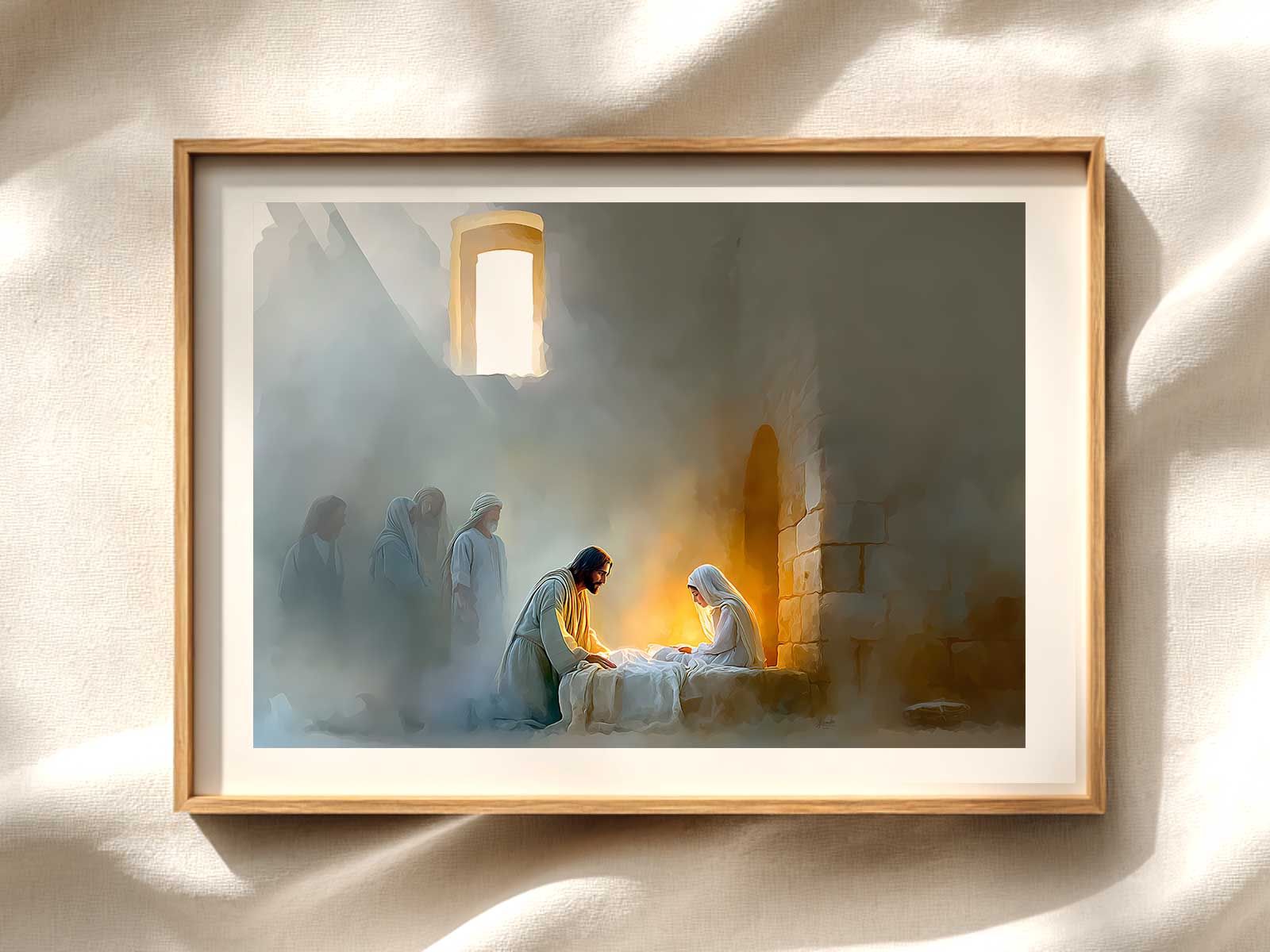
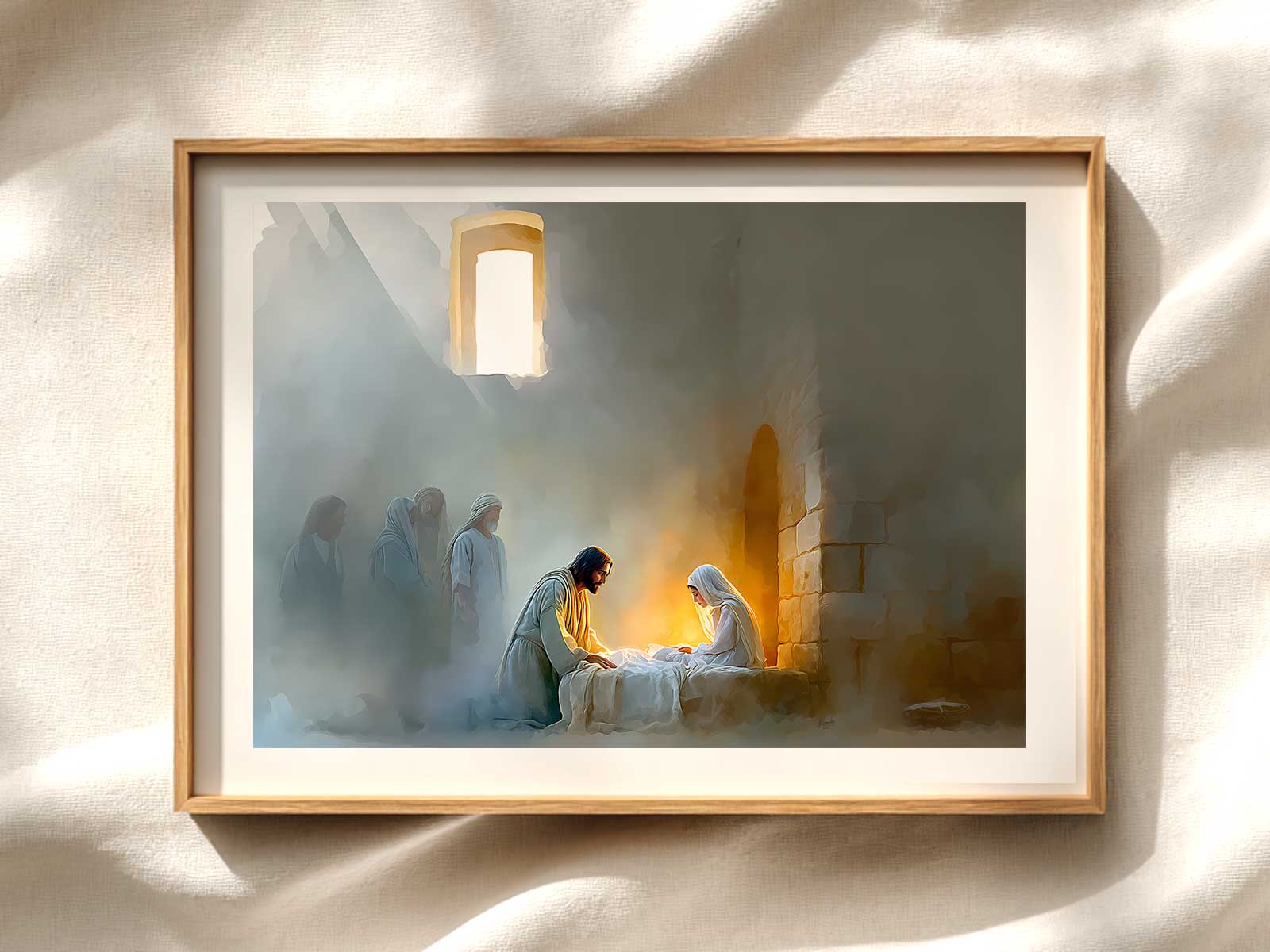
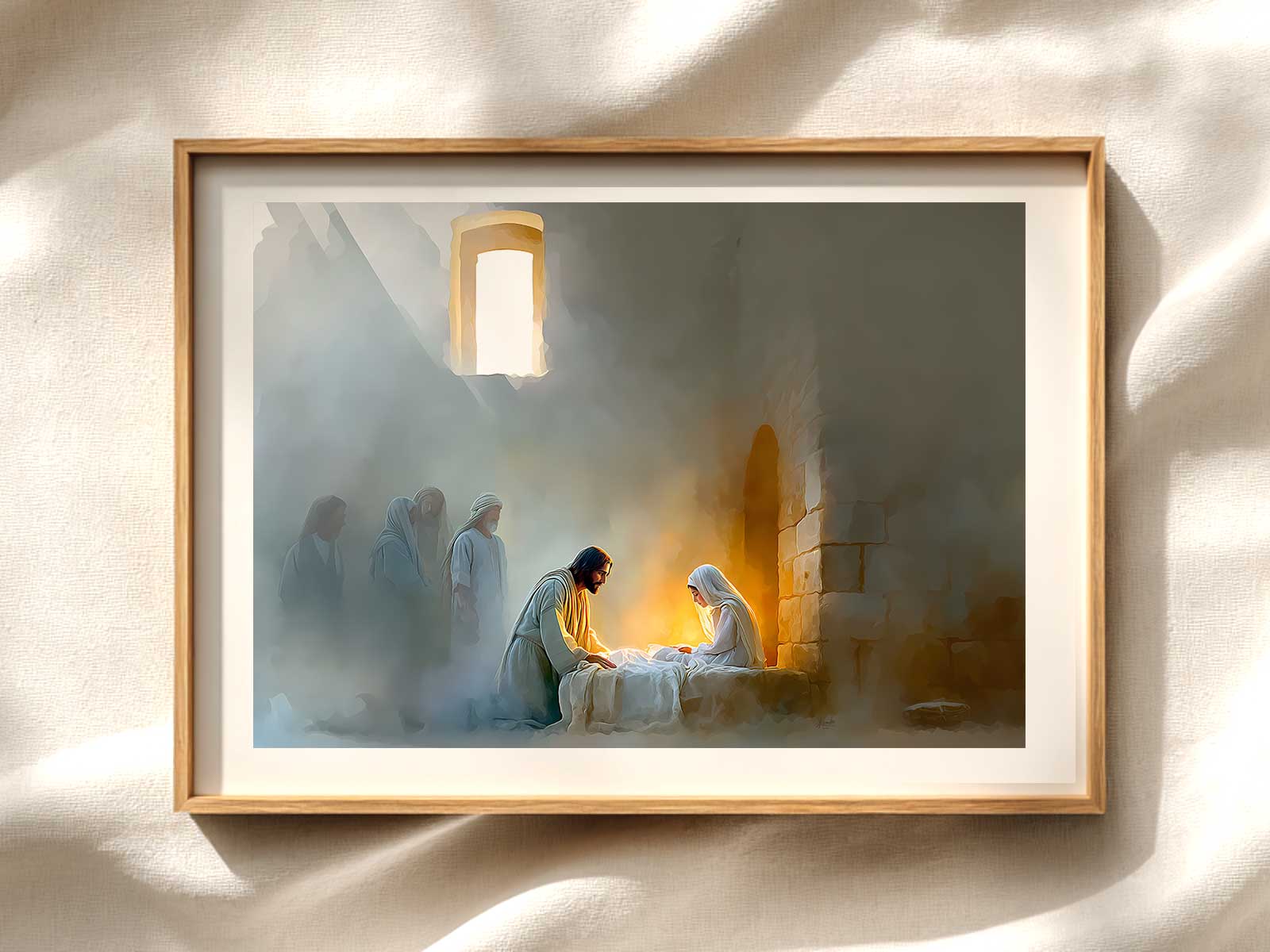
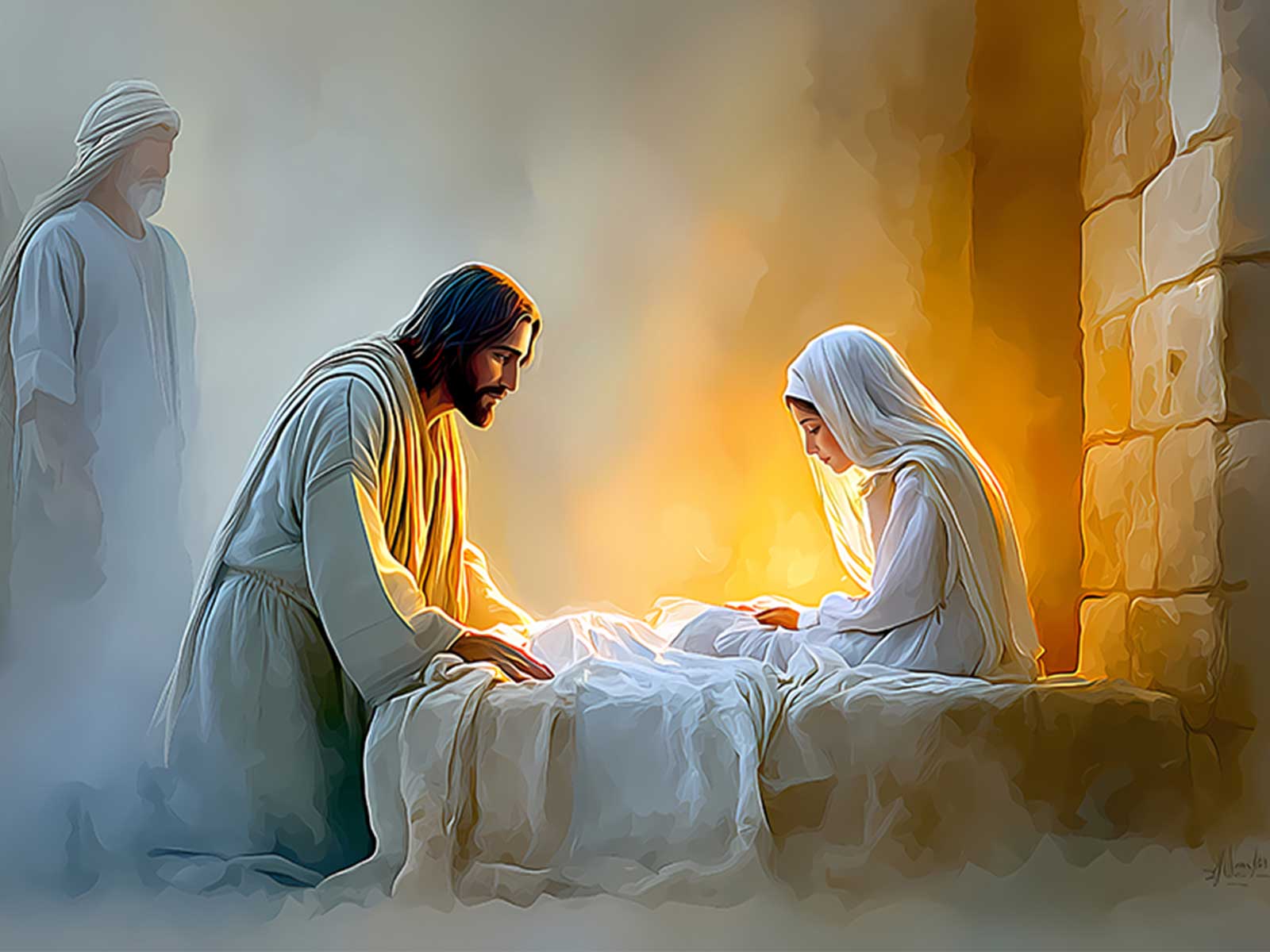
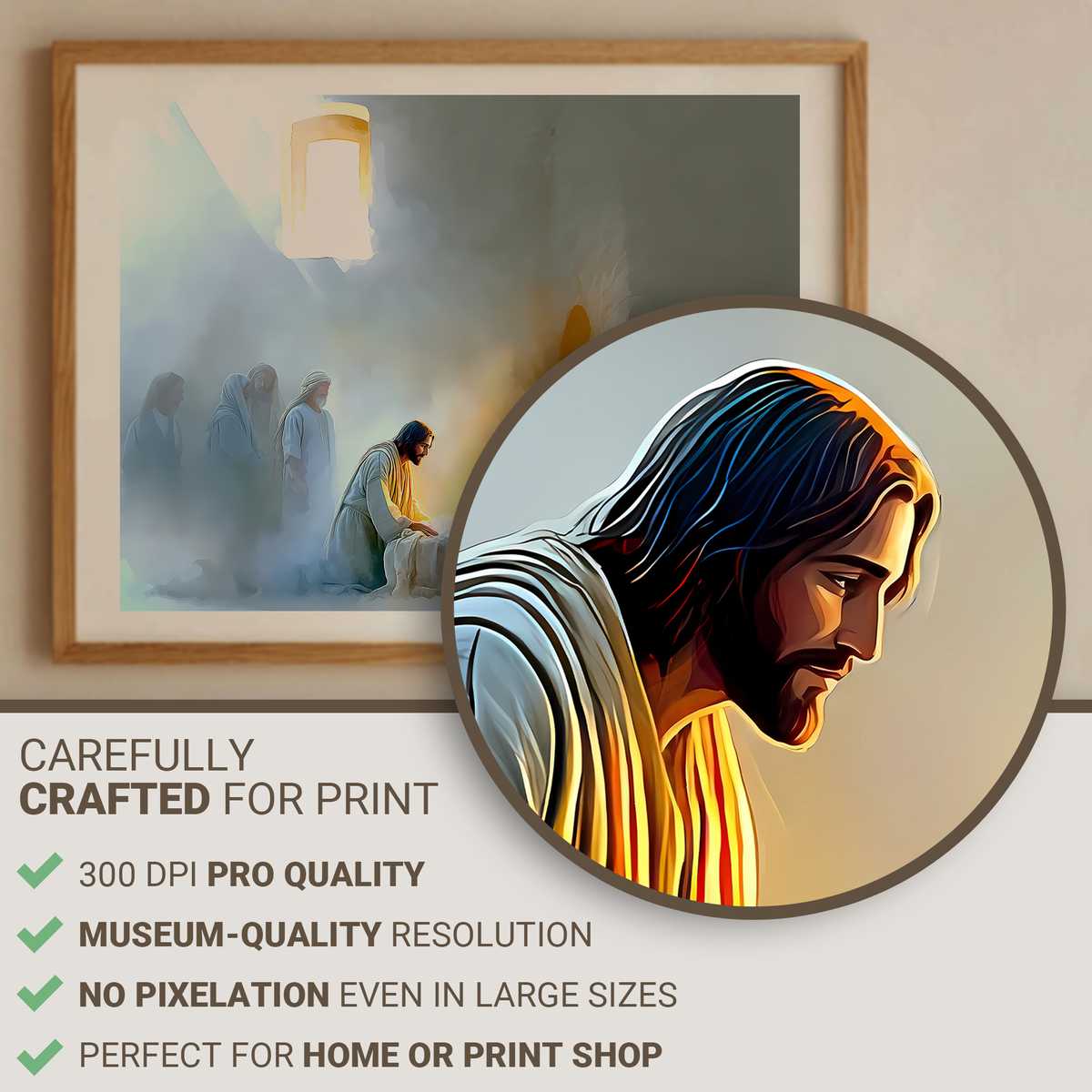
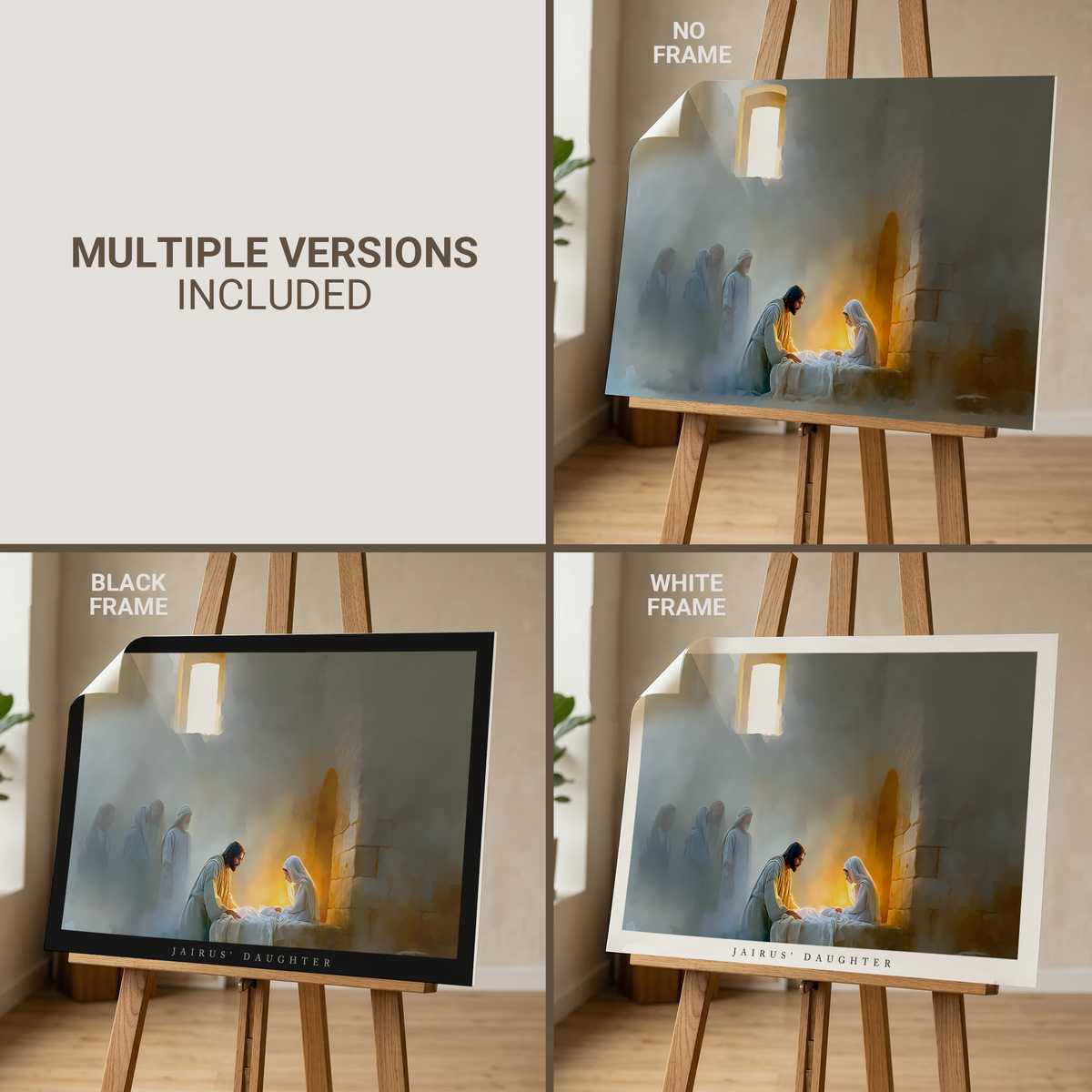
The image focuses on the moment when Jesus breathes life into Jairus’ daughter, an intimate scene of resurrection that reads as both tender and authoritative. Here Christ is not distant: his hand is extended in a gentle, decisive gesture, his face composed with compassionate resolve. The girl’s small form, captured between sleep and waking, draws the eye to the human vulnerability at the heart of the miracle. Around them, a hush of muted color and soft light suggests a room made holy by presence rather than spectacle.
Visually, the composition invites a slow gaze. The figures form a compact triangle that keeps attention rooted in the encounter: Jesus leaning toward the child, the child returning to life, and a few grieving figures receding into shadow. This concentration of figures allows the artwork to function as a private icon for a domestic interior — something that does not demand theatrical viewing but rewards quiet attention. The palette favors warm, subdued tones so that the piece integrates easily into a bedroom or prayer corner without overwhelming quieter décor.
What this scene reveals about Christ is shown less in dramatic display than in a steady, saving presence. The gesture is one of authority over death but expressed through tenderness; the command that restores life is framed by compassion. Viewers can read in the calmness of his expression a faith that faces fear without being consumed by it. As wall art, those visual cues—gesture, gaze, and gentle light—translate into an everyday reminder that courage in faith is quiet and human as well as divine.
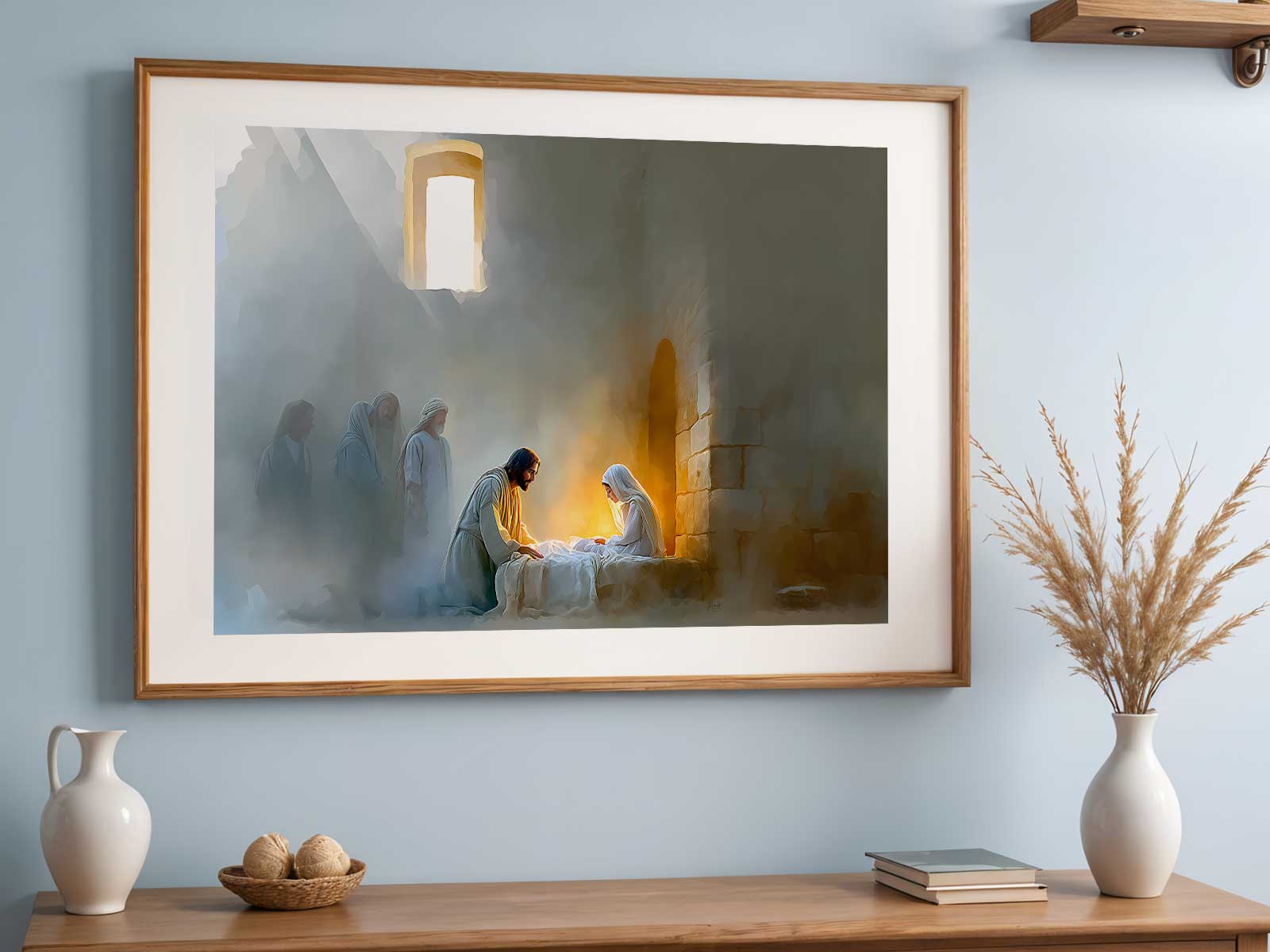
Placed in a hallway or above a reading chair, the image works as an orienting presence: its devotional focus is specific enough to invite short, repeated acts of contemplation yet open enough to fit different devotional rhythms. For a nursery or a family room, the scene speaks to protective care and the fragile dignity of childhood restored. In a study or bedside corner, it can become a steady companion for brief prayers, a visual breath that calms anxious thoughts by pointing toward hope enacted in the smallest, most intimate moments.
[IMAGE_INSERT_ARTICLE_01]
The devotional life the image encourages is simple rather than ornate. One can spend a minute before it to breathe, acknowledge fear, and receive a quiet affirmation that hope may prove stronger than anxiety. The close-up human scale of the figures avoids triumphalist drama and instead supports a contemplative posture: minds settle, hands unclench, and room light reads the painting as a lived-in prayer rather than a museum spectacle.
For someone choosing Jesus art for a home, this depiction offers layered reasons to live with it. It combines a clear theological moment with domestic intimacy, it is visually composed to invite repeated reflection, and its mood — tender authority meeting human vulnerability — makes it an apt gift for baptisms, recoveries, or any season when consolation is needed. In daily life it becomes a gentle teacher: showing that resurrection can begin in a single, merciful gesture and that hope can quietly outlast fear.



 ↧ Digital download
Art of Jesus on the Cross: The Carrying of the Cross and Christ’s...
Digital download
↧ Digital download
Art of Jesus on the Cross: The Carrying of the Cross and Christ’s...
Digital download
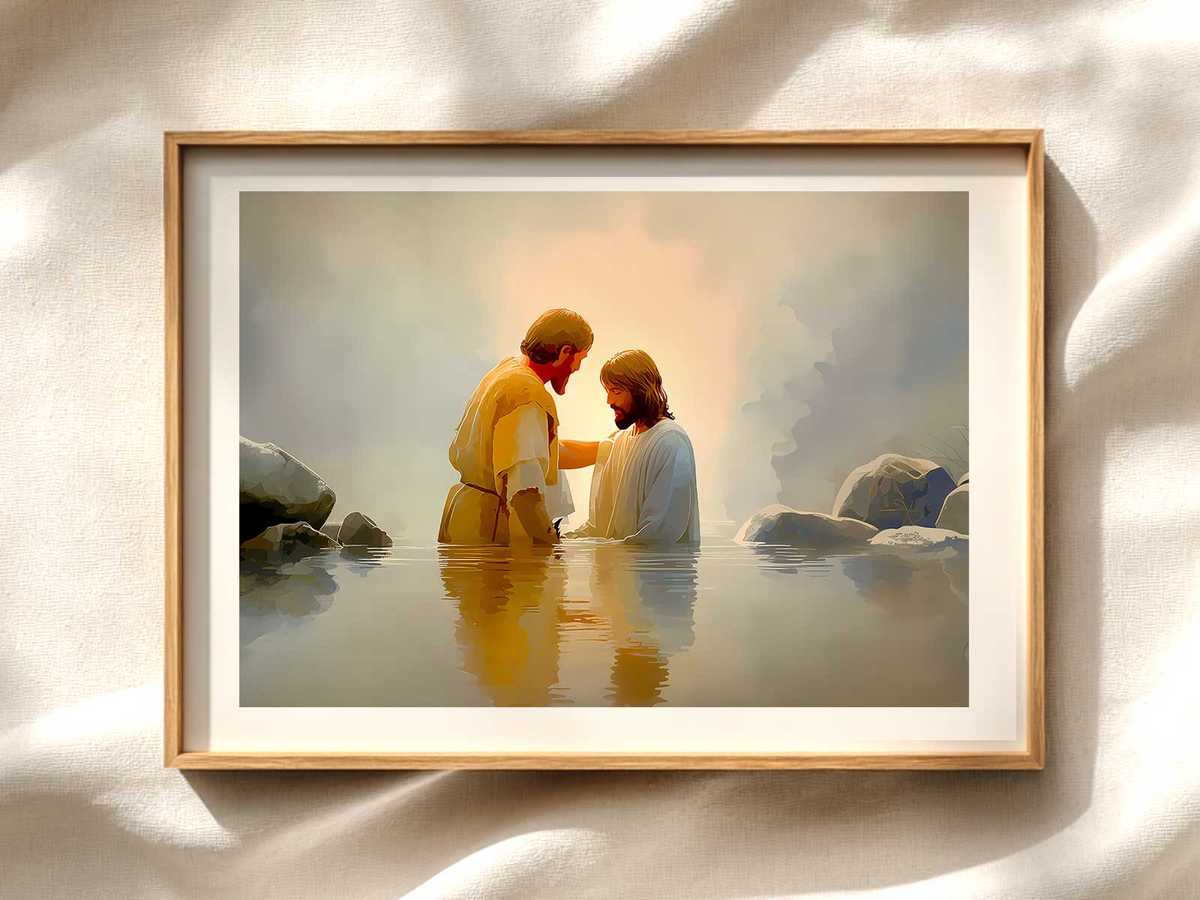 ↧ Digital download
Baptism of Christ painting — a sacred print for quiet devotion at home
Digital download
↧ Digital download
Baptism of Christ painting — a sacred print for quiet devotion at home
Digital download
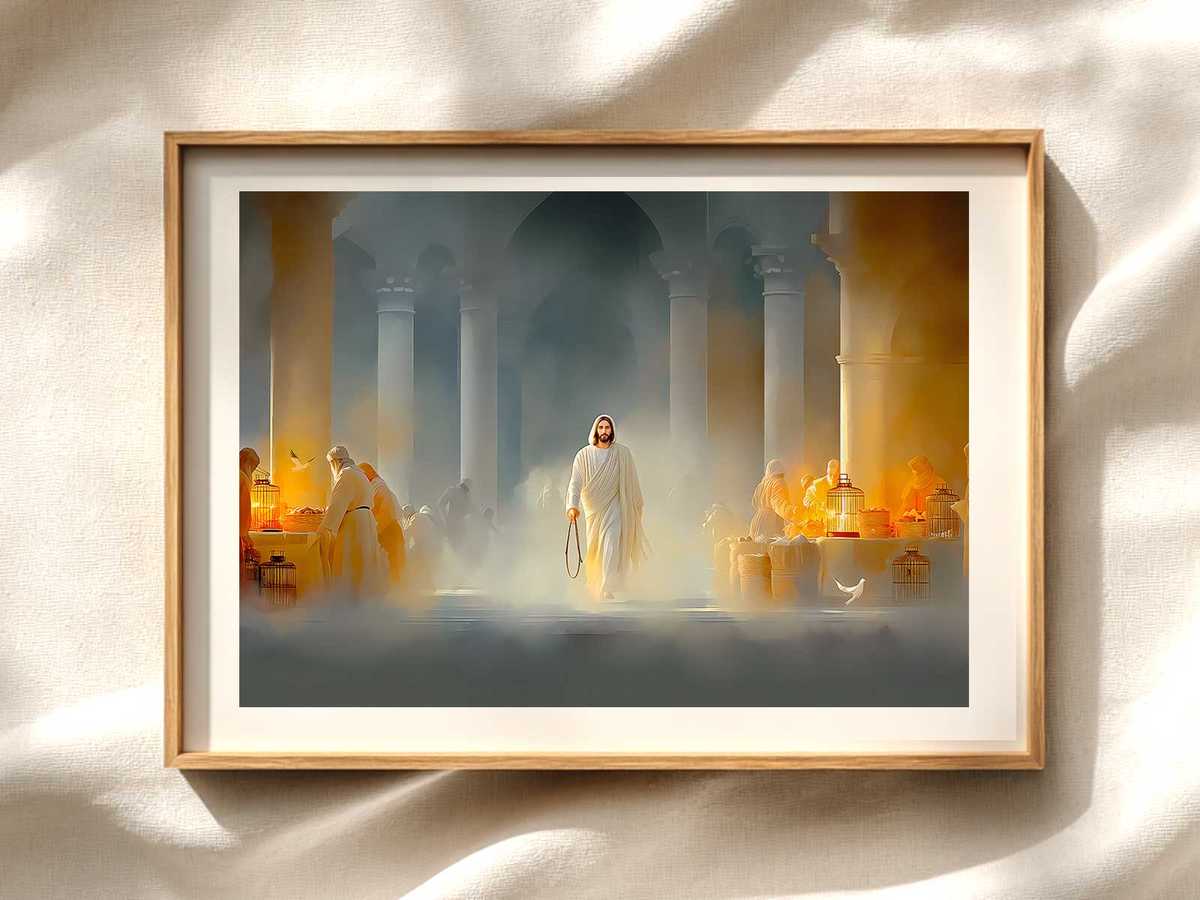 ↧ Digital download
Drawings of Jesus Christ Print: The Purification of the Temple...
Digital download
↧ Digital download
Drawings of Jesus Christ Print: The Purification of the Temple...
Digital download
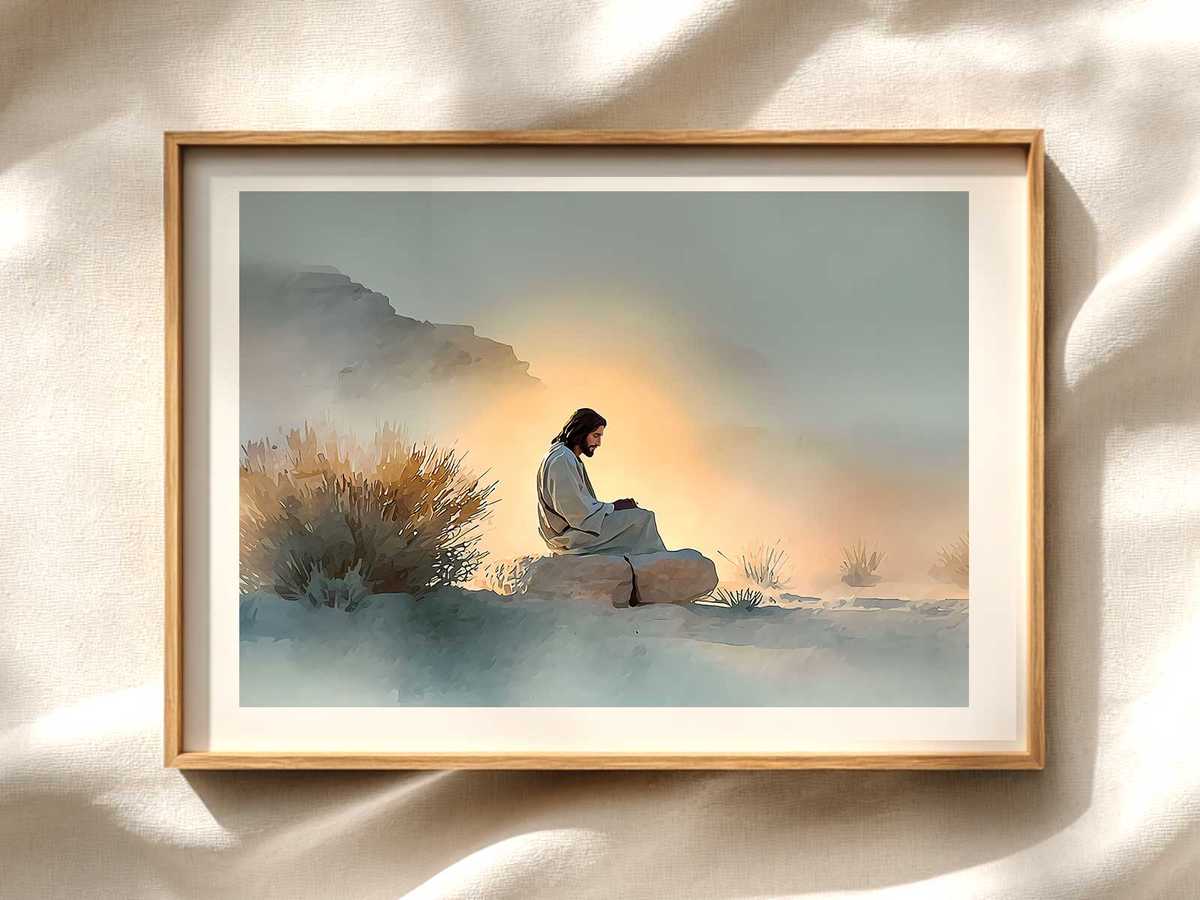 ↧ Digital download
Christian wall art — Drawings of Jesus Christ: Desert Temptation and...
Digital download
↧ Digital download
Christian wall art — Drawings of Jesus Christ: Desert Temptation and...
Digital download