Comparing Christ’s Miracles: Healings, Exorcisms, Nature Acts and Acts of…
Scholarly and popular treatments commonly group the miracles of Jesus into major types: healings, exorcisms (deliverances), nature miracles, and acts of abundance or provision. Each category includes vivid Gospel episodes—healing the blind and paralytic, the Gerasene demoniac, calming the storm and walking on the sea, and the feedings or Cana’s water-into-wine—that together shape Christian reading of these events.
This article compares the main miracle types found in the Gospels and explains how they form a unified theological pattern across the evangelists.
Quick preview: Read about the human need each miracle answers, what each changes in the narrative, how Gospel authors frame these deeds, and why scholars see a theological unity among them.
THE SCENE AND ITS HUMAN NEED
Each category of miracle in the Gospels begins from a particular human situation. Healings address bodily suffering and social marginalisation—blindness, paralysis, chronic illness—while exorcisms respond to torment described as demonic possession. Nature miracles occur amid natural danger or the ordinary needs of travel and livelihood. Acts of abundance answer hunger, social embarrassment, or communal need. Recognising these distinct starting points helps us see how Gospel narratives place Jesus in direct relation to concrete human vulnerability.
WHAT THE MIRACLE ACTUALLY CHANGES
Scholarly categorisations highlight different kinds of change. Healings restore bodily wholeness and often reinstate a person’s social standing. Exorcisms remove a destructive force described in Gospel accounts. Nature miracles re-order creation’s behaviour under Jesus’ authority. Acts of abundance transform scarcity into provision. Attention to these narrative effects prevents collapsing all miracles into a single emotional register and clarifies what each story claims was altered in the scene.
FAITH, COMPASSION, AND RECOGNITION
Gospel episodes often pair the miracle with responses such as faith, pleading, or astonished recognition. Across the categories—whether a paralytic brought by friends, a frightened group on a storm-tossed boat, or crowds fed from a few loaves—the narratives register human dependence and an encounter that reveals something about Jesus’ role. Not every story foregrounds identical responses, but the pattern of petition, encounter, and changed circumstance recurs in the Gospel examples scholars cite.
WHAT THE GOSPEL WRITERS EMPHASISE
Reference works and studies note that evangelists place different emphases on the miracles. The Gospel of John, for instance, frames some deeds explicitly as “signs” that point to Jesus’ identity—examples include turning water into wine and raising Lazarus—showing that at least one Gospel interprets miracles as theological indicators. Other Gospels narrate healings and exorcisms with attention to Jesus’ authority and compassion. Academic summaries observe that healings and exorcisms are central to the ministry portrait, while nature and provision miracles are often read for their symbolic or theological significance.
WHY THIS MIRACLE-TYPE CLASSIFICATION MATTERS
Classifying miracles into healings, exorcisms, nature miracles, and acts of abundance is more than an academic exercise: it helps readers see recurring theological motifs. Scholarly and popular treatments—summarised in reference works and topical studies—argue that the categories illuminate how the Gospels present Jesus’ authority over illness, spiritual forces, the created order, and social need. This comparative lens clarifies how different episodes contribute to an integrated portrait of ministry.

HOW SCHOLARS AND TRADITION READ THESE TYPES
Encyclopedias, commentaries, and recent topical guides converge on the broad categorization and offer cautious theological reading. Some treat healings and exorcisms as central to the portrait of Jesus’ active presence among people, and present nature and abundance miracles as acts that the evangelists often interpret theologically. Academic essays also explore the idea that miracles can function like parables or signs—actions that both accomplish an immediate good and point beyond themselves to the kingdom or to Jesus’ identity.
HOW MIRACLE SCENES LIVE ON IN CHRISTIAN ART
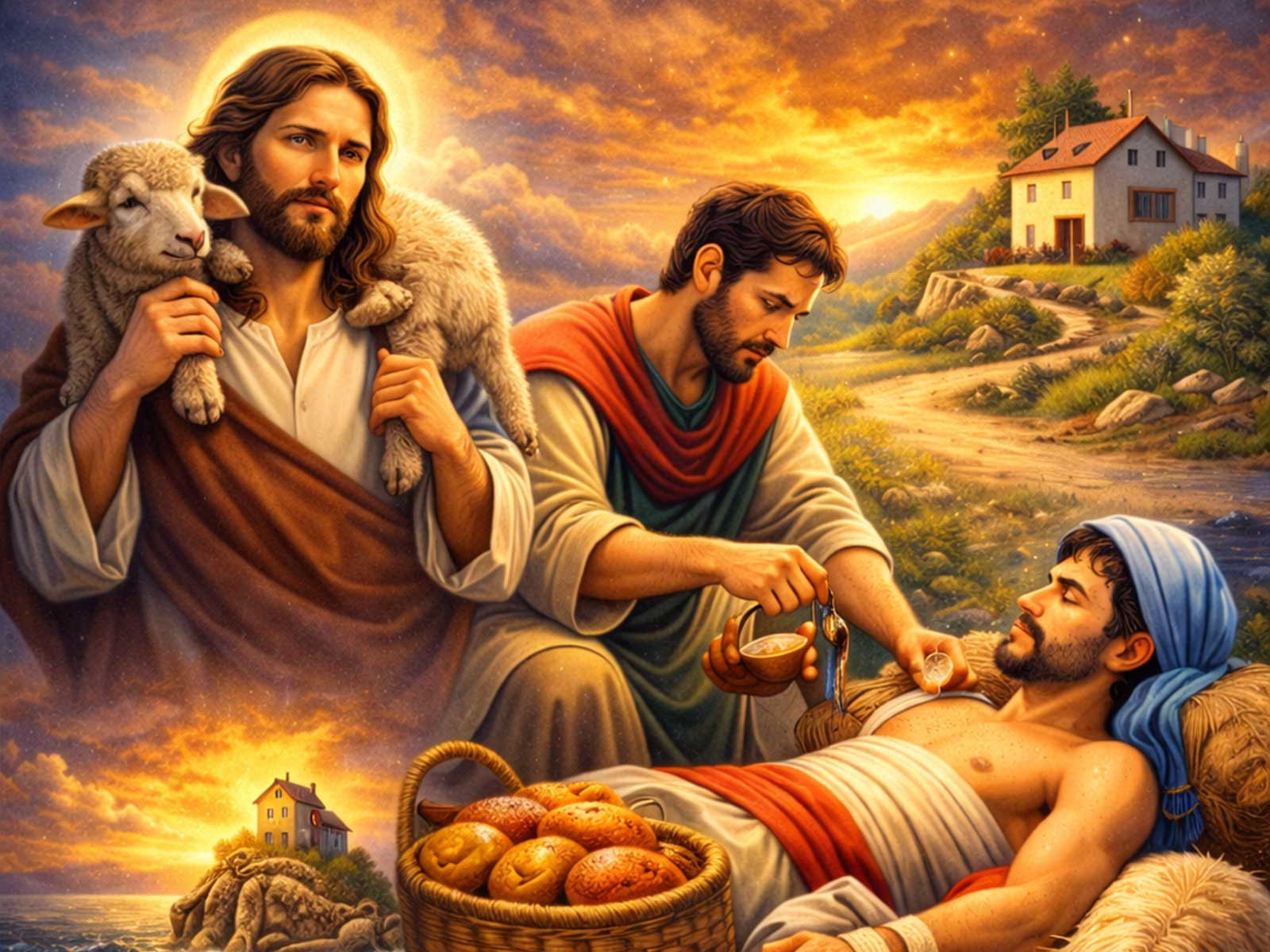
Because each miracle type answers a visible human or communal need, artists and devotional traditions have repeatedly chosen these scenes to express theological themes. Feedings and healings appear in liturgical art for their communal and restorative imagery; nature miracles are used to evoke divine authority over creation; exorcisms have been depicted to dramatise liberation. The distinct visual vocabulary for each category helps worshipping communities remember different aspects of the Gospel story.
A QUIET FINAL INTERPRETATION
Comparing the main types of Christ’s miracles—healings, exorcisms, nature miracles, and acts of abundance—reveals not fragmentation but a consistent pattern in the Gospels: deeds that respond to human need while also bearing theological weight. The Gospel of John’s language of signs makes this unity explicit, and reference works and scholarly studies support reading the categories together. Seen carefully, the classification sharpens our understanding of what each story changes, how evangelists interpret Jesus’ authority, and why these episodes have continued to shape Christian thought and art.
Further reading: Reference studies and Gospel commentaries summarise these categories and provide Gospel references for the major examples mentioned in this article.