St Michael Prayer: Victory, Protection, and the Enduring Iconography of…
The Archangel Michael occupies a distinctive place in Christian imagination: a heavenly warrior who fights against the dragon and a guardian figure associated with protection and judgment. Christian memory draws on a few clear sources—Scripture, long‑standing liturgical observance, devotional prayers, and a persistent visual tradition—to shape what we mean when we speak of a "St Michael prayer" and of Michael's role in the life of faith.
An editorial look at why Michael remains powerful in Christian tradition: biblical depiction as heavenly warrior, liturgical presence, historical prayer, and a rich iconography of victory and judgment.
This article traces the roots—biblical, liturgical, devotional, and artistic—behind the figure invoked in St Michael prayers and in Christian visual culture.
Who Michael Is at the Core
The primary biblical image that shapes Christian understanding of Michael is found in Revelation 12:7–9, where Michael leads a heavenly battle against the dragon identified with Satan. That passage gives Michael a role as a leader in a cosmic struggle and establishes the basic motif of divine contest with evil that informs prayer and devotion.
Prayer and Liturgical Presence
Devotional practice around Michael has a formal element in the Roman tradition: a Prayer to Saint Michael was composed and added by Pope Leo XIII in 1886 and became part of Roman Catholic devotional life, attached historically to the Leonine prayers. The Church also marks the archangels, including Michael, in the liturgical calendar on September 29 (Michaelmas), which reflects an ongoing communal recognition of these figures within liturgy and devotional rhythm.
The Visual Language: Warrior and Judge
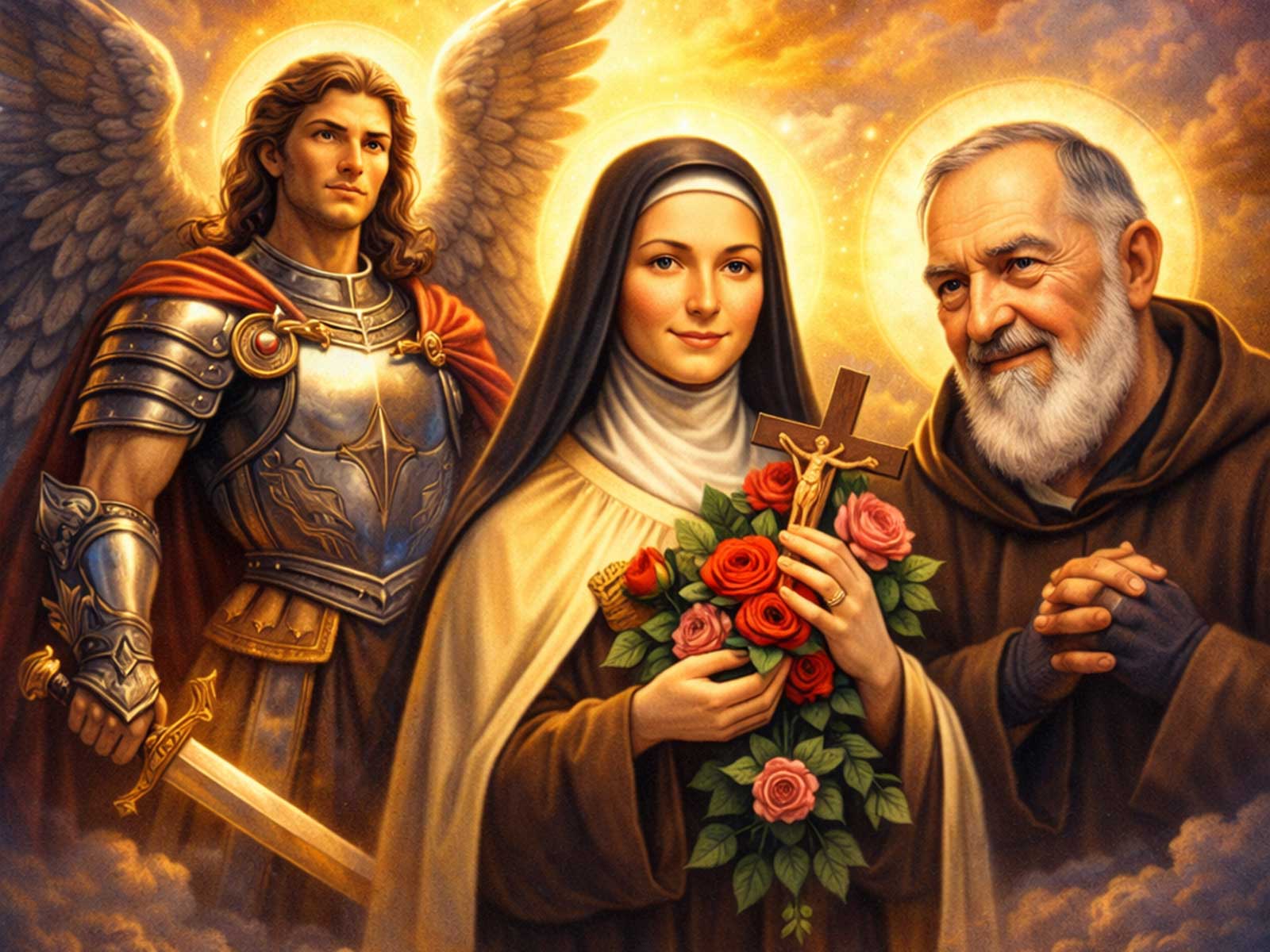
Across centuries of Christian art Michael appears with a consistent suite of attributes that translate theological meaning into visual form. He is commonly shown wearing armor and wielding a sword or spear as a warrior; frequently he is depicted trampling or piercing a dragon, an image that directly echoes the Revelation scene and symbolizes victory over evil. Another recurring attribute is a pair of scales used to weigh souls (psychostasis), linking Michael to themes of judgment and the care of the faithful at moments of moral or eschatological reckoning.
Museum Evidence and Historical Tradition
Major collections and museums—examples documented by institutions such as the Rijksmuseum and the Cleveland Museum of Art—preserve works that illustrate these iconographic types: Michael as dragon‑slayer, Michael with sword and scales, and portraits that emphasize his martial and judicial symbolism. The survival and circulation of these images across time show a deep, persistent visual tradition rather than a single moment of invention.
Why People Turn to Michael
The convergence of biblical narrative, liturgical observance, and devotional prayer helps explain why believers invoke Michael. The Revelation passage provides a dramatic theological image of opposition to evil that can be named in prayer; liturgical commemoration keeps the figure present in the communal calendar; and the formal Prayer to Saint Michael gives a concentrated devotional text that has been historically used for protection and spiritual vigilance.
Symbolism and Meaning in Home and Church
Michael’s attributes—sword, scales, dragon—carry distinct but related meanings that resonate in both church art and home devotional practice. The sword speaks of conflict with evil; the dragon represents the hostile power described in Revelation; the scales recall judgment and the weighing of souls. Together these images make Michael a complex figure: not only a fighter but also a guardian and a presence associated with final accountability.
A Quiet Closing Reflection
When Christians speak of a "St Michael prayer" they are drawing on a layered tradition: a biblical scene of heavenly combat, a liturgical place in the calendar, a devotional text from the modern era, and an enduring iconography conserved in art and museums. Each layer reinforces the others, so that Michael continues to function in Christian imagination as both protector and emblem of the struggle against evil, translated into words of prayer and images that have lasted for centuries.
Note: This article is based on the biblical depiction in Revelation 12:7–9, the liturgical feast of the archangels on September 29, the Prayer to Saint Michael attributed to Pope Leo XIII (1886), and the historical iconographic tradition preserved in museum collections and art history.