Francis de Assisi: Mercy, Simplicity and Fraternity as Concrete Choices
Saint Francis of Assisi remains one of the most recognizable Christian figures because his name evokes a faith lived with radical simplicity, concrete mercy, and a sense of kinship that extends beyond human boundaries. This article focuses on specific choices and texts—his public renunciation of wealth, the leper encounter, his Testament and Rules, and the Canticle of the Creatures—to show how those elements form a tangible guide for Christian practice today.
Who Francis of Assisi Is at the Core
The verified portrait of Francis centers less on legend than on concrete acts and texts. Medieval biographies and official Church accounts record a man who publicly renounced his inheritance and chose a life of poverty; who repeatedly returned to the Scriptures as the standard for his community; and who left a short Testament and rules that organize a Gospel-shaped way of life. Those concrete anchors shape the spiritual identity associated with his name.
The Defining Choice: Public Renunciation of Wealth
One decisive and well-attested episode is Francis’ public renunciation of his inheritance and worldly goods. This act, reported in medieval sources and cited by the Holy See, is not only an ascetic gesture but a deliberate public statement about how he would follow the Gospel. As an editorial insight: the renunciation makes visible the covenantal posture Francis wanted for himself and his followers—a tested, sacramental-style choice that binds interior conviction to outward practice.
A Turning Point: The Encounter with Lepers
Thomas of Celano’s First Life records a formative meeting between Francis and a leper. That encounter is consistently presented by reliable sources as a turning point that concretely moved him toward mercy for those marginalized by society. The episode provides a model: mercy here is not abstract pity but a tactile, costly engagement with people whom the culture excludes. For contemporary Christians, it reframes charity as relationship and converts good intentions into face-to-face service.
Testament and Rules: Practical Instructions for Community Life
Francis’ Testament (dated 1226) and his Earlier and Later Rules give direct evidence of the concrete shape he wanted for a Gospel life. These texts emphasize poverty, humility, fraternity, and communal living as more than ideals—they are regulatory choices meant to order everyday habits and decisions. The existence of those texts matters editorially because it shows Francis deliberately translated conviction into communal structures that could be practised and transmitted.

Canticle of the Creatures: Kinship with Creation
The Canticle of the Creatures (Song of Brother Sun) expresses Francis’ spirituality of kinship with the created order and is often cited as evidence of his concrete practice of fraternity with all creatures. While later readers have drawn ecological implications from the Canticle, the verifiable fact is that Francis articulated a relational imagination in which creation participates in praise—an image that invites Christians to translate reverence for creation into daily care.
How These Elements Guide Christian Practice Today
Official Vatican reflections and modern Franciscan ministries continue to present Francis’ renunciation, service to the poor, fraternity and care for creation as practical models. Practically speaking, this means three areas of application for contemporary Christians: (1) intentional simplicity—choosing limits on consumption to free resources for others; (2) proximate mercy—seeking contact with marginalized people in ways that overcome social distance; (3) communal structures—forming habits, prayer rhythms, and small communities that sustain Gospel commitments. These are not abstract ideals but actions suggested by Francis’ recorded choices and writings.
Symbols, Visual Memory and Domestic Devotion
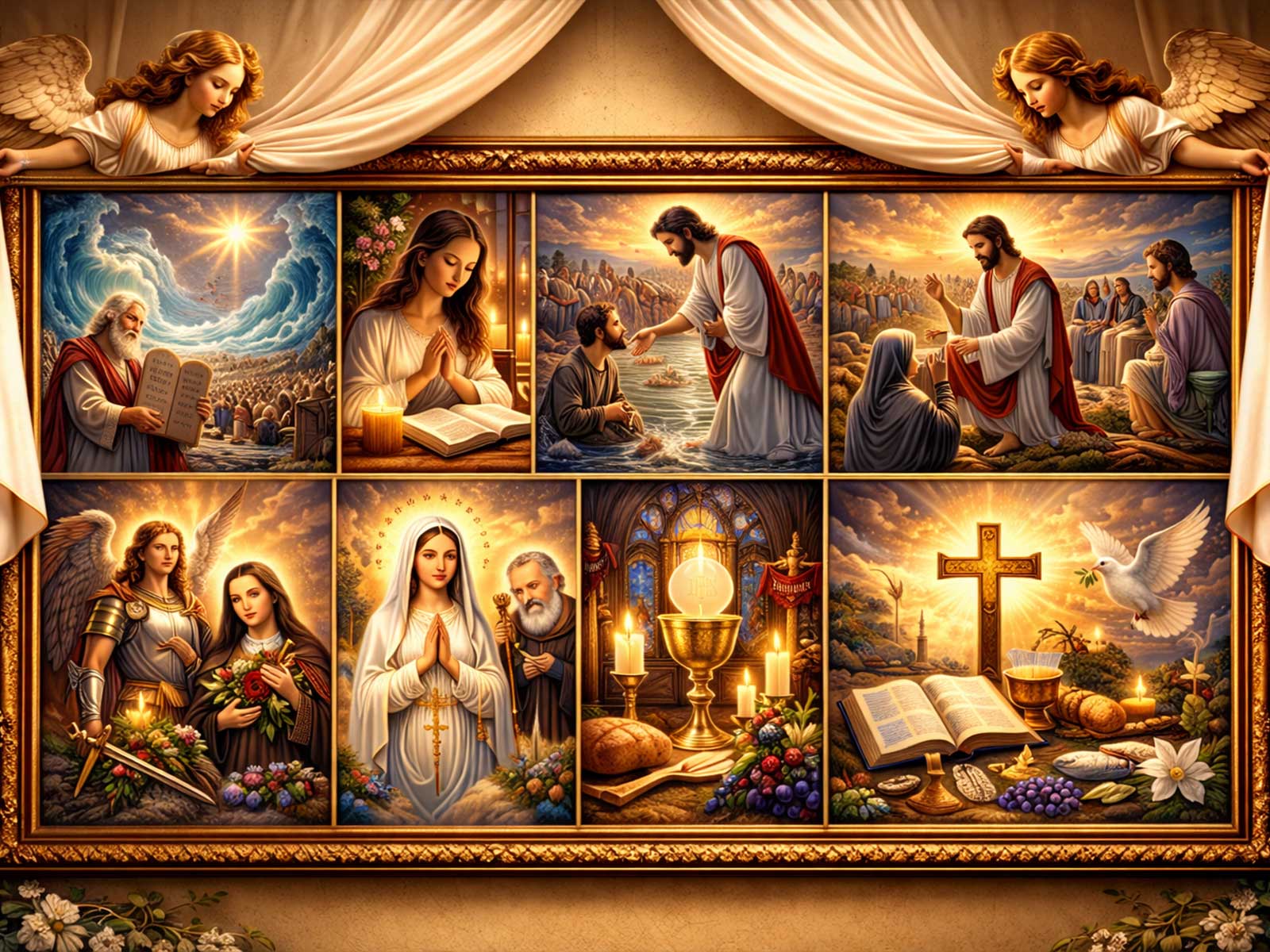
Francis’ life and texts have shaped how he is represented in art and devotional objects, often emphasizing poverty, humility, and care for creation. That visual memory matters for Christian home decoration and liturgical settings because it translates theological priorities into daily sightlines. Displaying images or texts linked to Francis can serve as a practical reminder of Gospel priorities: a commissioned Canticle text on the wall, or symbols of brotherhood and service placed near one’s door, can encourage ordinary acts of charity and restraint.
A Quiet Closing Reflection
Reading Francis through the concrete facts preserved in medieval testimonies, his Testament, Rules, and the Canticle allows a grounded editorial judgment: his enduring appeal lies not in romanticized legend but in clearly documented decisions that bound inner conviction to outward practice. For Christians today who seek a faith that shapes daily choices, Francis’ witnessed life offers a template: renounce what distracts from Gospel fidelity, meet the marginalized face to face, build communities that embody humility, and learn to see creation as a partner in praise. Those are practical, testable ways his name continues to summon mercy, simplicity, and fraternity.
Further reading: Official texts such as the Testament, the Earlier Rule, and Thomas of Celano’s First Life provide primary sources for these themes and are available through Franciscan and Vatican publications.