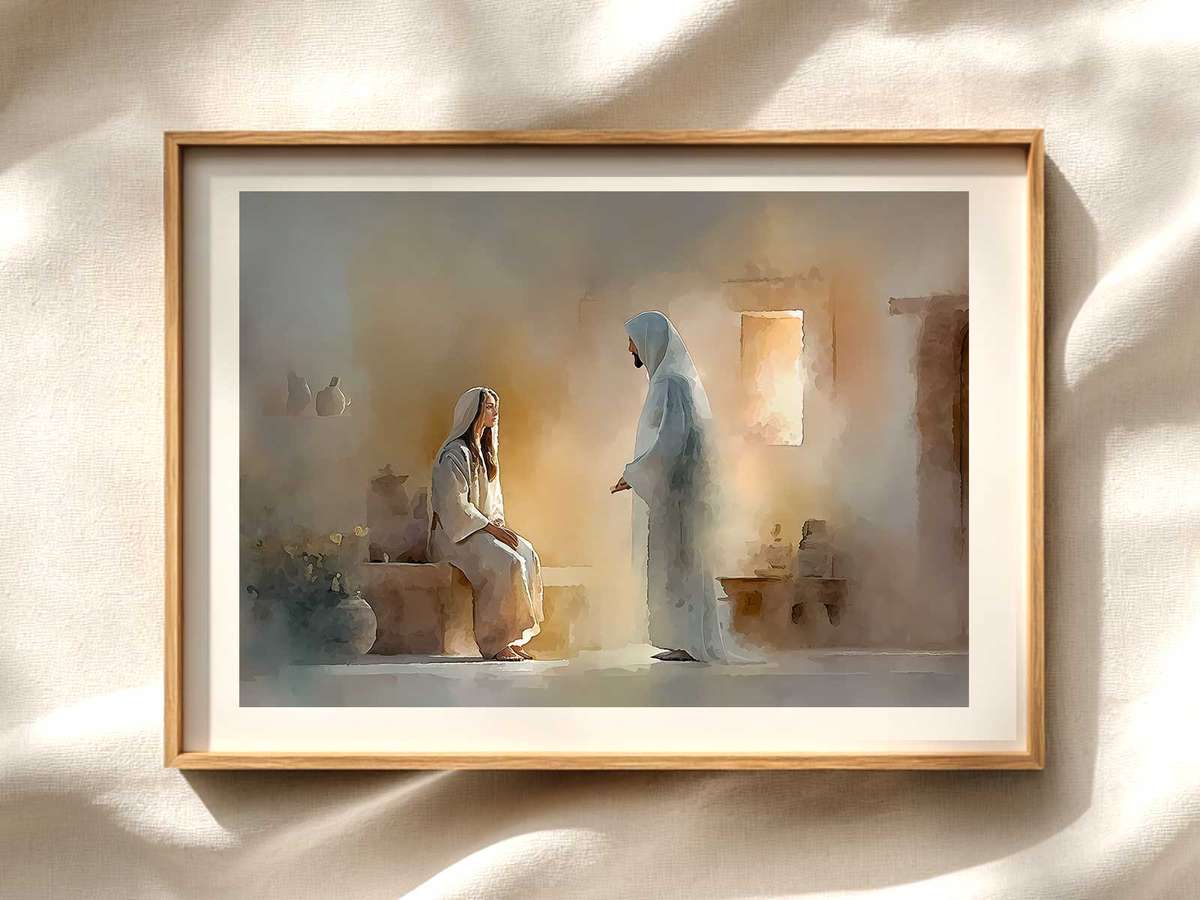
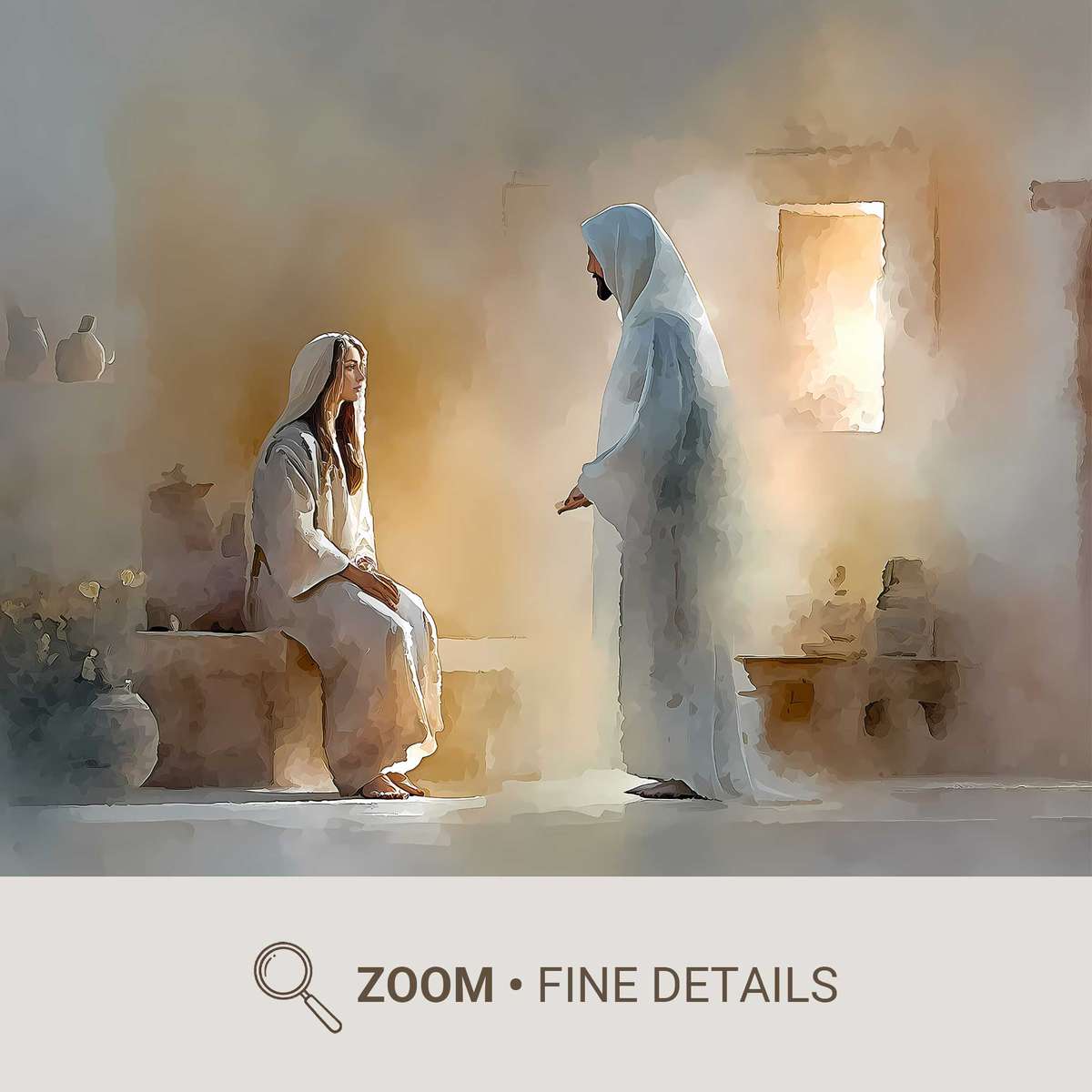
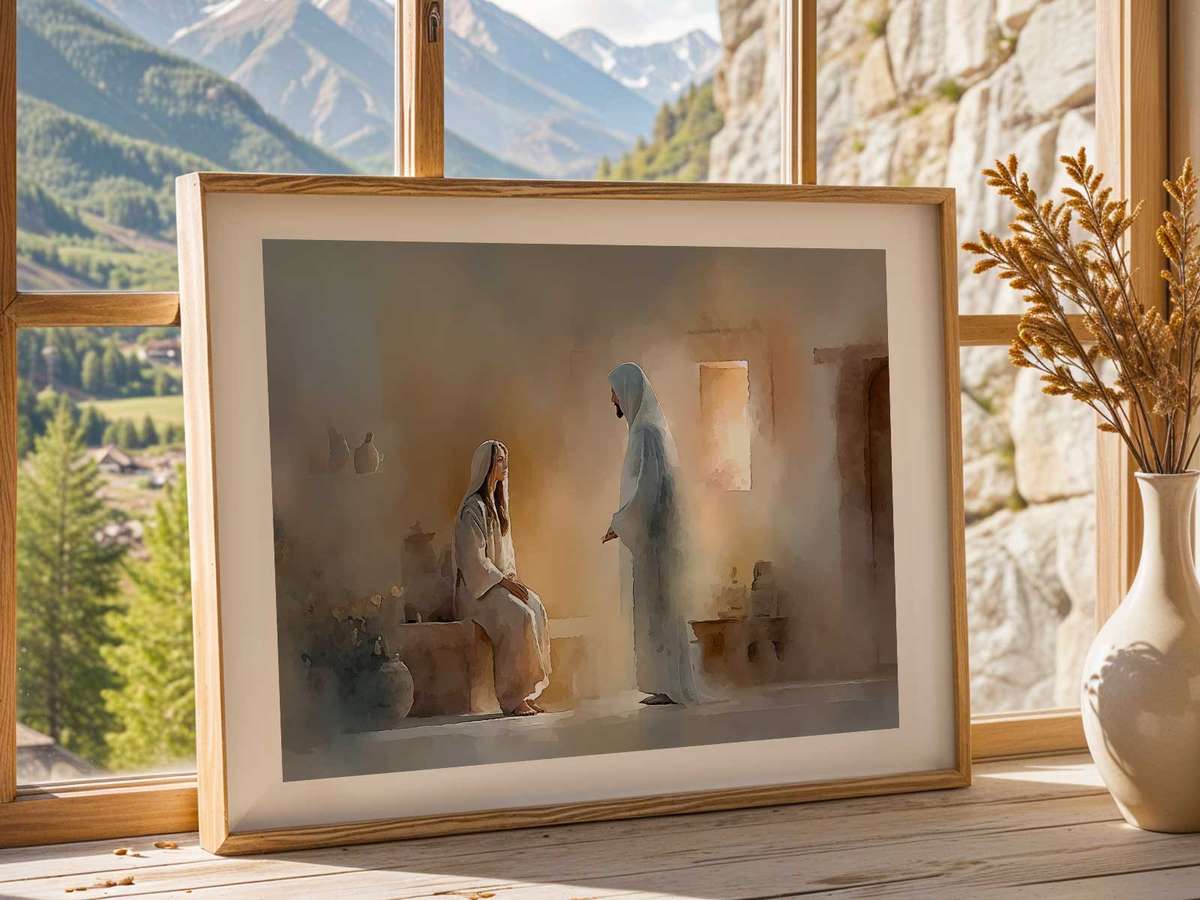
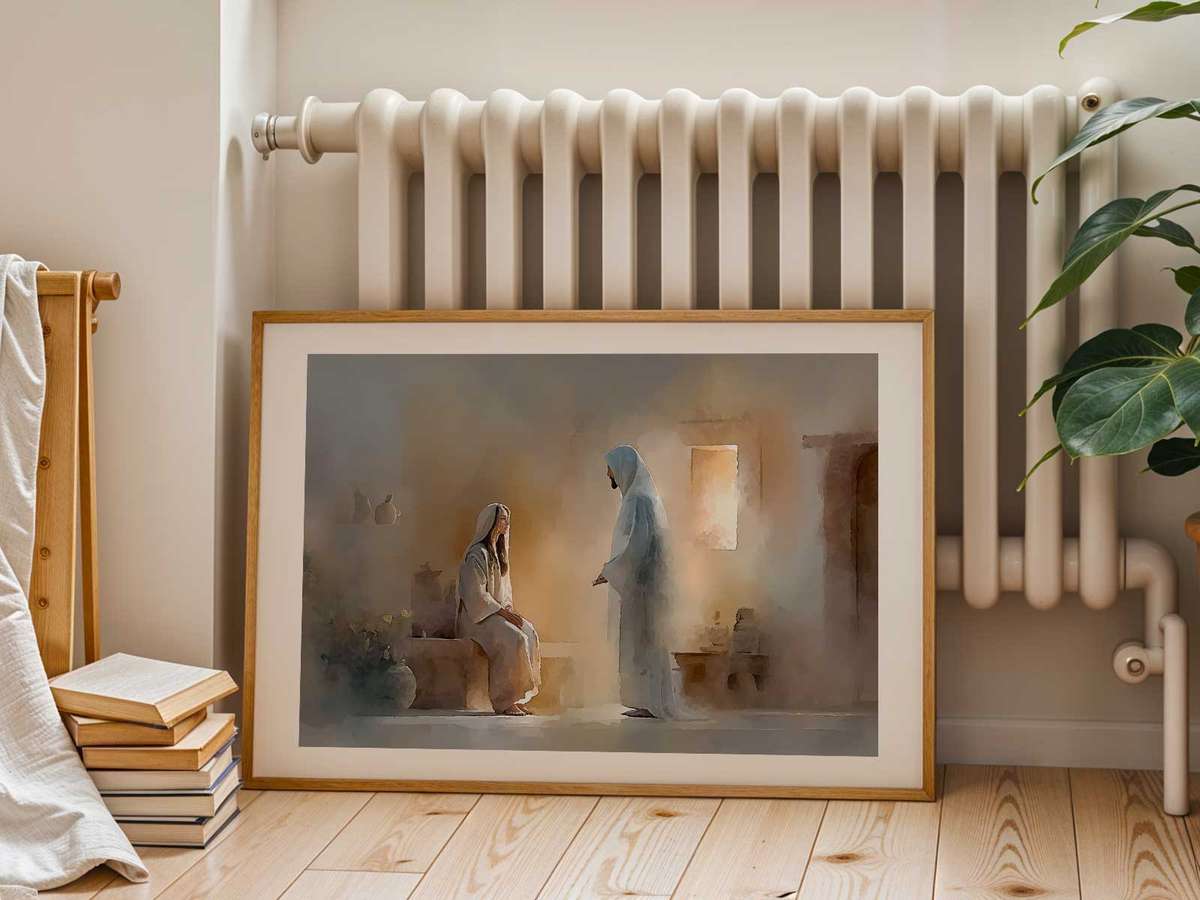
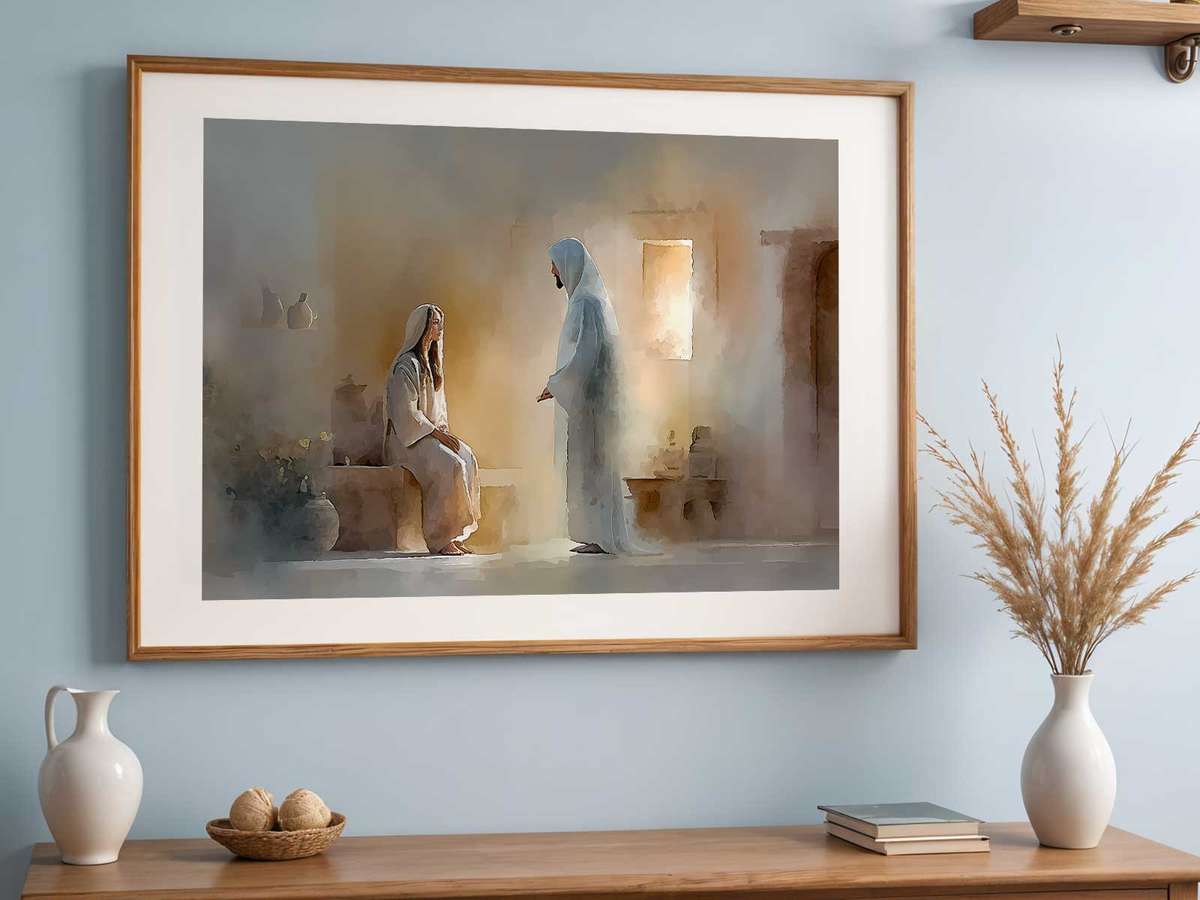
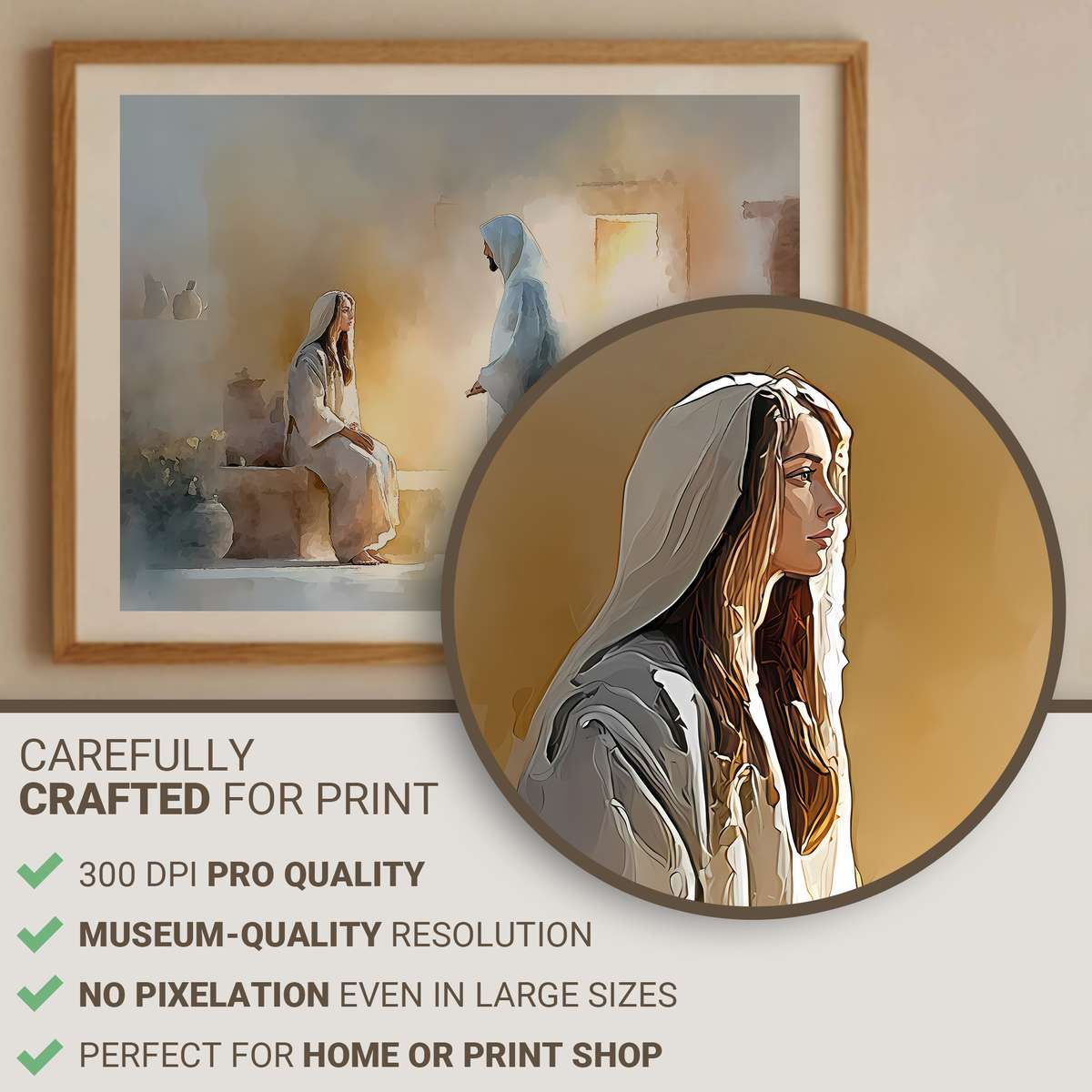
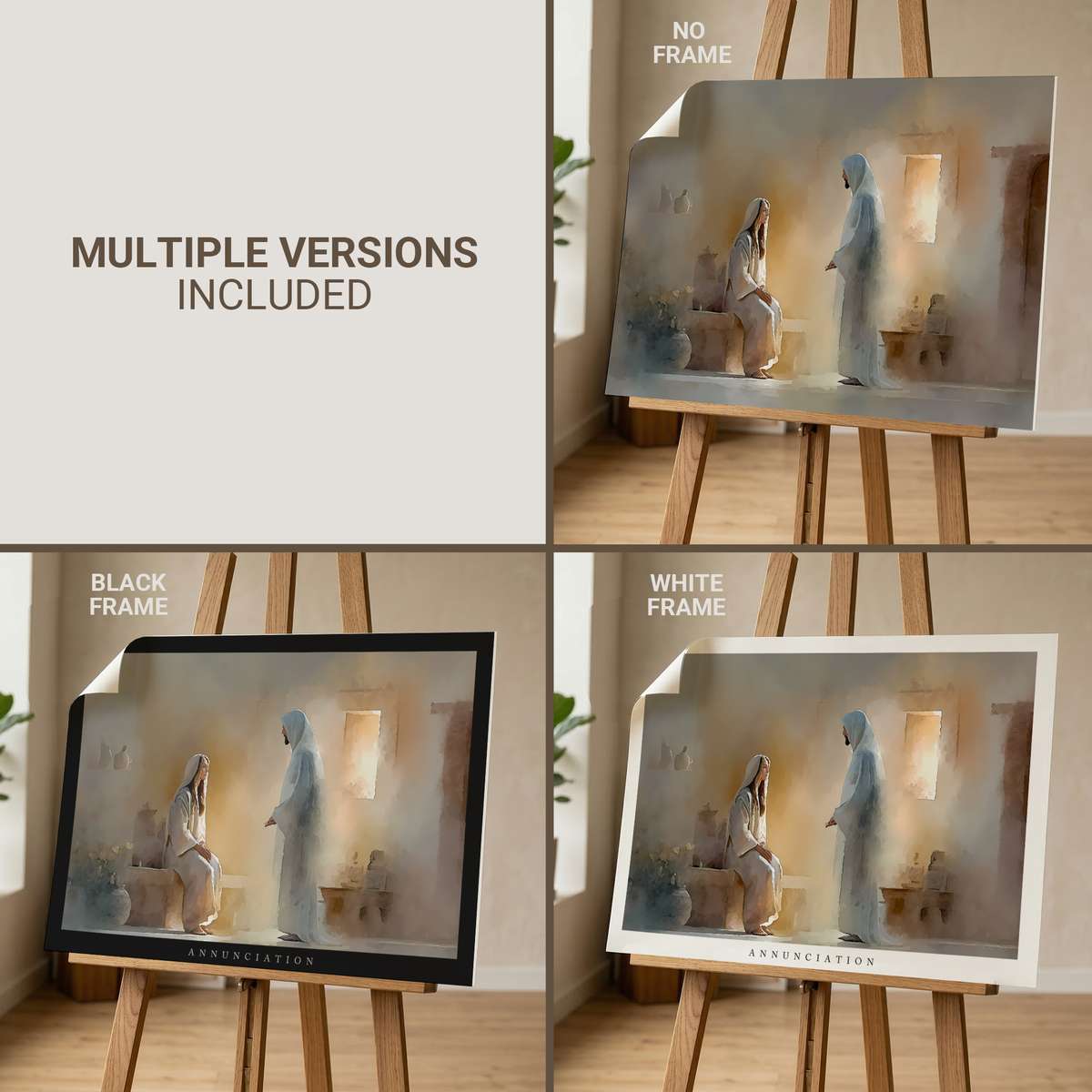
The image gathers itself around a single event: the announcement of the Incarnation. Treated here not as a museum headline but as a living memory, the composition places the Annunciation within a visual language that feels worn-soft rather than merely fashionable. Softened pigments, a restrained palette and a composed, devotional geometry allow the familiar figures to speak with a clarity that suits prayer as readily as it suits a domestic wall.
What makes this work feel of the tradition is not imitation of age for its own sake but the disciplined quiet that older devotional painting often embodies. Hands and gazes are measured. Negative space becomes room for attention rather than ornament. The image reads at a distance and in close company: its forms are legible on an entryway wall and intimate enough to sustain a moment of devotion in a bedside lamp's glow. The visual shorthand—an angled lamp of light, the tilt of a head, the hush of a closed hand—keeps the theological weight present while allowing the viewer’s own prayer or wonder to enter.
Texture plays a careful role. A soft, print-like surface, faint craquelure suggestion, and muted edges give the picture the feel of something handled over generations. This patina is not a claim of antiquity but a signal: the image belongs to a lineage of looking that values attention and remembrance. It suggests the measured rhythm of liturgical time and domestic ritual—book open on a table, a candle lit for a short prayer, a child pausing at a picture as an older family member recalls a blessing. The artwork's restraint resists spectacle, inviting repetition rather than a single impressed moment.
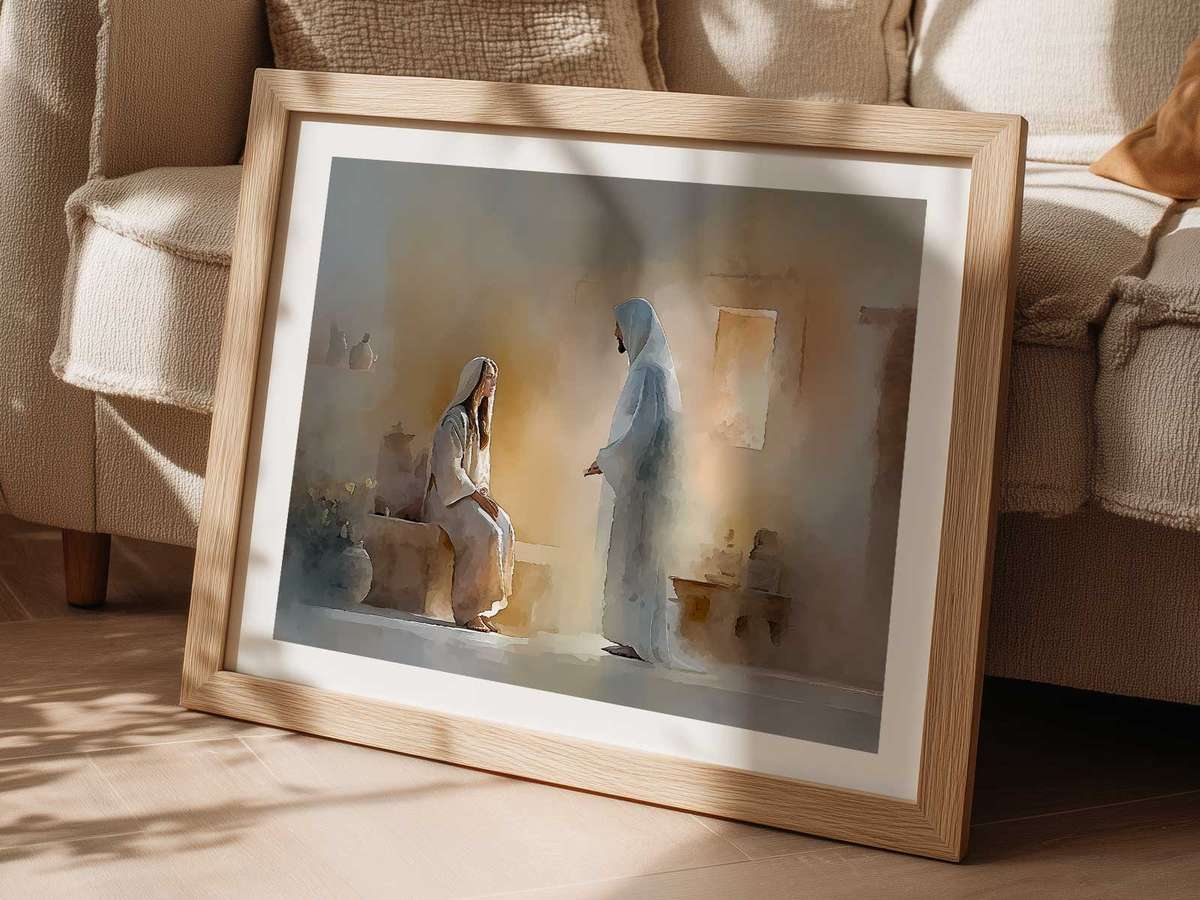
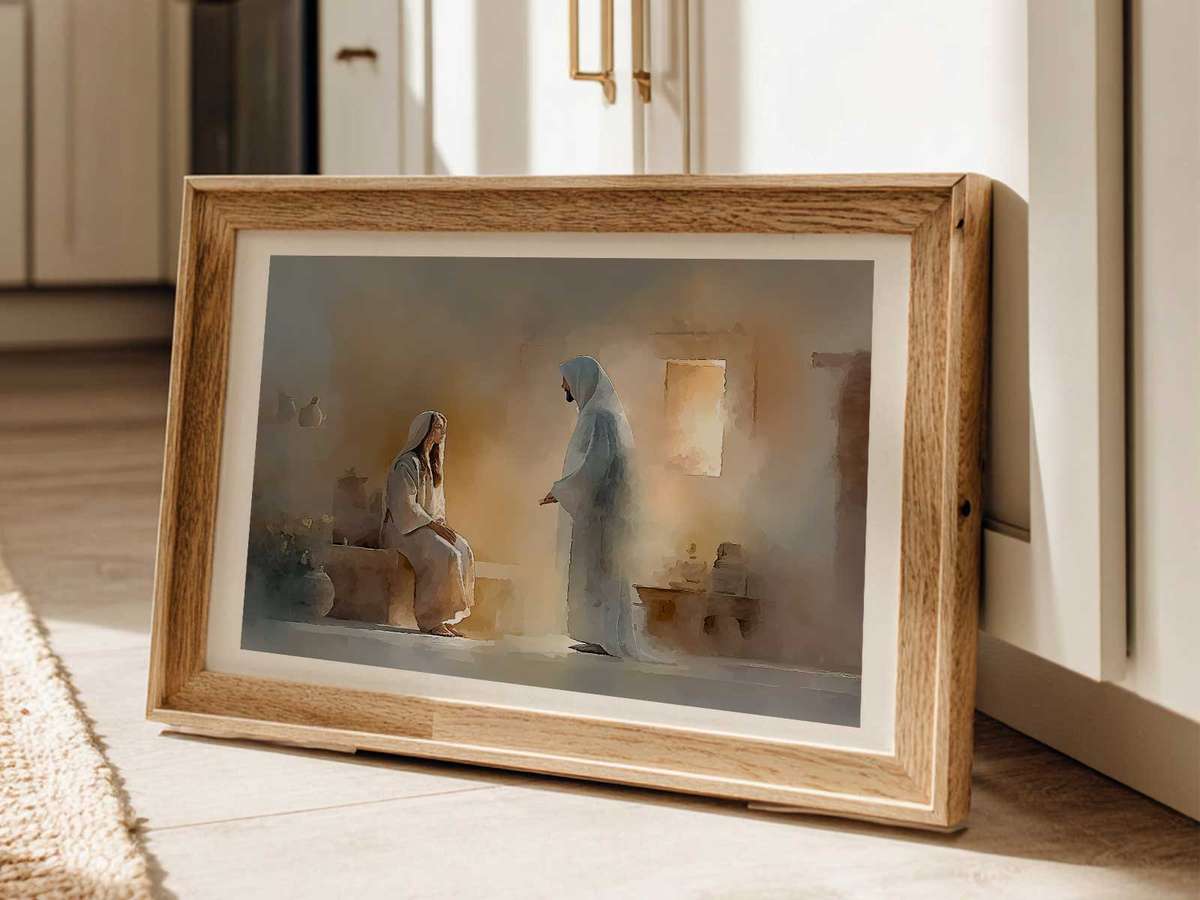
Seen in a contemporary interior, the piece operates by translation rather than transplantation. Familiar motifs—an enclosed space, a beam of light, a gesture of assent—are translated into forms that respect modern sightlines: clear silhouettes, quiet contrasts, and a vertical calm that complements a narrow wall or a reading nook. The image neither competes with everyday objects nor dissolves into décor; it holds its own as a distinct place of attention. Its presence quietly shapes the room’s rhythm, encouraging pause without demanding liturgical knowledge from those who stand before it.
[IMAGE_INSERT_ARTICLE_01]
Spiritually, the usefulness of such an image in the home depends on habit, not hype. Placed above a simple table, near a crib, or beside a study lamp, it becomes an aid to memory: a visual cue to recall the mystery at ordinary hours. The Annunciation depicted with heritage sensibility can serve as a domestic lectern, offering a momentary break in the day for thanksgiving, wonder, or intercession. Its visual economy helps family members of different ages approach the scene in their own ways—some with silent reverence, others with questions that lead to story and teaching.
Finally, this painting-style piece suggests an ethical aesthetic: beauty that forms rather than merely decorates. Its classical lines and devotional stillness encourage prolonged looking, which in turn fosters interior habits—listening, remembering, and orienting life by a sacred story. In a home that values continuity, the image becomes a gentle heirloom, not by proving ancient pedigree but by offering a manner of seeing that can be handed on: patient, inviting, and quietly rooted in the mystery it portrays.
Author:



 ↧ Digital download
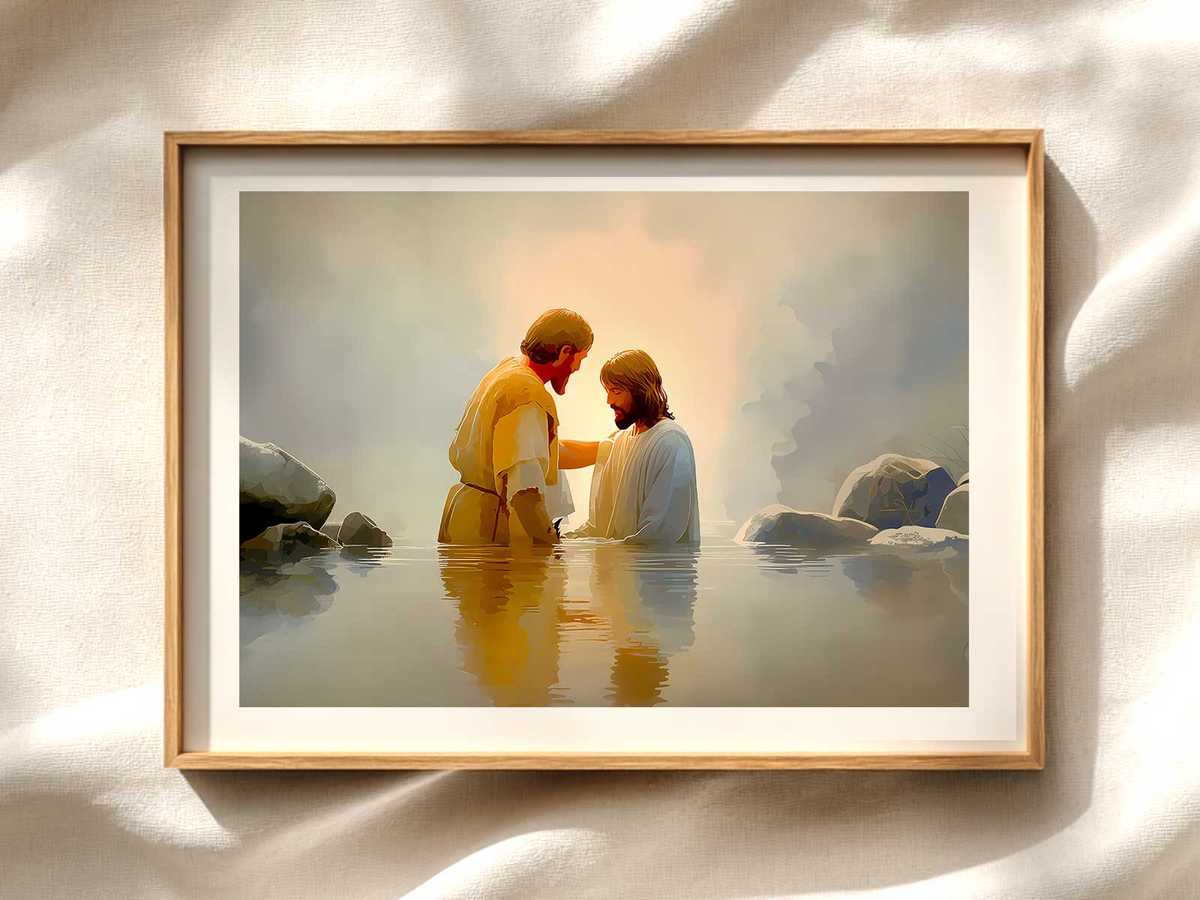
Baptism of Christ painting — a sacred print for quiet devotion at home
Digital download
↧ Digital download
Baptism of Christ painting — a sacred print for quiet devotion at home
Digital download
 ↧ Digital download
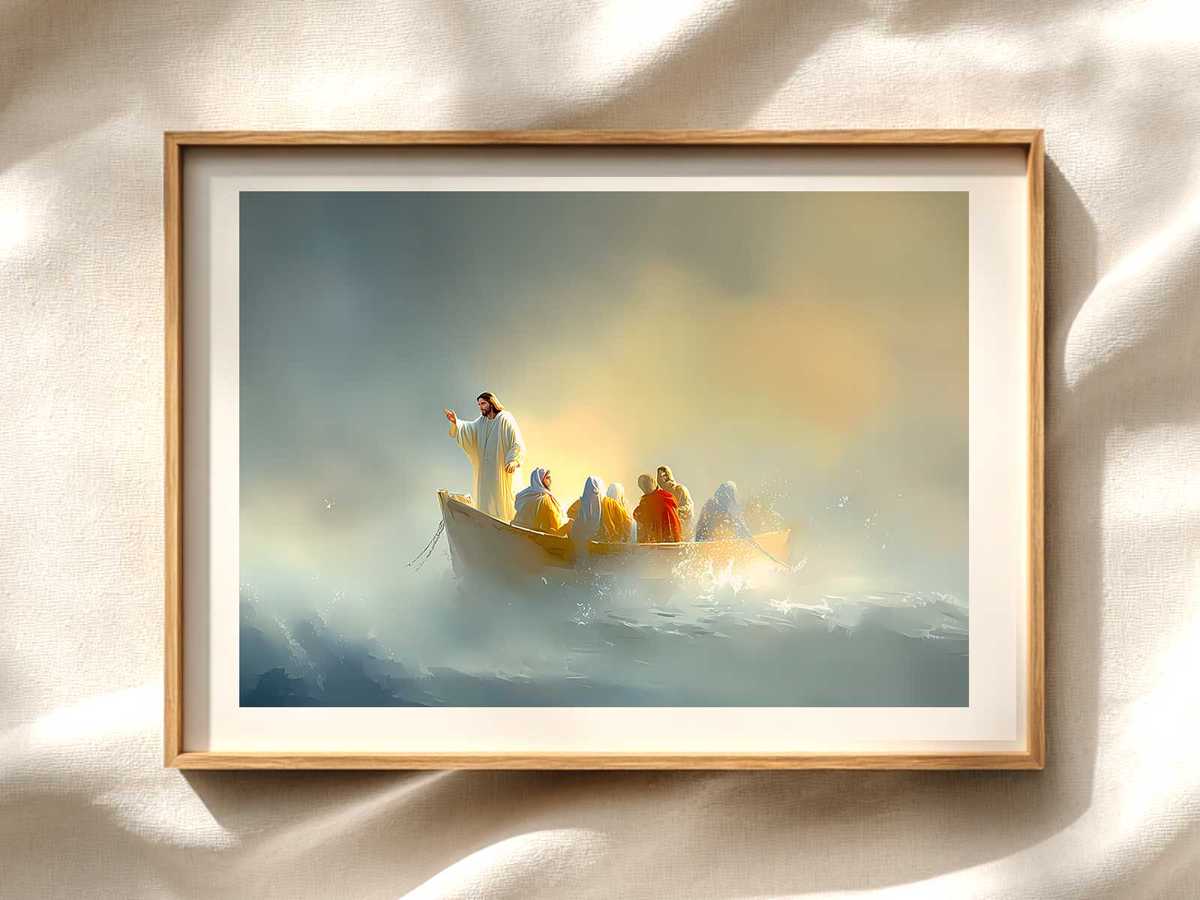
Jesus Art: The Stilled Storm — A Quiet Icon of Christ’s Gentle...
Digital download
↧ Digital download
Jesus Art: The Stilled Storm — A Quiet Icon of Christ’s Gentle...
Digital download
 ↧ Digital download
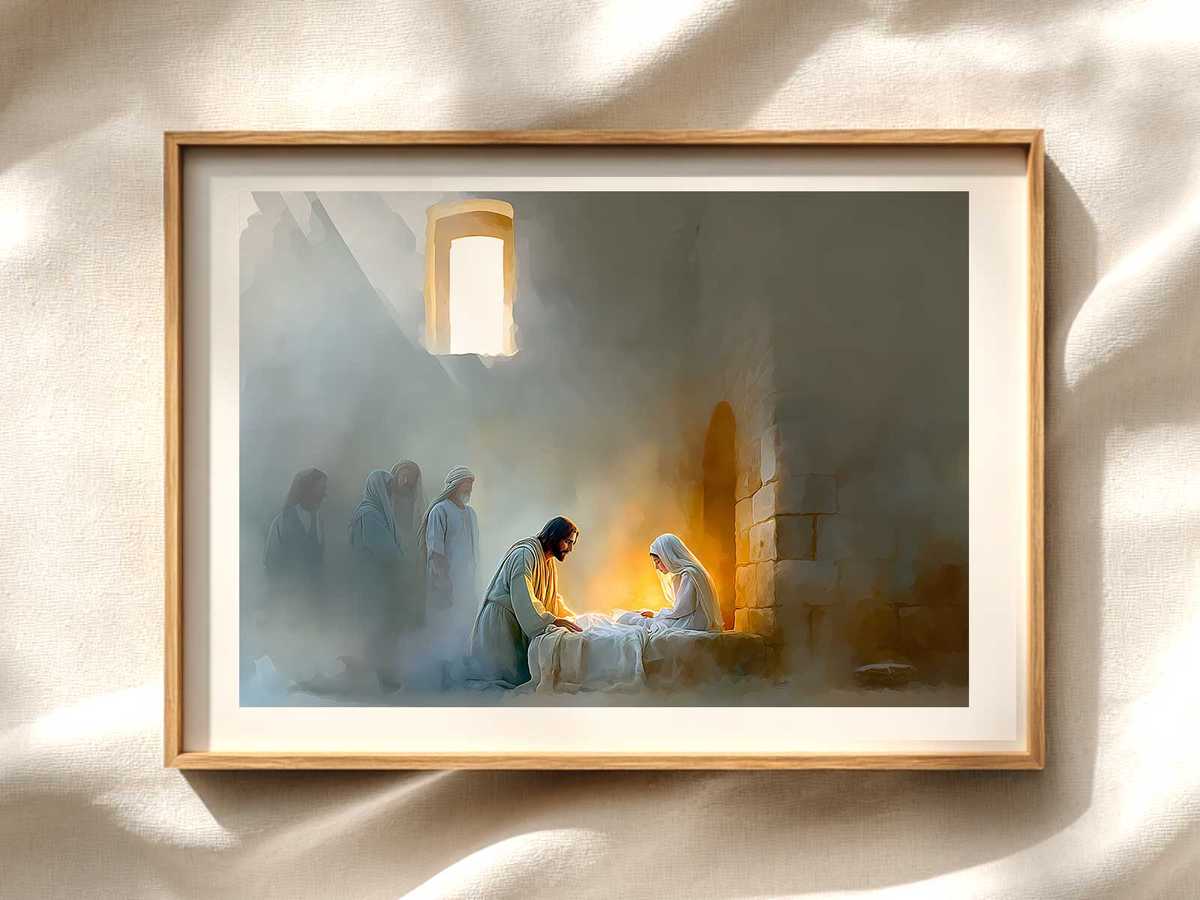
Jesus Art: The Resurrection of Jairus’ Daughter — Hope Stronger Than...
Digital download
↧ Digital download
Jesus Art: The Resurrection of Jairus’ Daughter — Hope Stronger Than...
Digital download
 ↧ Digital download
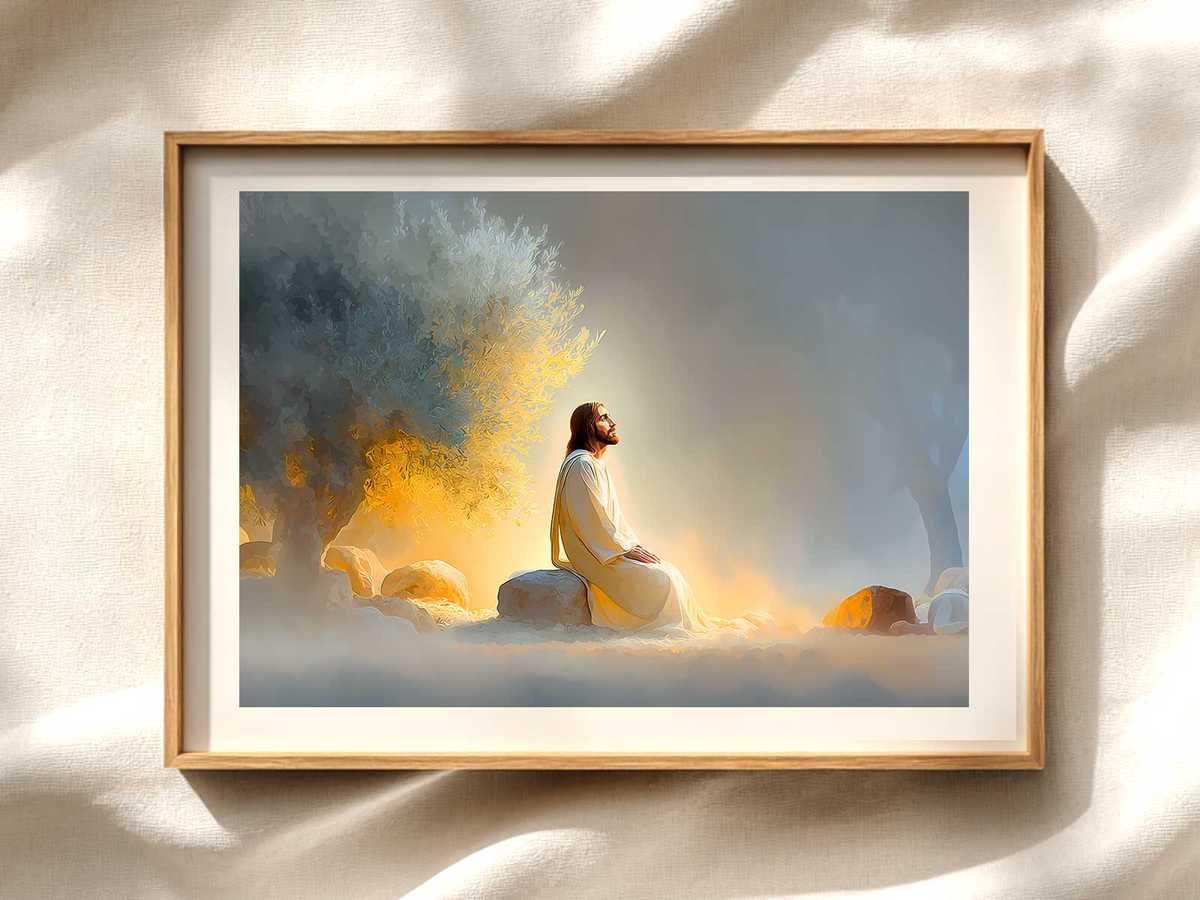
Gethsemane Drawing with Bible Verse Wall Art: A Quiet Companion for...
Digital download
↧ Digital download
Gethsemane Drawing with Bible Verse Wall Art: A Quiet Companion for...
Digital download