Psalm 91: A Prayer of Refuge and Protection
Psalm 91 presents a series of sheltering images—"shelter of the Most High," "shadow of the Almighty," "my refuge and my fortress," and protection "under his wings"—that have made it a lasting prayer of refuge and protection. Christians, pastors, and devotional writers commonly read and pray this psalm when fear, uncertainty, illness, or inner fatigue weigh heavily.
Summary: Psalm 91 uses fortress and wing imagery to portray divine safety and is frequently used devotionally and pastorally during crises.
Quick links: Poetic language | Devotional use | Pastoral cautions
WHY THE PSALMS STILL FEEL IMMEDIATE
Psalm 91’s immediacy comes from concrete, everyday images of shelter and protection. Calling God a refuge or fortress translates the abstract idea of divine care into a place someone can imagine entering when danger threatens. Such images invite the reader to bring present fears—whether physical danger or inner exhaustion—into a space described as safe.
THE POETIC LANGUAGE OF THE PSALMS
Scholarly and pastoral commentaries note specific images in Psalm 91: wings as a protective image, fortress and refuge as sanctuary metaphors. These poetic pictures work together to create an embodied sense of safety rather than an intellectual argument. The language aims to comfort by evoking shelter, shadow, and safekeeping.
PRAYER, MEMORY, AND REPETITION: DEVOTIONAL USE
Psalm 91 is widely used in devotional and pastoral contexts as a prayer or reading for protection and reassurance. It frequently appears in private prayer and corporate worship when people face danger, illness, or periods of uncertainty. Repeating lines from the psalm can become a spiritual habit that steadies attention and memory in hard seasons.
NEW TESTAMENT CONNECTION AND HISTORICAL AWARENESS
Early Christian awareness of Psalm 91 appears in the New Testament: verses about angelic protection (Psalm 91:11–12) are quoted in the account of Jesus’ temptation, showing how the psalm’s protective language was interpreted and used in Gospel narrative. This connection underscores the psalm’s longstanding role in the life of Christian faith.

WHY CERTAIN PRAYERS BECOME DAILY COMPANIONS
Prayers like Psalm 91 become daily companions because they name common human vulnerabilities and offer a concise, memorable framework for seeking help. The psalm’s metaphors are portable: people can picture a fortress, remember the promise of shelter, and speak those images aloud or silently when weariness or fear arises.
PASTORAL APPLICATION AND COMMON USES
Pastoral commentaries highlight the psalm’s application to fear, pestilence, and threats, which is why it is often chosen during crises. Clergy and spiritual directors recommend it for moments when congregations or individuals need reassurance. The psalm’s images encourage trust while providing words that can be prayed by those who find speech difficult in distress.
PASTORAL CAUTIONS: AVOIDING SUPERSTITION
Reputable commentators and major Christian traditions treat Psalm 91 as expressing themes of refuge, shelter, and divine fidelity while warning against reading it as a magical guarantee that removes human vulnerability. Pastoral guidance emphasizes that the psalm is a form of prayer and trust, not a formula to secure automatic protection.
HOW SACRED WORDS SHAPE A QUIET SPACE
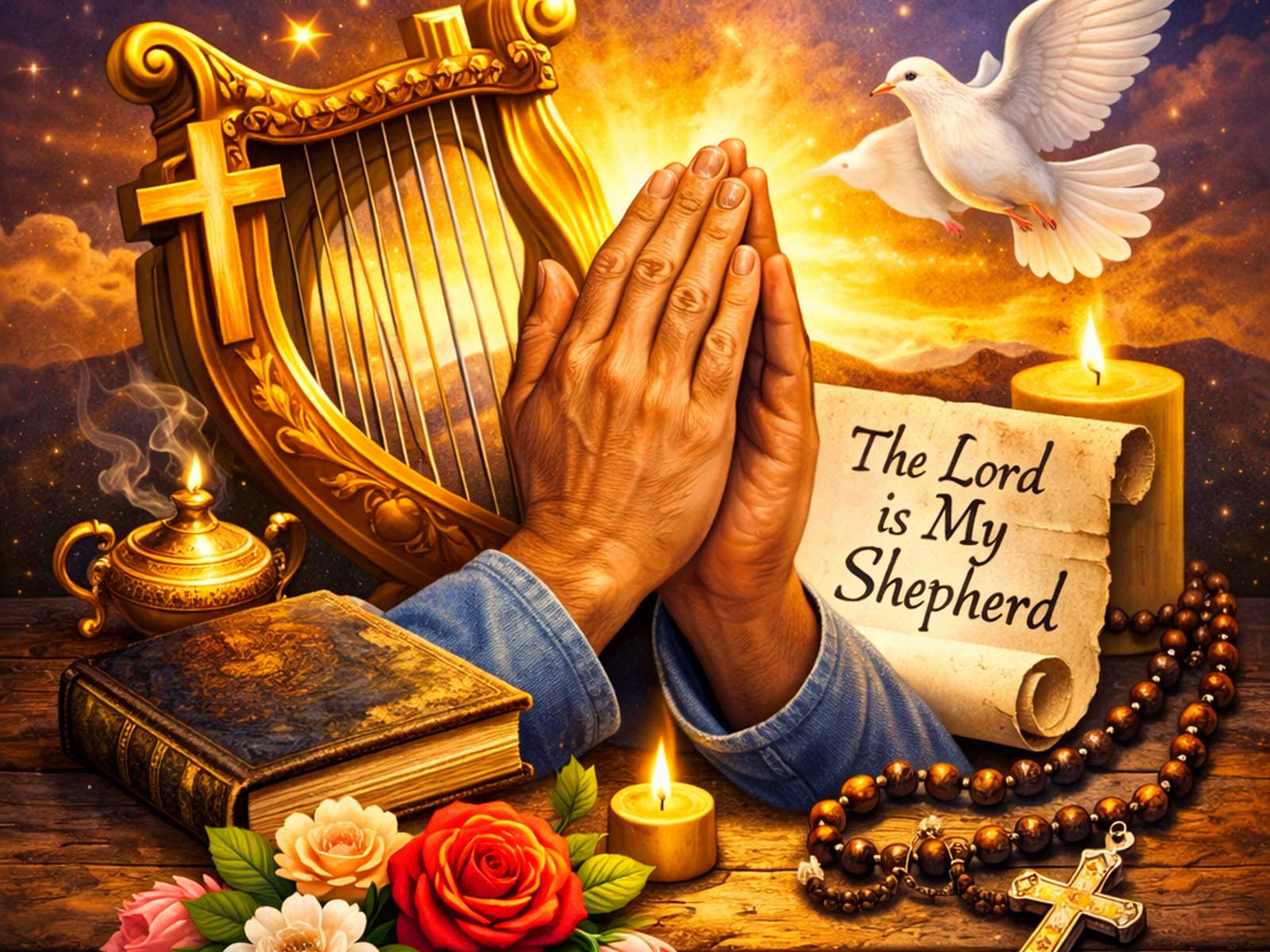
Using Psalm 91 in a prayer corner, bedside, or church setting helps shape emotional atmosphere. The psalm’s images can inform visual symbols—artwork showing wings, a simple cross near a bedside, or text-based wall art—so that familiar words help people enter into stillness, trust, and hope when they return to the space.
A GENTLE CLOSING REFLECTION
Psalm 91 endures because it gives language to both fear and consolation. Its metaphors invite us into imagined safety while acknowledging that life includes threats and vulnerability. Read devotionally, it can steady the heart, focus prayer, and remind believers that language of refuge remains a companion in seasons of uncertainty and inner fatigue.
Sources: Commentary and study notes affirming Psalm 91’s refuge imagery, its devotional use, New Testament citation of verses 11–12, and pastoral cautions about superstition.