Psalm 4:8 — How a Short Verse Gives Language to Fear, Petition, Trust, and…
Psalm 4:8 offers a concise, memorable confession: in peace I lie down and sleep, because the Lord alone makes me dwell in safety. That simple image—sleeping in peace because God provides safety—serves as a spiritual summary of a movement from fear to petition, from answered plea to trust and quiet thanksgiving.
Summary: Psalm 4:8 (French Louis Segond and common English renderings) reads as a closing statement of calm trust: "I lie down and sleep in peace, for you alone, O Lord, make me dwell in safety." It is used devotionally to name fear, to shape petition, and to express thankful confidence.
Reader preview: This article traces the verse's movement—fear, appeal, divine reassurance, restful trust—and explains why worship and nightly prayer traditions commonly use it to re-center troubled minds.
WHY THE PSALMS STILL FEEL IMMEDIATE
Psalm 4 includes lament and appeal earlier in the poem and closes with verse 8’s calm affirmation. Commentators note that the verse functions as a personal testimony: after complaint and petition, the speaker declares peaceful rest. That progression—honest fear followed by prayer and then trust—keeps the Psalms immediate. They do not hide distress; they move through it.
THE POETIC LANGUAGE OF THE PSALMS
The imagery in Psalm 4:8 is plain yet powerful. To "lie down and sleep in peace" ties a bodily posture to an inner disposition. "You alone, O Lord, make me dwell in safety" places the source of that peace squarely in God's protection. Biblical and devotional readers find the verse’s economy of language useful: short lines that name concrete fear and a concrete gift—safety—make the transition from anxiety to assurance speakable.
PRAYER, MEMORY, AND REPETITION
Because Psalm 4:8 is pithy and image-rich, it is easily memorized and repeated in prayer. Commentaries and devotional guides show that Christians use the verse in evening prayers or compline-style reflections to re-center their minds at day’s end. Repetition of the phrase helps turn a worried imagination toward trust, providing a liturgical or personal frame for petition and then surrender.
TRUST, LAMENT, PRAISE, OR COMFORT
Exegetical sources link verse 8 to the psalm’s overall arc: the psalm moves from complaint and appeal to a concluding assurance. Readers and preachers often read the verse as the faithful response after God’s deliverance or after the act of petition itself. In that sense, verse 8 names both the condition (fear or danger) and the outcome (peace and safety), and so it gives language to lament that leads into praise or quiet thanksgiving.
WHY CERTAIN PRAYERS BECOME DAILY COMPANIONS
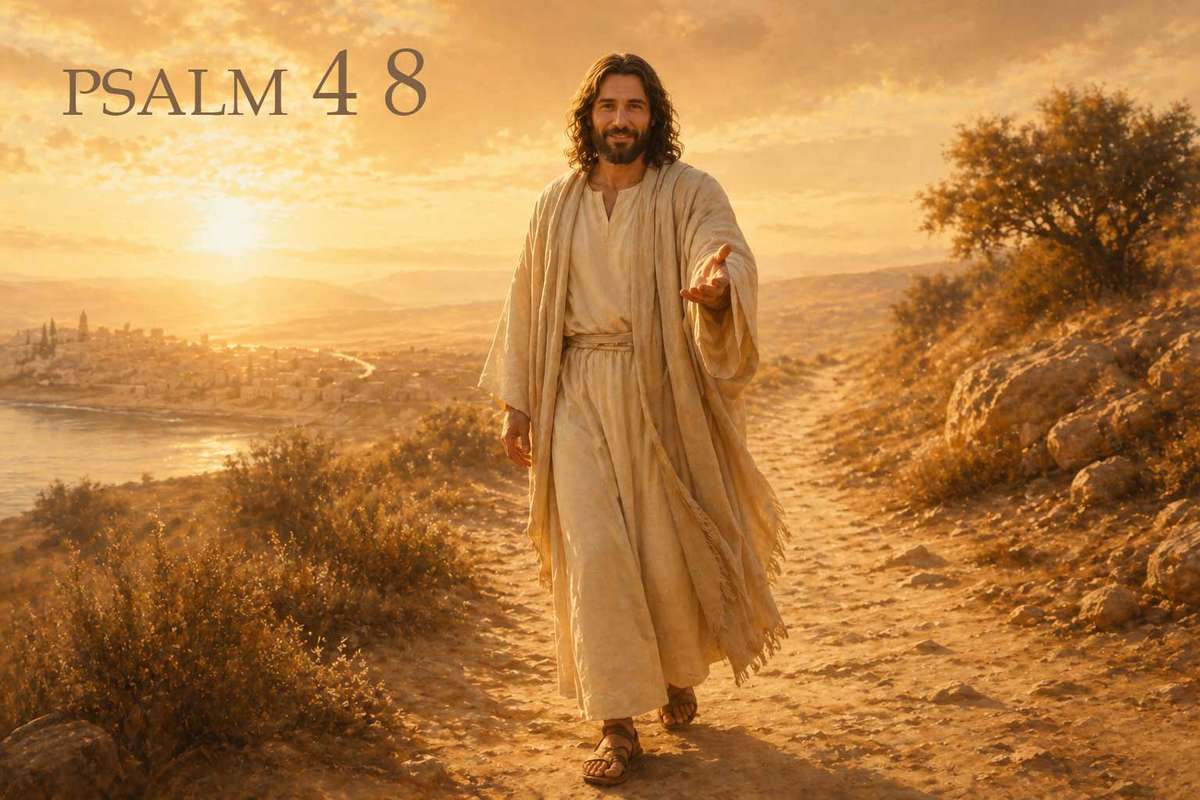
Devotional and liturgical materials show that Psalm 4:8 becomes a daily companion because it is usable at a fixed moment—the transition to sleep—and because it addresses a universal human need: release from worry. Liturgical contexts such as vespers and compline commonly include the verse for this reason: it helps congregations and individuals give voice to fear, then rest in God’s protection.
HOW SACRED WORDS SHAPE A QUIET SPACE
Using Psalm 4:8 in a bedroom, prayer corner, or church setting shapes the tone of the space. The verse invites stillness rather than simply offering a quick solution. As commentators observe, its voice of calm trust models a posture for the believer: after bringing fears and petitions to God, one can dwell in the assurance that God makes one safe.
MORNING, EVENING, AND HARD-SEASON PRAYER THEMES
Although Psalm 4:8 is especially suited to evening and sleep, devotional resources also apply its language in hard seasons more broadly. Commentators draw a theological line from the psalm’s petitions to its final trust: the same words that close the day can be spoken as a confession amid ongoing trials, expressing confidence that God remains the foundation of safety.
A GENTLE CLOSING REFLECTION
Psalm 4:8 condenses a spiritual journey into a short sentence: fear made articulate, petition expressed earlier in the psalm, trust bestowed by God, and a resultant peaceful rest. That economy explains why preachers, commentators, and devotional writers keep returning to it: the verse gives Christians a faithful, simple language to name fear, to pray, and then to rest in thanksgiving for God's protection.
Author: