The Lord Is My Strength and Salvation: Giving True Language to Fear, Petition…
"The LORD is my strength and my song; He has become my salvation" (Psalm 118:14) is a biblical phrase long used in prayer and worship. Rooted in the Psalms, this line names God as both power and deliverer, and pastoral writers often use it to help communities and individuals move from fear toward petition, trust, and thanksgiving.
Summary: Psalm 118:14 has a long devotional and liturgical history as a song of victory that frames fear, petition, trust, and thanksgiving.
Read preview: why the Psalms remain immediate; how repetition shapes prayer; forming a quiet space around sacred words.
WHY THE PSALMS STILL FEEL IMMEDIATE
Psalm 118:14 sits within a psalm that has been used for communal thanksgiving and liturgical celebration. Commentaries and devotional writers commonly treat the verse as an expression of confident deliverance. That historical and liturgical use helps explain why the line still resonates: it combines personal voice and public song, allowing worshippers to name both inner need and communal rescue.
PRAYER, MEMORY, AND REPETITION
Devotional resources often point out that this verse functions well as a repeated refrain. Repetition in prayer anchors memory; saying "the Lord is my strength and my song" moves the speaker from isolated fear into a remembered narrative of deliverance. Pastoral writers and lectionary notes note this liturgical role, showing how a short, theologically rich line can become a daily companion in prayer.
TRUST, LAMENT, PRAISE, OR COMFORT
The language of Psalm 118:14 embraces several spiritual postures at once. Biblical and devotional treatments link the phrase to trust and thanksgiving while acknowledging that it follows seasons of fear or petition. Commentaries and pastoral reflections identify the verse as especially useful for shifting voice: it can follow lament and petition, giving words that move attention toward trust and praise.
THE POETIC LANGUAGE OF THE PSALMS
Scholars and devotional writers connect Psalm 118:14 with other Old Testament passages that portray God as strength and salvation, such as the Song of Moses in Exodus and related psalms like Psalm 28:7 and Psalm 18:1. These links show a consistent poetic vocabulary across Scripture: strength, song, and salvation form a compact theological image that both describes God’s action and invites a sung response.
WHY CERTAIN PRAYERS BECOME DAILY COMPANIONS
Pastoral and devotional materials explicitly describe how short, theologically dense verses become daily companions in worship and private prayer. Psalm 118:14’s concise pairing of strength and salvation makes it easy to memorize and use liturgically. That memorability, together with its association with victory and deliverance in commentaries and lectionary use, explains its persistence as a prayerful resource.
HOW SACRED WORDS SHAPE A QUIET SPACE
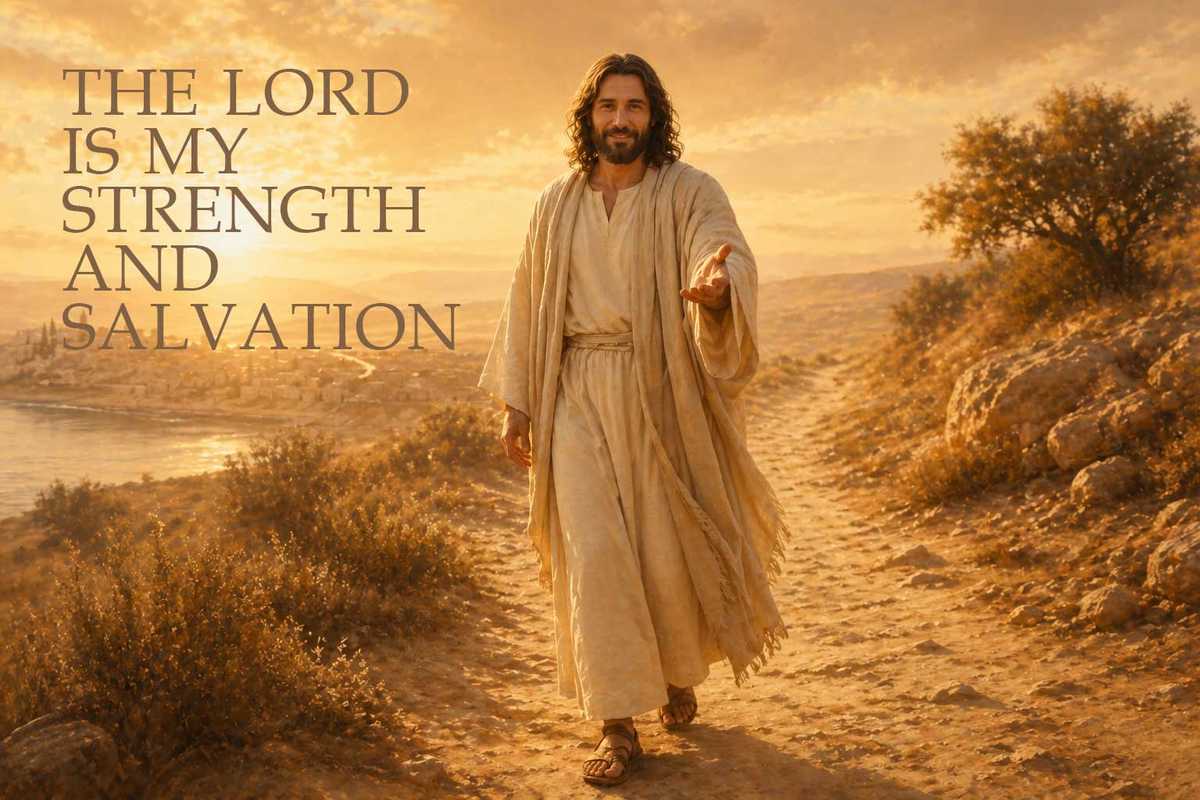
Liturgical and devotional use of this verse also shapes physical and interior spaces for prayer. The phrase can be placed on a wall, repeated at the start of a daily office, or sung in a congregation; in all cases it helps form a listening posture. Devotional reflections and lectionary notes highlight the verse’s role in moving attention from immediate anxiety to a broader story of deliverance.
A GENTLE CLOSING REFLECTION
Because Psalm 118:14 appears in the Psalter and is treated in commentaries and devotional writings as a song of victory, it naturally supplies language for fear, petition, trust, and thanksgiving. Its poetic economy and liturgical history make it a reliable phrase for personal and communal prayer: a brief confession that names danger, remembers deliverance, and offers praise.
Sources: The verse and its liturgical and devotional use are treated in Psalm 118 resources and related commentaries and devotionals that link this wording to themes of deliverance, praise, and pastoral application.