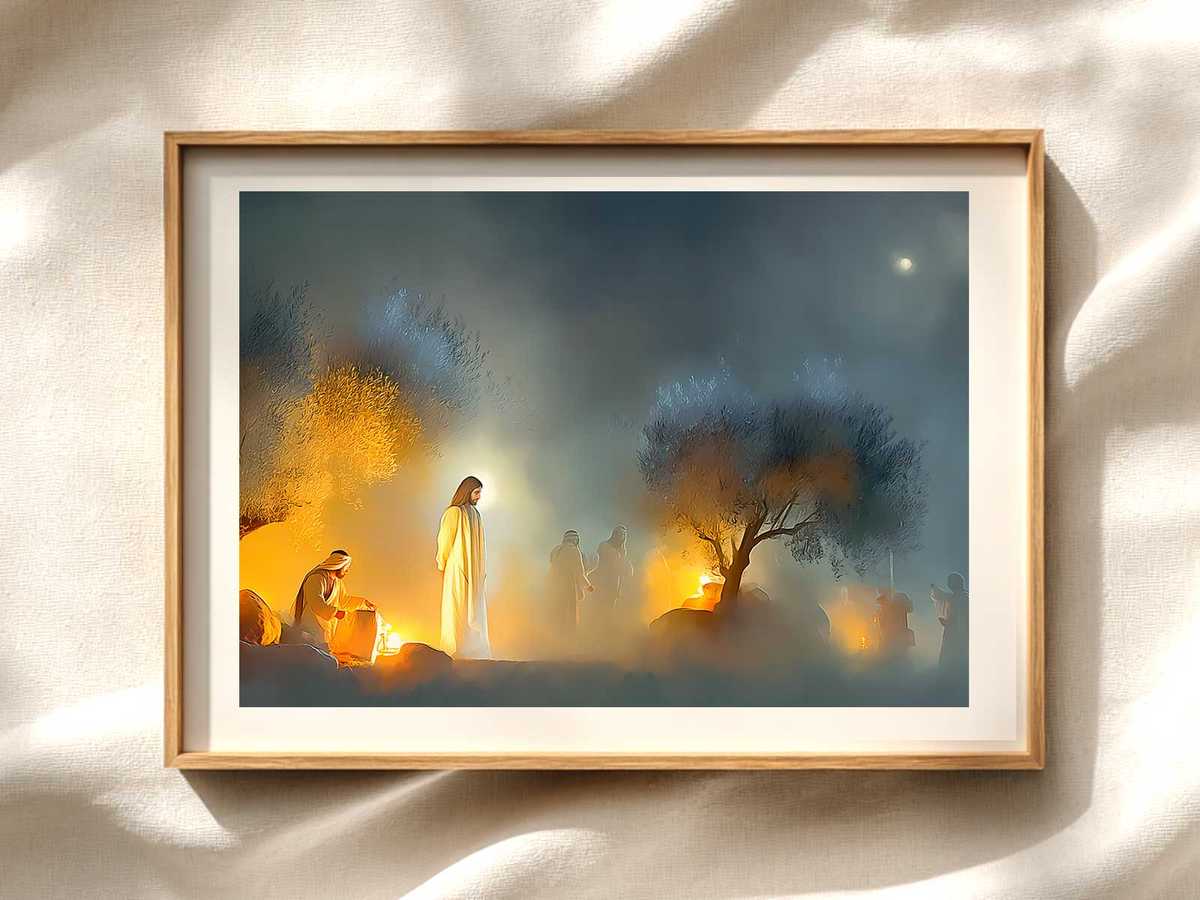
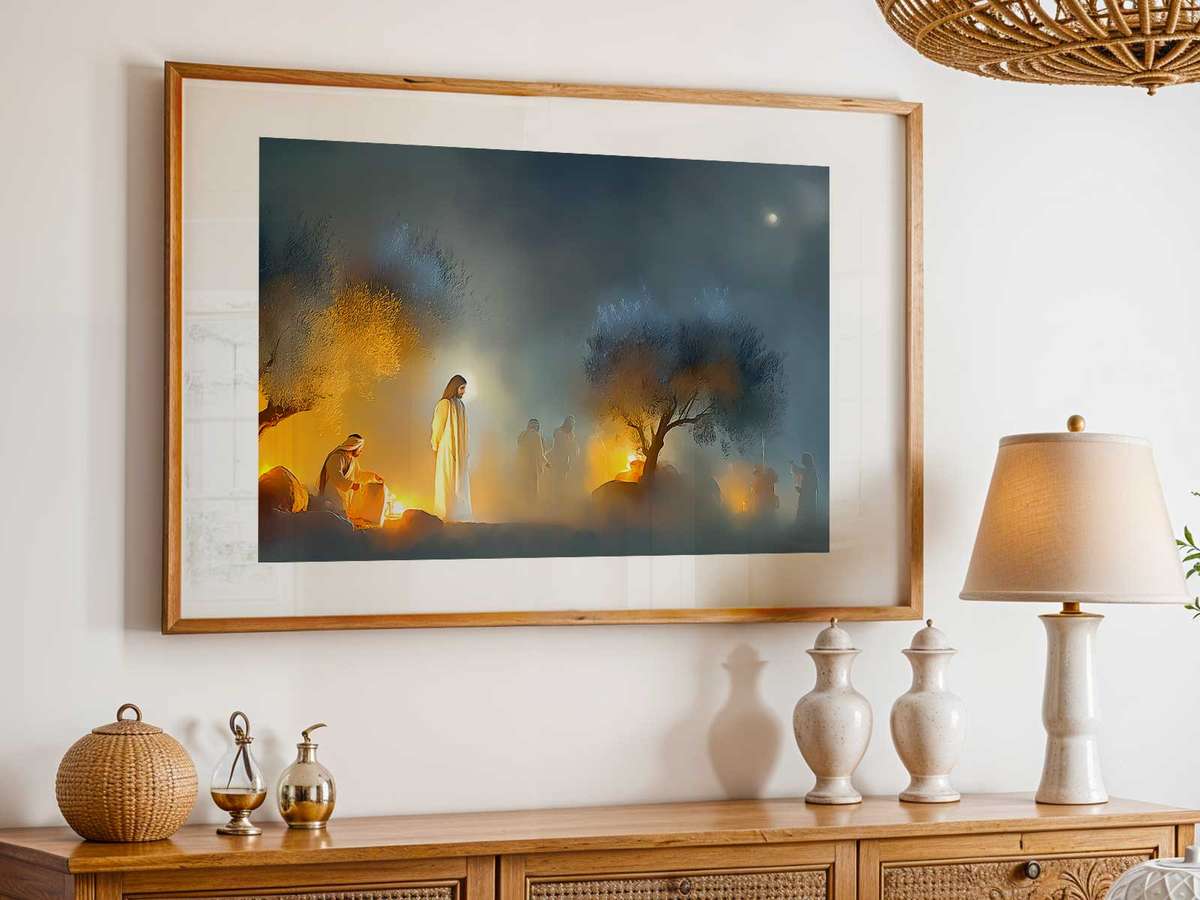
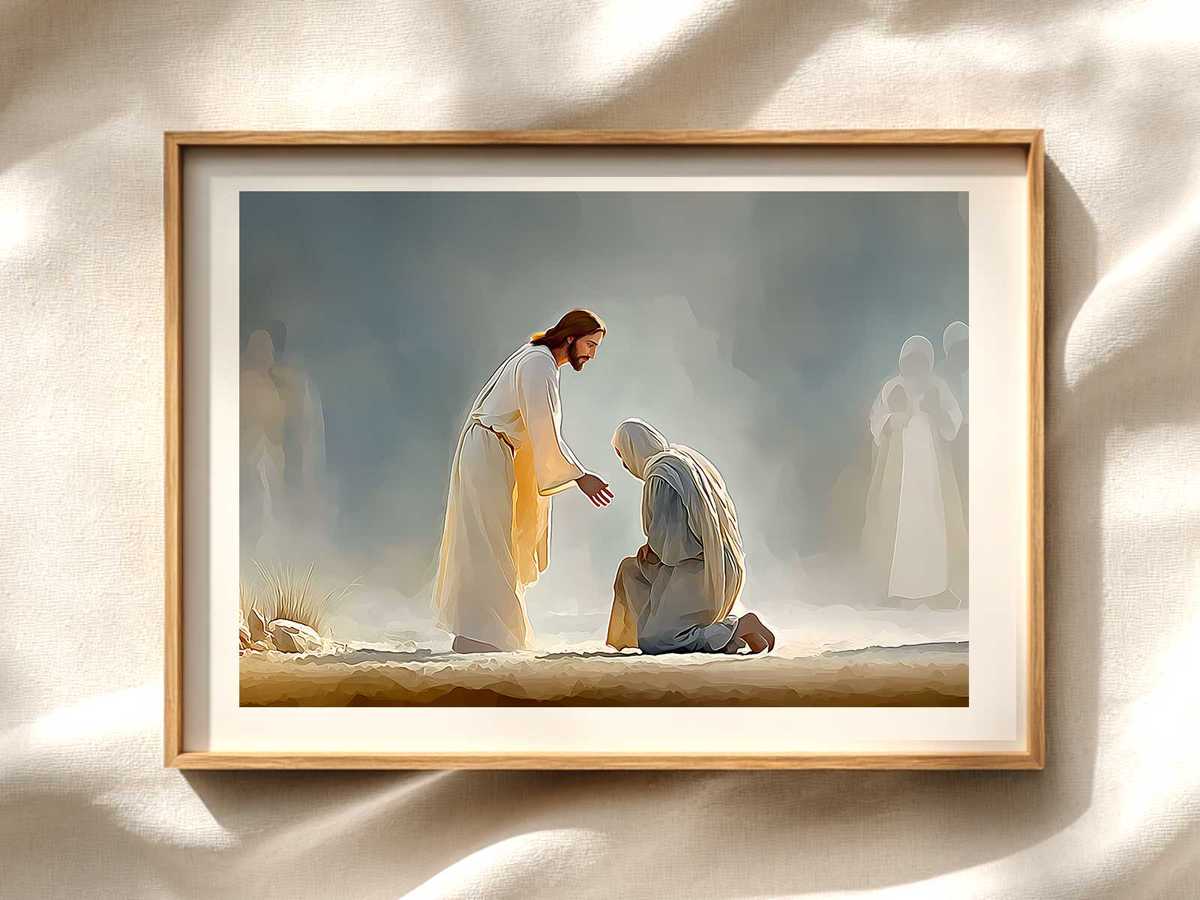
The drawing places the moment of Jesus' arrest at the center without spectacle: a handful of careful lines defines the posture of those who surround him, while the face of Christ is rendered with deliberate restraint. The scene resists melodrama. Instead of dramatic chiaroscuro or crowded detail, the artist chooses economy—soft contours for the face, a few strokes to suggest hands and cloaks, an implied space that lets the viewer step forward in silence. In that simplicity the image becomes less a narrative tableau and more a presence invited into a room.
What gives the composition its devotional power is how tenderness survives the violence implied by the moment. Where other renderings might show struggle or panic, this drawing keeps Christ’s expression composed and attentive. The eyes are downcast yet awake; the mouth holds no defiance, only a grave softness. That sober treatment of gesture and face transforms the arrest into an occasion for contemplation: the viewer is asked to witness rather than be drawn into action, to linger over the mystery of mercy that remains visible even amid human aggression.
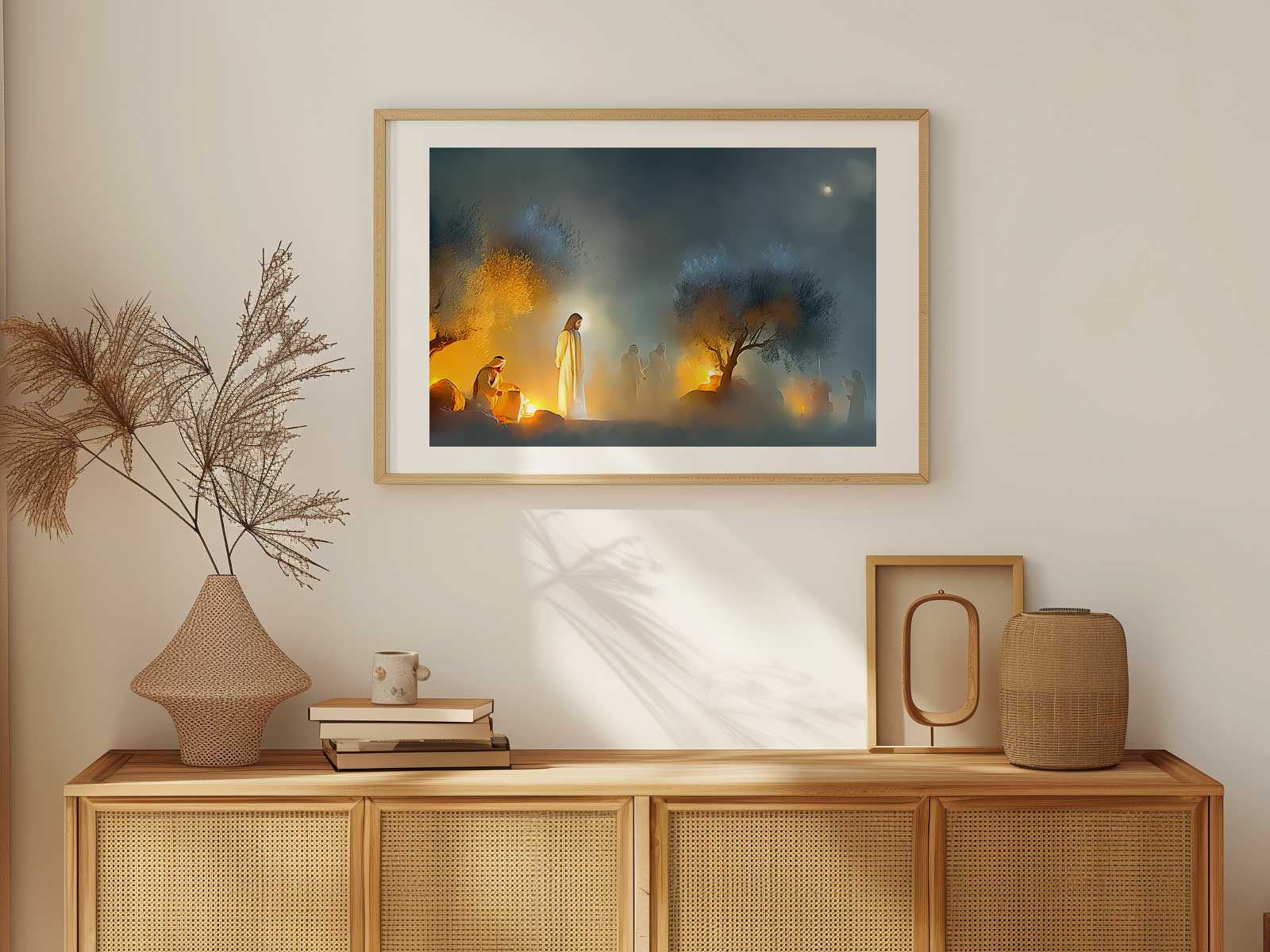
Visually, the work depends on contrast between restraint and suggestion. Sparse lines map the scene’s essentials—the tilt of a head, the weight of a cloak, the direction of a hand—while negative space frames the central figure. This quiet economy of means invites reflection every time you pass it on a wall: the eye rests on the face, then moves out to the surrounding marks, and returns. In a bedroom or a study the drawing can become a companion for short prayers and slow thoughts, a respectful reminder of presence rather than an illustration that demands explanation.
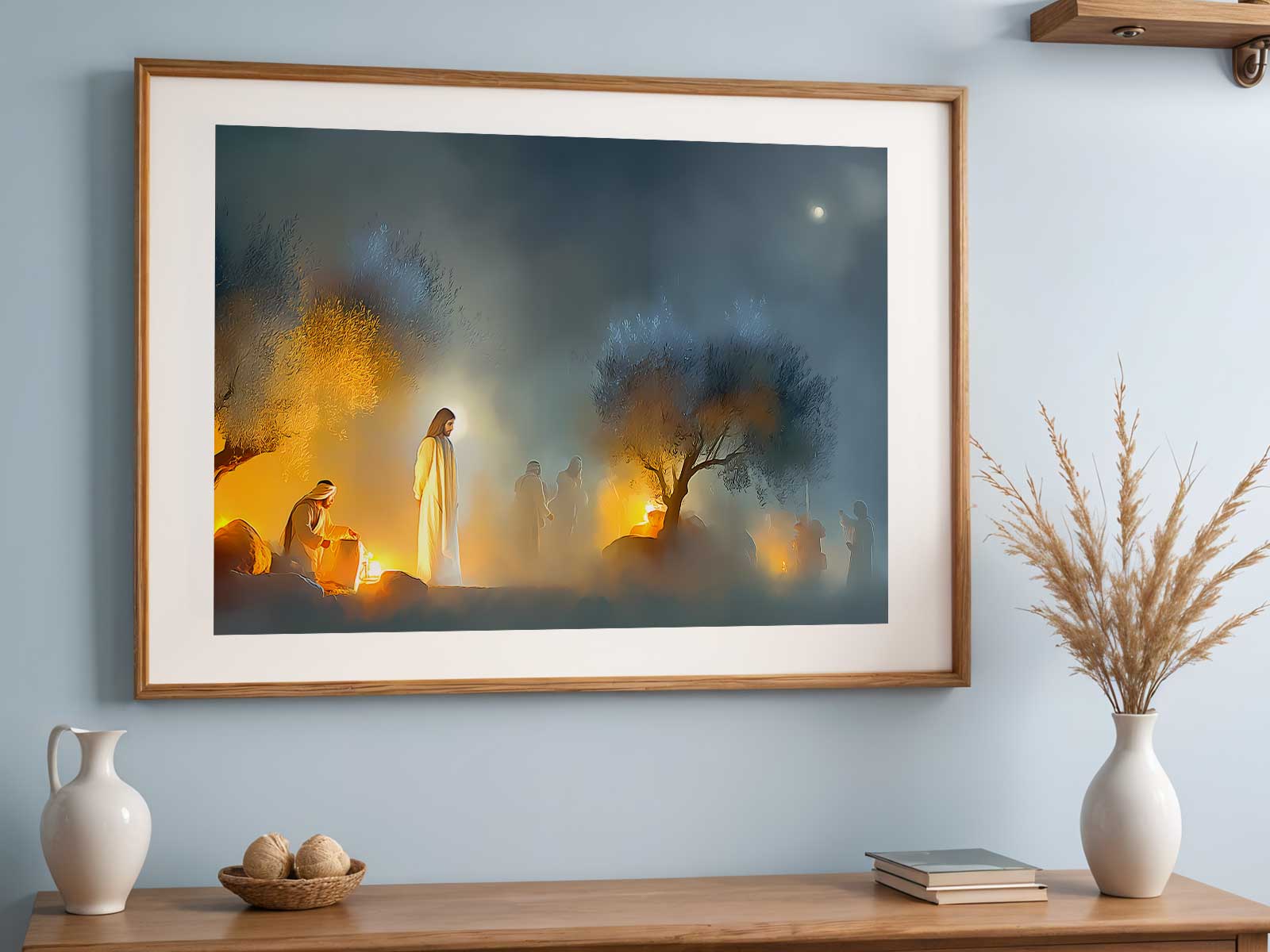
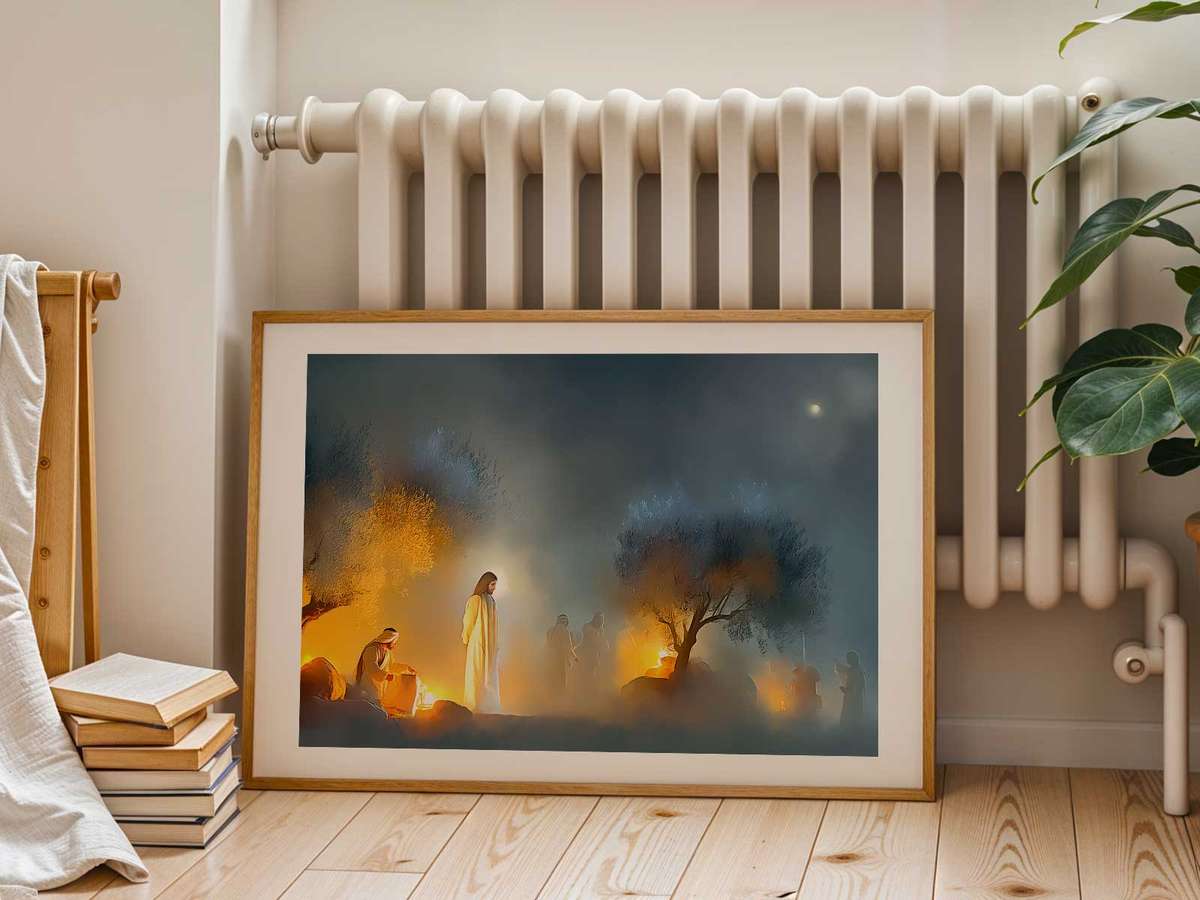
The domestic effect is subtle and steady. Hung above a modest table, in a narrow hallway, or in a small prayer corner, the drawing arrests attention without overwhelming the room. Its softness complements textiles and warm woods, and the sober line work plays well with minimalist interiors where quiet matters more than ornament. For someone seeking an image that supports daily recollection rather than theatrical display, this piece feels personally chosen: it offers a look that receives you rather than judges you.
The devotional value of the image comes from its capacity to hold ambiguity—strength without hardness, surrender without passivity. These are not abstract virtues but perceptible qualities in the drawing’s delicate handling of gaze and gesture. As wall art, it encourages a posture of watching and listening; as a companion in prayer it offers a face that meets sorrow and confusion with unforced calm. Such an image can quietly shape the tone of a room, providing a visual place to pause.
Seen as a gift, the drawing speaks to someone who values contemplative presence: a friend beginning a new season, a family member seeking a gentle anchor for grief or gratitude, or a household arranging a corner for daily reflection. The scene’s sobriety makes it adaptable—equally at home in a simple apartment or a lovingly furnished family room—because its power comes not from ornament but from the human stillness it preserves.
Author:







 ↧ Digital download
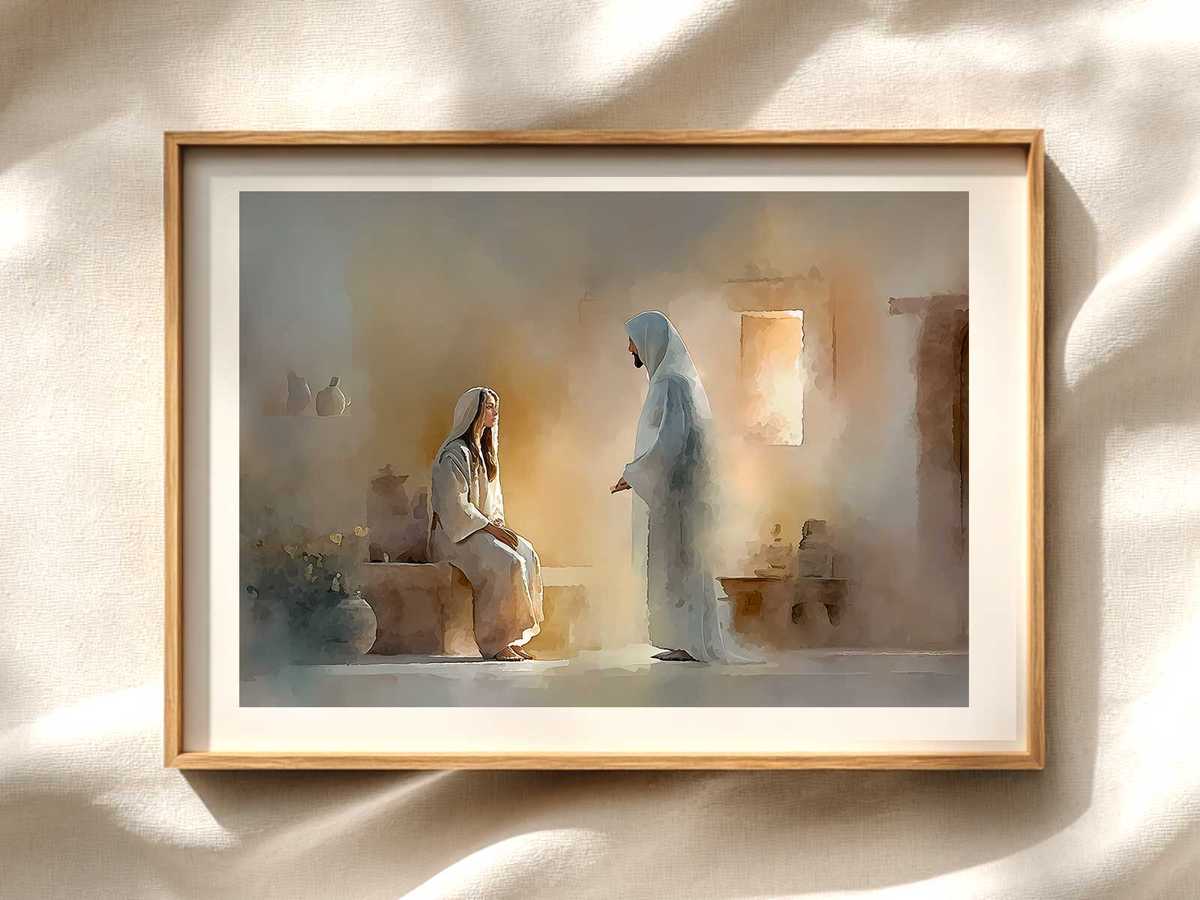
Early Painting of Jesus: The Annunciation and Incarnation in...
Digital download
↧ Digital download
Early Painting of Jesus: The Annunciation and Incarnation in...
Digital download
 ↧ Digital download
Jesus Walking on Water: A Sacred Image of Trust Amid Fear — Jesus...
Digital download
↧ Digital download
Jesus Walking on Water: A Sacred Image of Trust Amid Fear — Jesus...
Digital download
 ↧ Digital download
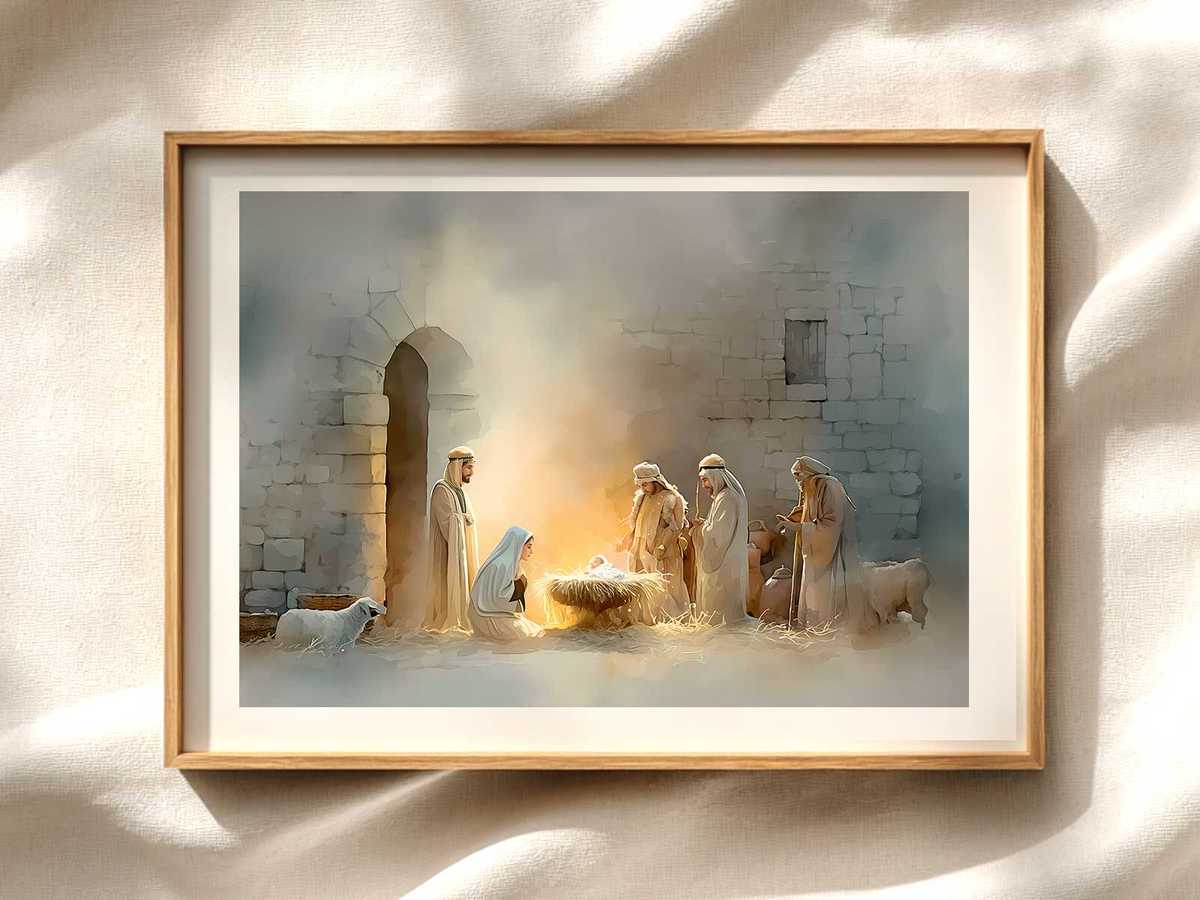
The Magi’s Adoration on Canvas: Traditional Christian Canvas Wall...
Digital download
↧ Digital download
The Magi’s Adoration on Canvas: Traditional Christian Canvas Wall...
Digital download
 ↧ Digital download
Jesus art: The Healing of the Leper — a Quiet Image to Anchor Home...
Digital download
↧ Digital download
Jesus art: The Healing of the Leper — a Quiet Image to Anchor Home...
Digital download