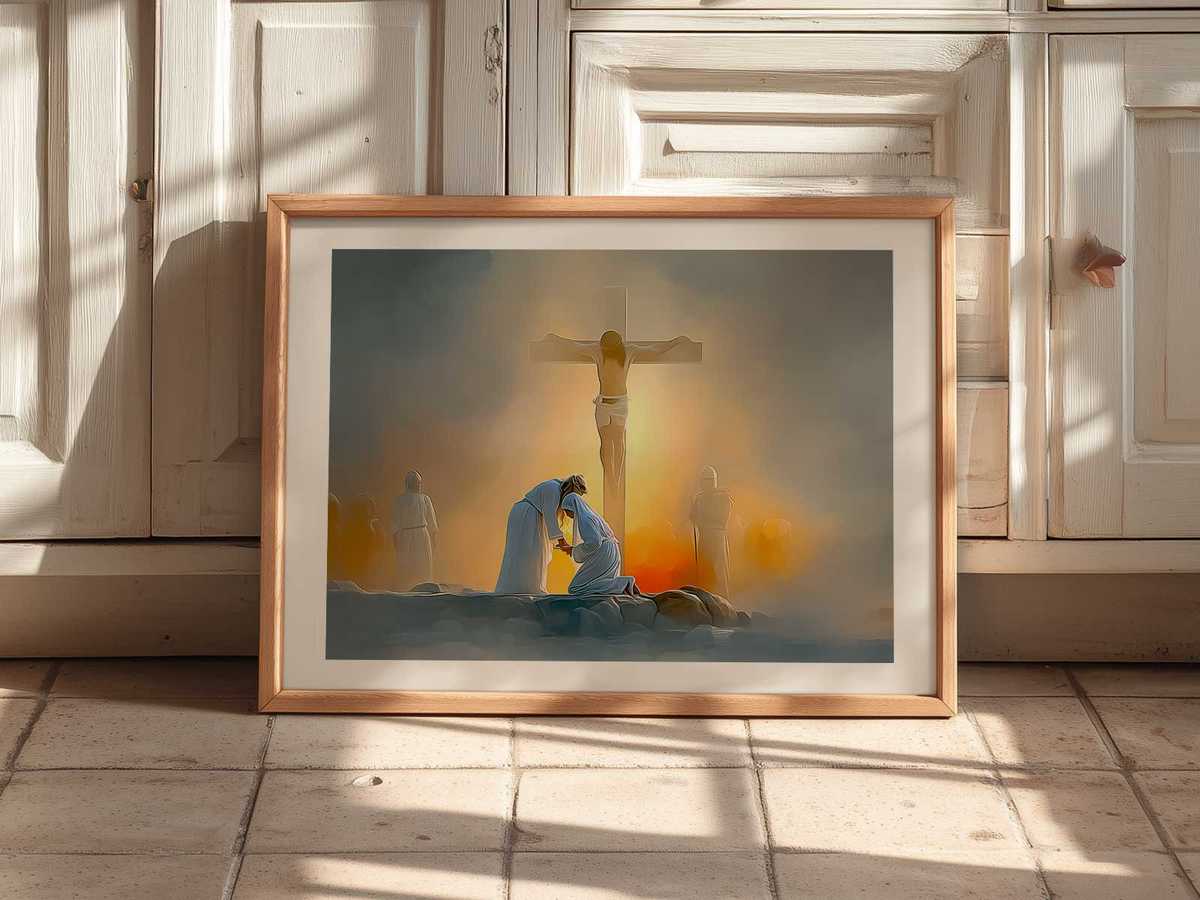
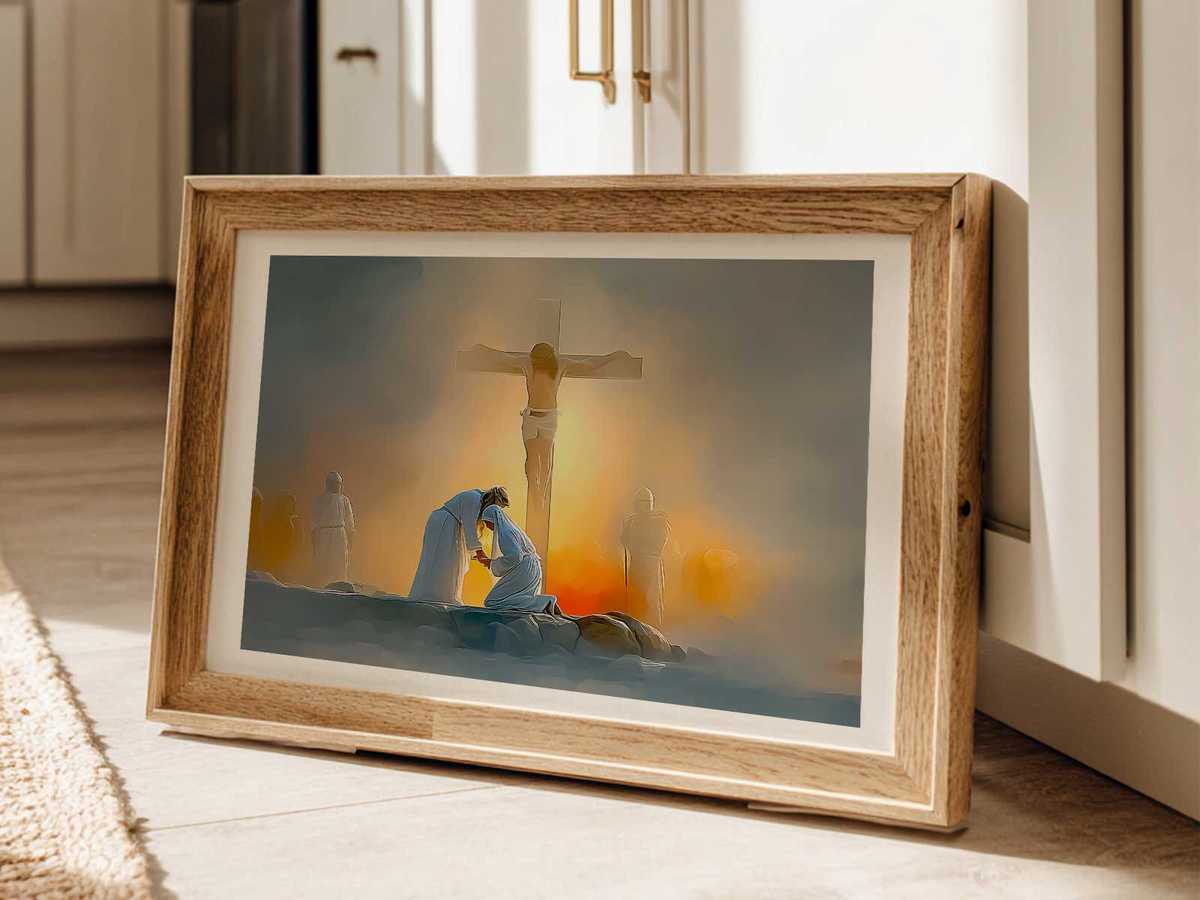
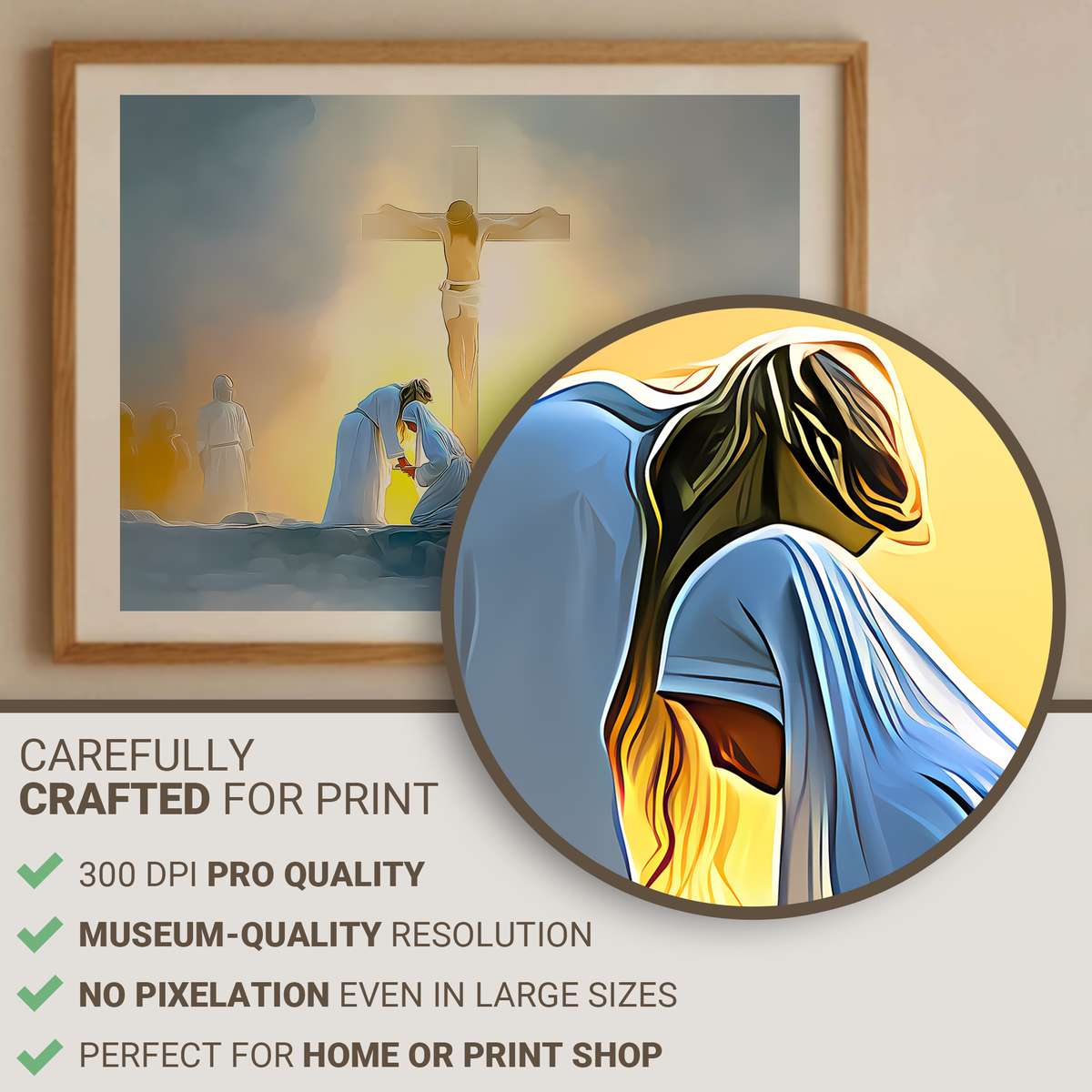
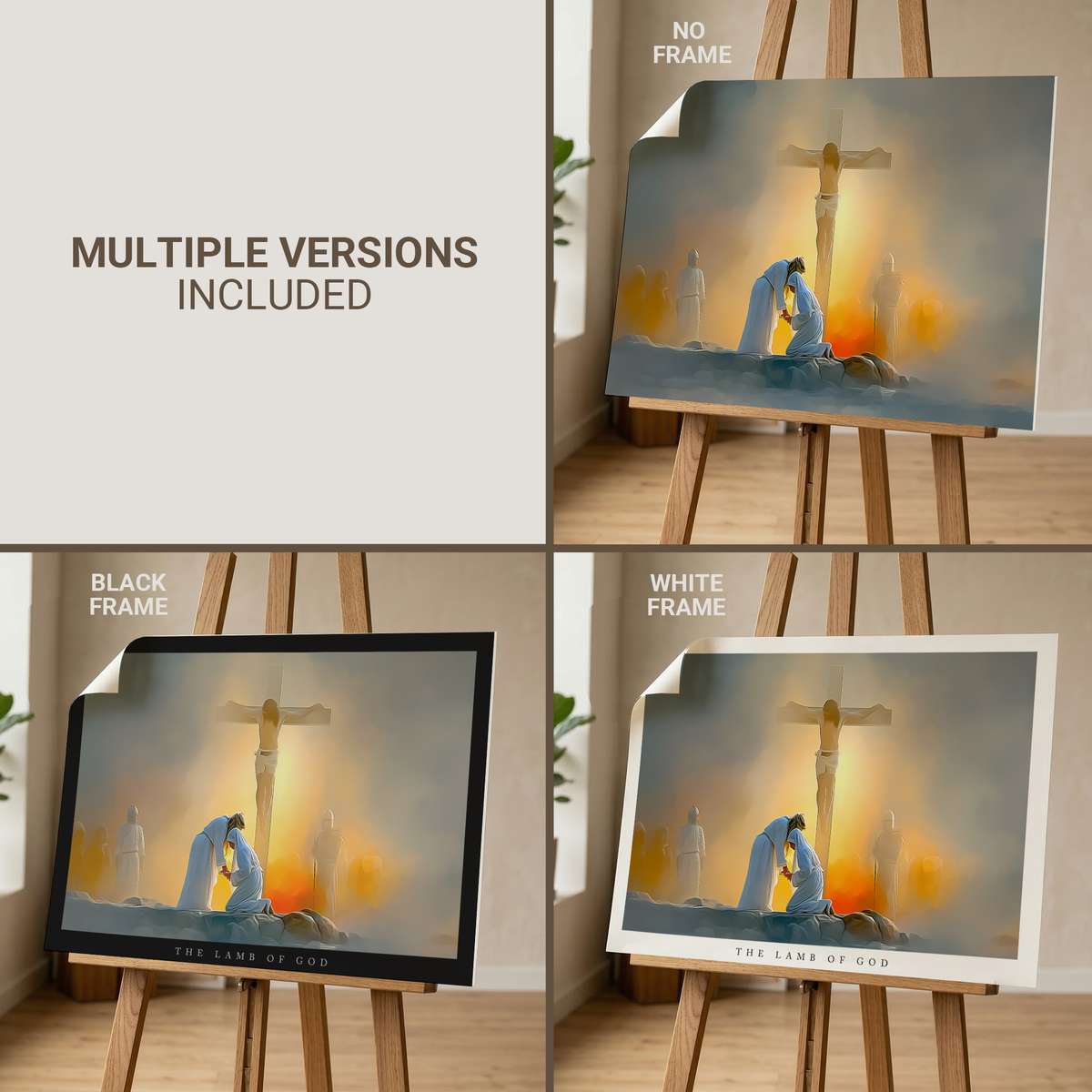
The image centers a Crucifixion rendered with the economy of a single steady hand: spare lines describe the cross, the bowed head, the shoulders set against negative space. This pared-down drawing of Jesus on cross does not compete for attention with ornament; it invites the eye to slow and the heart to linger. The restraint of the stroke and the calm dignity of the face keep the scene from becoming theatrical, offering instead a presence that can quietly hold a room.
What gives this piece its devotional weight is less what is shown than how it is shown. The face—measured, gentle, almost ascetic in its simplicity—becomes a point of contemplation. Without dramatic chiaroscuro or crowd scenes, the viewer meets a human countenance that registers both surrender and steady love. The absence of excess detail prevents distraction and opens space for prayer or reflective thought, so the drawing functions as an aid to interior attention rather than a momentary spectacle.
Visually, the sobriety of the line work establishes an intimate scale of devotion. A thin, deliberate contour around hands and brow suggests vulnerability; a slightly heavier stroke on the cross grounds the composition and signals stability. This interplay of light and weighted lines enables the work to read as protective rather than exposed—an image that one can live with in a bedroom, a study, or a small prayer corner without overwhelming the room.
[IMAGE_INSERT_ARTICLE_01]
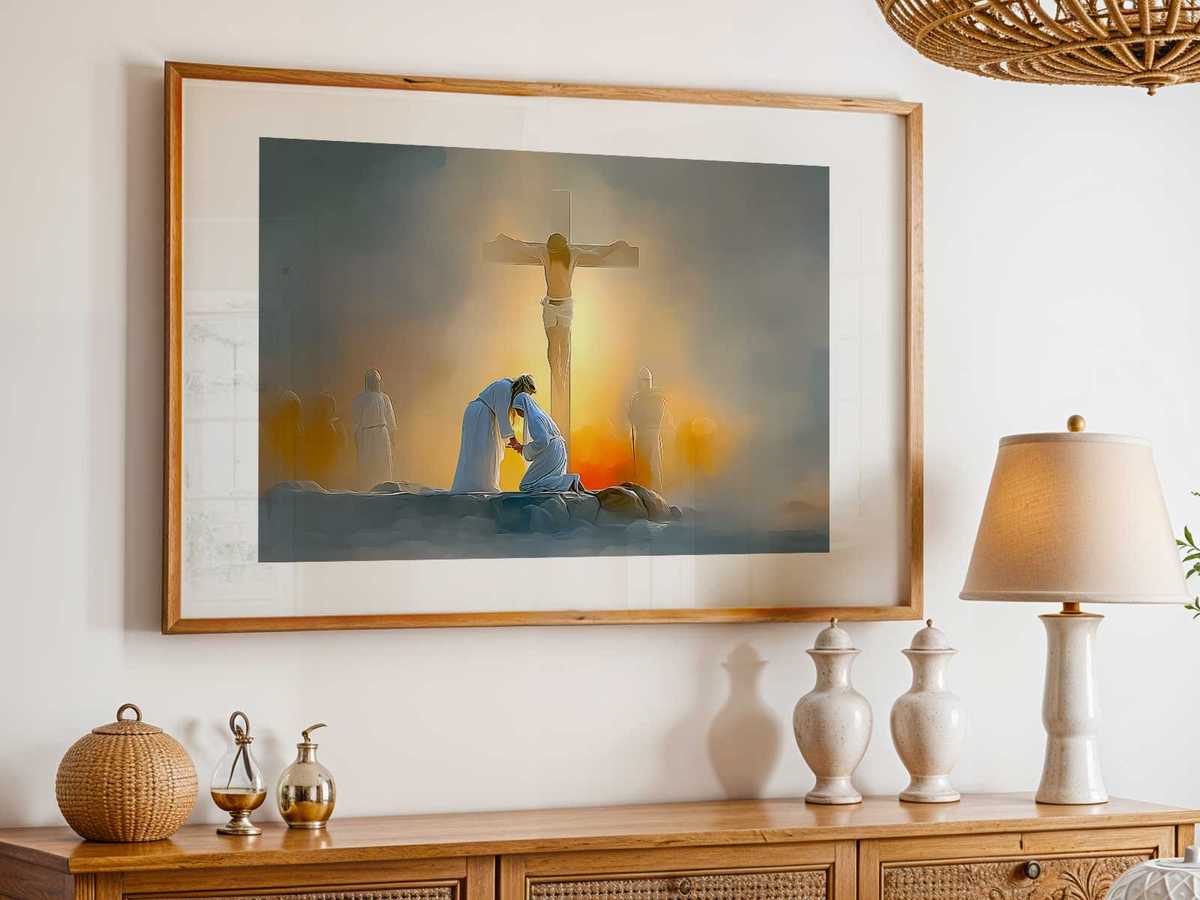
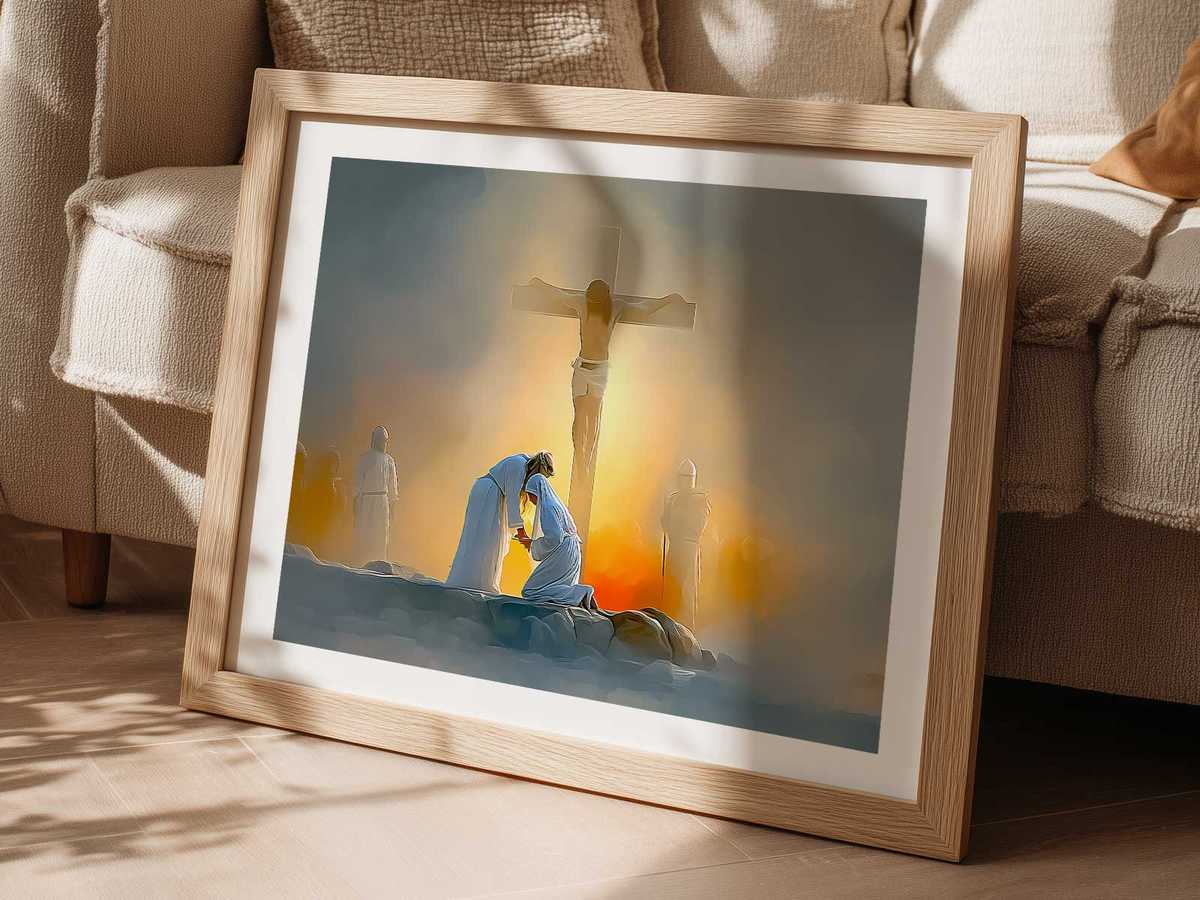
Placed near a bedside lamp or above a modest mantel, the drawing becomes a companion for daily rhythms. Morning coffee, a quiet pause between tasks, an evening prayer—each moment finds a visual anchor in the simple face and the uncluttered posture of the figure. Because the portrayal resists dramatization, it also resists dictating how the viewer must feel; the piece offers a quiet invitation to bring whatever burdens or gratitude one has into the presence suggested by the image.
For someone choosing art that aims to be both sacred and domestic, this drawing succeeds by balancing dignity with approachability. The pared-back aesthetic reads as respect for the mystery at the heart of the scene: the Crucifixion remains central, understood as an act of love conveyed through a face and a line rather than through spectacle. In this way the work keeps faith in clear view while allowing everyday life to unfold around it.
As a gift, the drawing carries a particular tenderness. It speaks not with imposed declaration but with an offered space—an image you can set in a hallway to meet visitors with quiet witness, or in a nursery to remind parents of steadfast love without alarm. Its visual restraint makes it adaptable to many interiors while preserving a devotional core that can deepen over time as the homeowner returns to it again and again.
The contemplative quality of this crucifixion drawing makes it more than decorative; it becomes a discreet center of attention in a room, a calm companion for prayerful thought, and a daily reminder of the love at the heart of Christian faith. The simplicity of the trait and the face keeps the sacredness intact: this is an image meant to be lived with, to be glanced at and then carried inward, a quiet presence more than a performance.






 ↧ Digital download
Drawings of Jesus Christ Print: The Trial and the Silent Dignity of...
Digital download
↧ Digital download
Drawings of Jesus Christ Print: The Trial and the Silent Dignity of...
Digital download
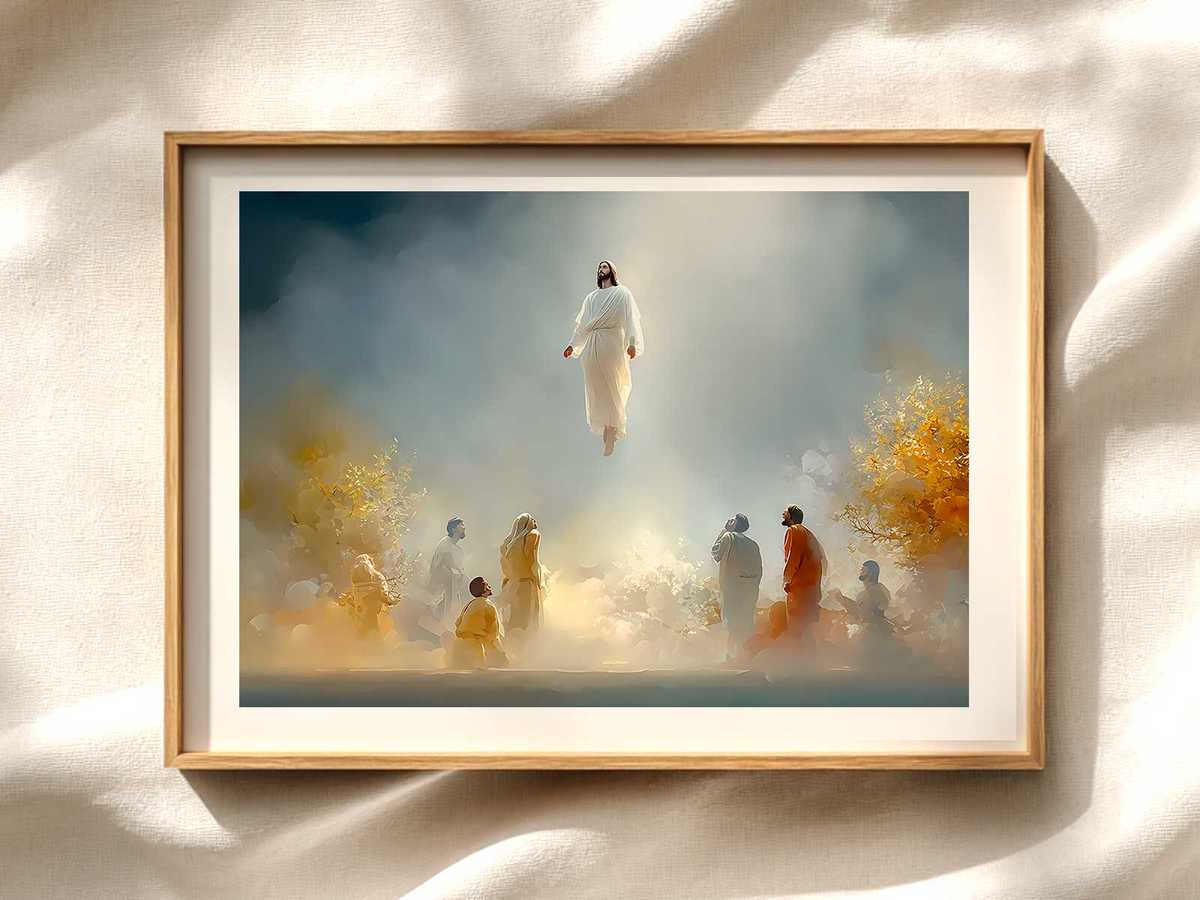 ↧ Digital download
Ascension as a Sign of Light, Hope and Sending — A Famous Christ...
Digital download
↧ Digital download
Ascension as a Sign of Light, Hope and Sending — A Famous Christ...
Digital download
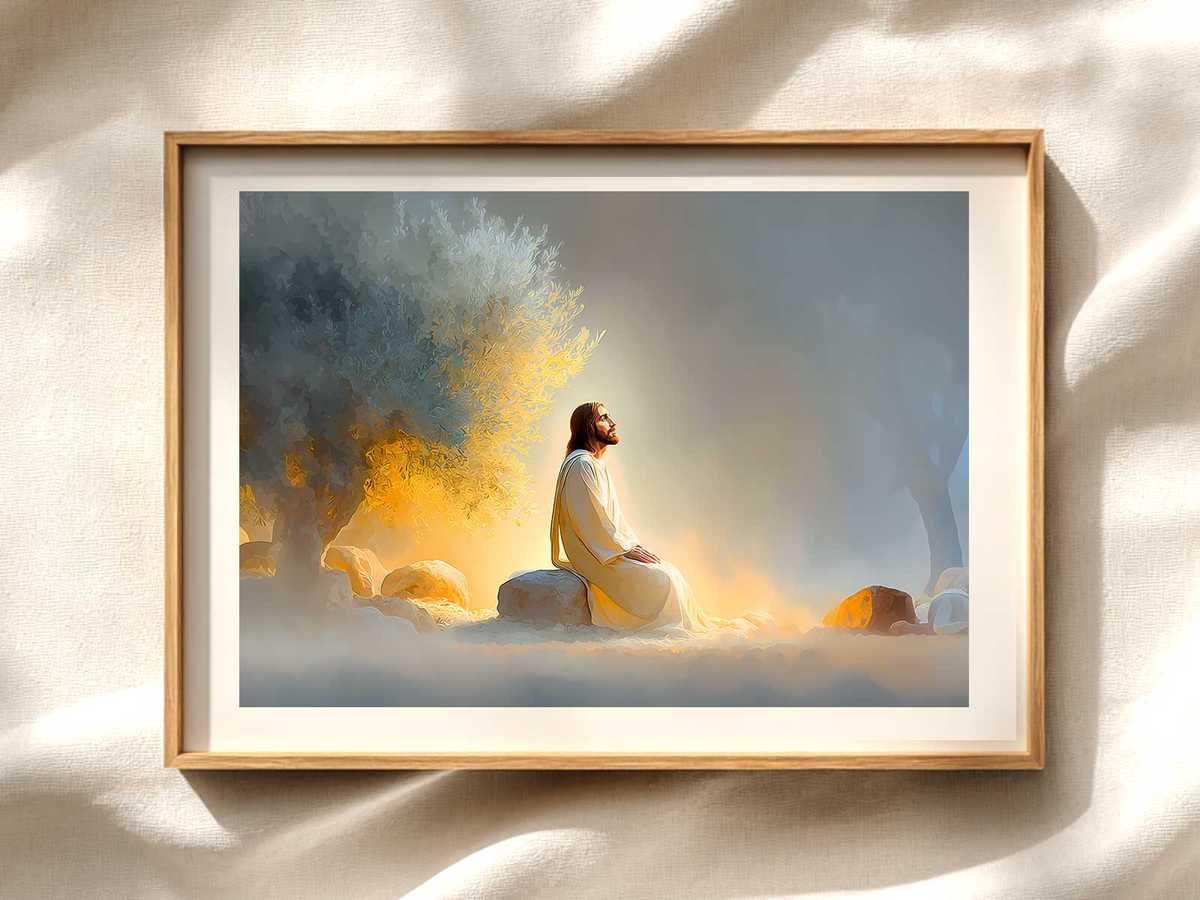 ↧ Digital download
Gethsemane Drawing with Bible Verse Wall Art: A Quiet Companion for...
Digital download
↧ Digital download
Gethsemane Drawing with Bible Verse Wall Art: A Quiet Companion for...
Digital download
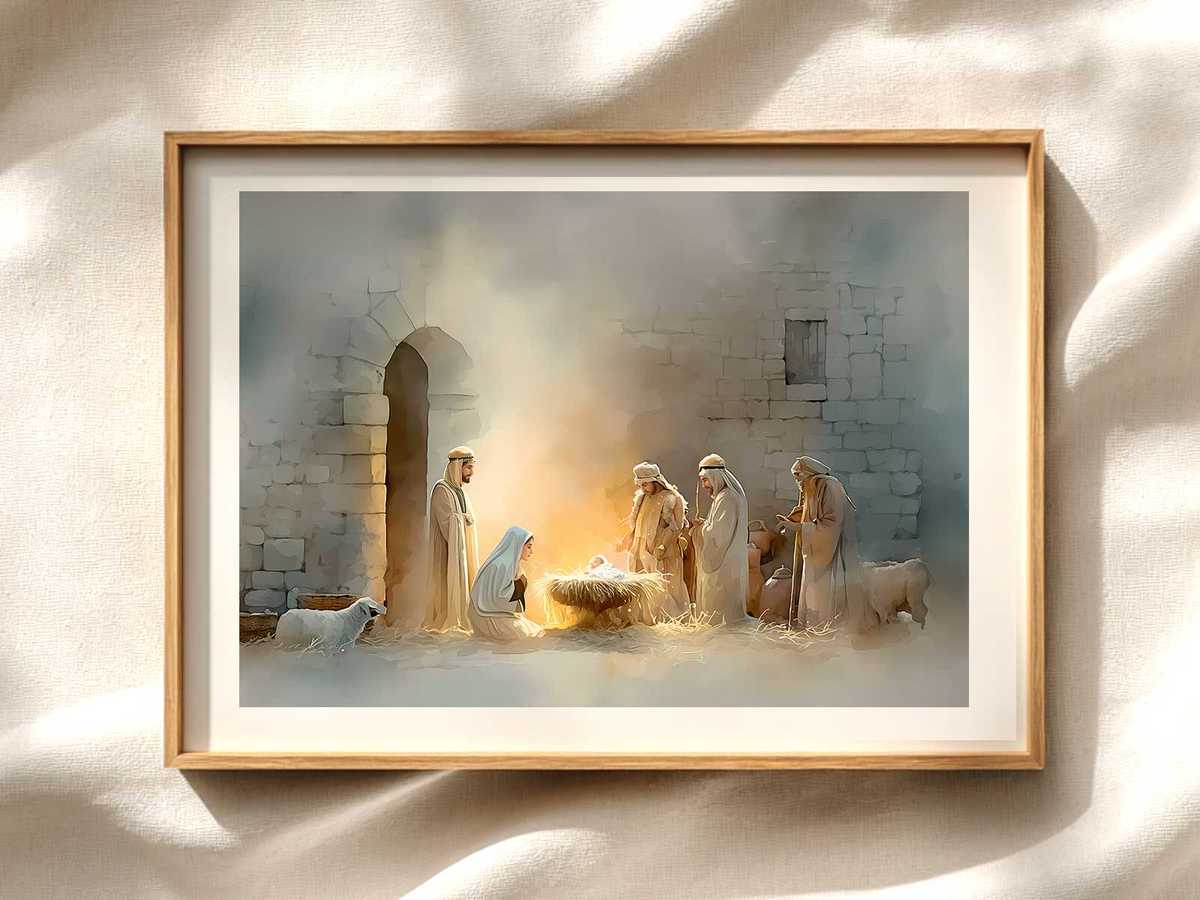 ↧ Digital download
The Magi’s Adoration on Canvas: Traditional Christian Canvas Wall...
Digital download
↧ Digital download
The Magi’s Adoration on Canvas: Traditional Christian Canvas Wall...
Digital download