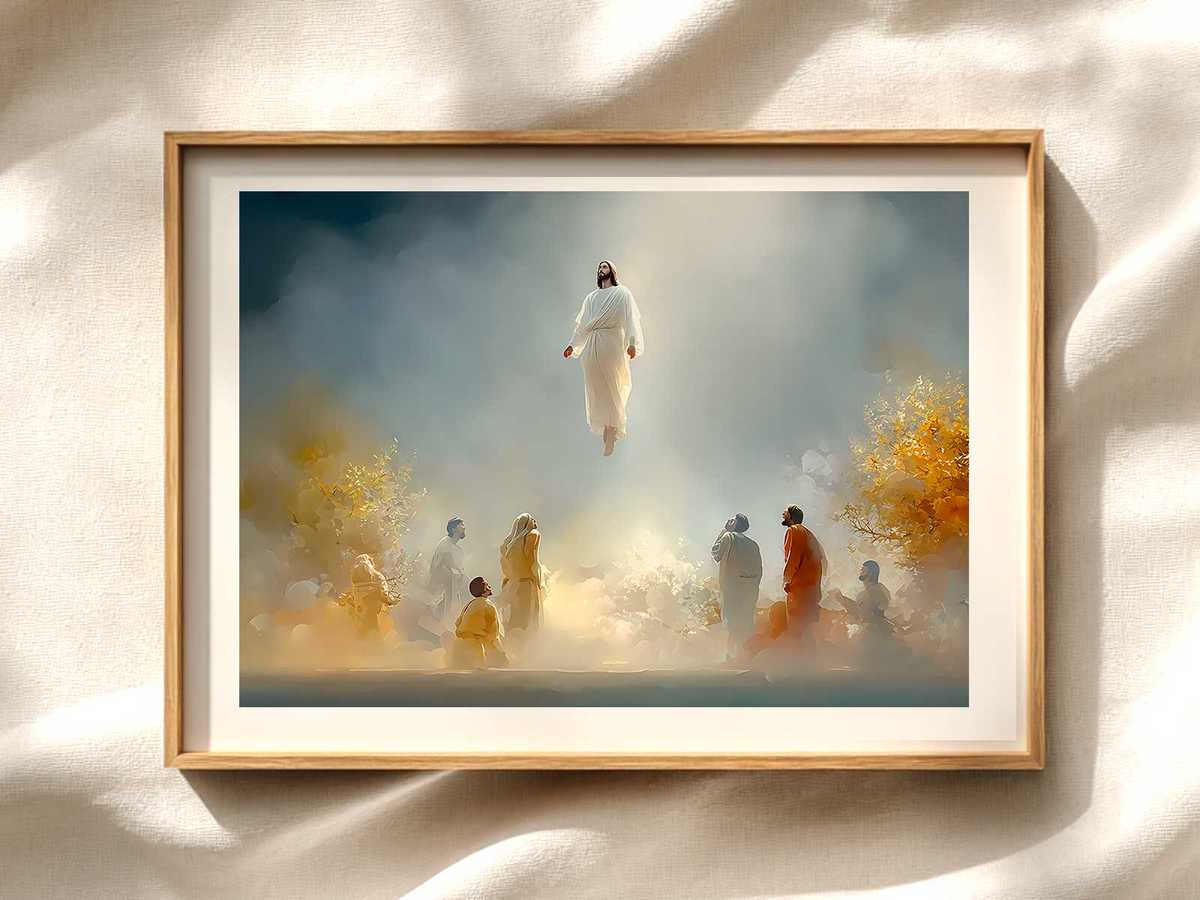
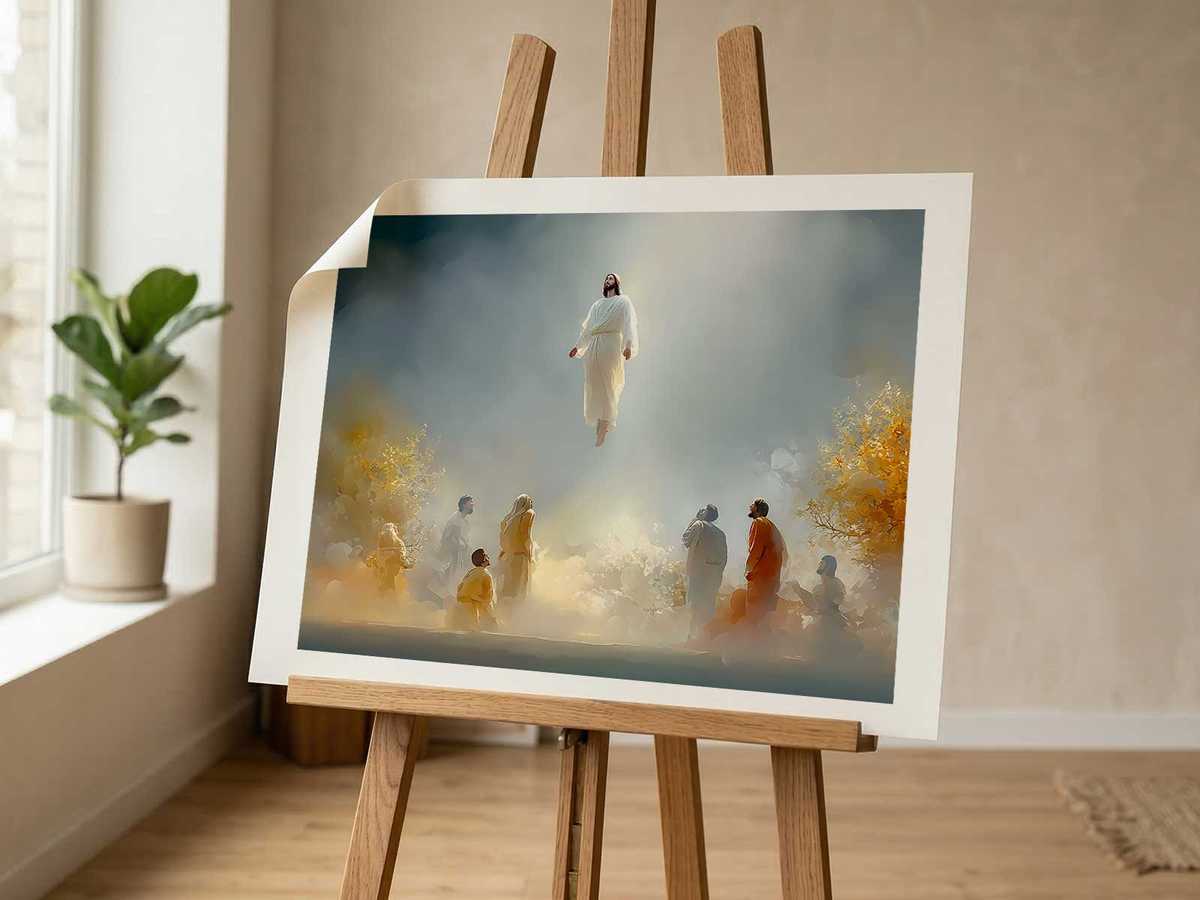
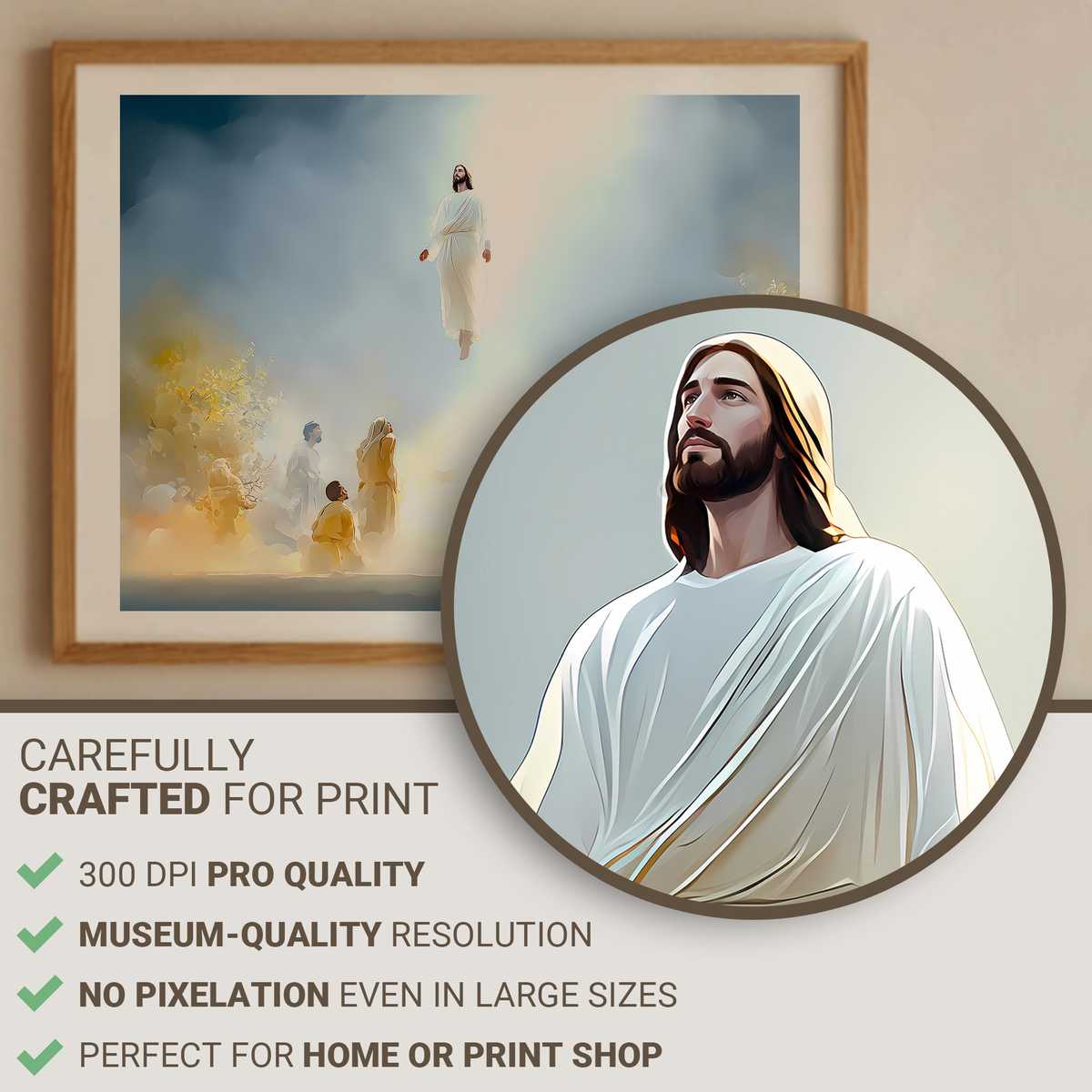
The Ascension has always been a visual language rather than a single scene to admire for fame alone. In this wall art interpretation a famous Christ painting is read first as a sign: a vertical movement of light, a quiet triumph of elevation, and an implied sending that opens the gaze beyond the frame. The composition keeps the figure lofty but not distant, reducing crowded detail to a clear, restrained arrangement so the eye receives the story before it catalogs brushwork or reputation.
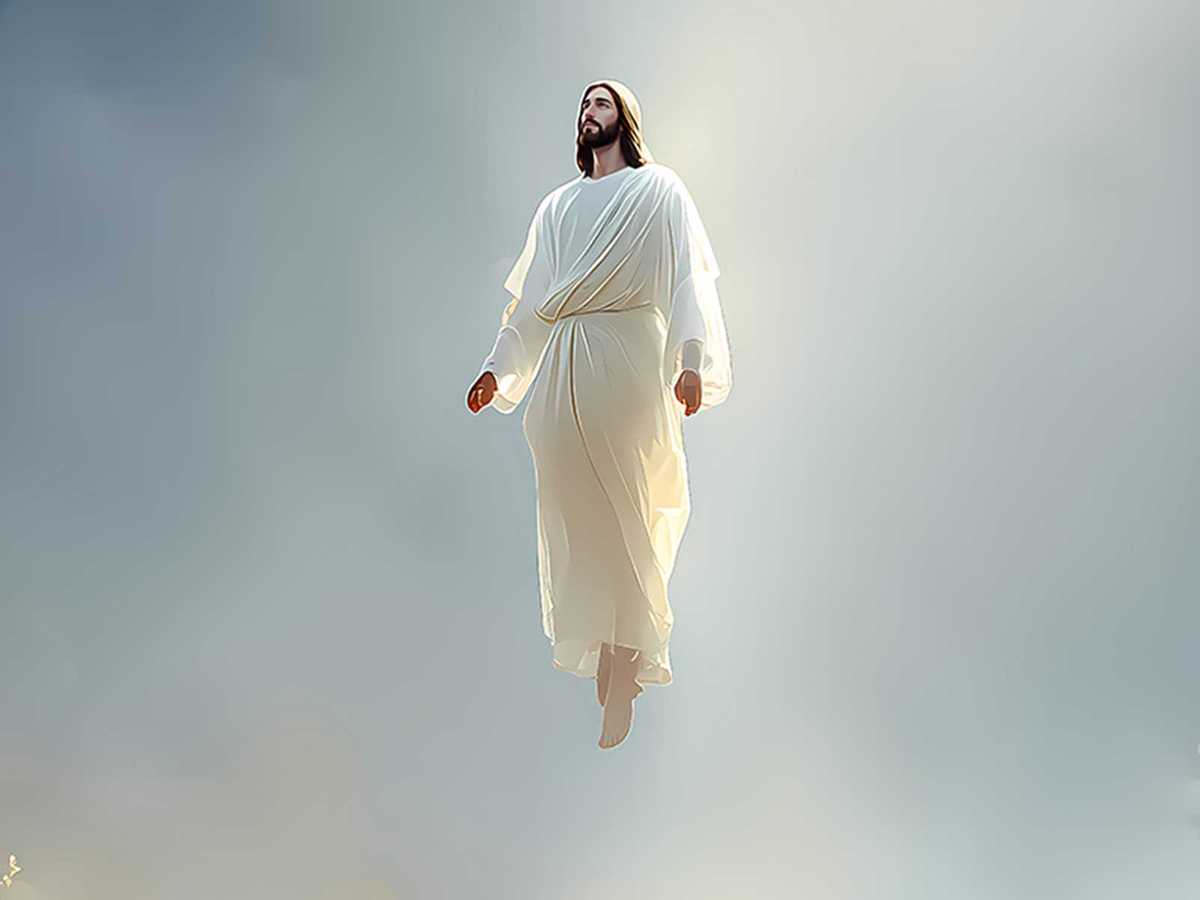
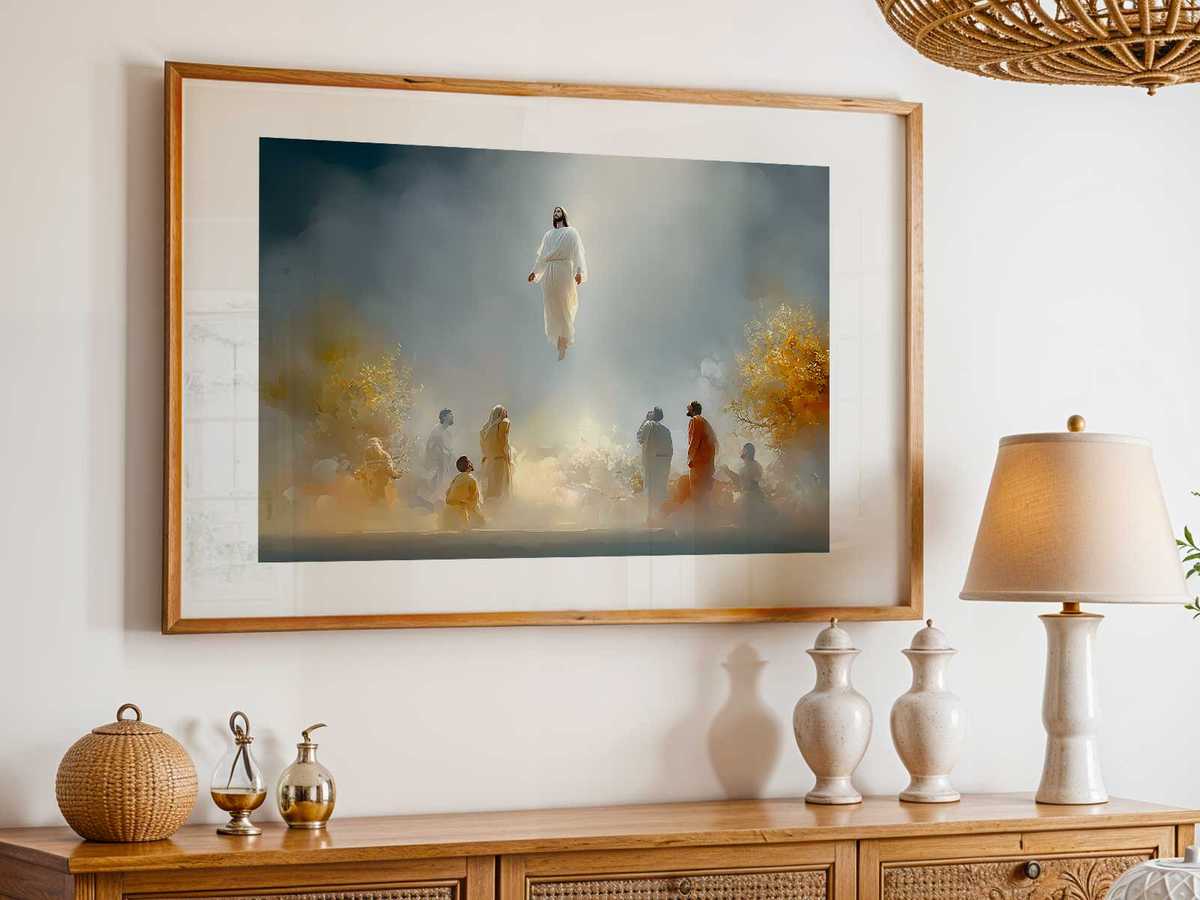
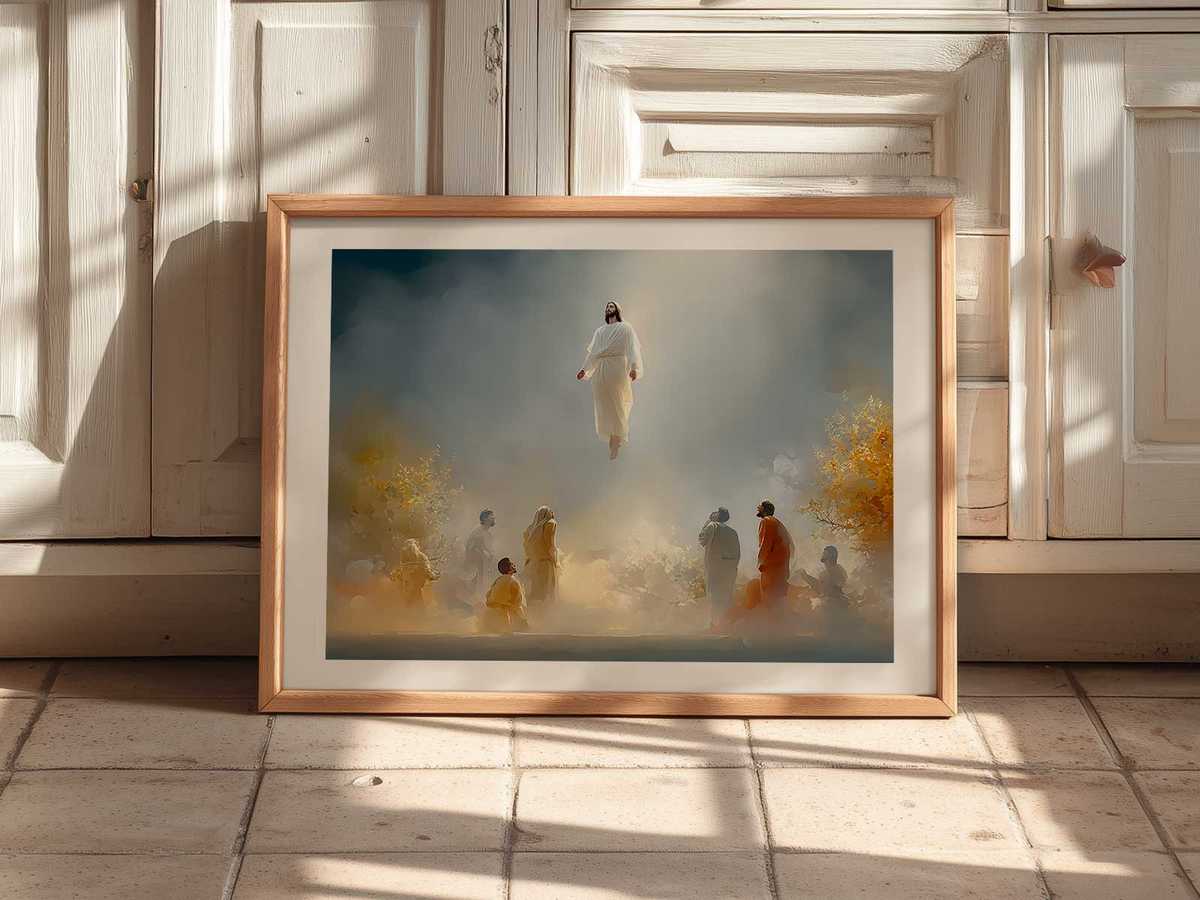
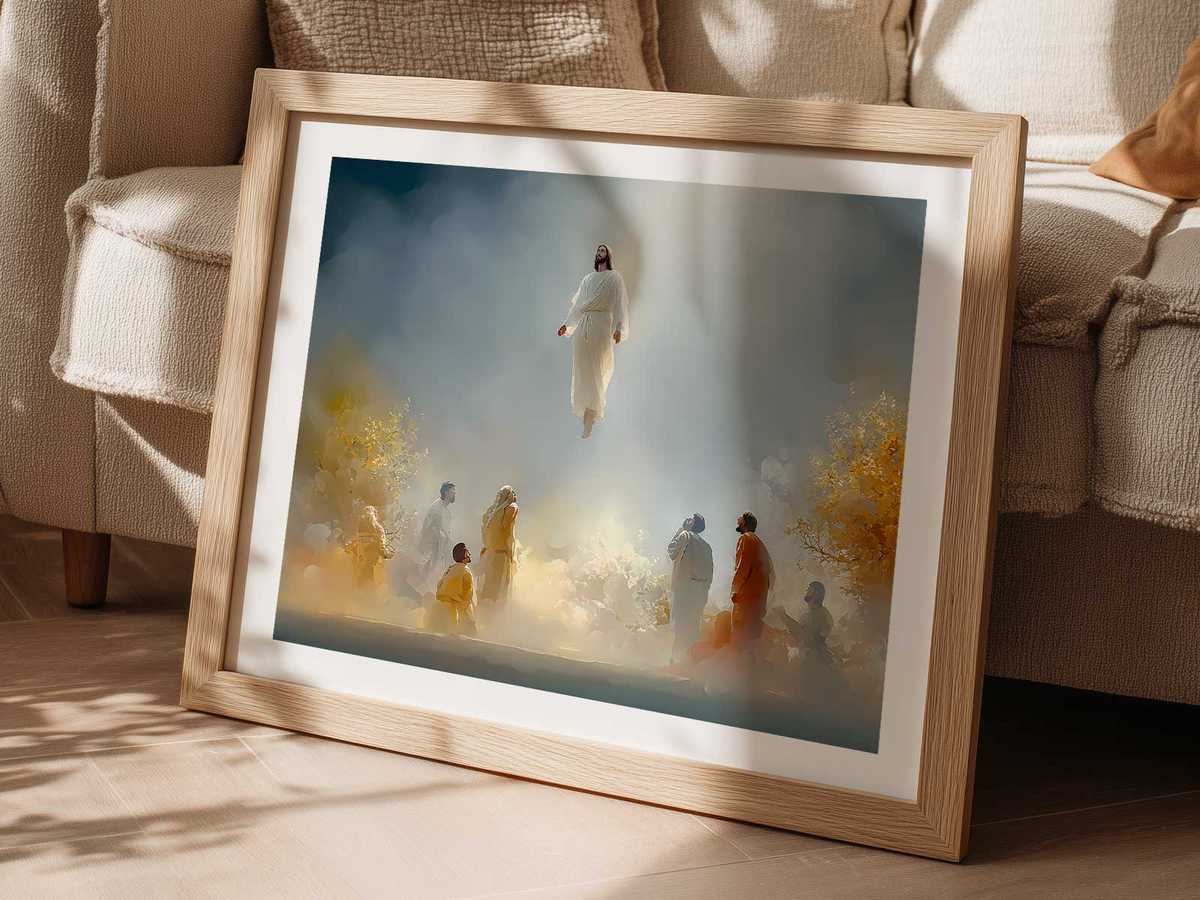
Visually the piece centres on an upward axis of luminance. A focused pool of light gathers around the risen Christ and diffuses upward in graduated tones, suggesting ascent without the clutter of many figures or ornate architecture. This simplicity is what gives the image its devotional force: a single luminous focal point becomes both destination and departure, encouraging contemplation rather than theatrical display.
The sense of victory here is not a parade but a stillness that follows decisive movement. The posture and upward line imply completion and authority, while the soft halo of light and open sky carry the promise that presence continues in another mode. Because the artwork treats triumph as an inward certitude expressed through space and light, it resists becoming mere historical spectacle and instead reads as an emblem of hope you can live with.
Equally important is the theme of sending. The Ascension in this composition is suggested as a hinge between intimacy and mission: the vertical gesture opens a horizon rather than closing a scene. The surrounding pictorial quiet — a few sketch-like figures at the lower edge or a minimal suggestion of landscape — anchors human response without competing with the central sign. That restraint lets the piece work as a prayerful prompt in a study or a subtle encouragement in an entryway, where it can be seen as an invitation to go forth rather than as a dramatic climax confined to a museum wall.
[IMAGE_INSERT_ARTICLE_01]
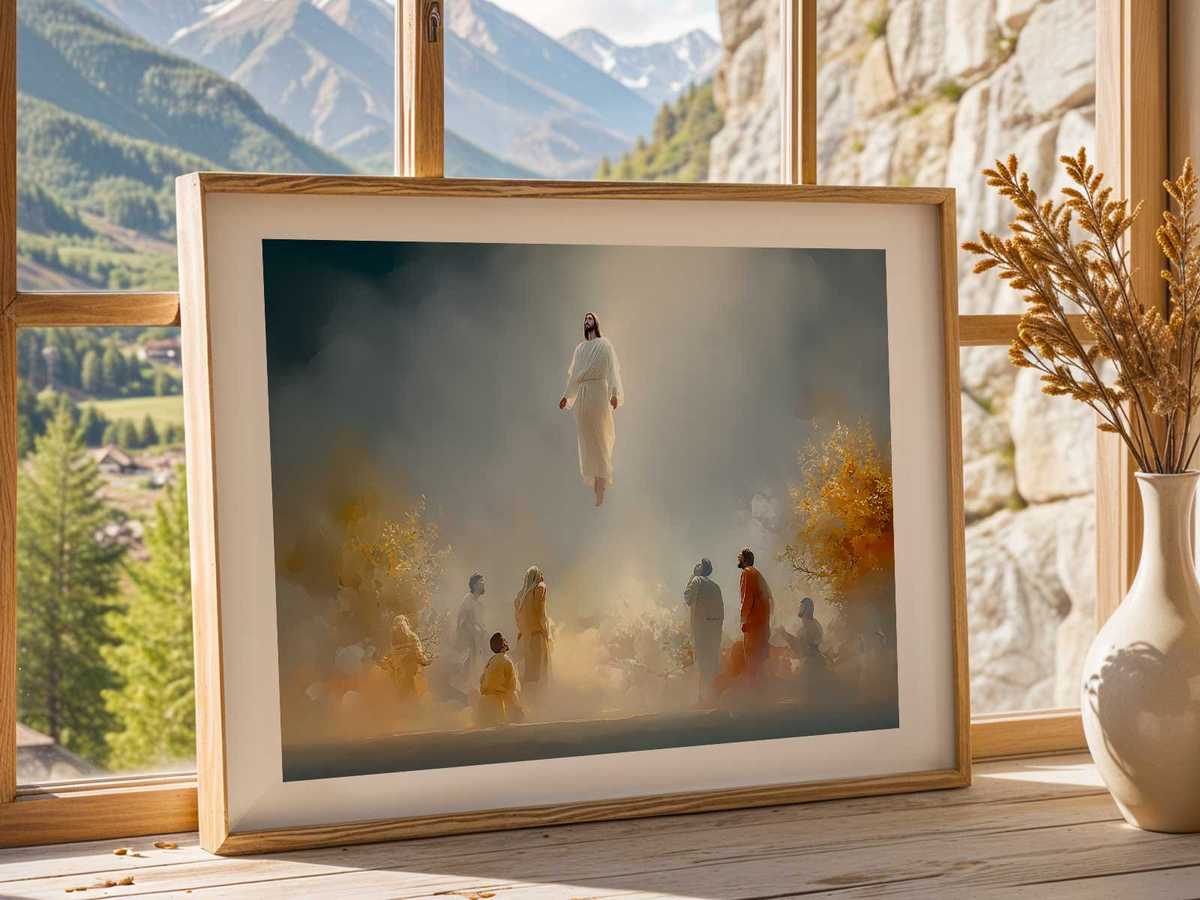
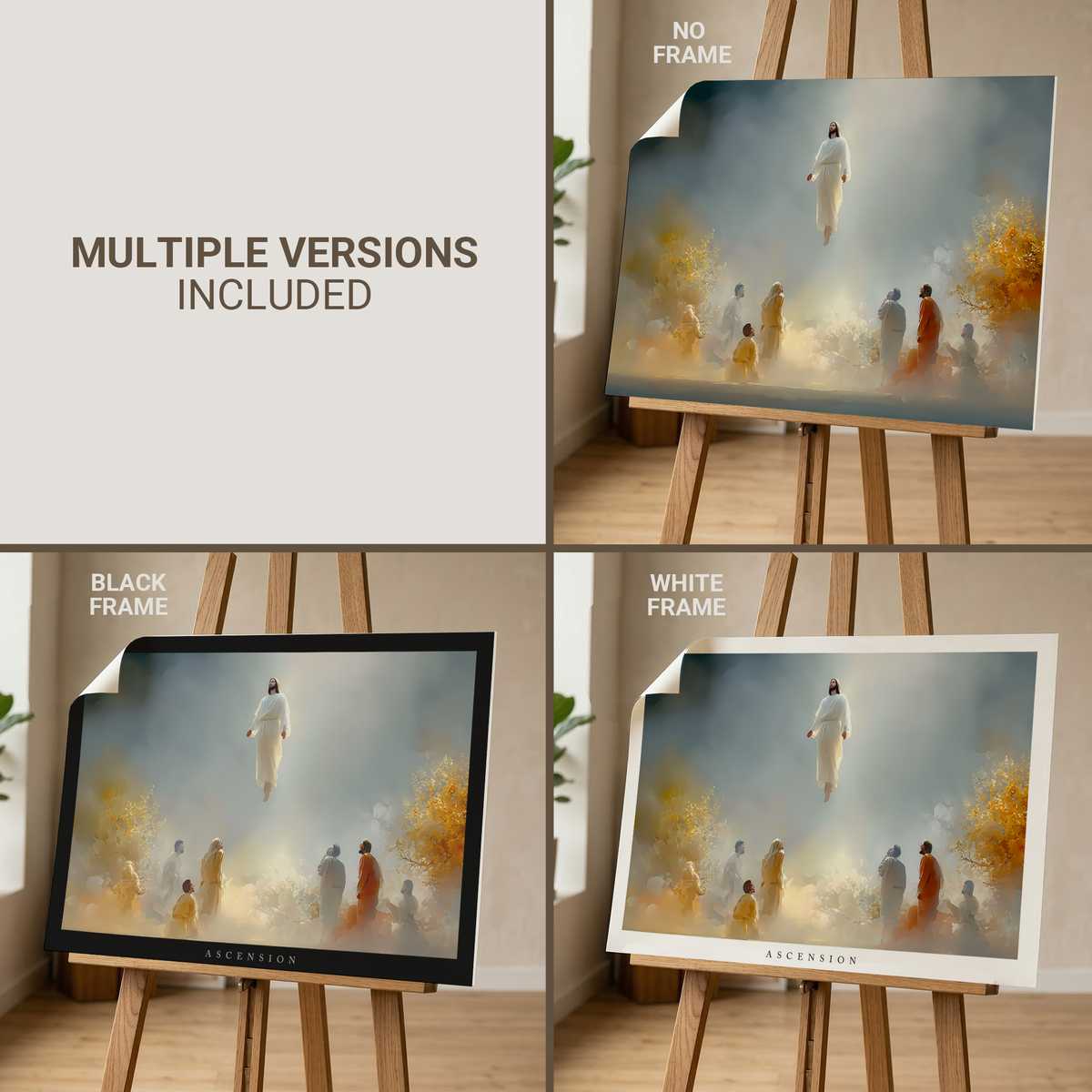
Because the design emphasises symbolic clarity, it adapts easily to domestic light and texture. On a pale wall the gentle contrasts read as warmth; in a softly lit prayer corner the luminous center functions like a focus for reflection. In a bedroom or nursery the upward sweep suggests protection and future, while in a quiet office it can be a non-intrusive reminder of purpose. The artwork’s dignity comes from proportion and white space — the decisiveness of what is left out becomes part of the message.
Living with this representation means living with a sign that works on several levels at once: an image of light that reaches up, a mark of victory that calms, and a visual verb that continues to send. It asks the viewer to read before displaying, to allow the ascendant line to guide thought and prayer rather than simply to admire a famous Christ painting for its name. In that careful balance between simplicity and meaning the piece finds its place in a Christian home: not as a showpiece, but as a quiet companion for daily attention and gentle witness.



 ↧ Digital download
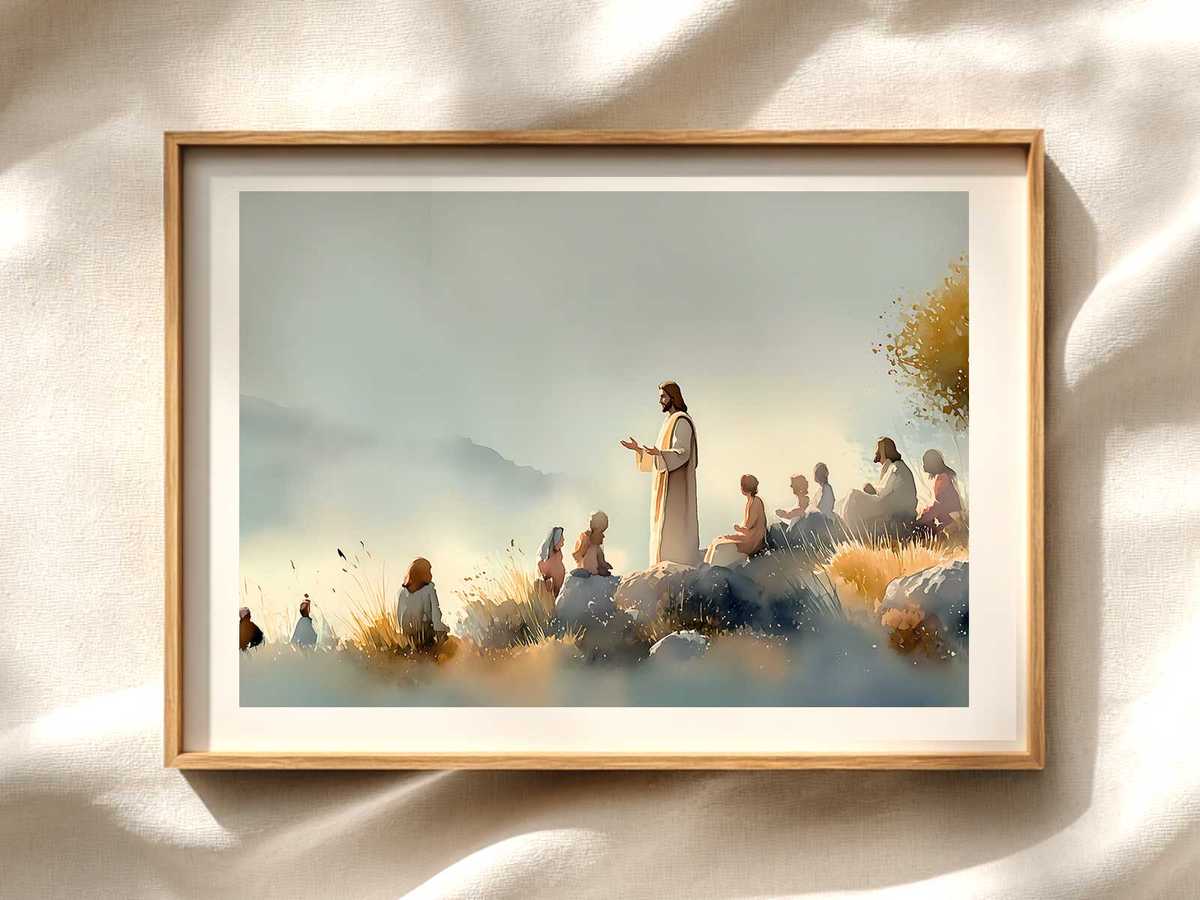
Why the Sermon on the Mount Makes Gentle, Daily Wall Art
Digital download
↧ Digital download
Why the Sermon on the Mount Makes Gentle, Daily Wall Art
Digital download
 ↧ Digital download
Jesus Art: The Miraculous Catch as a Quiet Call to Trust
Digital download
↧ Digital download
Jesus Art: The Miraculous Catch as a Quiet Call to Trust
Digital download
 ↧ Digital download
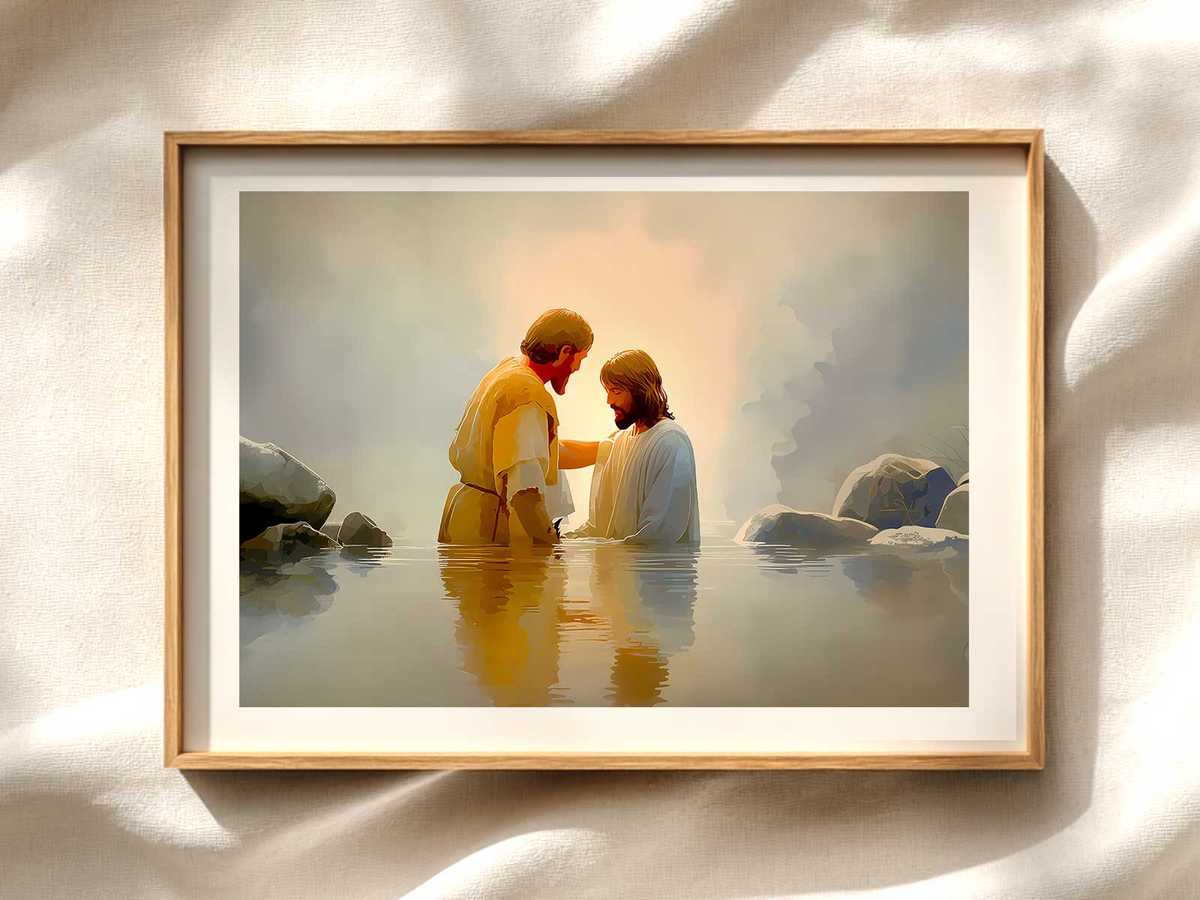
Baptism of Christ painting — a sacred print for quiet devotion at home
Digital download
↧ Digital download
Baptism of Christ painting — a sacred print for quiet devotion at home
Digital download
 ↧ Digital download
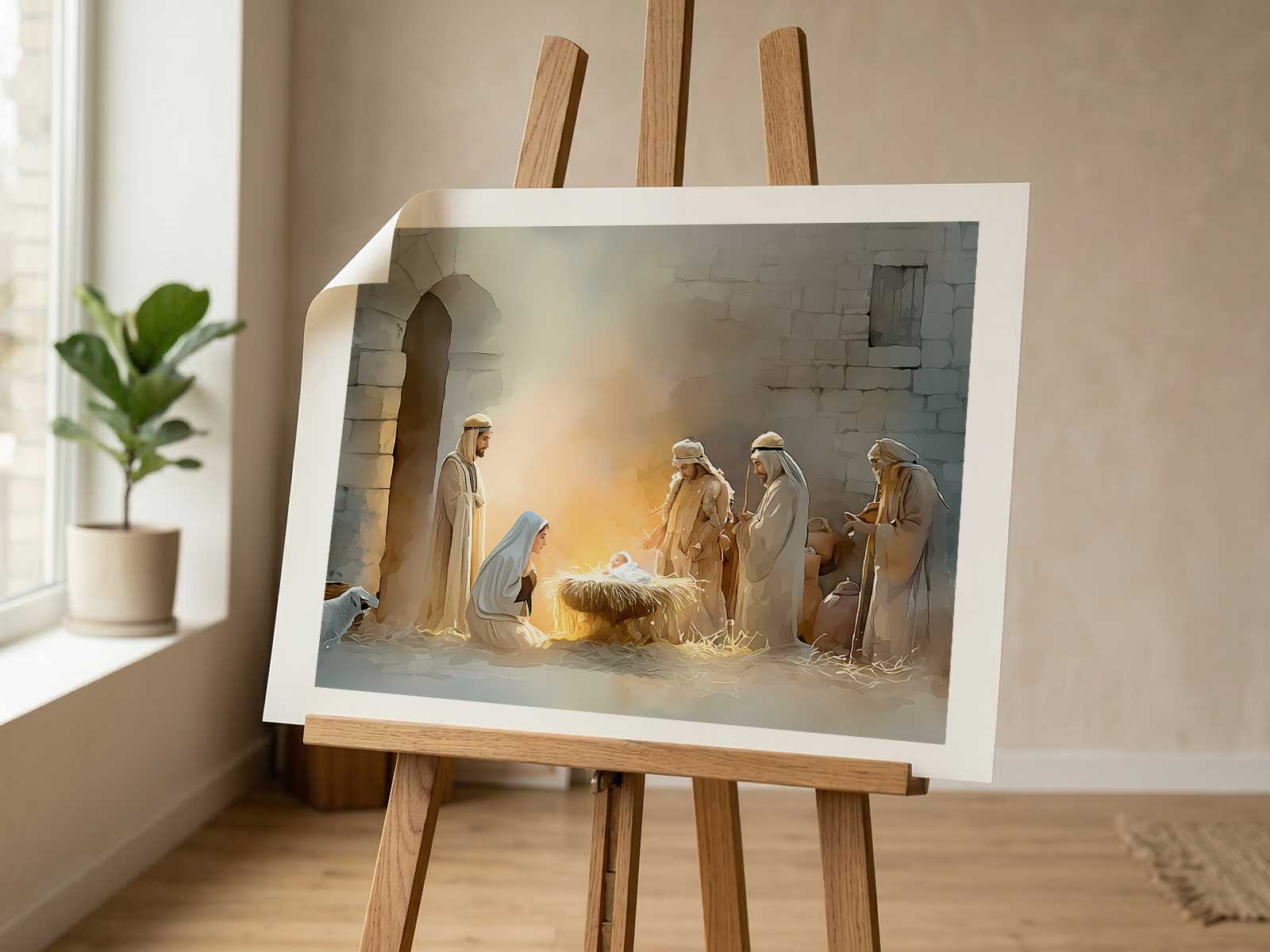
Jesus Wall Art – 33 Printable Christian Posters, Biblical Art...
Digital download
↧ Digital download
Jesus Wall Art – 33 Printable Christian Posters, Biblical Art...
Digital download