Crown of Thorns Meaning: Suffering, Mock Kingship, Humility, and Sacred Image
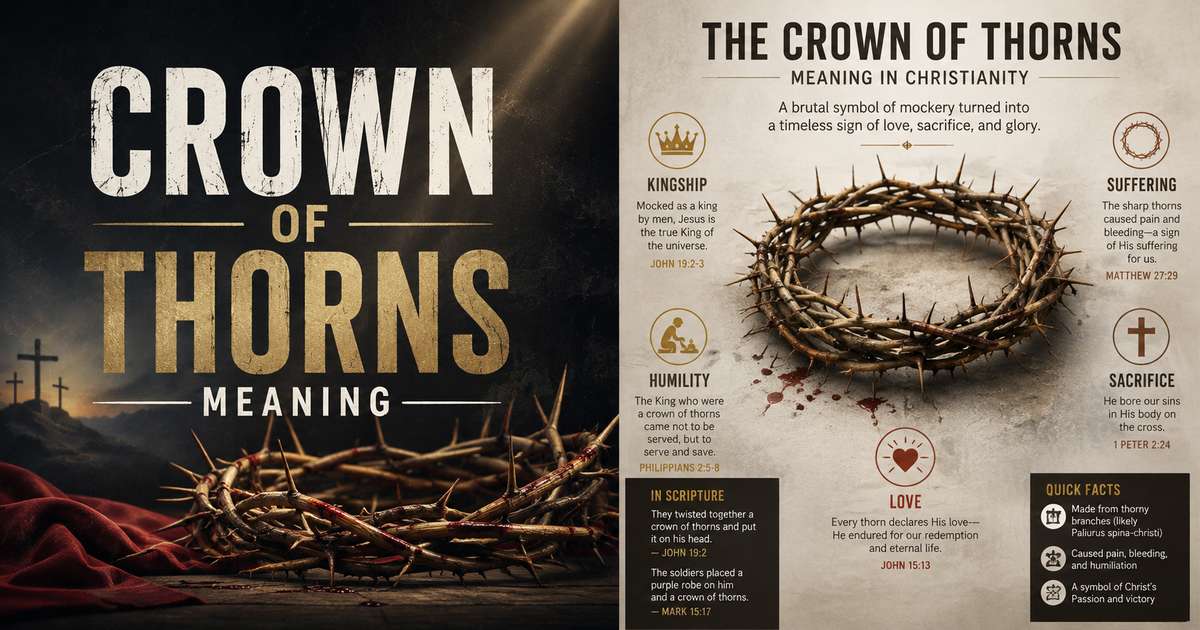
The crown of thorns is one of the most powerful images of the Passion. Placed on Jesus' head by Roman soldiers during his mocking before the crucifixion, the crown appears in the Gospels and has become a lasting symbol of suffering, humiliation, and paradoxical kingship in Christian thought and art.
Quick summary: The Gospels of Matthew, Mark and John record that soldiers placed a crown of thorns on Jesus' head as part of mocking him as "King of the Jews." Christian interpretation connects this act to redemptive suffering, the curse of thorns in Genesis, and devotional use in art and prayer.
Quick access: Definition • Biblical roots • Sacred art
Clear definition
In Christian language, the crown of thorns refers to the wreath of thorny branches that Roman soldiers placed on Jesus' head during his trial and mocking shortly before the crucifixion. It is presented in the New Testament as an instrument of ridicule—meant to mock Jesus' title as King—but it also carries deeper spiritual meanings in Christian reflection.
Biblical roots
The crown of thorns is attested in the Gospels of Matthew, Mark and John, which describe soldiers clothing Jesus in a purple robe, placing a thorny crown on his head, offering a reed as a scepter, and taunting him with the words "Hail, King of the Jews." These passages frame the crown as part of the Passion narrative and the sequence of humiliation that leads to crucifixion.
Spiritual meaning
Christian theological reading commonly links the crown of thorns to themes of suffering and humility. The object functions on two related levels: historically as an act of mockery and devotionally as a sign of redemptive suffering. Commentators and hymnographers have used the motif to show how Christ bears humiliation and pain, and how that bearing is bound up with the Christian understanding of salvation.
Christian symbolism
Symbolically, the crown points to several interwoven ideas. It evokes mock kingship—soldiers parodying royal insignia—while also recalling the curse in Genesis associated with thorns and thistles, often cited in theological reflection to show how Christ takes on the consequences of human brokenness. Thus the crown is both an instrument of scorn and a paradoxical emblem of Christ's humble, suffering kingship.
Sacred art and visual language
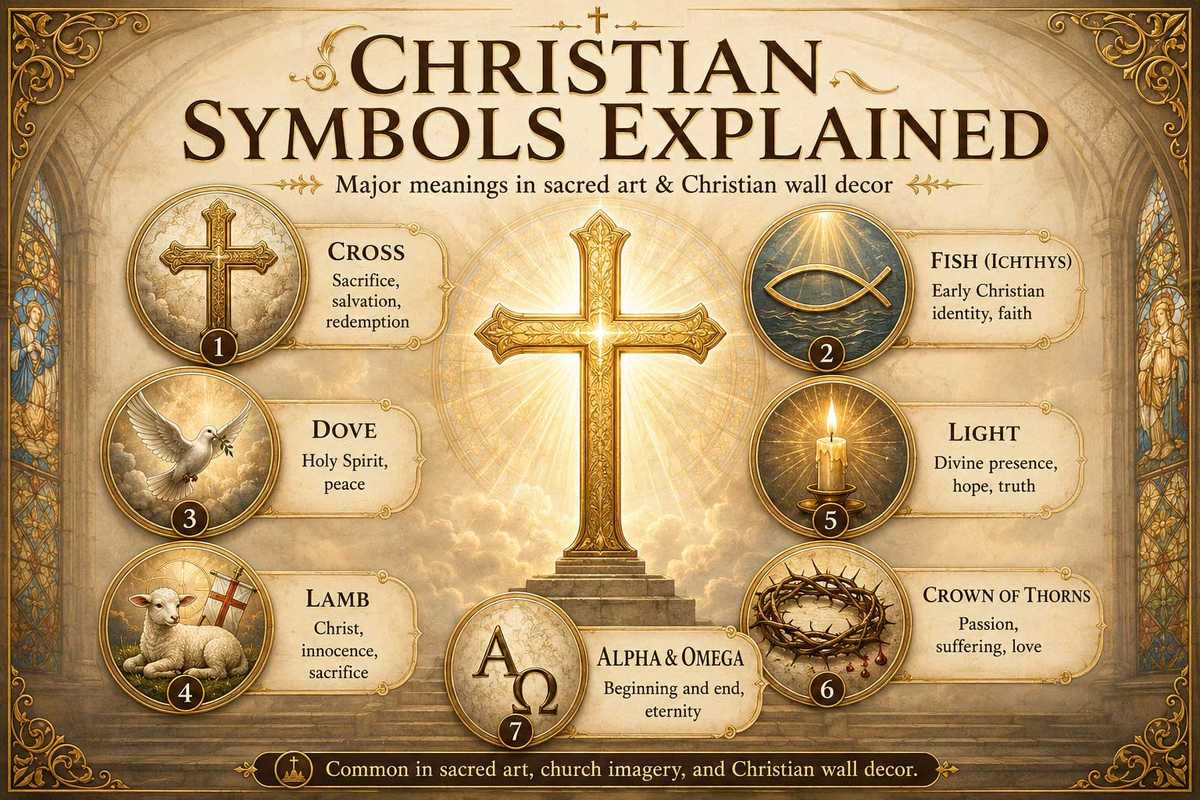
The Crowning with Thorns became a central motif in Christian art. Western and Eastern artists depict the scene to highlight different aspects: the physical pain inflicted, the mockery by the crowd or soldiers, and the dignity of Christ amid suffering. In devotional images and the Rosary's Sorrowful Mysteries, this motif reinforces contemplation on the Passion and the paradoxical nature of Christ's kingship.
Liturgy and tradition
In Christian devotional practice the crowning appears as a meditation on the Passion. It is explicitly included in traditions such as the Rosary's Sorrowful Mysteries and is invoked by preachers and writers who emphasize Christ's humility and redemptive suffering. Over centuries the image also entered liturgical imagination and private devotion as a focus for sorrow and reflection.
Relics and historical notes
Christian history preserves a long-standing tradition that a relic venerated as the Crown of Thorns has been kept and honored in ecclesiastical contexts. Medieval reliquaries and later devotion sustained the object's place in Christian memory, feeding both art and pilgrimage practices associated with the Passion.
Prayer and home devotion
For personal devotion and Christian wall art, the crown of thorns can invite a contemplative posture: a reminder to pray with the Sorrowful Mysteries, to place suffering in a redemptive frame, or to create a quiet corner for reflection on humility and compassion. In images, the crown's stark lines and painful texture often contrast with serene faces or haloed figures, helping viewers hold tension between suffering and hope.
Common misunderstandings
Beginners sometimes reduce the crown to mere decoration or shock value. The verified tradition presents it first as an instrument of mockery recorded in the Gospels, and only secondarily as a theological symbol of suffering and humility. Also, while relic traditions exist, claims about specific historical provenance vary and belong to ecclesiastical history rather than the Gospel narrative itself.
Closing interpretation
The crown of thorns meaning in Christianity rests on the Gospel account of mockery and the long devotional reading that follows: an object meant to humiliate becomes a symbol of Christ's bearing of suffering and paradoxical kingship. In art, prayer, and home devotion the image calls viewers to hold together pain and purpose, humiliation and hope—helping Christians of many backgrounds reflect on the mystery of the Passion.
Author: William L.