Bible Verses About Forgiveness: Selecting and Structuring a Coherent Meditation
Forgiveness is a frequent search in Scripture because it answers a concrete human need: the desire to be freed from resentment, the need to reconcile broken relationships, and the longing to know God’s mercy. This article explains how to select Bible verses about forgiveness and how to arrange them into a brief, coherent Bible-based meditation that can guide personal reflection or inspire wall art in a home or prayer space.
WHY THIS TOPIC LEADS PEOPLE TO SCRIPTURE
People turn to Scripture about forgiveness when they face guilt, hurt, or stalled relationships. The Bible offers language and images that name both the offended conscience and the offer of divine pardon. Topical resources collect these passages because readers often need concentrated, trustworthy scriptural material to pray through a specific internal struggle.
WHAT KIND OF VERSES FIT THE THEME BEST
For a focused meditation on forgiveness choose verses that do three jobs: acknowledge the human condition (confession or hurt), show God’s action (removal or pardon), and give ethical direction (the call to forgive others). Reputable topical lists—such as collections compiled by Bible study sites and Bible Gateway—point to passages that do exactly this.
OLD TESTAMENT AND NEW TESTAMENT BALANCE
Balance matters. Old Testament passages supply vocabulary and imagery for God’s mercy—Psalm 103:12, for example, uses the image of distance: our transgressions removed "as far as the east is from the west." New Testament texts give practical instruction and relational ethics: the Lord’s Prayer context and Jesus’ teaching on persistent forgiveness connect divine pardon to how believers treat others.
HOW TO READ THESE VERSES IN CONTEXT
Read strong topical verses in their immediate context rather than as isolated slogans. Matthew 6:14–15 sits inside the Lord’s Prayer and the Sermon on the Mount; Matthew 18:21–35 includes the Parable of the Unforgiving Servant and grows out of questions about community life and discipline. Ephesians 4:32 and Colossians 3:13 belong to letters that shape Christian households and communities. Consulting curated lists and the passages around each verse (as Bible Gateway and other study sites do) helps keep reading balanced and honest.
VERSES FOR DAILY ENCOURAGEMENT AND REFLECTION
Curation by theme is useful because it keeps a small set of passages ready for daily use. Core passages repeatedly recommended by reputable resources include: Matthew 6:14–15 (forgiving others in the Lord’s Prayer context), Matthew 18:21–35 and Matthew 18:21–22 (Peter’s question and the parable), Luke 17:3–4 (forgiving the repentant repeatedly), Ephesians 4:32 and Colossians 3:13 (ethical instructions to forgive), and Psalm 103:12 (God’s imagery for removing sin). These passages cover confession, assurance, and obligation—three steps that make a meditation feel complete.
WHY CERTAIN LINES STAY IN MEMORY
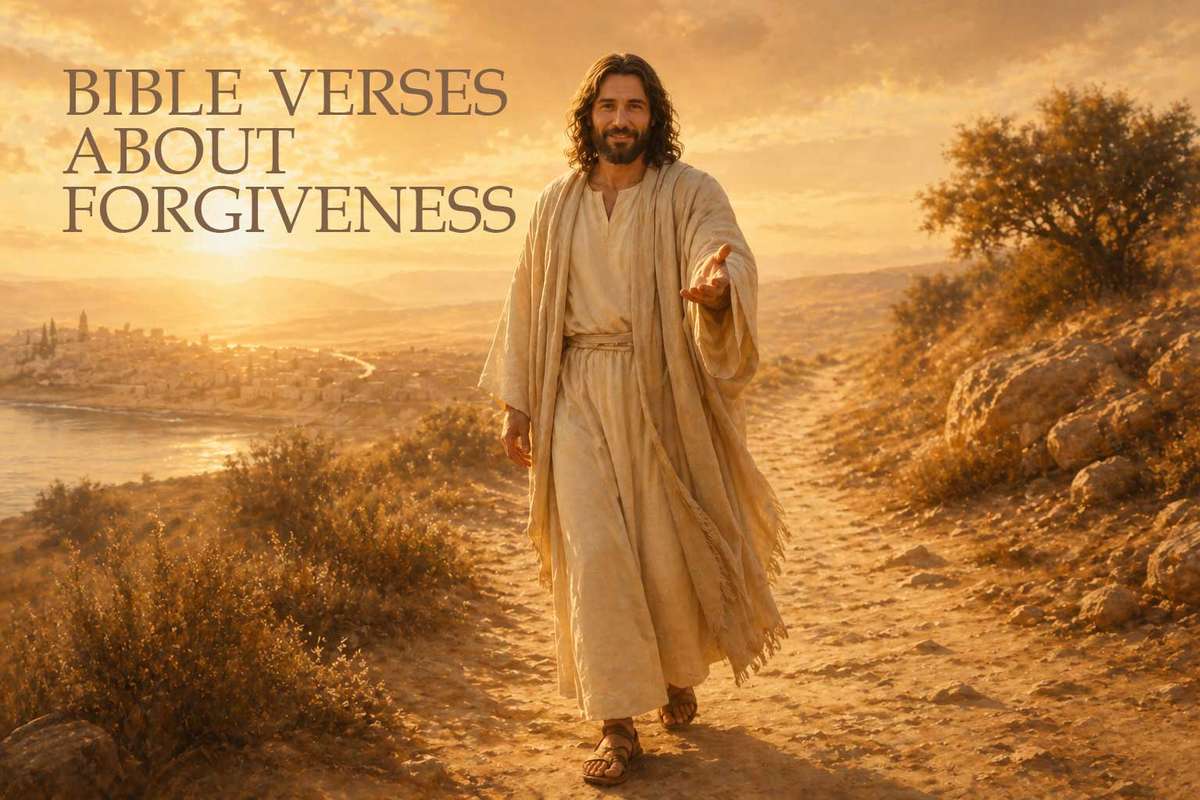
Short, vivid lines become memorable because they encapsulate an image or a practice. Psalm 103:12’s east–west image gives a visual of removal; the repeated formula in Matthew and Luke about forgiving reinforces habit and discipline; Colossians 3:13 and Ephesians 4:32 couple forgiveness with kindness and forbearance, making the moral connection easy to recall. These same memorable lines are why verse-based wall art often resonates: a concise biblical image or command can prompt prayer, confession, and reconciliation in daily life.
HOW VERSE ART KEEPS A THEME PRESENT IN DAILY LIFE
When placed in a home or a quiet corner, carefully chosen forgiveness verses function like liturgical reminders. They do not replace pastoral counsel or communal sacramental practices, but they keep a theme present: a visible verse can invite a pause before a conversation, a moment of confession, or a decision to extend mercy. Curated verse lists and devotional plans help choose which lines are most appropriate to display.
A CALM CLOSING REFLECTION ON THE TOPIC
Forgiveness in Scripture is both a divine gift and a relational task. Using a small set of passages—rooted in the Psalms and guided by the New Testament teachings found in the Lord’s Prayer context, the Parable of the Unforgiving Servant, Luke’s instructions on repeated forgiveness, and the household ethics of Paul—helps form a meditation that is coherent and actionable. Consult curated topical lists and the passages’ immediate contexts to keep the practice balanced and spiritually honest.
Further reading and verse lists can be found through reputable topical resources and Bible study collections that compile forgiveness passages and offer short commentary for meditation.