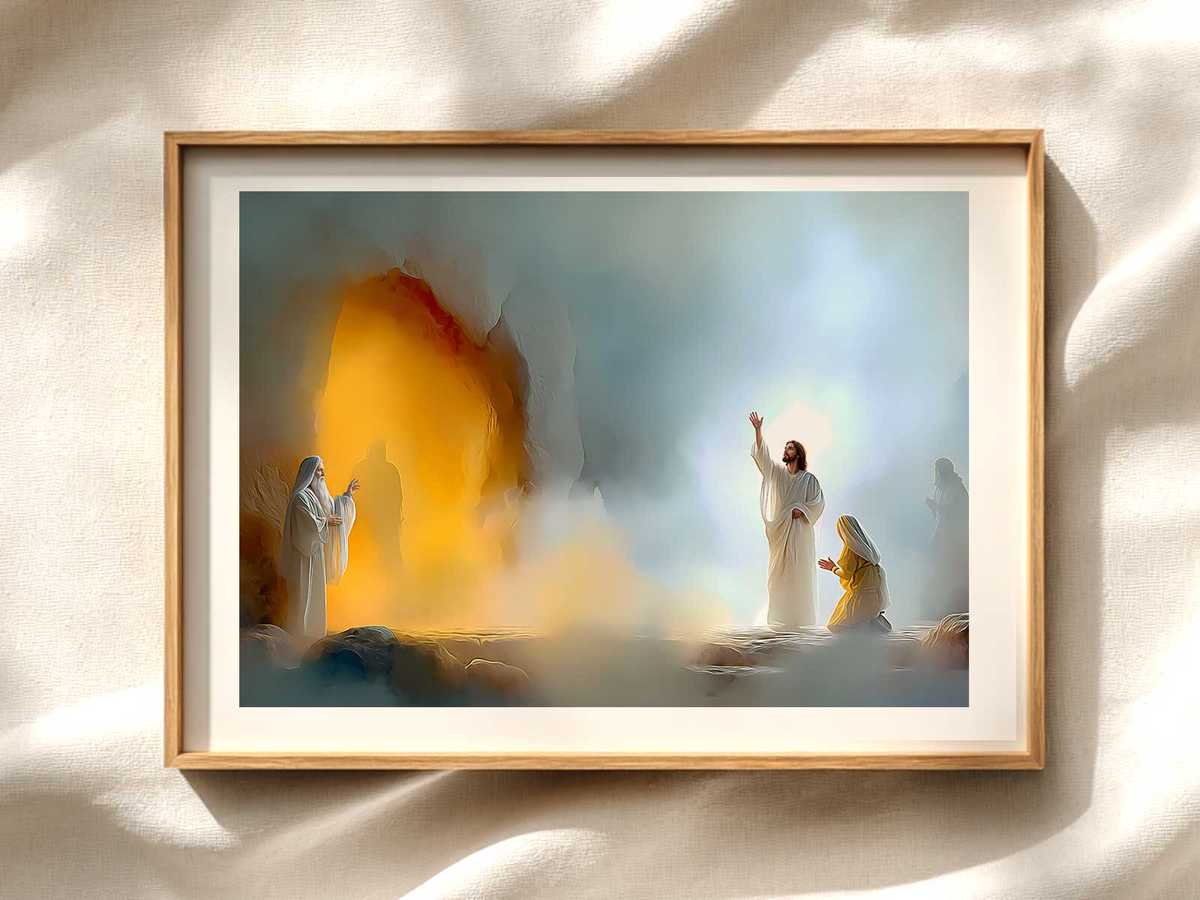
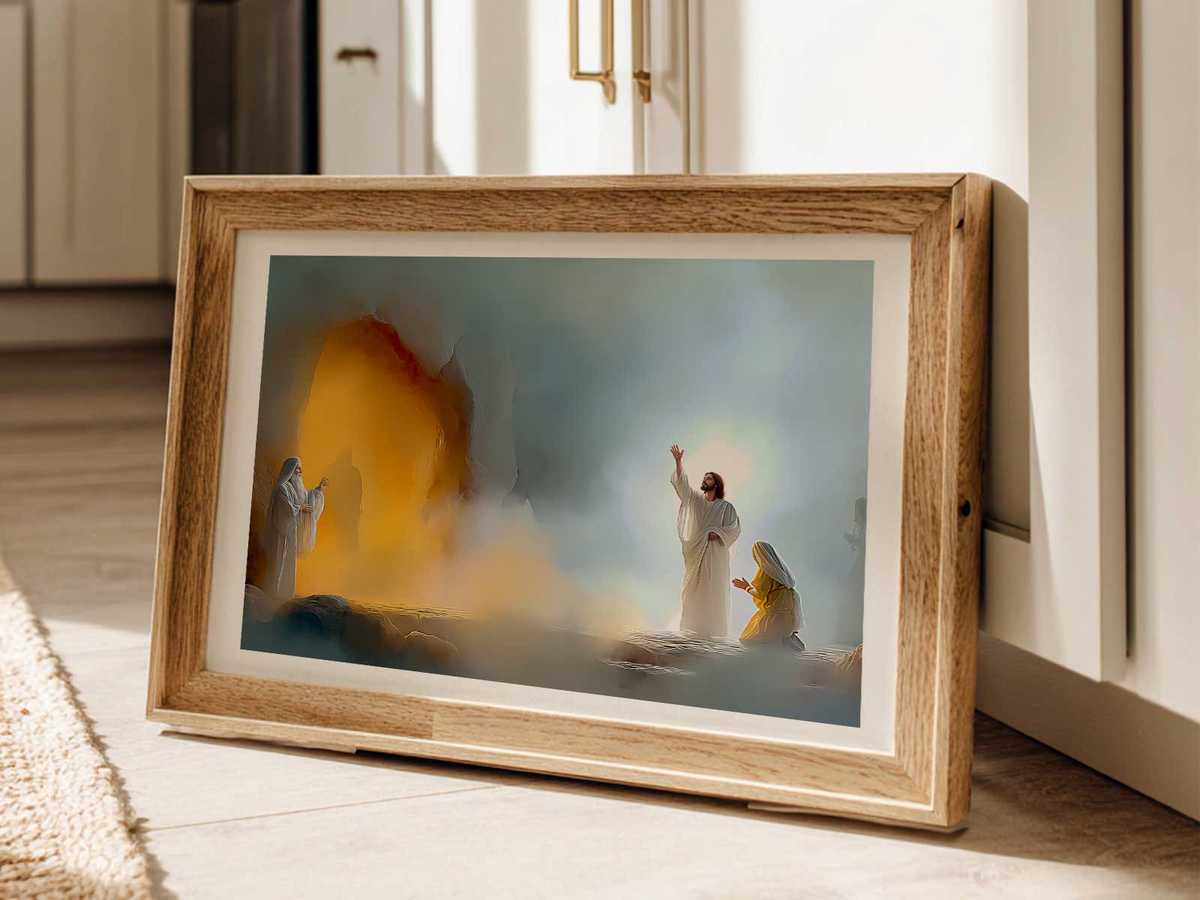
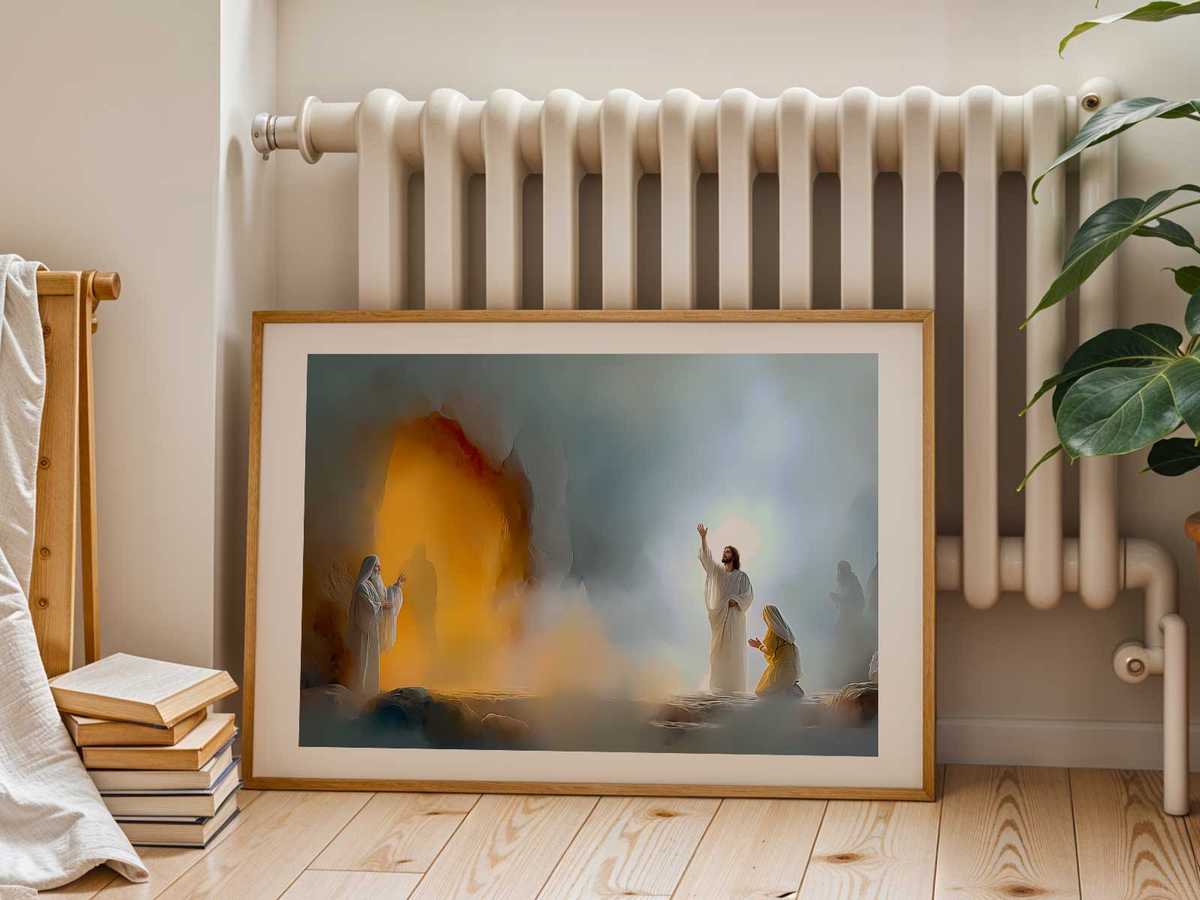
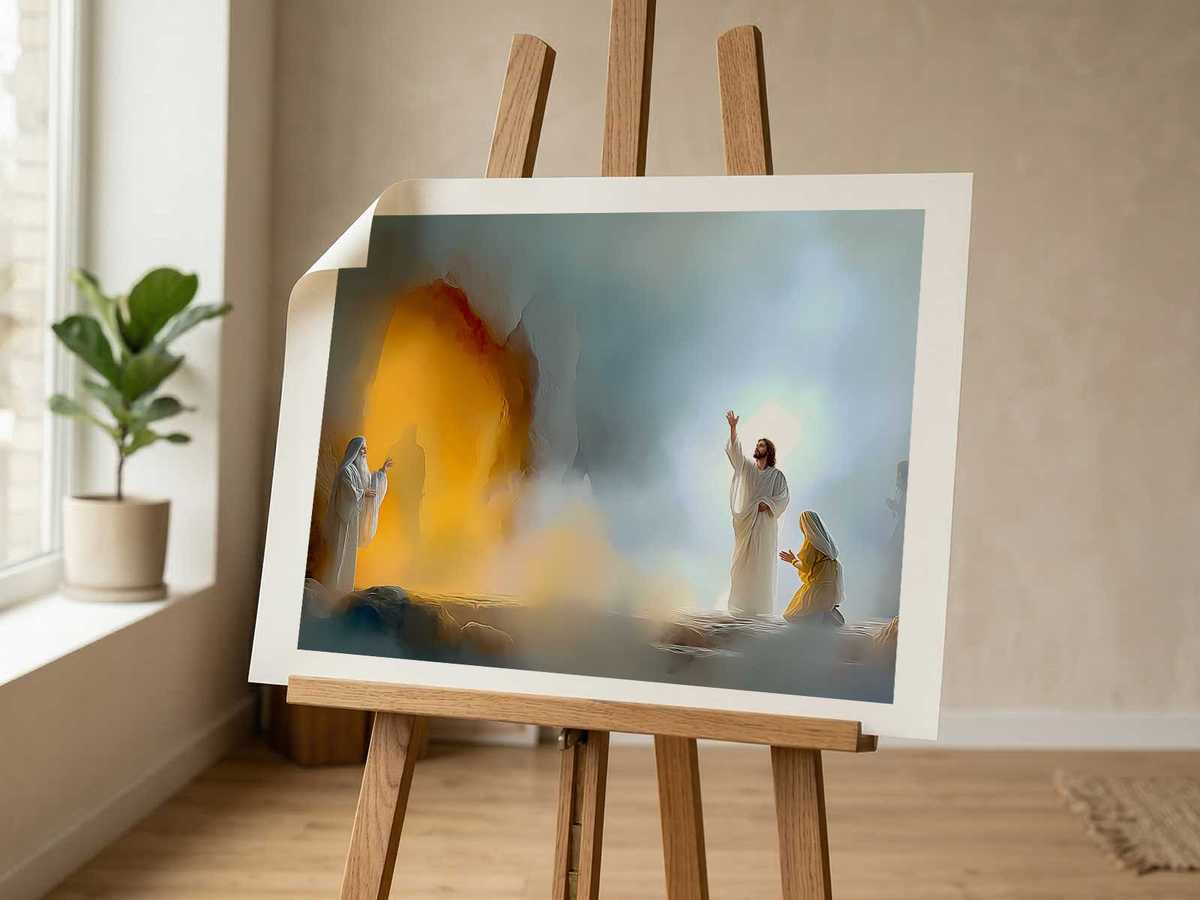
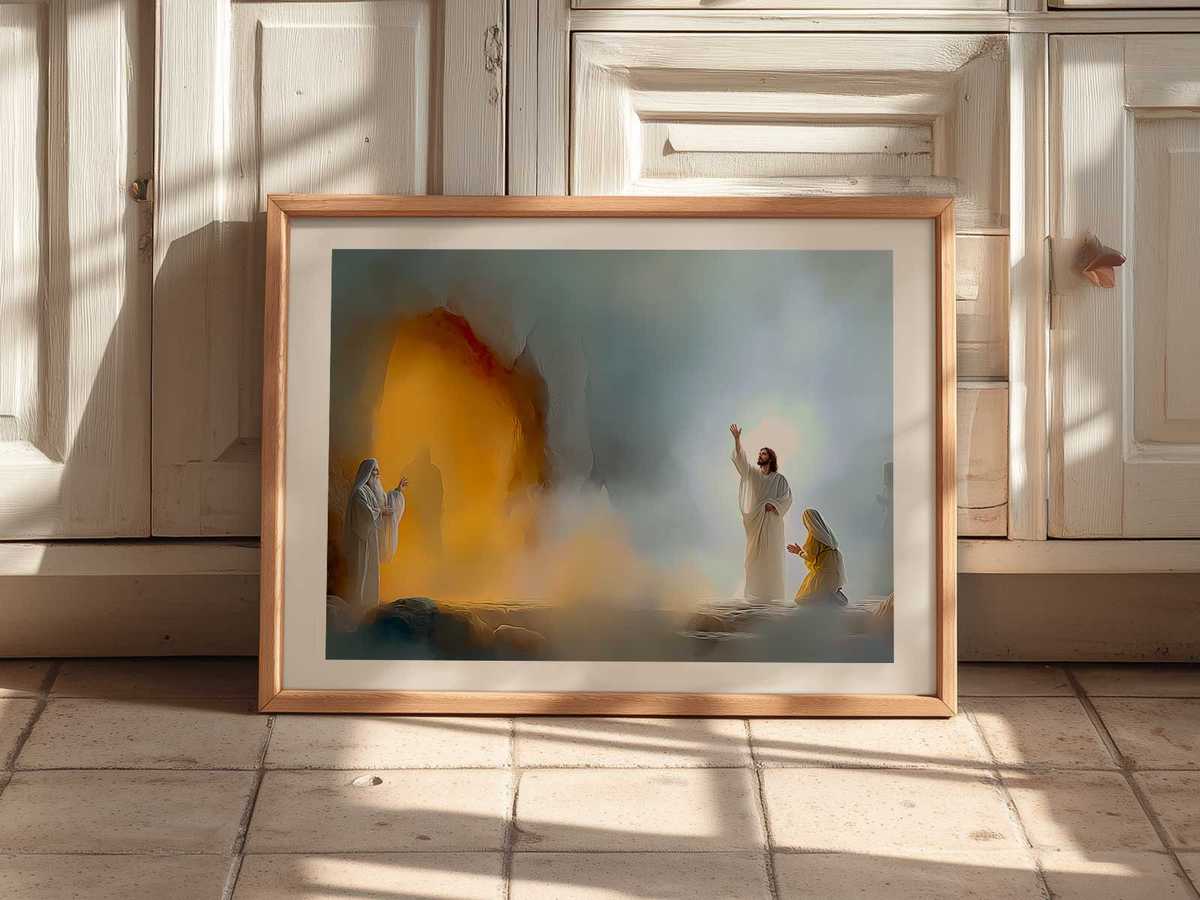
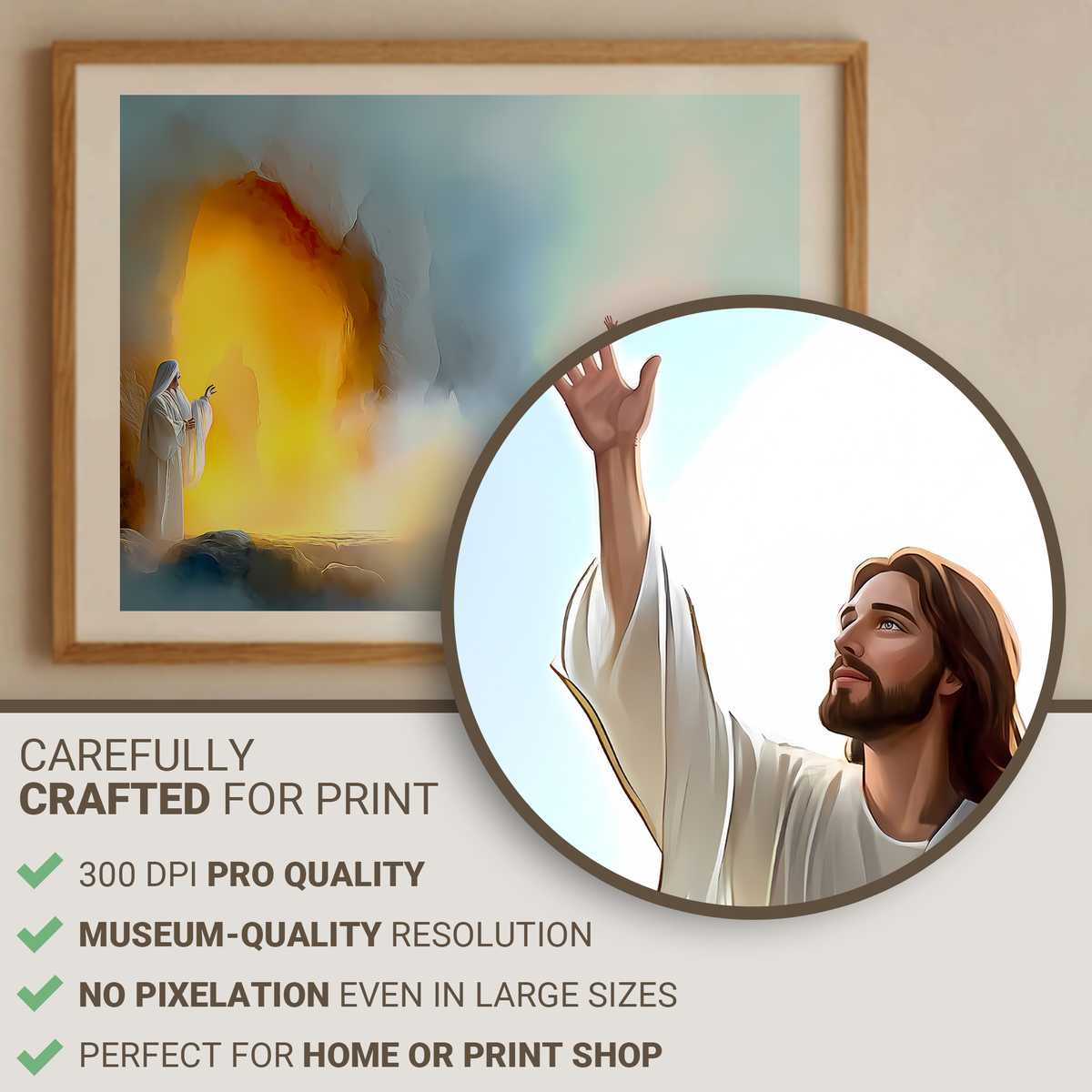
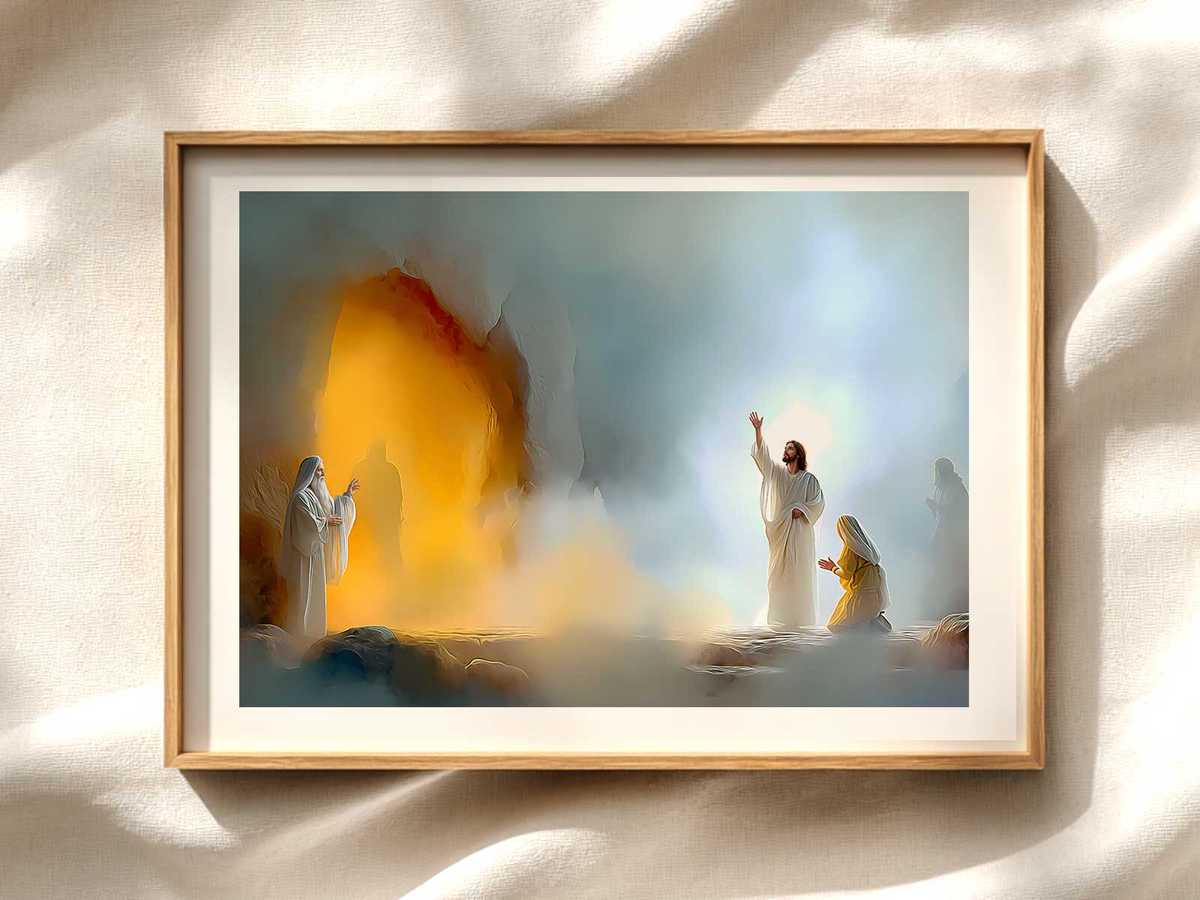
The Raising of Lazarus, narrated in John 11, is presented in Christian art as a decisive Johannine sign revealing Jesus as "the resurrection and the life." As a large-format canvas for the home, this scene offers a focused image that carries clear theological weight: it points to Christ's authority over life and death and gestures toward the promise of life that lies at the heart of the Gospel.
Visually, the episode is traditionally staged around a concentrated moment—the word of Christ, the tomb opening, the human response of awe and grief—which makes it especially effective when reproduced on a generous canvas. A large-format piece allows the viewer to read the composition from a distance and then move closer to discover smaller gestures: the posture of those who mourn, the physical space of the tomb, and the central presence whose command orders life to return. These visual layers invite repeated, simple acts of attention rather than a single glance.
Because scholars treat John 11 as the climactic sign in the Book of Signs, the scene naturally carries both authority and compassion. A canvas that emphasizes this duality—showing Christ's sovereign word together with human tenderness—supports a contemplative rhythm at home. Placed in a prayer corner, hallway, or living room, the image can be a steady reminder of the Gospel claim that Jesus' power touches the boundary between death and life, without requiring elaborate explanation.
Art-historical experience confirms that artists from different eras have treated the Raising of Lazarus in ways that spotlight either the miracle moment or Christ's human compassion; a carefully composed canvas for the domestic interior can hold both emphases. The scale of a wide-format print gives important pictorial space for the scene's drama to unfold without crowding: light and shadow, the opening of the tomb, and the gathered figures breathe more naturally at large scale, creating a devotional focus that is visually readable from everyday vantage points in a room.
The presence of such a canvas in the domestic church resonates with longstanding Catholic and theological affirmation that sacred images and beauty support prayer and family life. While no single visual prescription defines every household display, a Raising of Lazarus canvas that balances clarity of narrative with stillness of form invites simple daily practices—pausing for a breath before work, a quick glance between tasks, or a longer moment of prayer—that make the image part of ordinary life.
For those seeking a devotional picture that is at once theologically significant and visually accessible, a large-format Raising of Lazarus canvas offers a way to dwell with a Gospel sign. It asks nothing dramatic of the household; it quietly reorients attention toward the Christ who, in John’s account, both weeps with the mourners and proclaims power over death—an image whose scale and composition can sustain contemplation in the rhythm of a home.






 ↧ Digital download
Parable Verses as Wall Art: A Visible Word for Discernment...
Digital download
↧ Digital download
Parable Verses as Wall Art: A Visible Word for Discernment...
Digital download
 ↧ Digital download
Jesus Art: The Resurrection of Jairus’ Daughter — Hope Stronger Than...
Digital download
↧ Digital download
Jesus Art: The Resurrection of Jairus’ Daughter — Hope Stronger Than...
Digital download
 ↧ Digital download
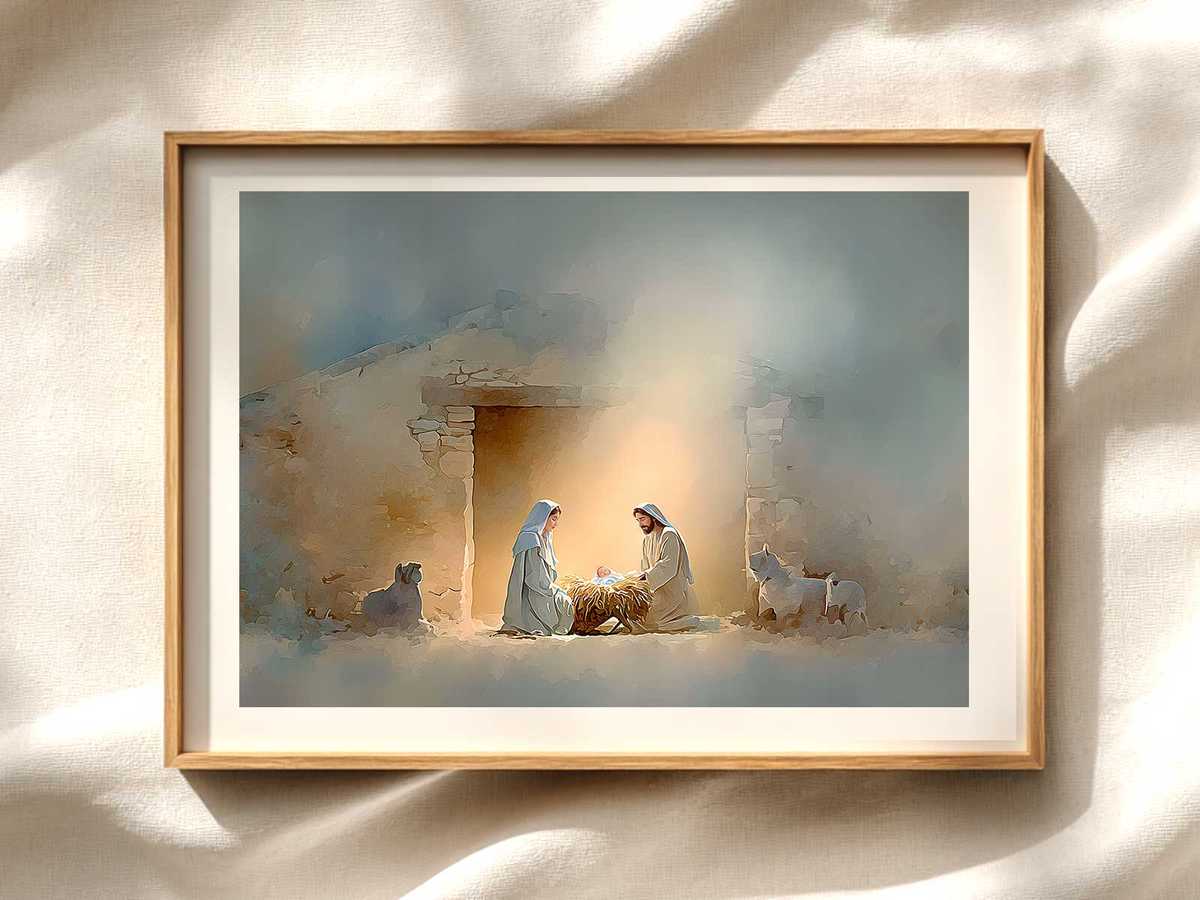
Earliest Painting of Jesus: The Nativity’s Quiet Thread Through...
Digital download
↧ Digital download
Earliest Painting of Jesus: The Nativity’s Quiet Thread Through...
Digital download
 ↧ Digital download
Famous Christ Painting Print: The Resurrection of Lazarus — A Sacred...
Digital download
↧ Digital download
Famous Christ Painting Print: The Resurrection of Lazarus — A Sacred...
Digital download